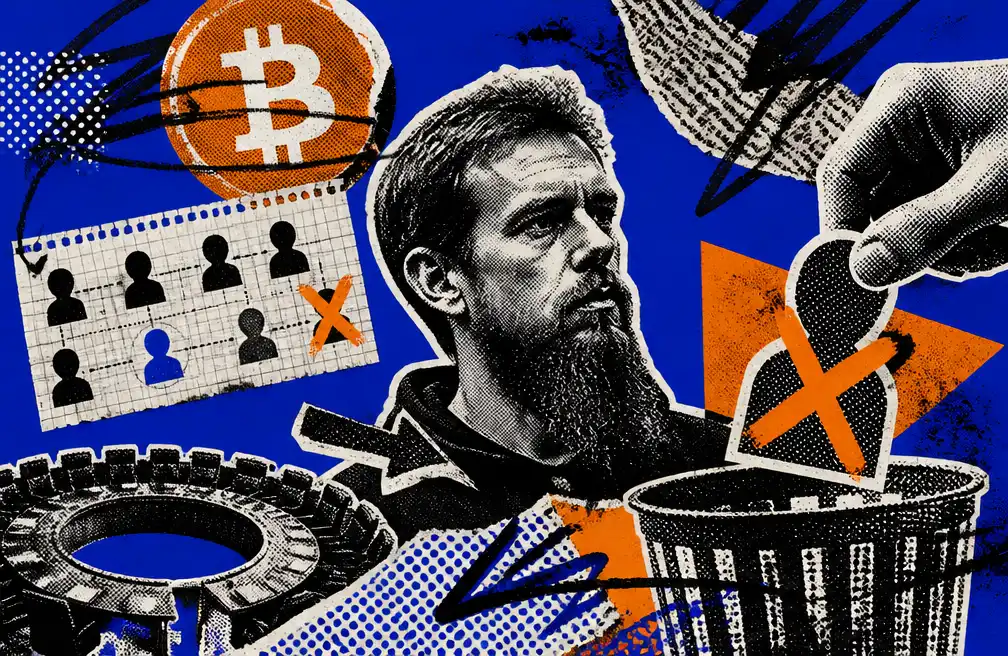
Под давлением крипто-царь Трампа избавляется от своих криптовалютных активов на сумму более 200 млн долларов

cryptonews.ru2021-09-15 tarihinde yayınlandı2025-03-15 tarihinde güncellendi

  • Дэвид Сакс продал более 200 миллионов долларов из цифровых активов, чтобы избежать конфликта интересов.
  • Сенатор Элизабет Уоррен раскритиковала Сакса, поставив под сомнение его криптовалютные активы.
  • Подробности продажи активов Саксом были раскрыты незадолго до письма Уоррен с просьбой разъяснить право собственности на криптовалюту.

Чтобы избежать потенциальных конфликтов интересов, крипто-царь Дэвид Сакс, советник президента Дональда Трампа, ликвидировал более $200 млн в цифровых активах. Этот шаг последовал за растущей критикой его финансовых связей с крипто-сектором и его пропагандой стратегического резерва биткоина.

Сакс подвергся пристальному вниманию в социальных сетях и со стороны американских законодателей, включая высокопоставленного члена банковского комитета Сената, из-за его участия в сфере цифровых активов.

Служебная записка, опубликованная Белым домом, показывает, что Сакс и его венчурная фирма Craft Ventures стремились свести к минимуму любые потенциальные конфликты. Время примечательное: меморандум был опубликован за день до письма сенатора Элизабет Уоррен от 6 марта, в котором она потребовала от него подтвердить, что он больше не владеет какими-либо цифровыми активами, после его заявления на X о том, что он продал всю свою криптовалюту.

Связанный: World Liberty Financial: привлечено $550 млн, покупка SEI и необычное предложение по обмену токенов

Уоррен написал: «Несмотря на ваши публичные заявления через X, остается неясным, когда именно вы лично отказались от BTC, ETH и SOL, когда Craft Ventures вышла из Bitwise, и могли ли близкие вам люди удерживать позиции и продавать их во время недавнего скачка цен».

Дэвид Сакс распродает криптовалюту на сумму более 200 млн долларов

Основные продажи активов, осуществленные Sacks and Craft Ventures, включают:

  • Криптовалютные активы: Сакс продал все ликвидные запасы криптовалюты, включая биткоин, Ethereum и Solana, до начала второго срока президента Трампа 20 января 2025 года. Кроме того, 22 января 2025 года он продал свою долю в Bitwise 10 Crypto Index Fund (BITW).
  • Акции публичных компаний: Сакс также продал свои акции в публично торгуемых компаниях, включая Coinbase (COIN) и Robinhood (HOOD), а также акции частных компаний, занимающихся цифровыми активами.
  • Интересы в инвестиционных фондах: Сакс продал свои доли в инвестиционных фондах, ориентированных на цифровые активы, таких как Multicoin Capital и Blockchain Capital. Craft Ventures также продала свою долю в Multicoin Capital и Bitwise Asset Management, Inc.
  • Венчурные фонды: Пойдя еще дальше, Сакс инициировал продажу своих долей в фондах с ограниченной ответственностью в Sequoia Funds и примерно 90 других венчурных фондах. Эти фонды держат позиции в тысячах компаний, некоторые из которых могут быть связаны с индустрией цифровых активов.

По теме: Комитет Сената США одобрил законопроект о стейблкоинах, уравновешивающий государственные и федеральные роли

В общей сложности Сакс и Craft Ventures продали более 200 миллионов долларов в цифровых активах, из которых не менее 85 миллионов долларов напрямую связаны с самим Саксом. Изъятие инвестиций сопряжено со значительными налоговыми издержками, поскольку специальные государственные служащие, такие как Сакс, не имеют права на получение сертификатов о продаже активов.
İlgili Okumalar

Vitalik's Algorithmic Stablecoin Vision: Interpreting the Mechanism and Challenges from an Options Perspective

Vitalik Buterin's recent algorithmic stablecoin proposal envisions using an option-like mechanism to create a stablecoin without the liquidation risks inherent in traditional collateralized debt position (CDP) models. The design splits one unit of ETH into two components: a 'stable' leg (P) that maintains value up to a certain strike price, and an 'upside' leg (N) that captures any appreciation above that price. Together, they always sum to one ETH, eliminating the need for debt or liquidation mechanisms. From an options perspective, the stable leg essentially functions as a synthetic, covered call position. However, significant challenges exist. For the stable asset to maintain its peg, it must continuously roll deep in-the-money call options, leading to potential rollover slippage, predictable trading paths vulnerable to front-running, and liquidity issues. Crucially, the system's scalability depends on a constant demand for the upside leg—a form of leveraged ETH long position without funding rates or liquidation risk. It's unclear if such persistent, specific demand will materialize from speculators or market makers who have simpler alternatives like perpetual swaps. The author, drawing from experience with Rysk, argues that DeFi options have struggled as standalone trading products due to complexity and fragmented liquidity. Their potential lies instead as foundational infrastructure underpinning more complex financial primitives like stablecoins, structured yields, or index products—transforming from a direct product into a core pricing and risk distribution engine for the next generation of on-chain finance.

marsbit1 saat önce

Vitalik's Algorithmic Stablecoin Vision: Interpreting the Mechanism and Challenges from an Options Perspective

marsbit1 saat önce

GPT-5.6 Countdown: Abandon the Illusion of a Single API, Computational Iteration Can't Outpace a Single Page of Compliance

In mid-June, three seemingly independent industry events—the compliance-driven throttling of Fable 5, the open-sourcing of GLM-5.2, and the leaked release timeline for GPT-5.6—are pushing the global AI industry toward a watershed moment. These shifts signal a fundamental restructuring of the industry's underlying logic. First, **"usability" has substantially overtaken "advanced capabilities"** as the primary weight, pushing the global large language model (LLM) supply chain into a "dual-track" phase of controlled closed-source and local open-source coexistence. Second, **the competitive moats of closed-source giants are shifting**. Their technical focus is moving from "language intelligence" toward "spatial intelligence (world models)"—a domain heavily reliant on computing power. Third, faced with常态化 transnational compliance risks, **a "model-agnostic" decoupled design has become a survival necessity for application-layer developers to maintain business continuity.** The article details how Anthropic's Fable 5, despite its advanced engineering feats, was restricted for non-U.S. citizens within 72 hours of launch, highlighting how geopolitical compliance can instantly limit even the most advanced models. In response, the open-source camp, exemplified by Zhipu AI's MIT-licensed GLM-5.2, is gaining market share by offering stable performance improvements and significant cost advantages (up to 70% savings for enterprises), while achieving full adaptation with domestic semiconductor platforms. Meanwhile, closed-source leaders like OpenAI are pivoting. The anticipated GPT-5.6 reportedly shifts focus from language to spatial intelligence and world models, aiming to rebuild a generational gap in areas like 3D understanding, simulation, and industrial design that demand immense compute. The core conclusion is that the LLM supply chain's logic has changed. Enterprises must now evaluate infrastructure based on a composite of technical performance and policy compliance. For developers, complete reliance on a single closed-source API poses unacceptable risk. Implementing a truly model-agnostic architecture—enabling swift switches to compliant, locally deployable open-source alternatives—is no longer just good practice but a fundamental baseline for business continuity.

marsbit4 saat önce

GPT-5.6 Countdown: Abandon the Illusion of a Single API, Computational Iteration Can't Outpace a Single Page of Compliance

marsbit4 saat önce

Is the 'Token Subsidy War' Among AI Giants Almost Over?

The article discusses the ongoing "token subsidy war" among AI giants like OpenAI and Anthropic, questioning whether it's nearing its end. It reveals that current AI subscription prices are heavily subsidized, with some plans offering tokens at up to 70 times the actual cost to attract and retain heavy users, especially developers and enterprises. This strategy mirrors past internet-era subsidy battles, but with a key difference: AI tokens lack "lock-in" effects. Unlike ride-hailing or food delivery apps, users can easily switch between AI providers as APIs become standardized, making it difficult for companies to raise prices post-subsidy. The piece highlights a structural asymmetry in the competition. Giants like Google, with massive advertising revenue, can afford to subsidize tokens indefinitely, akin to using "tokens as a weapon." In contrast, venture-backed companies like OpenAI and Anthropic face pressure to become profitable, especially as they approach IPO. The article cites Google Ventures founder Bill Maris, who suggests Google could slash token prices by 80%, putting immense pressure on competitors. Two potential endgames are presented: the "internet service" model (subsidize, monopolize, then raise prices) and the "utility" model (tokens become a standardized, low-margin commodity like electricity). Given the low switching costs, the latter seems more likely. The competition may not have a single winner but could instead accelerate AI's evolution into a foundational, infrastructure-level technology, akin to a public utility. For now, users continue to benefit from heavily subsidized token costs.

marsbit4 saat önce

Is the 'Token Subsidy War' Among AI Giants Almost Over?

marsbit4 saat önce

İşlemler

Spot
Futures
活动图片