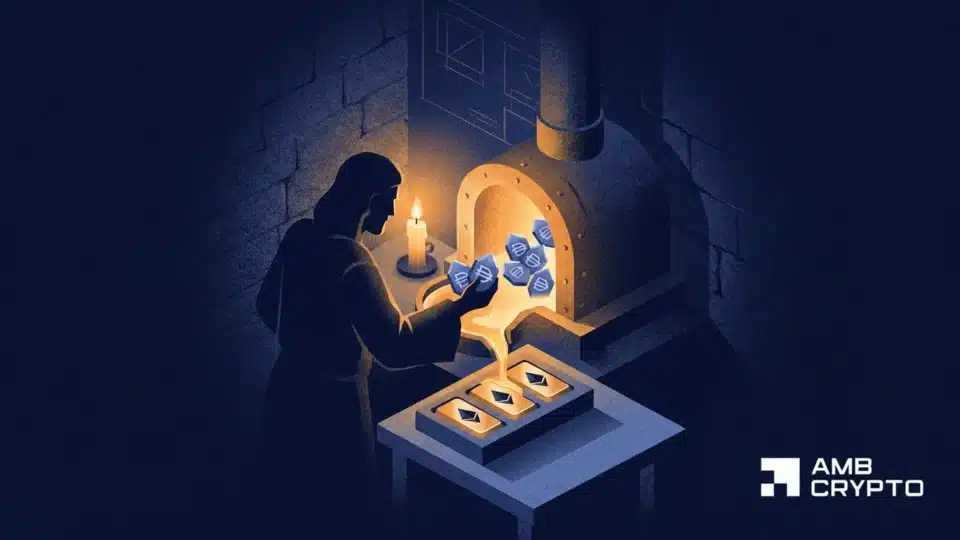
20M SHIB burned: Why does Shiba Inu's price continue to struggle?

Ambcrypto2025-03-06 tarihinde yayınlandı2025-03-06 tarihinde güncellendi

Özet

Market reactions will determine if burns can stabilize SHIB’s price or if further action is required.

Shibburn has flagged a massive burn of 20MShiba SHIB, slashing the circulating supply in one move.

Can this burning mechanism truly drive sustainable upward momentum?

On-chain data tracker Shibburn has reported a massive 20,000,000 Shiba Inu [SHIB] burn transaction, significantly reducing the circulating supply of the token.

An anonymous whale executed a burn as part of today’s 20.79 million SHIB burn, increasing the daily burn rate by 34.24%.

Token burning is vital to SHIB’s tokenomics, aiming to create deflationary pressure and potentially boost its value over time.

However, despite these burns, SHIB’s price remains volatile, currently down 60% from its post-election high of $0.00003340.
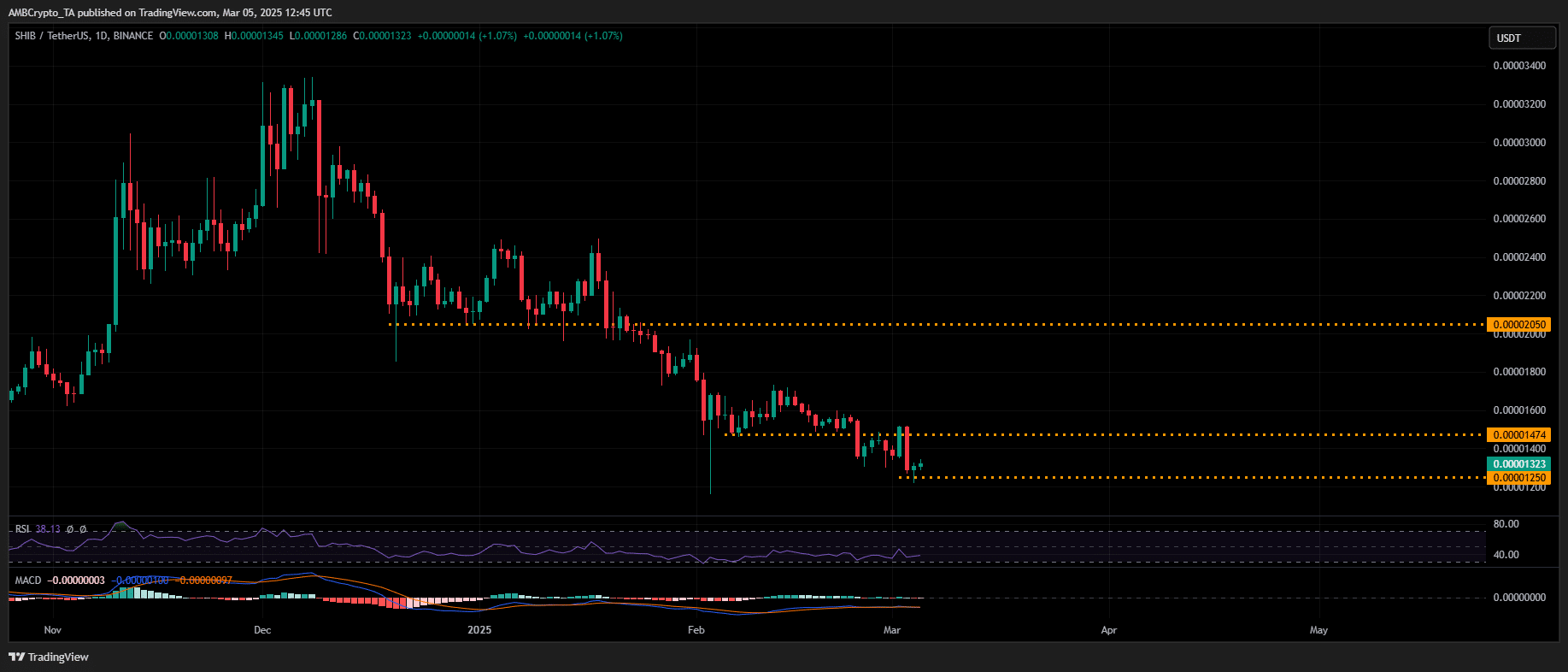
The effectiveness of its deflationary strategy is up for debate.

While routine burns reduce the circulating supply by locking tokens in dead wallets, SHIB still faces the challenge of its enormous circulating supply – 589.25 trillion tokens.

Take the 23rd of February, for example, when 40.45 million SHIB tokens were burned. Yet, just a day later, SHIB posted an 11% dip, mirroring Bitcoin’s[BTC] 4.5% drop.
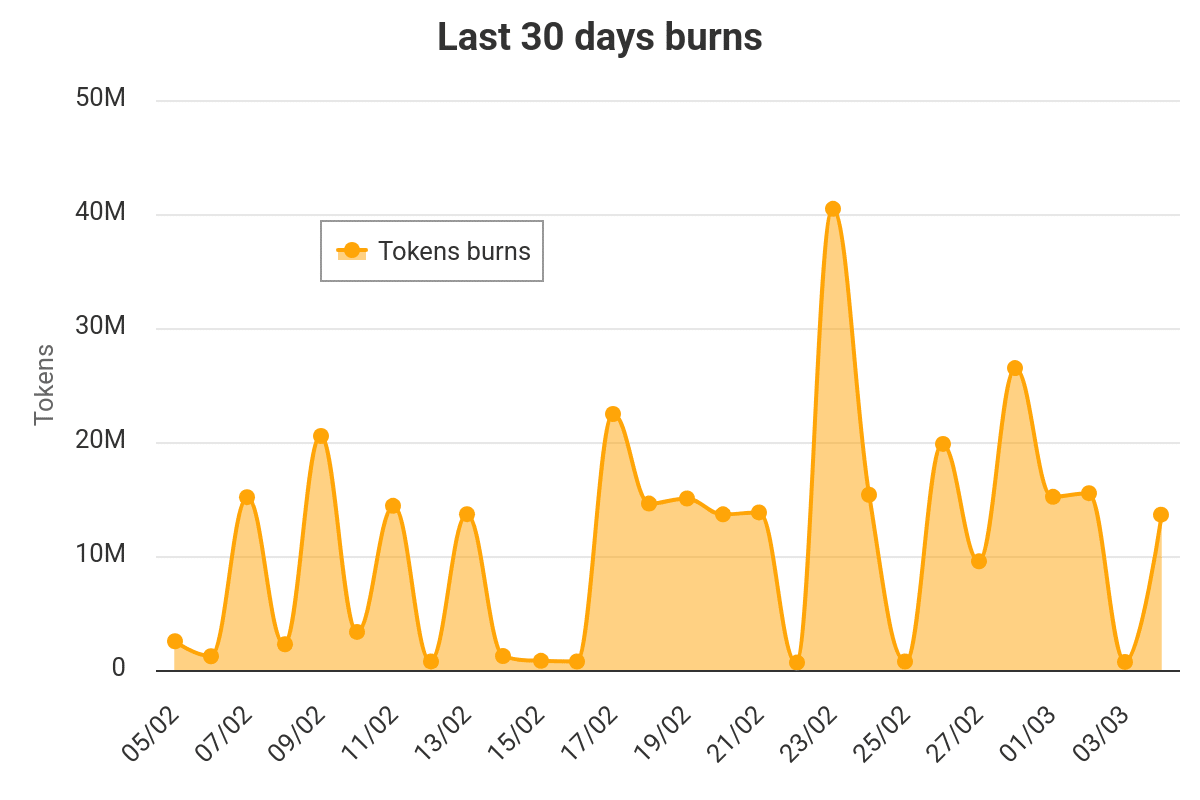
Shiba Inu: Will this burn drive long-term value?

SHIB’s price is influenced more by social media hype, investor behavior, and market conditions than just its circulating supply.

Currently, SHIB’s Social Volume has hit a three-month low, mirroring its price decline. This drop in engagement often signals a decline in market interest, making it harder for SHIB to rally without fresh attention.

Even more concerning is the trading volume – once surging past $4 billion during election “hype”, it’s now fallen to just $311.44 million.
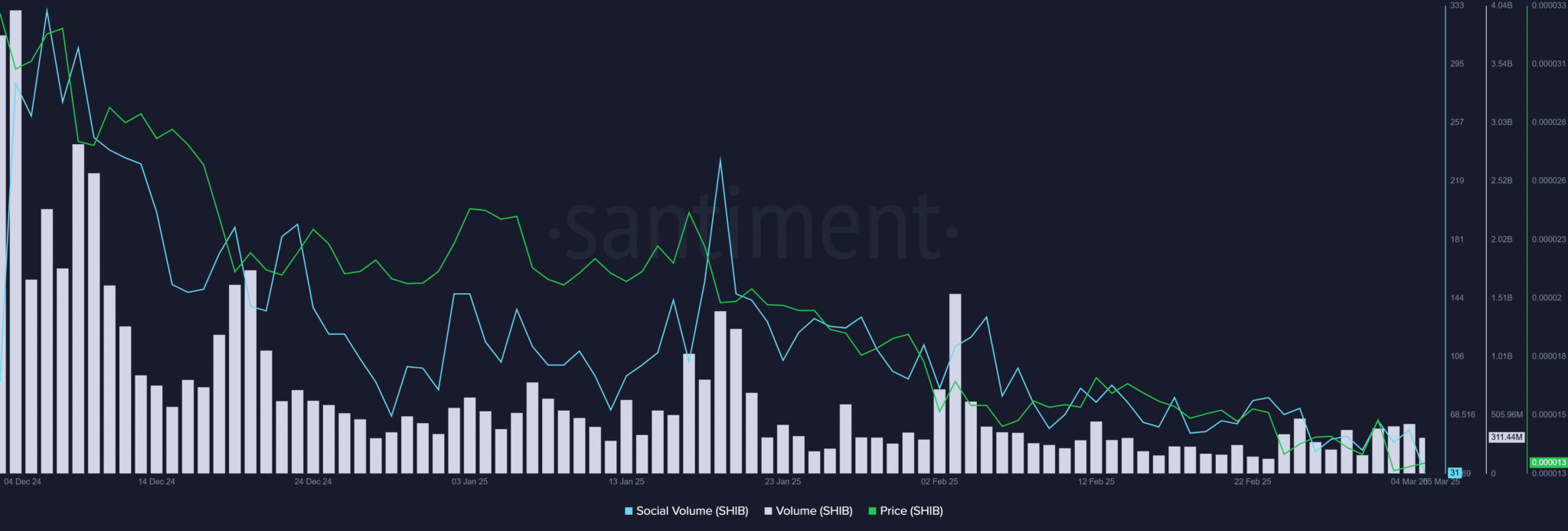
This sharp reduction in volume indicates a lack of market participation. If social momentum and buying pressure don’t pick up soon, SHIB could remain trapped in its current bearish trend.


Trend Kriptolar

İlgili Okumalar

Li Fei-Fei's Latest Long-Form Article: When Video Generation, Robotics, and NVIDIA All Call Themselves World Models, We Need a Taxonomy

In a new article, Dr. Fei-Fei Li addresses the widespread and often inconsistent use of the term "world model" in AI. She proposes a clear, functional taxonomy rooted in the classic Partially Observable Markov Decision Process (POMDP) loop (agent → action → state → observation → agent). According to this framework, current systems called "world models" are different projections of this loop, categorized by their primary output: 1. **Renderers**: Output observations (pixels). Their goal is visual fidelity for human consumption (e.g., video generation models like Sora). They are the most commercially mature but are limited by a focus on appearance over physical accuracy. 2. **Simulators**: Output states (geometric, physical, dynamic representations). They provide a structurally accurate world for both human professionals (e.g., architects) and computational agents (e.g., robots for training). Li argues simulators are the crucial, underappreciated bridge, as they can underpin both rendering and planning. 3. **Planners**: Output actions. Given an observation and a goal, they decide what an agent should do next (e.g., robotic action models). This area is highly promising but remains the least mature for real-world deployment. Li highlights a key trend: the boundaries between these three categories are beginning to blur, as they all rely on a shared underlying understanding of geometry, physics, and dynamics. The logical endpoint is a unified world foundation model capable of switching between rendering, simulation, and planning based on downstream needs. This convergence, she concludes, is central to advancing spatial intelligence—enabling machines not just to talk about the world, but to truly understand, imagine, and interact with it.

marsbit3 saat önce

Li Fei-Fei's Latest Long-Form Article: When Video Generation, Robotics, and NVIDIA All Call Themselves World Models, We Need a Taxonomy

marsbit3 saat önce

Forbes Feature: Stablecoin Cross-Border Payments Are Faster, But Not Yet Cheaper

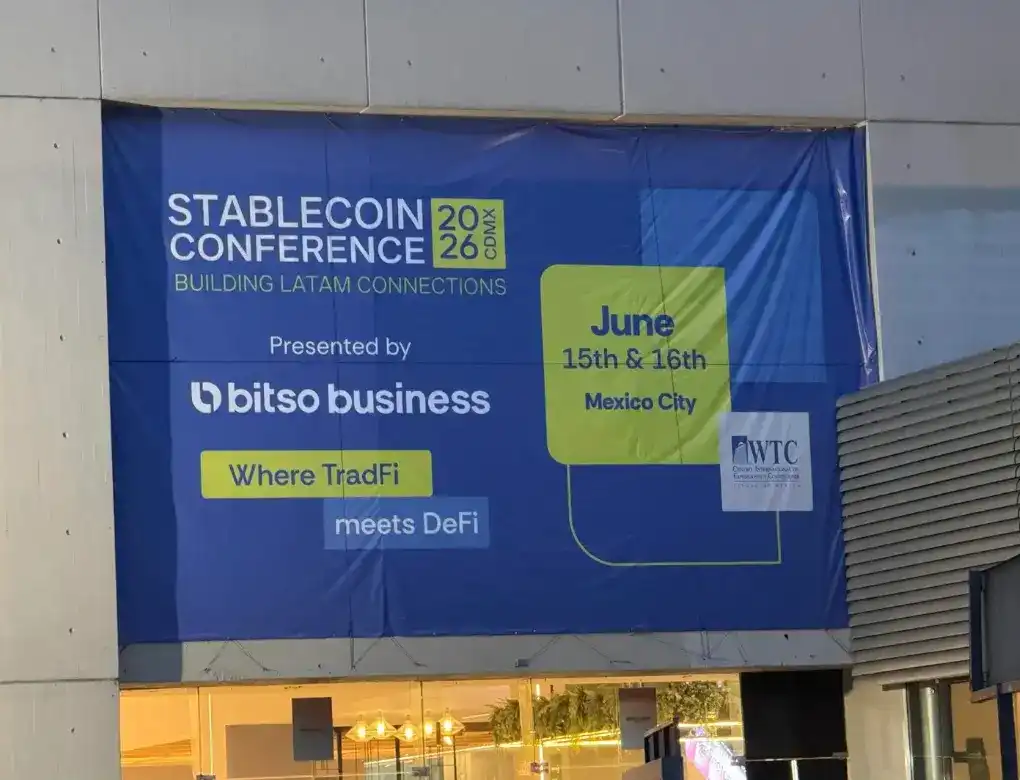
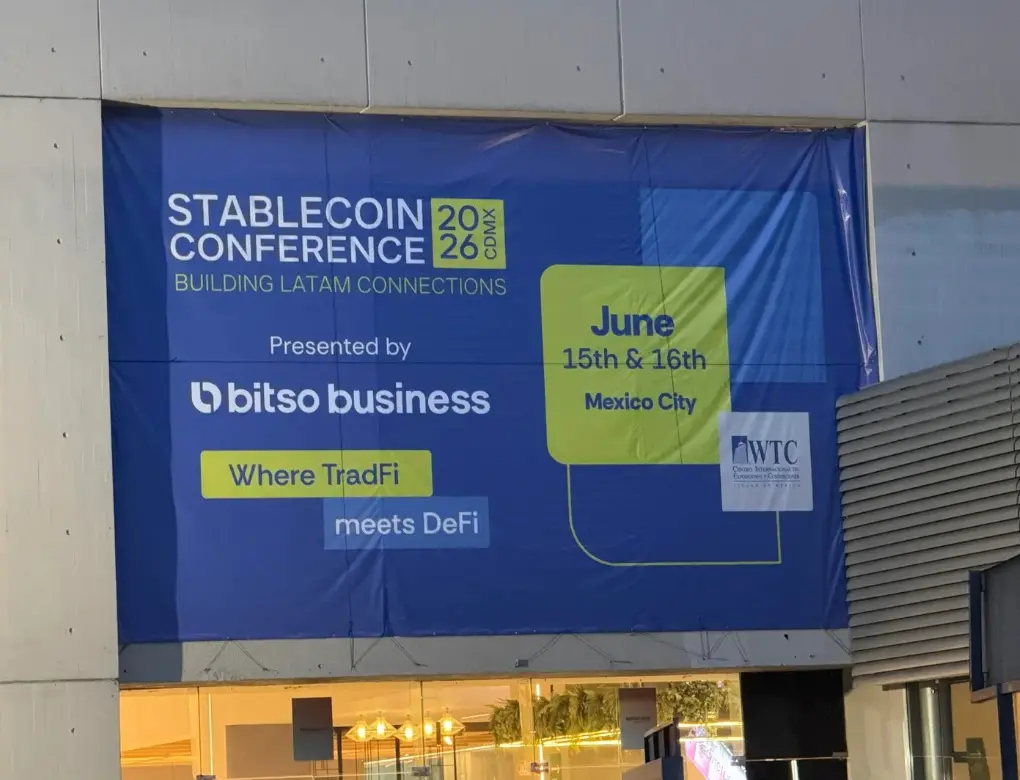
A Forbes feature delves into the state of stablecoin-based cross-border payments, noting rapid growth but a key shortfall: while faster and more accessible, they are not yet cheaper. At a recent industry conference in Mexico City, optimism about technology, regulation, and volume was tempered by discussions with practitioners. The core issue is liquidity. Traditional FX brokers charge 60-70 basis points, and stablecoins promise to slash this to 2-5 basis points. However, this theoretical cost advantage cannot be realized until deep liquidity pools are established at scale, requiring significant institutional capital inflow. A major adoption barrier is trust. Businesses often rely on long-standing relationships with traditional brokers, valuing reliability over marginal cost savings. This shift will be gradual. Furthermore, successful companies in the space are not positioning themselves as replacements for legacy systems like SWIFT, but as complements. They leverage stablecoins for speed while using traditional rails for their standardization and reliability in ensuring accurate payment details—a critical factor for supplier payments to avoid customs issues. Companies like Caliza, experiencing high monthly growth, exemplify this hybrid approach. The industry anticipates consolidation, as long-term viability will depend on securing the essential trifecta: proper licensing, robust fiat on/off-ramps, and deep liquidity. Without these, firms risk being mere intermediaries rather than building sustainable businesses.

marsbit3 saat önce

Forbes Feature: Stablecoin Cross-Border Payments Are Faster, But Not Yet Cheaper

marsbit3 saat önce

İşlemler

Spot

Popüler Makaleler

SHIB Nasıl Satın Alınır

HTX.com’a hoş geldiniz! SHIBA INU (SHIB) satın alma işlemlerini basit ve kullanışlı bir hâle getirdik. Adım adım açıkladığımız rehberimizi takip ederek kripto yolculuğunuza başlayın. 1. Adım: HTX Hesabınızı OluşturunHTX'te ücretsiz bir hesap açmak için e-posta adresinizi veya telefon numaranızı kullanın. Sorunsuzca kaydolun ve tüm özelliklerin kilidini açın. Hesabımı Aç2. Adım: Kripto Satın Al Bölümüne Gidin ve Ödeme Yönteminizi SeçinKredi/Banka Kartı: Visa veya Mastercard'ınızı kullanarak anında SHIBA INU (SHIB) satın alın.Bakiye: Sorunsuz bir şekilde işlem yapmak için HTX hesap bakiyenizdeki fonları kullanın.Üçüncü Taraflar: Kullanımı kolaylaştırmak için Google Pay ve Apple Pay gibi popüler ödeme yöntemlerini ekledik.P2P: HTX'teki diğer kullanıcılarla doğrudan işlem yapın.Borsa Dışı (OTC): Yatırımcılar için kişiye özel hizmetler ve rekabetçi döviz kurları sunuyoruz.3. Adım: SHIBA INU (SHIB) Varlıklarınızı SaklayınSHIBA INU (SHIB) satın aldıktan sonra HTX hesabınızda saklayın. Alternatif olarak, blok zinciri transferi yoluyla başka bir yere gönderebilir veya diğer kripto para birimlerini takas etmek için kullanabilirsiniz.4. Adım: SHIBA INU (SHIB) Varlıklarınızla İşlem YapınHTX'in spot piyasasında SHIBA INU (SHIB) ile kolayca işlemler yapın.Hesabınıza erişin, işlem çiftinizi seçin, işlemlerinizi gerçekleştirin ve gerçek zamanlı olarak izleyin. Hem yeni başlayanlar hem de deneyimli yatırımcılar için kullanıcı dostu bir deneyim sunuyoruz.

502 Toplam GörüntülenmeYayınlanma 2024.12.11Güncellenme 2026.06.02

SHIB Nasıl Satın Alınır

Tartışmalar

HTX Topluluğuna hoş geldiniz. Burada, en son platform gelişmeleri hakkında bilgi sahibi olabilir ve profesyonel piyasa görüşlerine erişebilirsiniz. Kullanıcıların SHIB (SHIB) fiyatı hakkındaki görüşleri aşağıda sunulmaktadır.

活动图片