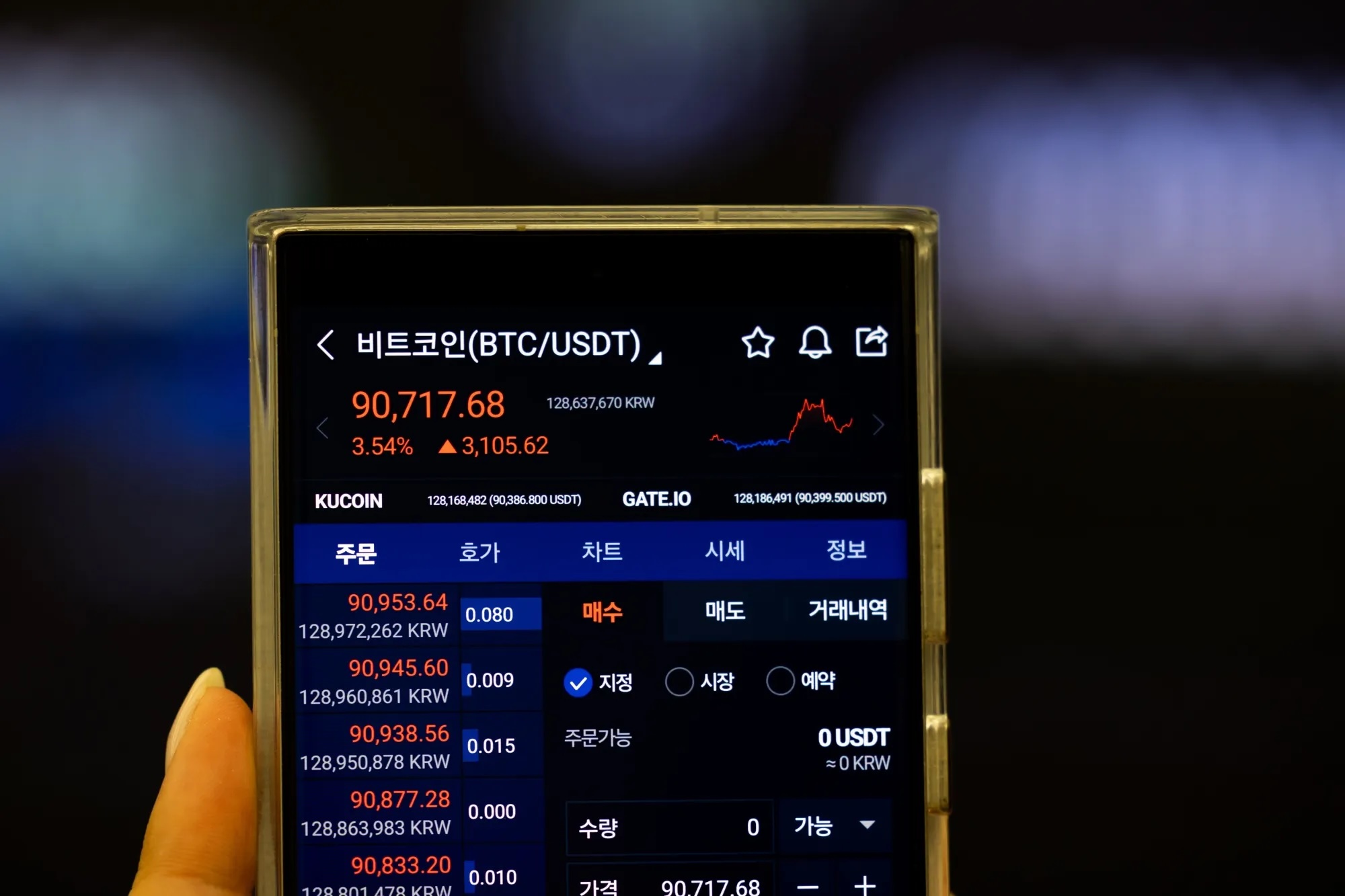
Биткойн превысил 100 тысяч долларов, поскольку рынок криптовалют восстанавливается с притоком в 220 миллионов долларов за ночь

cryptonews.ru2023-01-04 tarihinde yayınlandı2025-02-04 tarihinde güncellendi

  • Рынок криптовалют начал восстановление после резкого падения в минувшие выходные.
  • Биткойн поднялся выше 100 000 долларов перед закрытием торговой сессии в понедельник.
  • Восстановление рынка криптовалют отражает уверенность среди инвесторов.

Рынок криптовалют оправился от резкого падения на выходных благодаря ночному ралли, в результате которого в криптоэкосистему поступило 220 миллионов долларов. Биткойн, флагманская криптовалюта, возглавил восстановление, поднявшись выше 100 000 долларов, восстанавливая бычью уверенность среди пользователей криптовалюты, которые ожидают, что цены вырастут выше.

Политика президента Дональда Трампа, объявленная на прошлой неделе, спровоцировала падение цен на рынке криптовалют, которое произошло на выходных. К началу понедельника биткойн упал до $91 530. Тем не менее, он оправился от падения в понедельник и превысил 100 000 долларов, достигнув дневного максимума в 102 569 долларов, а затем закрылся на уровне 101 457 долларов.

Тарифная пауза ослабляет торговую напряженность

В понедельник Трамп отказался от своей политики повышения тарифов в отношении Мексики, приостановив ее реализацию и открыв ситуацию для переговоров между двумя странами. По сообщениям, Трамп и президент Мексики Клаудия Шейнбаум договорились приостановить действие пошлины между США и Мексикой на один месяц. В этот период Мексика отправит 10 000 солдат охраны для обеспечения безопасности границы.

Связанный: Экономические предложения Трампа: тарифы, снижение налогов и глобальный отказ от налогов

Президент Трамп отметил, что официальные лица с обеих сторон примут участие в переговорах. Президент назначил министра финансов Скотта Бессента и госсекретаря Марко Рубио представлять США на переговорах с Мексикой.

Широкое восстановление криптовалют и рыночный импульс

Помимо Биткойна, другие ведущие криптовалюты оправились от потерь прошлых выходных. Данные TradingView показывают, что Ethereum восстановился после внутридневного снижения в понедельник, поднявшись на 36,3%. Самый популярный альткойн закрыл торговую сессию понедельника на уровне $2883 после падения до $2150 ранее в тот же день. Солана восстановилась после падения до $176 рано утром в понедельник, достигнув дневного максимума в $218,97 перед закрытием сессии на уровне $216,48.

Связанный: Рынок криптовалют резко восстанавливается: опасения по поводу тарифов ослабевают

Несмотря на то, что рынок криптовалют продемонстрировал значительное восстановление, он еще не полностью оправился от спада на выходных, в результате которого рынок криптодеривативов был уничтожен на 2 миллиарда долларов после первоначального объявления Трампа о тарифах. Эта модель восстановления демонстрирует, как криптобыки отвергли падение, намекая на потенциал рынка подняться выше после восстановления ключевых уровней поддержки.


İlgili Okumalar

South Korean Institutions' Crypto Race: Dual Explosion of Stablecoins and RWA

**Summary: South Korea's Institutional Crypto Race: Stablecoins and RWA Take Off** South Korea is undergoing a structural shift in its crypto ecosystem, moving beyond its historical role as a major retail trading hub. Major financial institutions and internet platforms are now building institutional-grade blockchain infrastructure, with stablecoins and Real-World Asset (RWA) tokenization as the primary drivers. The push for a regulated Korean won stablecoin market is a major policy and corporate focus. This is driven partly by an estimated $115 billion outflow into dollar stablecoins like USDC, threatening the domestic financial system. Banks (e.g., KB Financial, Hana), payment giants (e.g., Shinhan Card, BC Card), and internet super-apps (KakaoPay, NAVER Pay) are all conducting pilots. The goal is to anchor future digital finance to the Korean won and local regulations. In RWA, South Korea is advancing rapidly within regulatory sandboxes, focusing on unique domestic assets beyond typical global templates like US Treasuries. Projects involve tokenizing ships (with Hyundai Heavy Industries), defense supply chain assets, and K-pop intellectual property, alongside more conventional assets. A legal framework is set for 2027, and platforms like NXT are preparing for regulated trading. Key opportunities for crypto-native projects lie in providing the underlying technology these traditional institutions lack: global distribution channels for tokenized assets, cross-chain liquidity solutions, and enabling infrastructure tools (e.g., for asset packaging and management). Partnerships, such as Solana with Shinhan Card or LayerZero with the Korea Gold Exchange, exemplify this proactive approach. Crucially, user access is being shaped by consumer platforms. NAVER's planned acquisition of Upbit's operator Dunamu and Kakao's development of a unified wallet aim to seamlessly integrate crypto with everyday payments for tens of millions of users. The race is now about which protocols and projects will become the foundational standards as regulation solidifies and institutional adoption accelerates.

Foresight News1 saat önce

South Korean Institutions' Crypto Race: Dual Explosion of Stablecoins and RWA

Foresight News1 saat önce

How to Detect AI-Generated Videos? A Review of Dynamic, Traceable, and Explainable Detection Systems

**How to Detect AI-Generated Videos: A Survey on Dynamic, Traceable, and Explainable Detection Systems** With rapid advances in AI video generation (e.g., Sora, Veo), creating highly realistic, multi-minute videos is now possible, widening the gap with detection research. Current AI video detection, often limited to unreliable binary classifications, is insufficient. This survey, accepted at ACL 2026, reframes the goal as **"factual fidelity verification"**—checking if a video's content (who, when, where, what) aligns with the real world perceptually and cognitively. It categorizes AI-generated videos into three paradigms: **Local Manipulation Videos (LMV**, e.g., face swaps), **Audio-Visual Editing (AVE**, e.g., lip-syncing), and **Generative Video Synthesis (GVS**, fully synthetic videos like Sora's). Detection challenges evolve from visual artifacts in LMV to multi-modal inconsistencies in AVE and higher-level world knowledge violations in GVS. The core proposal is a **Vision-Language Dual-View framework** with four hierarchical layers: 1. **Layer 1 (Intrinsic Visual Cues):** Analyzes low-level signal statistics, noise patterns, and physiological signals. 2. **Layer 2 (Spatiotemporal Consistency):** Checks for temporal coherence in object motion and scene dynamics. 3. **Layer 3 (Cross-Modal Consistency):** Verifies alignment between video, audio, and text within the video. 4. **Layer 4 (Language-Guided World-Level Reasoning):** Uses external knowledge, facts, and physical laws to judge semantic plausibility and factual correctness. The survey traces a shift in detection focus from lower layers (1 & 2) toward higher, language-involved layers (3 & 4). It also reviews evolving evaluation metrics and datasets tailored for each video paradigm. The conclusion advocates for a **dynamic, evidence-first detection system** that moves beyond simple classification. Future trustworthy detection requires combining visual evidence (from CV) with semantic reasoning and explanation (from NLP & multimodal AI), ultimately creating traceable and explainable judgments about a video's adherence to real-world constraints.

marsbit1 saat önce

How to Detect AI-Generated Videos? A Review of Dynamic, Traceable, and Explainable Detection Systems

marsbit1 saat önce

İşlemler

Spot
活动图片