Топ-3 адреса смарт-кошельков для мониторинга на этой неделе

cryptonews.ru2024-06-29 tarihinde yayınlandı2025-01-29 tarihinde güncellendi

Так называемые смарт-кошельки китов могут приносить колоссальную доходность тем, кто повторяет их сделки. Например, недавно трейдер в сети Base превратил $9,694 в $1,3 млн на торговле токеном $GAME, что является примерно 13,545% доходности. Другой кит в сети Solana заработал $10,7 млн реализованной прибыли, торгуя монетами типа $TRUMP, а также удерживая нереализованную прибыль в мемкоине $ANON.

Адрес кошелька трейдера на Base, добившегося 13,545% доходности

Смарт-кошелек, торгующий на Base, с адресом 0x1d014371800dd8c97c1fe682ca7b30dafb16ea9a, заработал более $1,607,799, торгуя исключительно мемкоинами. На сегодняшний день процент успешных сделок по 30 токенам составляет 57%.
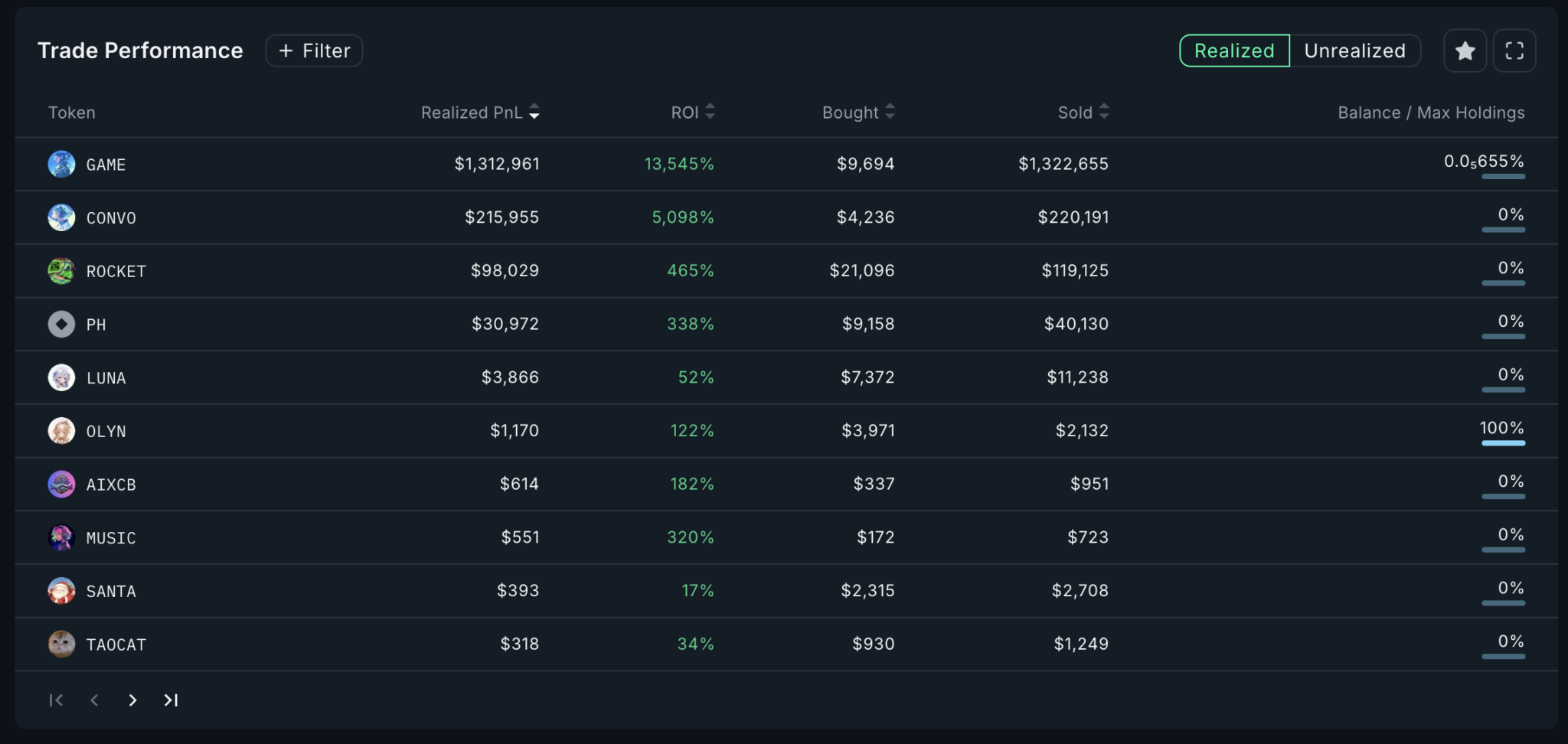
Стоит отметить, что трейдер вложил $9,694 в токен $GAME, а зафиксировал прибыль в размере $1,322,655, добившись ошеломляющей доходности в 13,545%. Он также смог добиться внушительной прибыли на торговле токеном $CONVO: вложив $4,236, он заработал $220,191, достигнув доходности равной 5,098%.

Кит в сети Solana, получивший 5,699% прибыли на торговле $TRUMP

Смарт-кошелек, торгующий на Solana, с адресом H4SSLANdxDNRCW6Qkk9w5EXi1Z27WjqQbsAiEqwFcKDQ, добился впечатляющих показателей PnL. Общий прирост средств составил $10,785,544, а процент успешных сделок равняется 44%.

Этот трейдер входит в топ-100 держателей токенов $TRUMP и $ANON. Кит продолжает активную торговлю в сети Solana, совершив транзакции более чем с 80 токенами на текущий момент.
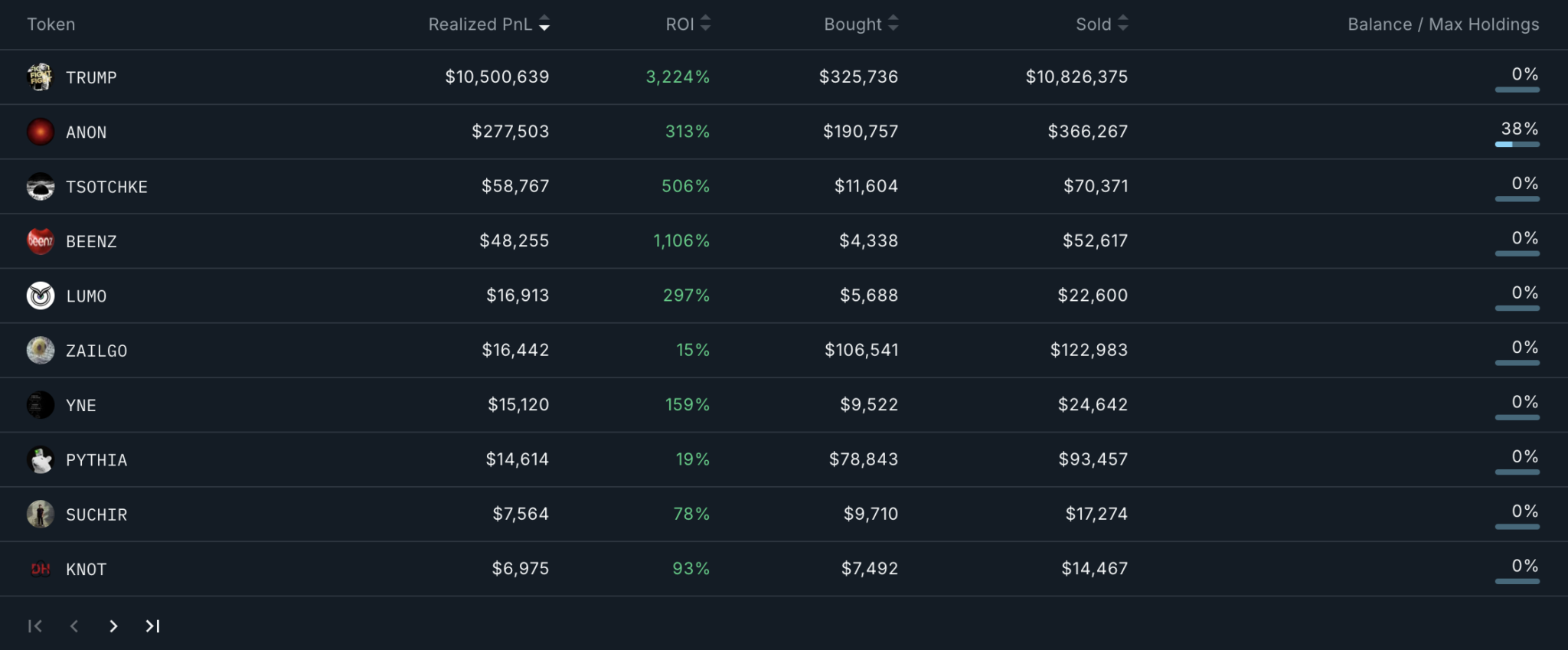
Самая успешная сделка была с токеном $TRUMP, где вложения в размере $325,736 превратились в $10,826,375. Кошелек также имеет нереализованную прибыль в размере $76,000 по мемкоину $ANON и получил хорошую прибыль, торгуя такими токенами, как $BEENZ и $TSOTCHKE.

Трейдер ориентируется на снайпинг новых мемкоинов, стараясь покупать токены незадолго после их запуска, что и дает ему возможность получать такие огромные доходности.

Кит на Solana, специализирующийся на торговле ИИ токенов

Смарт-кошелек, торгующий на Solana, с адресом 77n6X7LtGy5AZprsvjZu1eaekJpxqLeVRZLPJZdBYyg9, специализируется на торговле токенами, связанными с ИИ. На сегодняшний день он совершил транзакции более чем с 184 токенами, используя торгового бота Trojan в мессенджере Telegram.

Общий прирост средств составил $909,727, а процент успешных сделок составляет впечатляющий 61%. Самой успешной сделкой является покупка токена $SHRUB на $9,948; после продажи токенов чистая прибыль составила $138,615. Трейдер также смог заработать более $70,000, торгуя такими токенами, как $DAIGE, $SIMON и $TMC.
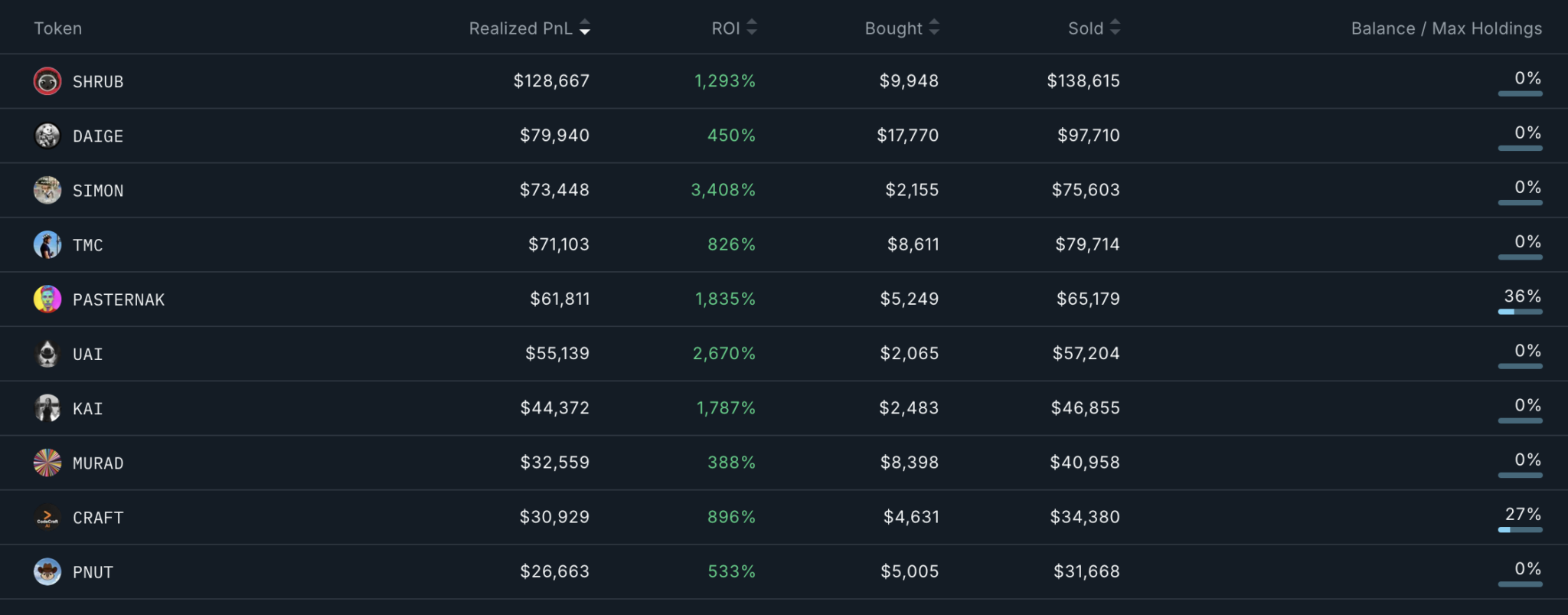
Стоит отметить, что сделка с мемкоином $SIMON принесла смарт-кошельку доходность в 3,408%. Купив токен на сумму $2,155, трейдер зафиксировал чистую прибыль в размере $75,603.


İlgili Okumalar

Dialogue with Yihui Capital, SoundAI Technology, Ling Universe, and Zhongbo Jili: Opportunities and Challenges in the AI Smart Hardware Track

On June 28, 2026, an event titled "New Opportunities in AI Hardware: The Battle for Interactive Entry Points Begins" was held in Beijing. It featured a report from ITJuzi and discussions with experts from SoundAI, Ling Universe, One Reed Capital, and Zhongbo Juli on the opportunities and challenges in China's AI hardware sector. Key report findings highlight the sector's intense activity: 327 out of 431 startups founded post-2023 have secured funding, with 179 investments in H1 2026 alone. The landscape is dominated by embodied intelligent robots, while wearable tech like smart rings and AI glasses shows rapid growth. Geographically, Shenzhen leads, leveraging its superior hardware supply chain, followed by Beijing and Shanghai. The overarching trend is for companies to focus on micro-innovations within specific scenarios rather than reinventing foundational technology. Industry leaders shared several critical insights: 1. **Balancing Innovation & Market Readiness**: Entrepreneurs face the "hammer looking for a nail" dilemma. Success requires balancing technical capability with user acceptance, cost control, and incremental design improvements rather than chasing disruptive innovation. 2. **Competitive Landscape**: The future interactive entry point may not be a single super-device but a mix of universal terminals and specialized, scenario-specific hardware. While large companies have ecosystem advantages, startups can win by deeply targeting vertical markets and specific user groups. 3. **Core Challenges & Business Models**: Key hurdles include deep understanding of AI models and navigating non-transparent hardware supply chains. Viable business models may involve selling hardware at cost and generating revenue through software subscriptions, but this requires tight control over both hardware BOM and model inference costs. 4. **The Road to Commercialization**: The ultimate test is market validation—achieving sales growth and sustainable cash flow. Companies must find the right application scenario, use edge computing effectively, and close the loop from technology to commercial success. 5. **The Future of Interaction**: Proactive, context-aware interaction is the next frontier, though it's currently limited by issues like model hallucinations and environmental perception. The near-term focus should be on identifying target users and creating a coherent experience in specific domains, such as health wearables. In summary, to succeed in the competitive AI hardware arena, companies must strategically choose their niche, build a team with the right geographical advantages (e.g., leveraging Shenzhen's supply chain), and most importantly, execute a flawless commercialization strategy that translates technology into market-accepted products and sustainable business growth.

marsbit29 dk önce

Dialogue with Yihui Capital, SoundAI Technology, Ling Universe, and Zhongbo Jili: Opportunities and Challenges in the AI Smart Hardware Track

marsbit29 dk önce

CryptoQuant Founder: The Cost to Double BTC Has Increased by 20,000 Times, Where Will the $100 Billion Buying Power Come From?

CryptoQuant founder Ki Young Ju analyzes Bitcoin's current capital challenge. He notes that the cryptocurrency market has grown too large for retail-driven momentum alone to generate massive price increases as in past cycles. His calculations show that in 2011, approximately $2.7 million in capital inflow could push BTC's price up by 550x, whereas the current cycle requires an estimated $101 billion in new capital just for a 100% price increase. This shift underscores that sustaining a bull run now depends on attracting large-scale, long-term institutional capital rather than short-term speculative trading. Recent outflows from US spot Bitcoin ETFs, totaling nearly $10 billion since May, highlight the fragility of current demand and challenge the narrative of deep institutional support. While surveys indicate continued institutional interest, these entities prioritize regulated products, risk management, and portfolio integration over speculative gains. For the next significant bull market, Bitcoin must transition to being a core macro asset. The key drivers are no longer just more buyers, but capital allocation from larger, slower-moving entities like wealth advisors, corporate treasuries, banks, and sovereign wealth funds. This new phase pits Bitcoin against other major asset classes like AI for a share of institutional capital, making its growth trajectory dependent on sustained, high-quality inflows from diversified financial balance sheets.

marsbit33 dk önce

CryptoQuant Founder: The Cost to Double BTC Has Increased by 20,000 Times, Where Will the $100 Billion Buying Power Come From?

marsbit33 dk önce

İşlemler

Spot
活动图片