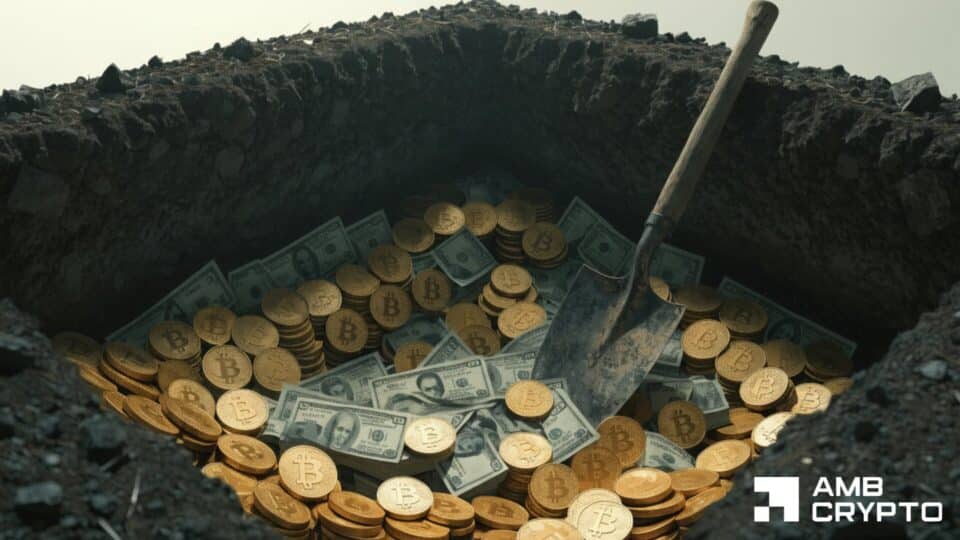
Иркутские энергетики направили в суд более 2 000 исков в отношении «серых» майнеров

investing.ru2025-01-17 tarihinde yayınlandı2025-01-17 tarihinde güncellendi

Администрация «Иркутскэнергосбыта» прокомментировала, что с 1 ноября 2024 года в России вступили в силу положения о майнинге, которые обязали юрлиц и индивидуальных предпринимателей, добывающих криптовалюту, зарегистрироваться в специальном реестре ФНС. Однако часть криптопредпринимателей проигнорировала требования законодательства, и с декабря в Иркутской области нелегальных майнеров начали отключать от сети.

«На 1 января 2025 года есть 1 348 судебных решений, вынесенных в пользу энергетиков, которые уже вступили в силу. Еще более 400 исков находятся на рассмотрении. При этом 104 иска были оплачены до вынесения судебного решения. Мы намерены и дальше продолжать работу в этом направлении», — заявил директор «Иркутскэнергосбыта» Андрей Харитонов.

Согласно вступившим в силу судебным решениям, «серые» майнеры должны вернуть «Иркутскэнергосбыту» более 650 млн рублей.

Ранее правительство России утвердило список регионов и территорий, где с 1 января 2025 года запрещена добыча криптовалют и участие в пулах майнинга. В частности, на территориях Иркутской области, Бурятии и Забайкальского края запрещается майнинг цифровых активов в осенне-зимний отопительный период.

Читайте оригинальную статью на сайте Bits.media

İlgili Okumalar

The Largest Upgrade Since The Merge? How Glamsterdam Will Affect Ethereum and Regular Users?

The upcoming Glamsterdam upgrade, scheduled for late 2026, is considered Ethereum's most significant change since The Merge. It focuses on fundamentally restructuring Ethereum's block production, transaction execution, and gas pricing to enable major scalability improvements while preserving decentralization. The upgrade centers on three key innovations: * **Enshrined PBS (ePBS)**: Moves the Proposer-Builder Separation mechanism into the protocol's core, eliminating reliance on external relays. This reorganizes the block pipeline, extending the time window for processing execution payloads, which is crucial for safely increasing block capacity. * **Block-Level Access Lists (BALs)**: Attaches a "map" to each block, declaring in advance which state data its transactions will access. This enables potential parallel transaction processing and faster node synchronization, breaking a key performance bottleneck. * **Gas Repricing**: Introduces a more accurate resource pricing model by separating computation costs from state storage costs. This discourages uncontrolled state growth by making operations that create permanent data (like new accounts) more accurately reflect their long-term network burden. Together, these changes aim to solve the core challenges of increasing Ethereum's throughput (e.g., raising the Gas Limit) without overburdening node hardware or increasing centralization risks. They prepare the infrastructure for higher capacity, targeting a credible post-upgrade capacity of up to 200 million Gas. For users, the impact will be nuanced: * General transaction fees may become lower and more stable as block space increases. * Simple transfers could see cost reductions, while state-intensive operations (like contract deployment) may become relatively more expensive due to the new gas model. * Gas fee estimations by wallets will become more accurate. * L2 networks could benefit long-term from increased data blob capacity. * Standardized logs for all ETH transfers (EIP-7708) will improve tracking for wallets and exchanges. Ultimately, Glamsterdam represents a foundational shift, not a simple block size increase. It seeks to expand Ethereum's capacity by re-engineering its underlying mechanics, maintaining its commitment to decentralization while enabling significant performance gains.

marsbit3 saat önce

The Largest Upgrade Since The Merge? How Glamsterdam Will Affect Ethereum and Regular Users?

marsbit3 saat önce

İşlemler

Spot
活动图片