一文读懂今晚币安新上项目Solv Protocol

marsbit2025-01-16 tarihinde yayınlandı2025-01-17 tarihinde güncellendi

今晚,Solv Protocol 将强势登场,同时上线币安、Bitget 和 HTX 等一众顶级交易所,再次引发市场的热烈关注。从最初扎根于以太坊 DeFi 生态,以 SFT(半匀质化代币) 为核心创新,到如今深耕比特币质押领域,以 链上 MicroStrategy 的姿态重新定义 BTCFi,Solv Protocol 的每一步都牵动着加密市场的目光。

这个被誉为“链上 MicroStrategy”的明星项目,不仅承载了比特币质押生态的无限想象,也在 DeFi 的浪潮中逐渐奠定了属于自己的行业地位。Solv Protocol 是如何从一个以太坊生态的创新项目,华丽转型为比特币金融化的中枢?它的技术架构和经济模型又为何能够吸引顶级资本和机构青睐?今晚,这个重磅上线的大热门项目究竟有哪些独到之处,将为我们揭开答案。


什么是 Solv Protocol

产品概述:从半匀质化代币到比特币生态的革新者

Solv Protocol 是区块链金融领域的一位探索者,致力于解决资产流动性和质押效率低下的问题。早期,Solv 的核心技术基于 ERC-3525 标准,定义了一种全新的半匀质化代币(Semi-Fungible Token, SFT)。这种创新的代币类型融合了 NFT 和 FT 的特点,能够在提供资产唯一性的同时支持高流动性操作。通过 SFT,Solv Protocol 为链上资产提供了更加灵活的表现形式,让债券、期权和资产支持证券(ABS)等复杂金融工具得以数字化,并大大增强了流动性。

随着 Solv Protocol 的发展,其技术焦点从 SFT 拓展至 比特币质押生态,推出了 Staking Abstraction Layer (SAL) 的概念。这一设计的目标是整合分散的比特币流动性,为跨链应用提供统一、透明的解决方案。通过 SAL,Solv Protocol 不仅连接了链上和链下的 BTC 资产,还开启了比特币质押在 DeFi 领域的更多可能性。

团队:跨领域专业的创新驱动力

Solv Protocol 的核心团队由区块链开发者和金融专家组成,他们在技术创新与市场洞察方面均表现出色:

  • Ryan Chow,创始人兼技术负责人,曾参与多个主流区块链项目的技术开发,擅长智能合约设计与区块链架构优化。
  • Michael Hu,金融专家,主攻经济模型设计和战略规划,具备丰富的投资银行和风险管理经验。
  • 孟岩,联合创始人,曾担任 CSDN 副总裁,值得一提的是,孟岩老师是将“token”翻译为”通证”的国内DeFi先行者。

这种技术与金融背景的融合,使团队能够快速抓住行业痛点并提出针对性解决方案,为 Solv Protocol 的持续创新奠定了基础。

投融资:资本的加持与未来的愿景

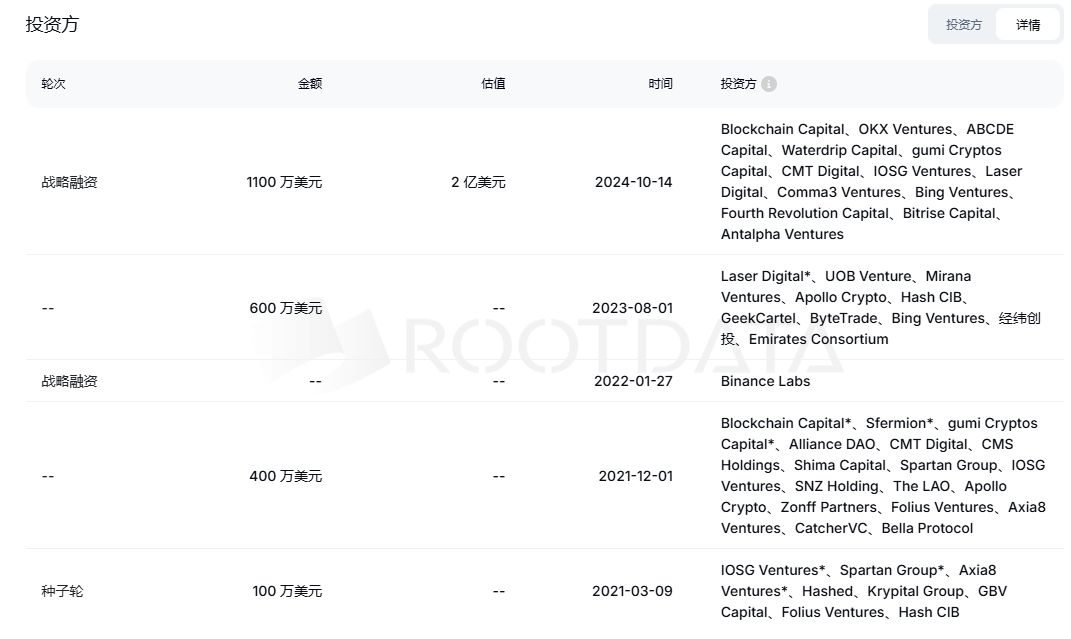
自成立以来,Solv Protocol 已获得顶级资本的多轮投资,总融资金额达到 2200 万美元,

  • 2021年5月8日,宣布完成 200 万美元种子轮融资,由Binance Labs投资;
  • 2021年8月30日,宣布完成 400 万美元种子轮融资,Blockchain Capital、Sfermion 和 Gumi Cryptos Capital 联合领投,DeFi Alliance、Axia 8 Ventures、TheLao、CMSholdings、Apollo Capital、Shima Capital、SNZ Holding、Spartan Group 等参投;
  • 2023 年8月1日,宣布完成 600 万美元种子轮融资,日本银行巨头野村证券旗下投资机构Laser Digital、UOB Venture Management、Mirana Ventures、Emirates Consortium、经纬中国、Bing ventures、Apollo Capital、HashCIB、Geek Cartel、Bytetrade labs等机构投资。
比特币金融化


除了直接的资本支持,Solv Protocol 还与多家行业头部机构达成战略合作,例如 Animoca Brands、Pendle 和 Fireblocks 等,共同推动 DeFi 和 BTCFi 的生态建设。


Solv 的行业定位:BTCFi 的新引擎

在比特币金融化(BTCFi)的浪潮中,Solv Protocol 通过整合分散流动性和打造标准化资产工具,为行业注入了强大的创新动能。其独特的定位不仅在于技术优势,还在于生态系统的深度布局。无论是早期的 SFT 技术还是目前的 SAL 模型,Solv Protocol 始终专注于提升资产流动性与效率,为投资者和协议提供更广阔的选择。

在未来,Solv Protocol 的愿景是成为比特币生态的流动性引擎,通过聚合跨链流动性,推动比特币在 DeFi 领域的进一步繁荣。


SAL 的核心理念

比特币金融化


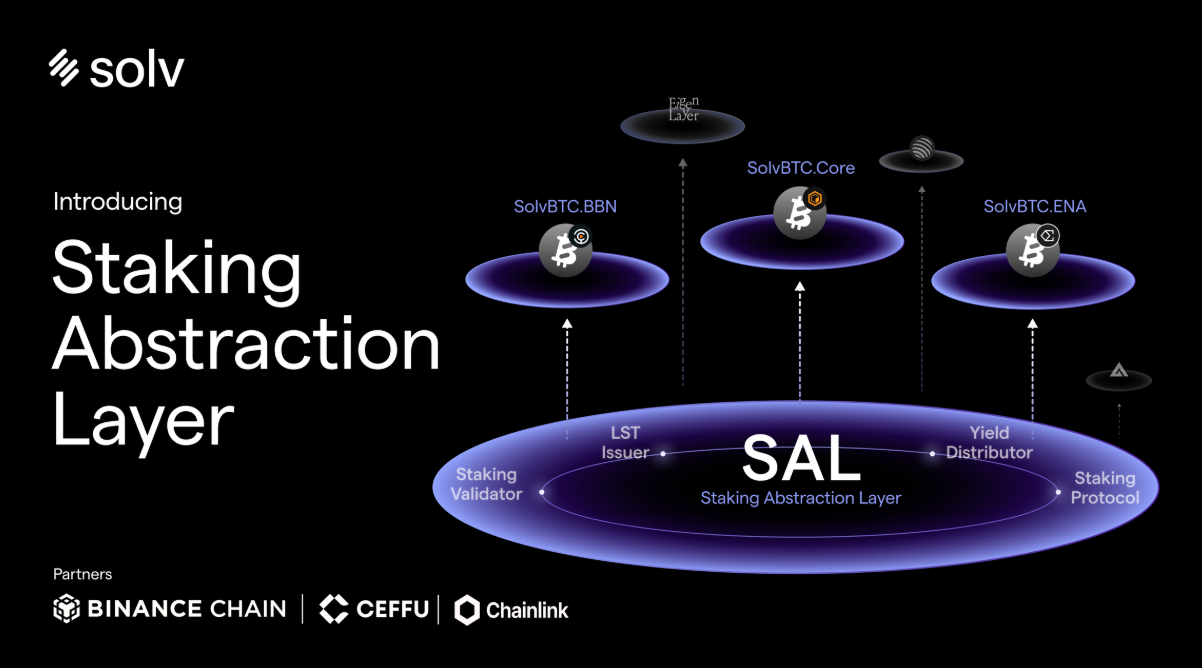
在比特币质押领域,SAL(Staking Abstraction Layer)质押抽象层 的出现,犹如为繁杂的拼图添加了一个关键的边框。它的使命是简化比特币质押的复杂流程,将分散的流动性资源整合到一个透明、高效的平台中。

通俗地说,SAL 就像一个智能化的“质押中枢系统”,将原本复杂、繁琐的比特币质押操作标准化,使用户不再需要在多个协议间来回切换,也无需担心技术上的不便。通过 SAL,开发者、用户和服务商可以轻松协作,为比特币质押的规模化应用铺平道路。


SAL 的运行机制

SAL 的核心价值在于用智能合约技术建立了一个模块化的系统,就像搭积木一样,每个模块负责一个关键任务,最终组成了完整的质押生态。以下是 SAL 的五个核心模块:

  1. 质押参数矩阵 (SPM):SPM 是 SAL 的“大脑”,负责记录和协调所有质押操作的关键参数。它包含了比特币脚本配置、交易参数、流动性质押代币(LST)的发行规则等。想象一下,SPM 就像一份详尽的“操作说明书”,确保每个模块和参与者都能清楚自己的任务,从而实现高效合作。
  2. LST 生成模块:这一模块负责发行和管理流动性质押代币(LST)。用户将比特币质押后,LST 生成模块会在比特币主网和 EVM 链(以太坊兼容链)之间交互,为用户生成等值的 LST。用户可以使用这些 LST 参与 DeFi 应用,同时保留比特币质押的收益。
  3. 交易构建模块:负责设计和优化质押交易。它会根据 SPM 提供的参数,创建符合要求的交易,并广播到比特币主网。这一模块的存在,大大减少了用户的操作复杂性,同时降低了交易成本。
  4. 验证节点:验证节点是 SAL 的“安全检查员”。它们通过比特币主网算法验证每一笔质押交易的合法性,并确保 LST 的发行量与底层比特币资产完全匹配。这一机制有效防止了欺诈行为,也增强了用户对协议的信任。
  5. 收益分发模块:这是 SAL 的“分红中心”,负责将质押产生的收益分配给 LST 持有者。用户可以选择收益直接增加到 LST 的价值中,或通过 DeFi 协议(如 Pendle)兑换为其他资产。


SAL 的生态与应用

SAL 的设计不仅优化了技术流程,还整合了比特币质押生态中的四大关键角色:

  • LST 发行方:负责发行 LST,例如 Solv、Lombard。
  • 质押协议:接收比特币并产生收益,例如 Babylon、CoreDAO。
  • 质押验证者:确保质押流程的透明性,例如 Ceffu、Fireblocks。
  • 收益分配者:负责高效、公平地分配收益,例如 Pendle、Gauntlet。

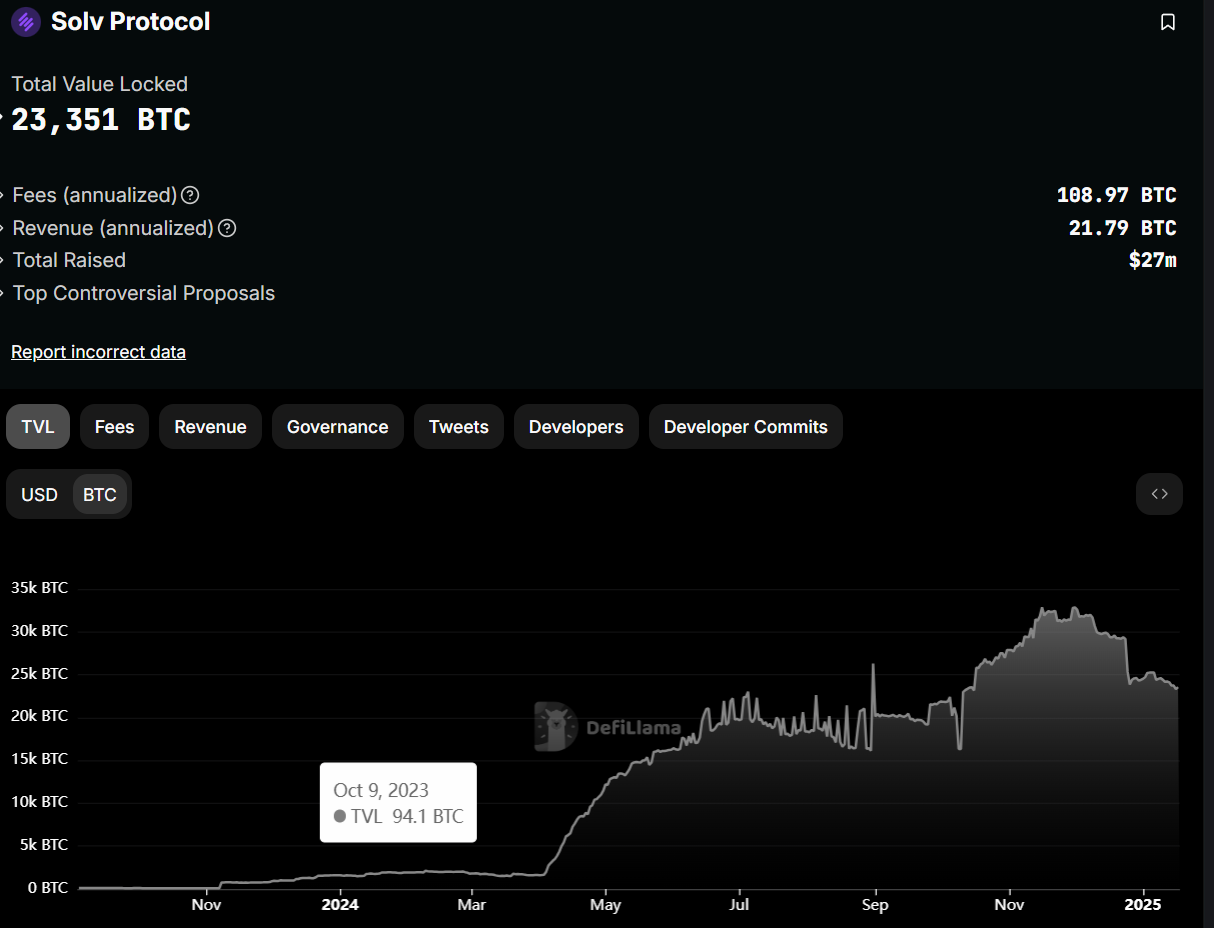
截至发文,SAL 已吸引超过 2 万枚 BTC(约 23 亿美元)参与质押。

比特币金融化


多方共赢的生态方案

SAL 的出现为比特币质押的各方参与者创造了实质性的价值:

  1. 用户:通过统一的界面和标准化流程,大幅降低了操作难度和风险。
  2. 协议开发者:通过 SAL 提供的服务模块,减少了开发成本,加速了质押业务的创新。
  3. LST 发行方:通过 SAL 的验证机制提升用户信任,同时优化了收益分配流程。
  4. 验证服务商:作为 SAL 的重要一环,拓展了业务模式并获得了可观的收入。


散户如何参与 ?

对于普通用户(散户)而言,参与 Solv Protocol 是一个低门槛且灵活的过程,特别是在 SAL(质押抽象层) 推出后,Solv Protocol 已支持多个链和封装比特币的无缝交互,让用户轻松参与比特币质押并获得收益。

1. 存入比特币或封装比特币

用户可以在多个支持的链上参与 Solv Protocol,包括 Merlin、Mantle、Avalanche、BOB 等。以下是具体步骤:

  • 选择存入资产:用户可将主网 BTC 或封装 BTC(如 WBTC、BTCB 等)存入 Solv Protocol。
  • 铸造 SolvBTC:按照 1:1 的比例,用户的 BTC 资产会被转换为 SolvBTC,这是一种在 Solv Protocol 上流通的比特币代币。
  • 跨链支持:通过 SAL 的抽象设计,用户还可以在 EVM 兼容链、BNB Chain 或 CeDeFi 场景中存入 BTC,享受流动性收益。


2. 利用 SolvBTC 进一步参与 LST 铸造

存入的 SolvBTC 不仅能维持用户对比特币资产的敞口,还能进一步铸造成其他形式的 LST(流动性质押代币)。这些 LST 允许用户参与更多的 DeFi 应用,比如质押、流动性挖矿和杠杆收益策略。


3. 多元化收益途径

用户通过 Solv Protocol 质押 BTC 或 SolvBTC,可以获得以下几类收益:

  • Staking 收益:Solv Protocol 会将用户的 BTC 存入 Merlin Chain、Stacks、Bsquare 等 BTC 第二层网络中,以获取质押奖励。
  • Restaking 收益:用户的 BTC 也可以被存入 Babylon 等协议,通过二次质押机制赚取额外的收益。
  • 流动性收益:Solv Protocol 会将部分 BTC 投入到 Arbitrum 和 BNB Chain 的 DeFi 项目中,用户可从这些项目中获得流动性提供的收益。


4. 分散风险与提升收益

Solv Protocol 的一大亮点是其与多个项目的合作:

  • 多协议支持:Solv 将用户的质押资产分配到多个优质协议,既降低了单一项目风险,又提高了整体收益率。
  • 实时收益分配:用户的收益通过 Solv Protocol 的收益分发模块自动分配,确保透明、公平。


Solv Protocol 的业务模型:双向赋能的经济体系

Solv Protocol 的经济模型围绕两类核心角色展开:BTC 和 LST 质押者 以及 与 Solv 合作的项目

1. BTC 和 LST 质押者

  • 散户用户
  • 用户可以通过 Solv Protocol 存入持有的 BTC 或封装 BTC(如 WBTC 和 BTCB),从而铸造 SolvBTC。
  • 存入后,用户的 BTC 资产既可以保持原有价值敞口,也能够通过参与 LST 铸造或质押,获得额外收益。
  • Solv Protocol 支持主网 BTC 质押(100 枚 BTC 起)以及多链封装 BTC 的小额质押,为不同规模的投资者提供灵活选择。
  • 高级用户
  • 一些持有大量 BTC 的高级用户(如机构或大额散户)可通过直接质押进入协议,获取更高的回报,同时支持 Solv 的流动性扩展。


2. 与 Solv 合作的项目

Solv Protocol 会根据合作项目的不同需求,将用户质押的 BTC 或封装 BTC 存入这些项目以生成收益。具体来说:

  • BTC-L2 收益:存入 Merlin Chain、Stacks 等 BTC 二层网络,获取 staking 收益。
  • Restaking 收益:存入 Babylon 等协议,通过二次质押机制赚取更高收益。
  • 流动性收益:将 BTC 投入 Arbitrum、BNB Chain 等 DeFi 项目,为合作协议增强流动性并提升安全性。

这种合作模式不仅能够为用户提供稳定而多样化的收益来源,还增强了 Solv Protocol 在生态中的关键地位,为其合作伙伴创造更多的流动性支持。


用户的最终获益

通过参与 Solv Protocol,散户不仅能维持对比特币资产的长期价值敞口,还能享受到如下好处:

  • 收益优化:质押收益、流动性收益、二次质押收益等多渠道收入叠加。
  • 风险分散:通过 SAL 技术,BTC 被分散质押至多个优质协议,显著降低了单一协议的系统性风险。
  • 操作简便:无需深入理解每个质押协议,用户只需存入 BTC 或封装 BTC,便可轻松参与。

通过以上机制,Solv Protocol 不仅成为机构和大额投资者的选择,也为散户提供了一个简便、高效的 BTCFi 入口。散户用户在享受收益的同时,也参与了比特币的流动性解锁,为 BTCFi 生态的发展贡献力量。Solv Protocol 的经济模型和业务体系,正在让 BTCFi 的潜力逐步惠及更多普通投资者。


经济模型

Solv Protocol 作为比特币质押领域的先行者,通过释放比特币资产的流动性和效用,打造了一个围绕比特币的创新金融生态系统。在这一生态中,SOLV 代币扮演着核心角色,不仅赋能协议运转,还为持有者提供多维度的价值捕获途径。

SOLV 是 Solv Protocol 的原生代币,用于驱动协议生态的多种功能,其主要用途包括:

  1. 治理权持有 SOLV 的用户可以参与协议的治理投票,对关键决策(如参数调整、收益分配规则等)发表意见。
  2. 质押收益质押抽象层 (SAL) 上质押 SOLV,持有者可以获得协议收益,包括协议排放和额外奖励。
  3. 费用折扣持有 SOLV 代币的用户在使用协议服务时可享受费用优惠,例如 SolvBTC 的赎回费减免。

此外,Solv Protocol 的经济模型建立在以下核心组件之上:

  • SolvBTC一种与比特币 1:1 挂钩的代币,支持安全、高效的跨链转账和 DeFi 参与。
  • SolvBTC.LSTs(流动性质押 BTC)一种流动性质押代币,让比特币持有者在保持资产流动性的同时产生收益。
  • 质押抽象层 (SAL)通过抽象化质押流程,为用户提供了统一界面,使其能够跨多个区块链高效地产生收益。


代币分配与市场流通

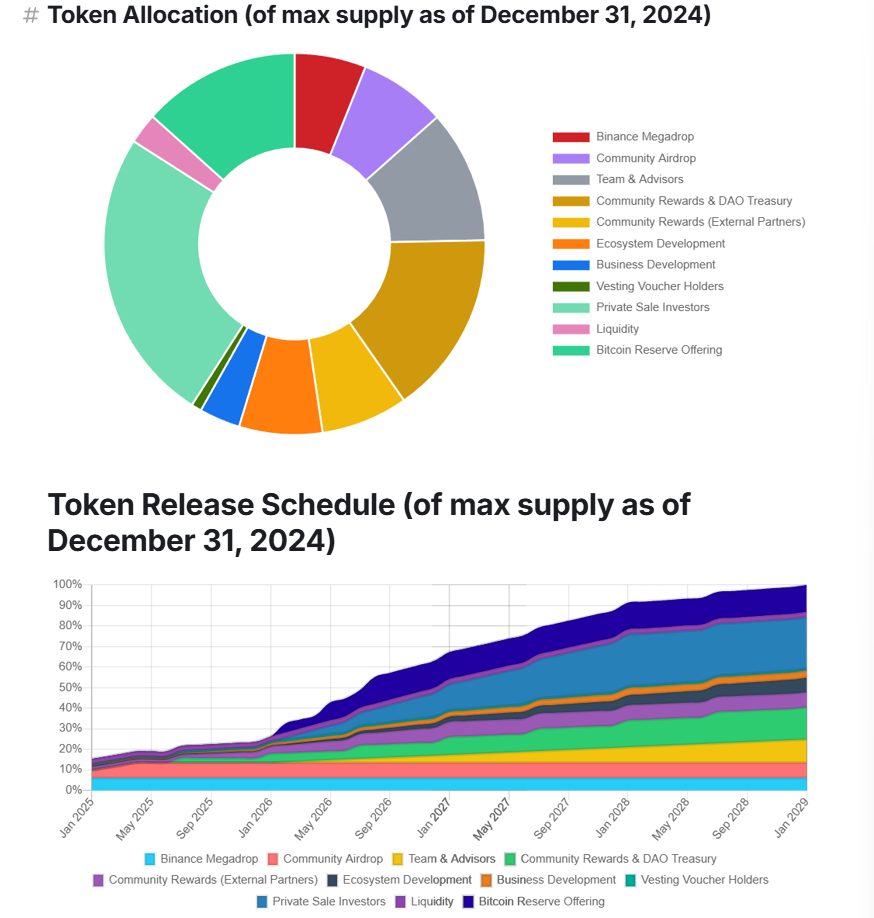
截至 2024 年 12 月 31 日,SOLV 的最大代币供应量为 9,660,000,000,总创世供应量为 8,400,000,000。具体分配如下:

  • 币安 Megadrop:分配 588,000,000 枚,占创世供应量的 7.00%
  • 初始流通量:在币安上市时,流通量为 1,482,600,000 枚,占创世供应量的 17.65%,占最大供应量的 15.35%


比特币金融化


价格预测

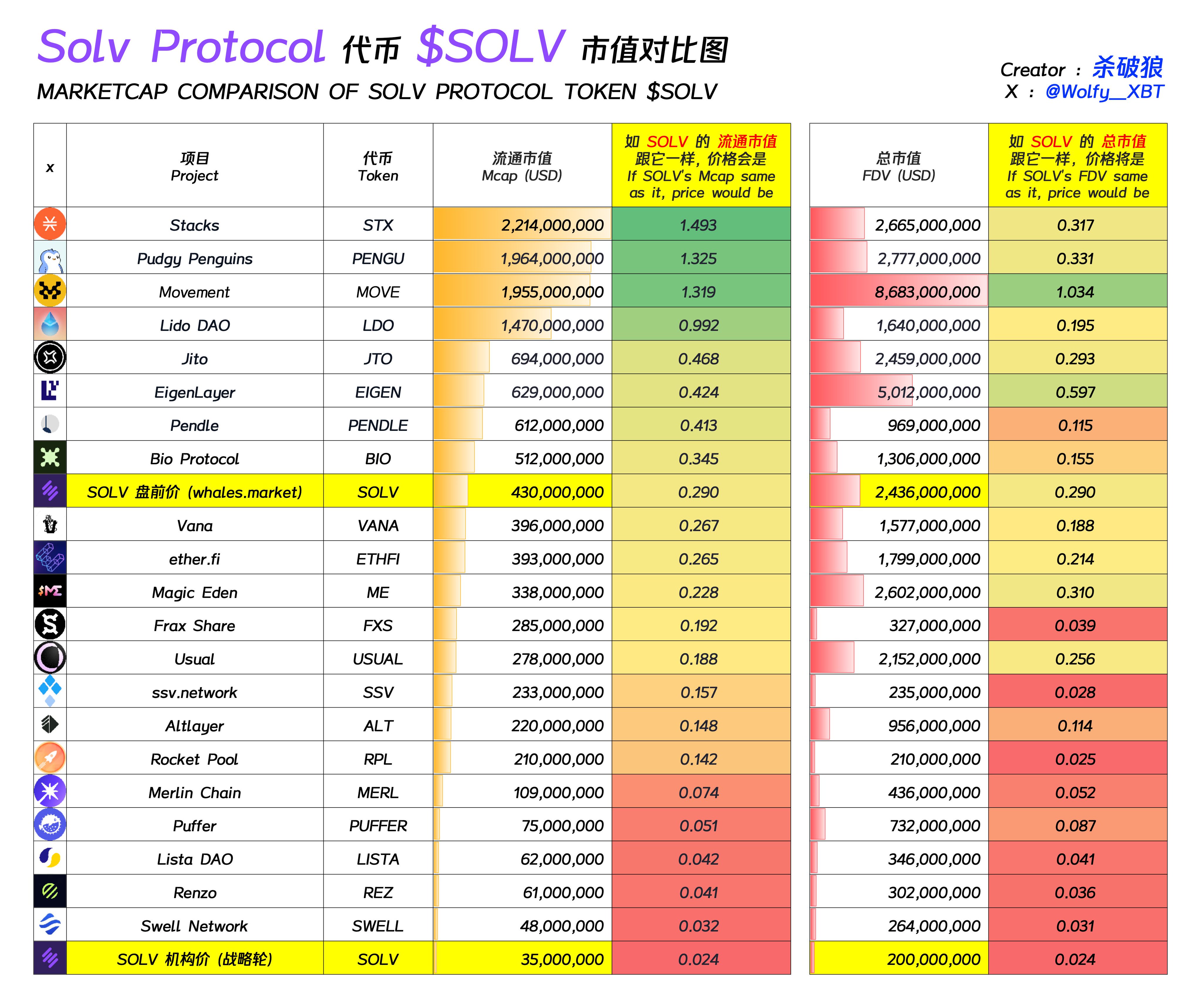
截至发文,SOLV 在 Whalesmarket 盘前交易价格为 0.24$,对应流通市值为 3.5 亿美元,对应 FDV 为 23 亿美元。

下面为SOLV对应不同项目的价格(加密 KOL 杀破狼@Wolfy_XBT

比特币金融化


总结:Solv Protocol 的未来潜力与行业意义

在去中心化金融(DeFi)的蓬勃发展中,比特币质押领域因其规模庞大且未被充分开发的流动性而备受关注。Solv Protocol 凭借其创新的质押抽象层(SAL)和流动性质押代币(SolvBTC.LSTs),已然在这一赛道中占据了独特的位置。

技术创新:重塑比特币质押生态

通过 SAL 的标准化设计,Solv Protocol 将原本复杂且分散的比特币质押流程简化为一站式的统一解决方案。无论是为比特币持有者提供便捷的收益渠道,还是为开发者和质押协议降低进入门槛,SAL 都展现出极大的灵活性和实用性。其创新性不仅仅在于技术突破,更在于为 BTCFi 生态注入了结构化的增长动力。

生态扩展:推动 BTC 流动性聚合

随着 Solv Protocol 不断吸引更多的协议和服务商加入其生态网络(如 Babylon、CoreDAO 和 Pendle 等),比特币质押的应用场景正在逐步拓展。从流动性增强到收益分配,Solv Protocol 正在将比特币的金融化潜力最大化。这种生态间的协同效应,不仅巩固了 Solv 在 BTCFi 领域的地位,也为整个去中心化金融体系带来了更多活力。

经济模型:从效用到治理的价值捕获

SOLV 代币通过其治理、质押和费用折扣功能,建立了多层次的价值捕获体系。无论是持有者参与协议治理,还是通过质押抽象层获得协议收益,SOLV 都为用户提供了持续的经济激励。而回购销毁与动态通胀机制的结合,则为代币的长期价值创造了坚实保障。

挑战与前景:在竞争中持续进化

尽管 Solv Protocol 在比特币质押领域取得了显著进展,但其前方仍有挑战:

  • 技术可靠性:智能合约和跨链技术的稳定性仍需长期检验。
  • 市场竞争:其他 BTCFi 项目(如 Babylon 和 CoreDAO)的快速崛起可能加剧竞争。
  • 宏观环境:比特币市场的波动性和全球监管政策的变动,都可能对协议的发展产生外部影响。

然而,随着去中心化金融叙事的深化,比特币作为全球最大的数字资产,其质押和流动性释放的潜力仍然巨大。如果 Solv Protocol 能够持续优化其技术与经济模型,同时稳步扩展其生态影响力,它有望成为 BTCFi 领域的基础设施,并为整个区块链行业创造更多机会。

展望:成为比特币质押的核心驱动者

Solv Protocol 的使命不仅仅是释放比特币的流动性价值,更是通过技术和生态的协同发展,推动去中心化金融迈向新的高度。在未来,随着 SAL 技术的不断完善和比特币质押生态的壮大,Solv Protocol 或将重塑比特币的金融化进程,为整个区块链行业开启新的篇章。


İlgili Okumalar

Has the 'Digital Gold' Narrative for BTC Failed?

**Title: Has the "Digital Gold" Narrative for Bitcoin Failed?** The article argues that Bitcoin's "digital gold" narrative remains valid despite a recent sharp price decline (from a peak near $126k in Oct 2025 to briefly under $61k in Feb 2026). It presents a long-term investment framework based on three core points: **1. Viewing Bitcoin as an Asset:** Bitcoin is presented as a superior potential store of value compared to gold. Key arguments are its absolute scarcity (21 million cap), superior portability, and transparent auditability via its public ledger. While acknowledging its current use in early, volatile stages (~3-4% global adoption), the author draws parallels to the early, disruptive phases of the internet and e-commerce. **2. Understanding the Recent Downturn:** The current ~50% correction is framed as a predictable, consensus-driven cycle following its post-halving peak (the 2024 halving preceded the Oct 2025 high). A crucial factor is a historic "changing of hands": the influx of new institutional buyers via ETFs allowed early, low-cost holders (miners, OG believers) to take profits. The author notes that while severe, Bitcoin's historical drawdowns (e.g., 93% in 2011, 77% in 2021-22) have been progressively smaller, suggesting maturing holder structure and decreasing volatility over time. **3. The Long-Term Perspective:** The long-term thesis hinges on Bitcoin capturing a portion of gold's market value. With Bitcoin's market cap at ~$1.4 trillion (at $70k) versus gold's ~$20 trillion, significant upside potential exists if the "digital gold" narrative is partially realized. However, the author strongly cautions that short-term risks remain, the bottom is unpredictable, and high volatility is inherent. The real risk is not Bitcoin failing but poor personal position management (over-leverage, wrong capital) and a lack of deep understanding, which can force investors out during severe downturns. The conclusion uses Amazon's 95% crash post-2000 dot-com bubble and subsequent 42x recovery as an analogy. The ultimate question is not if Bitcoin's price will rise, but if an investor's strategy and conviction can withstand the volatility to see the long-term play out. The recent divergence (gold up, Bitcoin down) is posed not as a narrative failure, but as potential evidence of this ongoing, painful transition from a speculative asset to a mainstream allocation.

marsbit51 dk önce

Has the 'Digital Gold' Narrative for BTC Failed?

marsbit51 dk önce

Has BTC's 'Digital Gold' Narrative Failed?

The article discusses Bitcoin's "digital gold" narrative, its recent price drop, and long-term outlook through the perspective of "Jason". It argues the narrative is not a failure but that Bitcoin represents a superior, new asset class due to its fixed supply (21 million), portability, and auditability. The piece compares its current ~3-4% global adoption rate to early internet/e-commerce, suggesting significant growth potential. Regarding the 2025-2026 price decline (from ~$126k to briefly under $61k), the author views it as a predictable, consensus-driven sell-off within Bitcoin's ~4-year cycle post-halving, exacerbated by a major "handover" from early, low-cost holders to new institutional buyers via ETFs. A key observation is that historical peak-to-trough drawdowns have lessened over time (e.g., 93% in 2011 to ~50% in 2026), indicating maturing volatility as holder structure changes. For the long term, the author uses a simple framework: Bitcoin's total market cap (~$1.4T at $70k) is only about 7% of gold's (~$20T). Even capturing 30-50% of gold's value would imply substantial upside. However, the article strongly cautions against viewing this as investment advice, emphasizing extreme volatility and the critical importance of risk management, position sizing, and deep fundamental understanding to survive severe drawdowns. It concludes by drawing a parallel to Amazon's 95% crash in 2000 and subsequent 42x recovery, stressing that the key is surviving market cycles to realize long-term potential.

链捕手1 saat önce

Has BTC's 'Digital Gold' Narrative Failed?

链捕手1 saat önce

From Code to Cognition: A Ten-Thousand-Word Guide to the Evolution of the Robot Brain

"From Code to Cognition: The Evolution of Robot Brains" The journey of robotic intelligence has shifted dramatically from manually coded systems to AI-driven brains. For decades, robots relied on layered software stacks—perception, state estimation, planning, control—each handcrafted. While predictable, they lacked adaptability. The 2010s saw deep learning revolutionize perception (e.g., object detection) and control (via reinforcement learning), but learned skills remained narrow. The arrival of Large Language Models (LLMs) marked a turning point. LLMs acted as high-level planners, interpreting natural language instructions and generating sequences of actions for traditional robotic systems to execute. However, true integration came with Visual-Language-Action (VLA) models, which fused vision, language, and motion prediction into a single network. Pioneered by models like RT-2 and open-source projects like OpenVLA, VLAs enable robots to reason and act directly from visual input and commands. The most advanced humanoid robots now employ a "dual-brain" architecture: a slow-thinking, large VLA (System 2) for reasoning and planning, and a fast-reacting, small network (System 1) for high-frequency motion control, sometimes with an even lower-level System 0 for balance. This split balances cognition with the physics of real-time movement. Computation is split between onboard hardware (e.g., NVIDIA Jetson) for safety-critical control loops and cloud/edge servers for non-critical tasks like learning and interfaces. A crucial driver is the open-source ecosystem—models like GR00T and OpenVLA allow startups to build upon pre-trained brains and fine-tune them with their own data, accelerating development. Despite progress, current systems struggle with recovery from errors, sample inefficiency, and long-horizon tasks. This has spurred the rise of **World Models**—neural networks that predict the consequences of actions. By simulating possible futures before acting (like NVIDIA Cosmos or Meta V-JEPA), robots can plan, recover, and generalize better. This represents the next frontier: shifting intelligence from learned reactions to an internal model of physics and cause-and-effect. The field is rapidly evolving. While not yet at its "ChatGPT moment," the convergence of cheaper hardware, scalable simulation, and world models points toward robots that are increasingly capable, adaptive, and useful. The question is shifting from "what can robots do?" to "what *should* they do?"

marsbit1 saat önce

From Code to Cognition: A Ten-Thousand-Word Guide to the Evolution of the Robot Brain

marsbit1 saat önce

AI Bubble Is Bursting

The AI Bubble is Bursting: A Necessary Purge on the Path to Ubiquitous Intelligence Market volatility has reignited debates about an AI bubble, with figures like Ray Dalio pointing to high valuations. However, this parallels the dot-com bubble, which, despite its crash, laid the physical infrastructure for today's internet era. The current AI investment frenzy, with tech giants planning trillions in infrastructure spending far outstripping current AI application revenues, appears similarly imbalanced. This 'bubble' is seen as an inevitable phase for a disruptive technology, paying the "innovation tax." Critically, AI inference costs have plummeted over 99.7% since 2023, making intelligence nearly free at the margin. This hasn't reduced spending but has instead unlocked massive new demand, as seen in enterprise AI cloud expenditure tripling. This follows the Jevons Paradox: efficiency gains lead to greater total consumption. The market is now entering a cleansing phase, weeding out speculative ventures lacking real moats. The deeper shift is a move from capital expenditure (CapEx) on hardware to value creation in operational expenditure (OpEx) through AI applications that solve real industry problems. While infrastructure valuations are high, rapid earnings growth from widespread AI adoption across sectors—from manufacturing and finance to law and healthcare—may digest these valuations over time. Ultimately, this creative destruction will leave behind robust infrastructure and optimized models, cheaply powering an AI-augmented future for all industries, much as the internet became indispensable after its own bubble burst. The core productive potential remains undiminished.

链捕手1 saat önce

AI Bubble Is Bursting

链捕手1 saat önce

İşlemler

Spot
Futures

Popüler Makaleler

SOLV Nasıl Satın Alınır

HTX.com’a hoş geldiniz! Solv Protocol (SOLV) satın alma işlemlerini basit ve kullanışlı bir hâle getirdik. Adım adım açıkladığımız rehberimizi takip ederek kripto yolculuğunuza başlayın. 1. Adım: HTX Hesabınızı OluşturunHTX'te ücretsiz bir hesap açmak için e-posta adresinizi veya telefon numaranızı kullanın. Sorunsuzca kaydolun ve tüm özelliklerin kilidini açın. Hesabımı Aç2. Adım: Kripto Satın Al Bölümüne Gidin ve Ödeme Yönteminizi SeçinKredi/Banka Kartı: Visa veya Mastercard'ınızı kullanarak anında Solv Protocol (SOLV) satın alın.Bakiye: Sorunsuz bir şekilde işlem yapmak için HTX hesap bakiyenizdeki fonları kullanın.Üçüncü Taraflar: Kullanımı kolaylaştırmak için Google Pay ve Apple Pay gibi popüler ödeme yöntemlerini ekledik.P2P: HTX'teki diğer kullanıcılarla doğrudan işlem yapın.Borsa Dışı (OTC): Yatırımcılar için kişiye özel hizmetler ve rekabetçi döviz kurları sunuyoruz.3. Adım: Solv Protocol (SOLV) Varlıklarınızı SaklayınSolv Protocol (SOLV) satın aldıktan sonra HTX hesabınızda saklayın. Alternatif olarak, blok zinciri transferi yoluyla başka bir yere gönderebilir veya diğer kripto para birimlerini takas etmek için kullanabilirsiniz.4. Adım: Solv Protocol (SOLV) Varlıklarınızla İşlem YapınHTX'in spot piyasasında Solv Protocol (SOLV) ile kolayca işlemler yapın.Hesabınıza erişin, işlem çiftinizi seçin, işlemlerinizi gerçekleştirin ve gerçek zamanlı olarak izleyin. Hem yeni başlayanlar hem de deneyimli yatırımcılar için kullanıcı dostu bir deneyim sunuyoruz.

80 Toplam GörüntülenmeYayınlanma 2025.01.17Güncellenme 2026.06.02

SOLV Nasıl Satın Alınır

Tartışmalar

HTX Topluluğuna hoş geldiniz. Burada, en son platform gelişmeleri hakkında bilgi sahibi olabilir ve profesyonel piyasa görüşlerine erişebilirsiniz. Kullanıcıların SOLV (SOLV) fiyatı hakkındaki görüşleri aşağıda sunulmaktadır.

活动图片