SHIB 达到 102 万亿级别 这意味着什么

金色财经2025-01-06 tarihinde yayınlandı2025-01-06 tarihinde güncellendi

原文来源公众号:陈摆烂不摆烂

get?code=ZTgzNmIyNWY2YjJmYmVlMDZjZDQxMmE5ZjM5OGExYjQsMTczNjE0NzE4ODU3MQ==

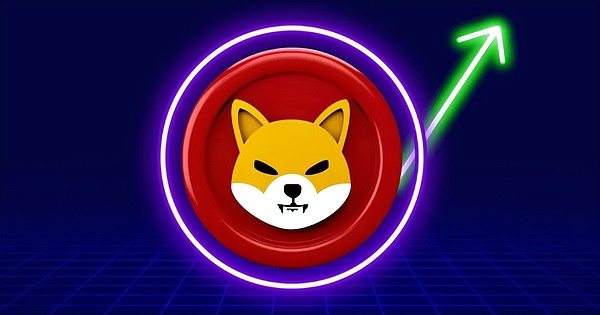
柴犬 (SHIB) 是一种领先的以狗为主题的加密货币,它在 2025 年开局强劲。SHIB 今年开盘价为 0.00002 美元,稳步攀升,今天达到 0.00002425 美元的高点。这标志着该资产可能连续第三天上涨,增强了投资者的乐观情绪。

随着新年的到来,更广泛的加密货币市场也出现了显著的改善。随着许多数字资产价格上涨,投资者重新燃起的兴趣似乎正在推动整个行业的增长。

包括Shiba Inu在内的山寨币表现强劲。鉴于其波动性比比特币更高,山寨币通常具有更大的短期收益机会,从而推动了当前的趋势。

从历史上看,第一季度是数字资产的有利时期,这可以解释 2025 年初观察到的积极情绪。

截至本文撰写时,Shiba Inu 的交易价格为 0.00002425 美元,过去 24 小时内上涨 2%,每周上涨 9%。此外,SHIB 的 24 小时交易量已超过 5.5 亿美元,凸显了人们对该代币的兴趣日益浓厚。

SHIB 达到 102 万亿里程碑:下一步是什么?

Shiba Inu 最近的上涨使其进入了一个关键的交易区间,历史上,这一区间的交易活动水平相当高。根据IntoTheBlock 的数据,在 0.000022 美元至 0.000024 美元的价格区间内,约有 102.57 万亿 SHIB 代币被收购。这一区间涉及 80,900 个地址,平均收购价格为 0.000023 美元。

目前,Shiba Inu 的交易价格略高于该区间,为 0.00002425 美元,它已经克服了这一温和的阻力,但面临下一个重要阻力区,即 0.000024 美元至 0.00003 美元之间。在这个范围内,207,630 个地址持有超过 70 万亿 SHIB 代币,这表明进一步上涨可能面临挑战。
get?code=ZTRlMGIwMTQwZDJmY2MyYmQ0OGYwZGE3NzM1YjFmYmYsMTczNjE0NzE4ODU3MQ==

下跌时的支撑位

如果价格回调,Shiba Inu在 0.000019 美元至 0.000022 美元之间有强劲支撑。数据显示,此范围内的 47,250 个地址持有约 28.77 万亿 SHIB 代币,这表明如果抛售压力增加,该资产的基础将十分稳固。

2025 年初加密货币市场的整体实力为 Shiba Inu 等资产提供了有利的环境。虽然 SHIB 目前的走势看似积极,但其保持势头的能力将取决于它如何驾驭阻力区并维持投资者的兴趣。

Trend Kriptolar

İlgili Okumalar

Ethereum's Next Decade in the Eyes of Vitalik

"Lean Ethereum" Long-Term Roadmap Unveiled by Vitalik Buterin On July 5, 2026, Vitalik Buterin published the "Lean Ethereum" roadmap, positioning it as Ethereum's third major evolution following the Merge. This multi-year, multi-phase upgrade aims to fundamentally transform Ethereum's core protocol through staged network upgrades extending to 2029. Key goals include achieving 1 gigagas per second L1 throughput (a massive increase from the current ~32 TPS), near-instant finality, and quantum-resistant cryptography. The plan involves transitioning Ethereum's security model from full transaction re-execution by all nodes to native verification via recursive STARK proofs. A major proposed change is replacing the EVM with a proof-friendly architecture like RISC-V or leanISA, though this remains a point of contention, especially with L2s like Arbitrum favoring alternatives like WASM. Other planned upgrades include a restructured state model with a large, cheap "warehouse" storage layer to drastically reduce fees for migrated applications, multi-dimensional gas pricing, and a new focus on making privacy a first-class, native protocol feature. While the roadmap significantly raises Ethereum's long-term technical ceiling, analysts note it does not directly address ETH's mid-term token economics or value capture. The plan's multi-year timeline means near-term price impact will likely depend on observable progress milestones, such as the successful deployment of the upcoming Glamsterdam gas limit increase, growth in L2 activity and blob usage, and trends in L1 fee revenue and ETH burn.

链捕手6 dk önce

Ethereum's Next Decade in the Eyes of Vitalik

链捕手6 dk önce

In Just 11 Days, Claude Rewrote Millions of Lines of Code, an Epic AI Engineering Feat Sparks Fury

In just 11 days, Bun's founder Jarred Sumner used Anthropic's Claude AI models to rewrite its million lines of code from Zig to Rust. This move sparked significant controversy, particularly from Zig's creator, Andrew Kelley, who publicly criticized Sumner's engineering practices and the decision to use AI for such a massive rewrite. Bun, a high-performance JavaScript/TypeScript runtime and rival to Node.js, was originally written in Zig. After Anthropic acquired Bun, the team encountered persistent stability and memory safety bugs in the Zig codebase. These issues, combined with Zig's strict policy against LLM-generated code, led to the decision to rewrite in Rust. The rewrite was executed using Claude AI tools at an estimated API cost of $165,000, dramatically reducing the expected time and financial cost. Andrew Kelley's response was scathing. He blamed the original bugs on poor engineering habits, calling Bun's Zig code a collection of "hacks on top of hacks." He expressed relief that Bun was no longer associated with Zig, fearing it would misrepresent the language and attract low-quality, AI-generated contributions. The tech community is divided; some view Kelley's critique as unprofessional, while others see it as a defense of engineering integrity. A major concern about the AI-driven rewrite is the resulting code quality. The translation from Zig left approximately 27,000 lines of unsafe Rust code, raising fears about long-term maintainability and technical debt. The debate centers on whether this project is a milestone in AI-assisted development or a future maintenance nightmare.

marsbit1 saat önce

In Just 11 Days, Claude Rewrote Millions of Lines of Code, an Epic AI Engineering Feat Sparks Fury

marsbit1 saat önce

From Auto Finance to Bitcoin to AI Engines: An Analysis of Cango's 'What Not to Do' Strategy

From Auto Finance to Bitcoin and Now AI: Cango's "What Not to Do" Strategy Cango, a Chinese auto finance platform that went public on the NYSE in 2018, is undergoing its third major transformation. After selling its entire auto business in 2024, it pivoted to become a large-scale Bitcoin miner, acquiring 50 exahash of mining rigs from Bitmain. However, its true goal was never Bitcoin, but owning and controlling energy infrastructure. Now, Cango is pivoting again. While most listed Bitcoin miners are leasing power to giant hyperscalers for AI training clusters, Cango is taking the opposite path. It has launched an AI inference subsidiary called EcoHash, focusing not on training but on distributed inference. The company's strategy hinges on the insight that over 70% of mining industry power is controlled by small, independent sites (10-50 MW), which are too small for hyperscalers but ideal for low-latency AI inference. Cango aims to partner with these small operators, providing the AI technology, customers, and financing through its EcoLink software layer, which can distribute workloads across sites for reliability. Cango maintains a hybrid model, running roughly 31.7 EH/s of Bitcoin mining for cash flow while aggressively cleaning its balance sheet—slashing long-term debt by 94.5% to $30.6 million and raising $75 million for its AI venture. Its first AI deployment will be at a 50 MW site in Georgia. The strategy faces skepticism, given the high costs of converting mining sites and the potential for an AI bubble. However, Cango's leadership believes discipline around "what not to do"—avoiding direct competition with hyperscalers in training—positions it to capture the long-tail demand for distributed AI inference power.

Foresight News1 saat önce

From Auto Finance to Bitcoin to AI Engines: An Analysis of Cango's 'What Not to Do' Strategy

Foresight News1 saat önce

Strategy's Bitcoin Sales Cap Far Exceeds $1.25 Billion: A Detail the Market Overlooked

The article discusses how MicroStrategy's potential Bitcoin sales go far beyond the announced $1.25 billion "reserve-building capacity." It clarifies a key distinction in the company's "BTC Monetization Program": selling Bitcoin to *build* a new dollar reserve (the $1.25B cap) versus selling to *replenish* the existing USD Reserve after it's used for expenses like preferred share dividends. The recent $216M BTC sale for dividend payments was a "replenishment," leaving the headline $1.25B building quota untouched. The plan actually outlines three potential funding pools from BTC sales: 1) Building the reserve ($1.25B cap), 2) Covering preferred share/ debt costs (no specified cap), and 3) Funding buyback programs (up to $20B). This means the structured sales potential exceeds $30 billion, not including uncapped replenishment sales. The piece argues this marks MicroStrategy's shift from a passive "buy-and-hold" Bitcoin proxy to an actively managed entity using BTC as a balance-sheet tool to manage its complex capital structure (common stock, preferred shares, debt, reserve). This creates new dynamics and potential conflicts, as actions benefiting one part (e.g., selling BTC to pay dividends) may pressure another (e.g., undermining the "never sell" narrative). Investors must now parse the company's specific terminology ("build" vs. "replenish") to understand the true scope of future BTC sales, which is significantly larger than the market initially perceived.

marsbit1 saat önce

Strategy's Bitcoin Sales Cap Far Exceeds $1.25 Billion: A Detail the Market Overlooked

marsbit1 saat önce

Goldman Sachs Report Deconstructs the Competitive Landscape of China's AI Large Models: Who Will Be the Long-Term Winner?

Goldman Sachs analyzes China's AI large language model (LLM) landscape, identifying key players and a strategic shift towards efficiency and global expansion. The report highlights that Chinese open-source/open-weight models are closing the performance gap with top global proprietary models at significantly lower cost, driven by architectural innovations like MoE. This enables a "two-tier" market: a high-end segment (e.g., GLM5.2, Qwen3.7 Max) with pricing at ~$1 per million tokens, and a low-end, price-sensitive global segment. Open-source strategies aid adoption but limit monetization, as deployments via third-party platforms (e.g., AWS Bedrock, Alibaba Cloud) may not generate direct revenue for model creators. The industry is thus moving towards "open-weight + community license" models with revenue-sharing to improve unit economics. Internationally, the focus is shifting from "token maximization" to ROI-driven enterprise adoption, particularly in non-U.S. markets. Major cloud platforms are integrating Chinese models (e.g., DeepSeek, MiniMax). Using a competitive framework based on pricing power, cost advantage, and financial strength, Goldman Sachs identifies **Zhipu AI** and **DeepSeek** as leaders in foundational text models, and **ByteDance** (with Seedance) leading in multimodal/video generation. **MiniMax** and **Kuaishou** are also rated favorably. The firm forecasts China's AI model API/subscription revenue growing from ~RMB 35bn (2026E) to RMB 879bn by 2030.

marsbit1 saat önce

Goldman Sachs Report Deconstructs the Competitive Landscape of China's AI Large Models: Who Will Be the Long-Term Winner?

marsbit1 saat önce

İşlemler

Spot

Popüler Makaleler

SHIB Nasıl Satın Alınır

HTX.com’a hoş geldiniz! SHIBA INU (SHIB) satın alma işlemlerini basit ve kullanışlı bir hâle getirdik. Adım adım açıkladığımız rehberimizi takip ederek kripto yolculuğunuza başlayın. 1. Adım: HTX Hesabınızı OluşturunHTX'te ücretsiz bir hesap açmak için e-posta adresinizi veya telefon numaranızı kullanın. Sorunsuzca kaydolun ve tüm özelliklerin kilidini açın. Hesabımı Aç2. Adım: Kripto Satın Al Bölümüne Gidin ve Ödeme Yönteminizi SeçinKredi/Banka Kartı: Visa veya Mastercard'ınızı kullanarak anında SHIBA INU (SHIB) satın alın.Bakiye: Sorunsuz bir şekilde işlem yapmak için HTX hesap bakiyenizdeki fonları kullanın.Üçüncü Taraflar: Kullanımı kolaylaştırmak için Google Pay ve Apple Pay gibi popüler ödeme yöntemlerini ekledik.P2P: HTX'teki diğer kullanıcılarla doğrudan işlem yapın.Borsa Dışı (OTC): Yatırımcılar için kişiye özel hizmetler ve rekabetçi döviz kurları sunuyoruz.3. Adım: SHIBA INU (SHIB) Varlıklarınızı SaklayınSHIBA INU (SHIB) satın aldıktan sonra HTX hesabınızda saklayın. Alternatif olarak, blok zinciri transferi yoluyla başka bir yere gönderebilir veya diğer kripto para birimlerini takas etmek için kullanabilirsiniz.4. Adım: SHIBA INU (SHIB) Varlıklarınızla İşlem YapınHTX'in spot piyasasında SHIBA INU (SHIB) ile kolayca işlemler yapın.Hesabınıza erişin, işlem çiftinizi seçin, işlemlerinizi gerçekleştirin ve gerçek zamanlı olarak izleyin. Hem yeni başlayanlar hem de deneyimli yatırımcılar için kullanıcı dostu bir deneyim sunuyoruz.

503 Toplam GörüntülenmeYayınlanma 2024.12.11Güncellenme 2026.06.02

SHIB Nasıl Satın Alınır

Tartışmalar

HTX Topluluğuna hoş geldiniz. Burada, en son platform gelişmeleri hakkında bilgi sahibi olabilir ve profesyonel piyasa görüşlerine erişebilirsiniz. Kullanıcıların SHIB (SHIB) fiyatı hakkındaki görüşleri aşağıda sunulmaktadır.

活动图片