Трамп поддерживает криптовалюту

cryptonews.ru2023-06-19 tarihinde yayınlandı2024-11-19 tarihinde güncellendi

Входящая в состав администрации избранного президента Дональда Трампа группа политиков от Республиканской партии, юристов и бизнес-лидеров. Примечательно, что некоторые из его кандидатов имеют одну общую черту: они либо прямо, либо косвенно владели криптовалютой и положительно относятся к этому классу активов.

Согласно публичным заявлениям и другим документам, рассмотренным Decrypt, несколько членов кабинета и более широкого окружения нового главнокомандующего являются или являлись держателями криптовалют, начиная от следующего советника по национальной безопасности и заканчивая будущим директором национальной разведки.

Вот члены кабинета министров и приближённые Трампа, которые поддерживают криптовалюту и в какой-то момент были вовлечены в игру.

Дж. Ди Вэнс, избранный вице-президент

Избранный вице-президент США Джей Ди Вэнс владеет от 250 000 до 500 000 долларов в биткоинах, согласно федеральным формам раскрытия информации, поданным в августе прошлого года.

В Сенате Вэнс активно поддерживал законодательство в поддержку криптовалют. Он внёс законопроекты, направленные на защиту криптовалютных компаний от отключения от традиционных банков, и раскритиковал подходы к регулированию таких ведомств, как Комиссия по ценным бумагам и биржам.

В июне 2024 года он распространил проект закона, предлагающий более удобную для отрасли систему регулирования цифровых активов, которая направлена на пересмотр методов надзора за криптовалютным рынком со стороны Комиссии по ценным бумагам и биржам и Комиссии по торговле товарными фьючерсами.

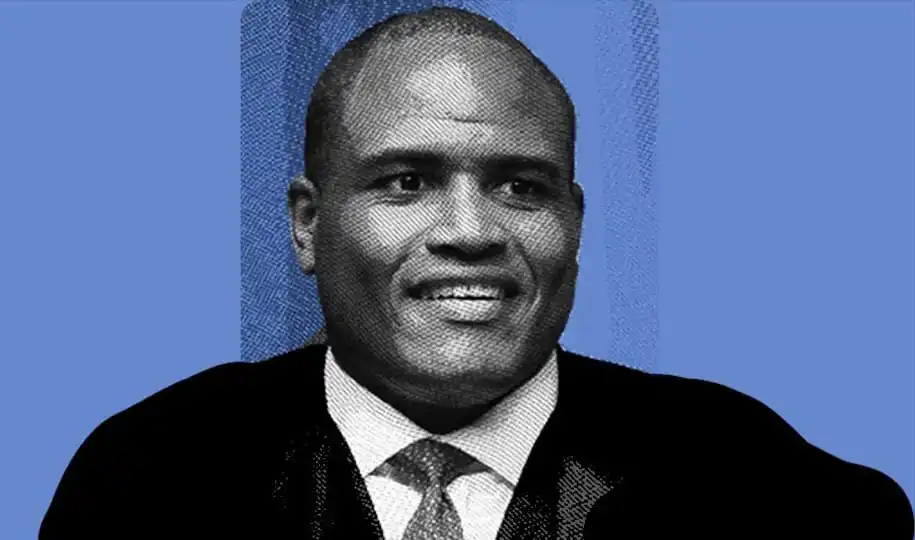
Роберт Ф. Кеннеди-младший, секретарь Министерства здравоохранения и социальных служб

Поскольку Р. Ф. Кеннеди-младший не является действующим конгрессменом США, он не обязан публично раскрывать информацию о своих цифровых активах.

Однако известный сторонник биткоина и бывший кандидат в президенты недавно сделал несколько комментариев о своих обширных накоплениях в старейшей в мире криптовалюте.

«Я большой сторонник биткоина. Я был здесь год назад на другой конференции, посвящённой биткоину, — сказал Р. Ф. Кеннеди-младший на публичном мероприятии в ноябре, —согласно видео, опубликованному на X. — Я вернулся домой и вложил большую часть своего состояния в биткоин, так что я полностью привержен этой идее».

В отдельном посте в этом месяце новый член кабинета Трампа также восхвалял биткоин как средство защиты от инфляции.

«Биткоин — это валюта свободы, защита от инфляции для американцев из среднего класса, средство против понижения статуса доллара как мировой резервной валюты и выход из катастрофического государственного долга», — сказал Р. Ф. Кеннеди-младший в посте.

Кеннеди также раскритиковал действующие меры регулирования, особенно принятые администрацией Байдена, за чрезмерную строгость в отношении криптовалют.

«Я прекращу войну администрации Байдена с биткоином», — заявил он в июле во время конференции по биткоину в Нэшвилле.

Он выступает за более открытую нормативно-правовую среду, которая будет способствовать инновациям и сохранять конкурентное преимущество США на мировой финансовой арене.

Майкл Вальц, советник по национальной безопасности

Майкл Уолтц, представитель Республиканской партии в Конгрессе США от 6-го избирательного округа Флориды, продемонстрировал поддержку биткоина и более широкого криптовалютного сектора как личными инвестициями, так и законодательными инициативами.

В 2023 году Уолтц владел биткоинами на сумму от 50 001 до 100 000 долларов, согласно его финансовому отчёту, представленному Конгрессу США в прошлом году.

Он также недавно проголосовал за законопроекты, поддерживающие криптовалюту, такие как FIT21 и отмена правила SAB 121 Комиссии по ценным бумагам и биржам, а также стал соавтором законопроекта о запрете использования цифровой валюты центрального банка для денежно-кредитной политики и других целей в США, согласно организации по защите цифровых активов Stand with Crypto.

Тулси Габбард, директор Национальной разведки

Бывший член Палаты представителей США от Демократической партии Тулси Габбард с Гавайев инвестировала как минимум в две криптовалюты. В конце 2017 года она приобрела от 1000 до 15 000 токенов Litecoin и Ethereum, о чём свидетельствует публичное раскрытие информации.

Хотя Габбард больше не владеет криптовалютой, согласно её последнему заявлению в 2019 году, она критически относится к правительственным инициативам, которые, по её мнению, посягают на финансовую конфиденциальность и автономию.

Она утверждает, что переход к ЦВЦБ является частью более масштабных усилий правительства по установлению контроля над населением, подрывающих децентрализованную природу криптовалют, таких как биткоин.

Илон Маск, соруководитель D.O.G.E

Хотя Маск и не является членом кабинета Трампа, он, несомненно, близок к лагерю Трампа и, по крайней мере публично, поддерживает криптовалюту.

Соруководитель недавно созданного Трампом Департамента эффективности правительства, аббревиатура которого совпадает с тикером Dogecoin (DOGE). Маск часто выражал поддержку Dogecoin, называя его «народной криптовалютой» и влияя на его рыночную стоимость.

«У меня по-прежнему есть немного Dogecoin, а у SpaceX есть немного биткоинов», — сказал Маск в интервью X Spaces в начале этого года.

Тем временем, по данным Arkham Intelligence, на момент написания статьи у Tesla Маска было 11 509 биткоинов на сумму более 1 миллиарда долларов.данные .

Вивек Рамасуми, сопредседатель D.O.G.E

Поскольку Рамасвами является частным лицом, он не обязан публично раскрывать свои криптовалютные активы. Тем не менее, бизнесмен-миллиардер давно отстаивает криптовалюту и, как полагают, также владеет цифровыми активами.

Например, бывший кандидат в президенты от Республиканской партии, который считался аутсайдером, два года назад объявил, что будет принимать пожертвования в криптовалюте для своей кампании на конференции Bitcoin 2023 в Майами.

Рамасами также подчеркнул необходимость четкого регулирования в сфере криптовалют. Он раскритиковал нынешний подход к регулированию со стороны таких ведомств, как Комиссия по ценным бумагам и биржам, назвав его «регулированием с помощью принуждения» и выступая за систему, которая способствует инновациям и обеспечивает защиту потребителей.

Кроме того, компания Ramaswamy’s Strive Asset Management, управляющая активами на сумму 1,7 миллиарда долларов, объявила в начале ноября, что онадобавит биткоин в портфели своих клиентов.
İlgili Okumalar

A Group of Suzhou Engineers Unexpectedly Attain Financial Freedom

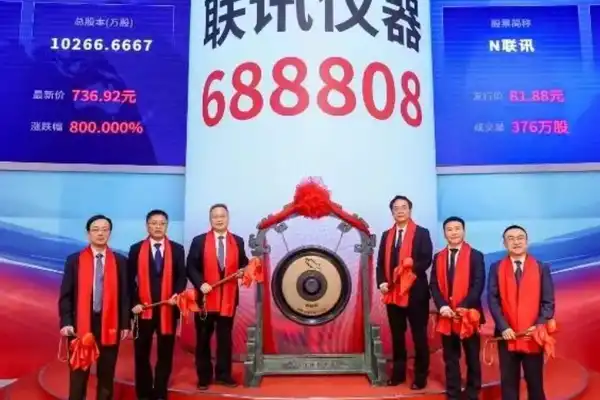
In Suzhou, a group of engineers from Lianxun Instruments, a leader in optical communication testing equipment, have achieved remarkable wealth after the company's IPO. Listed just two months ago on the STAR Market, the company's stock price surged approximately 30 times, making it the only A-share stock priced above 2,000 yuan. This surge created substantial fortunes for nearly 100 technical employees who held a collective 15.91% stake through employee stock ownership platforms, valued at over 36 billion yuan at the current market cap. Among them, nearly 40 became billionaires, while even the smallest holdings exceeded 5 million yuan in value. Founded in 2017 by Hu Haiyang, Yang Jian, and Huang Jianjun, Lianxun Instruments was established to address China's reliance on foreign high-end testing instruments. The company grew rapidly with a strong focus on R&D, where technical staff make up nearly 80% of its workforce. Early implementation of employee stock plans helped retain this core talent. The company's explosive growth is fueled by booming AI computing demand, with clients including major global optical module leaders. Its revenue skyrocketed from 276 million yuan in 2023 to 1.194 billion yuan in 2025, turning a profit in 2024. The IPO has also generated massive returns for early investors, including Suzhou's state-owned capital, which saw a hundredfold return. This story reflects a broader trend in China's markets, where technology firms in AI, semiconductors, and optics are creating new wealth, rewarding engineers and technical teams who are now central to modern capital-driven success stories, marking a shift from previous eras dominated by internet and real estate tycoons.

marsbit1 saat önce

A Group of Suzhou Engineers Unexpectedly Attain Financial Freedom

marsbit1 saat önce

NVIDIA's Annual 'Most Dangerous' Paper: AI Self-Replicating Code, Unlimited Leveling and Evolution

NVIDIA's "Red Queen Gödel Machine" (RQGM) paper proposes a potentially groundbreaking AI self-evolution framework. It breaks from the long-stalled concept of the "Gödel Machine," which required mathematically proven beneficial self-modifications, by adopting an evolutionary approach. The core, and most striking, innovation is that the AI does not just evolve its own code in a static environment. Instead, it co-evolves both the "student" (the task-performing agent) and the "examiner" (the evaluation system that judges it). This creates a dynamic, recursive self-improvement loop inspired by the biological "Red Queen Hypothesis"—where continuous adaptation is needed just to maintain relative fitness. The mechanism operates in epochs. Within an epoch, a fixed examiner evaluates all candidate code variants. At epoch boundaries, a new, potentially more rigorous examiner can replace the old one, but only if it proves statistically superior on a held-out "ground truth" dataset. This "controlled utility evolution" aims to ensure progress is measurable and grounded. The paper demonstrates RQGM's effectiveness across three domains: 1. **Code Generation:** It achieved a 71.7% test-set pass rate (improving over a 69.9% SOTA) while using 1.35-1.72x fewer computational tokens. 2. **Paper Writing:** In a subjective task, the co-evolved writer and reviewer achieved a 40.5% acceptance rate by a fixed human panel, up from 21.8%. 3. **Math Proofs:** It evolved more accurate graders (at 3x lower cost) and higher-scoring provers. Notably, RQGM also mitigated a known LLM bias where AI reviewers favor AI-generated content. By specifically rewarding reviewers that correctly rejected AI-written papers from a historical pool, the evolved system achieved impartiality while maintaining 80% accuracy. The research has sparked significant discussion about the acceleration of Recursive Self-Improvement (RSI). Some, like Anthropic's Jack Clark, have predicted a high probability of highly autonomous, self-evolving AI emerging by 2028. The paper suggests that when an AI begins to design its own evaluators and push itself toward ever-higher standards in a recursive loop, it may be taking a fundamental step toward redefining intelligence and autonomy.

marsbit1 saat önce

NVIDIA's Annual 'Most Dangerous' Paper: AI Self-Replicating Code, Unlimited Leveling and Evolution

marsbit1 saat önce

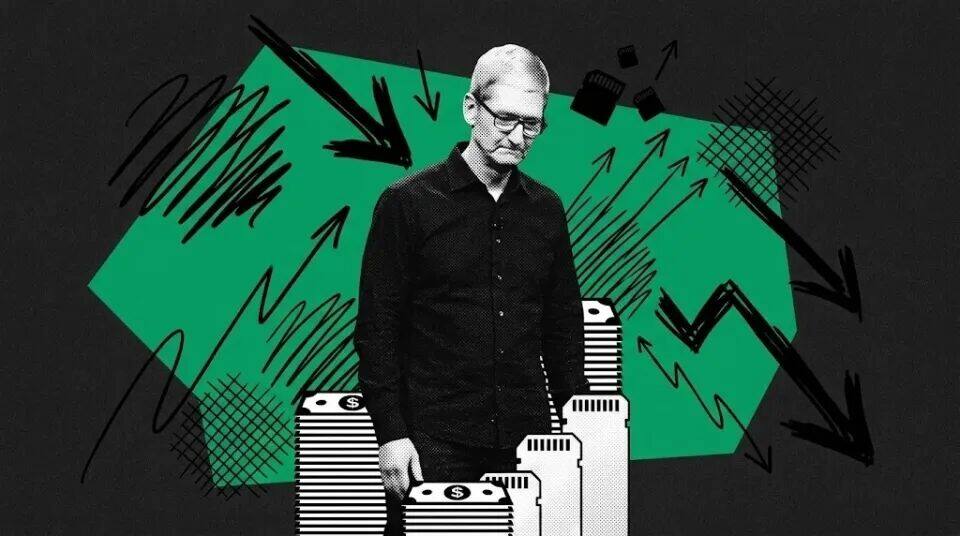
Apple and the Power Rebalancing with 'The Microns': Dissecting the Profit Ledger Behind the iPhone

The article analyzes the shifting profit dynamics and power balance between Apple and memory suppliers like Micron within the iPhone supply chain. It highlights a social media post criticizing Apple for raising iPhone prices while blaming memory chip cost increases, despite historically paying suppliers like Micron very little. An estimated iPhone 18 cost breakdown is referenced. Historically, memory was a minor cost component. In 2017's iPhone X, memory accounted for only about 1.6-2.3% of the price, with Apple capturing nearly 50% net profit. Over time, memory's share of the Bill-of-Materials (BOM) cost has grown significantly, reaching an estimated 12-15% for the iPhone 17 series. The core driver of this change is soaring demand for memory from the AI industry, particularly for High Bandwidth Memory (HBM) and AI servers, which is diverting production capacity and squeezing supply for consumer electronics. Memory manufacturers, after enduring periods of low profits, now hold greater pricing power. This is reflected in their recent strong financials, like Micron's 84.6% gross margin. Apple CEO Tim Cook initially described the memory price pressure as unprecedented in his 40-year career, later calling it a "once-in-a-century flood," before Apple announced price hikes across several product lines, causing a significant stock drop. Elon Musk echoed Cook's sentiment about the dramatic cost surge. The article concludes that the era of memory suppliers being at the mercy of Apple's pricing power has temporarily reversed, thanks to AI-driven demand. It notes Apple is reportedly seeking to diversify its supply chain, including exploring chips from China's CXMT.

Odaily星球日报3 saat önce

Apple and the Power Rebalancing with 'The Microns': Dissecting the Profit Ledger Behind the iPhone

Odaily星球日报3 saat önce

Conversation with the Founder of 42 Macro: The Fed's 'Boiling the Frog Slowly' and the K-Shaped Economy

In a conversation with Anthony Pompliano, Darius Dale, founder of 42 Macro, discusses the Federal Reserve's monetary policy and the K-shaped U.S. economy. Dale characterizes new Fed Chair Kevin Warsh as a "dove in hawk's clothing," expecting the Fed to signal or enact policy tightening in the coming quarters to create room for later easing. He argues current economic signals, including high deficit spending, debt monetization, and credit growth, strongly indicate inflation is not on a credible path back to 2%, forcing the Fed to act. The discussion highlights the stark "K-shaped" economic reality. While top earners, buoyed by massive cash savings (up ~$8 trillion since pre-pandemic), continue robust spending, those at the bottom face severe financial strain, with delinquency rates on consumer loans reaching crisis-era highs. Dale attributes much of the current social and political anxiety to this divergence, driven by the "Cantillon effects" of monetary expansion, which disproportionately benefits asset owners. He emphasizes that in this environment of "financial repression," individuals must participate in asset markets to avoid being left behind. On equities, Dale notes a rotation from the "Magnificent Seven" tech giants into broader AI-exposed companies, while warning that the tech giants' massive capital expenditure cycles could eventually puncture over-optimistic cash flow projections. Dale concludes by stressing that the core desire across all economic strata is simply the dignity to provide for one's family, a goal currently undermined by systemic policies that act as a "wealth siphon" from the bottom to the top.

marsbit3 saat önce

Conversation with the Founder of 42 Macro: The Fed's 'Boiling the Frog Slowly' and the K-Shaped Economy

marsbit3 saat önce

İşlemler

Spot
活动图片