ETF компании BlackRock лидирует с биткоинами на сумму $1 млрд

investing.ru2024-10-17 tarihinde yayınlandı2024-10-17 tarihinde güncellendi

Happycoin.club - Американские биткоин-ETF зафиксировали двухдневный приток почти в $1 млрд, вследствие чего цена главной криптовалюты направилась к сопротивлению на уровне $70 000.

Наплыв инвесторов, во главе с теми, кто купил биржевые фонды IBIT от BlackRock и FBTC от Fidelity, был впечатляющим относительно других, — написал специалист по ETF Нейт Джерачи.

Для контекста, только восемь из 560+ ETF, запущенных в 2024 году, привлекли более $1 млрд за год, — добавил эксперт.

На фоне оптимистичных настроений инвесторов 16 октября цена биткоин достигла около $68 257. В этом году главная криптовалюта прибавила к своей стоимости 52%.

Наряду с этим фонды, отслеживающие американский индекс S&P 500, в этом году показали колоссальный приток в размере $772 млрд.

Аналитик Bloomberg Intelligence Эрик Балчунас, ссылаясь на данные Bloomberg, назвал приток «flowmageddon».

В долгосрочной перспективе цена биткоина ещё больше взлетит на фоне растущей напряжённости на Ближнем Востоке и снижения Федеральной резервной системой расходов по займам, считает основатель BitMEX Артур Хейс.

Биткоин и криптовалюты вырастут, поскольку цены на энергоносители подскочат из-за беспорядков, — написал Хейс в своём блоге.

Одновременно с этим Хейс оговорился, что восходящее движение будет сопровождаться откатами, таким образом, волатильность будет высокая.

Читайте оригинальную статью на сайте Happycoin.club

İlgili Okumalar

With Mining Profits Depressed, What Kind of Mining Companies Can Survive a Bear Market?

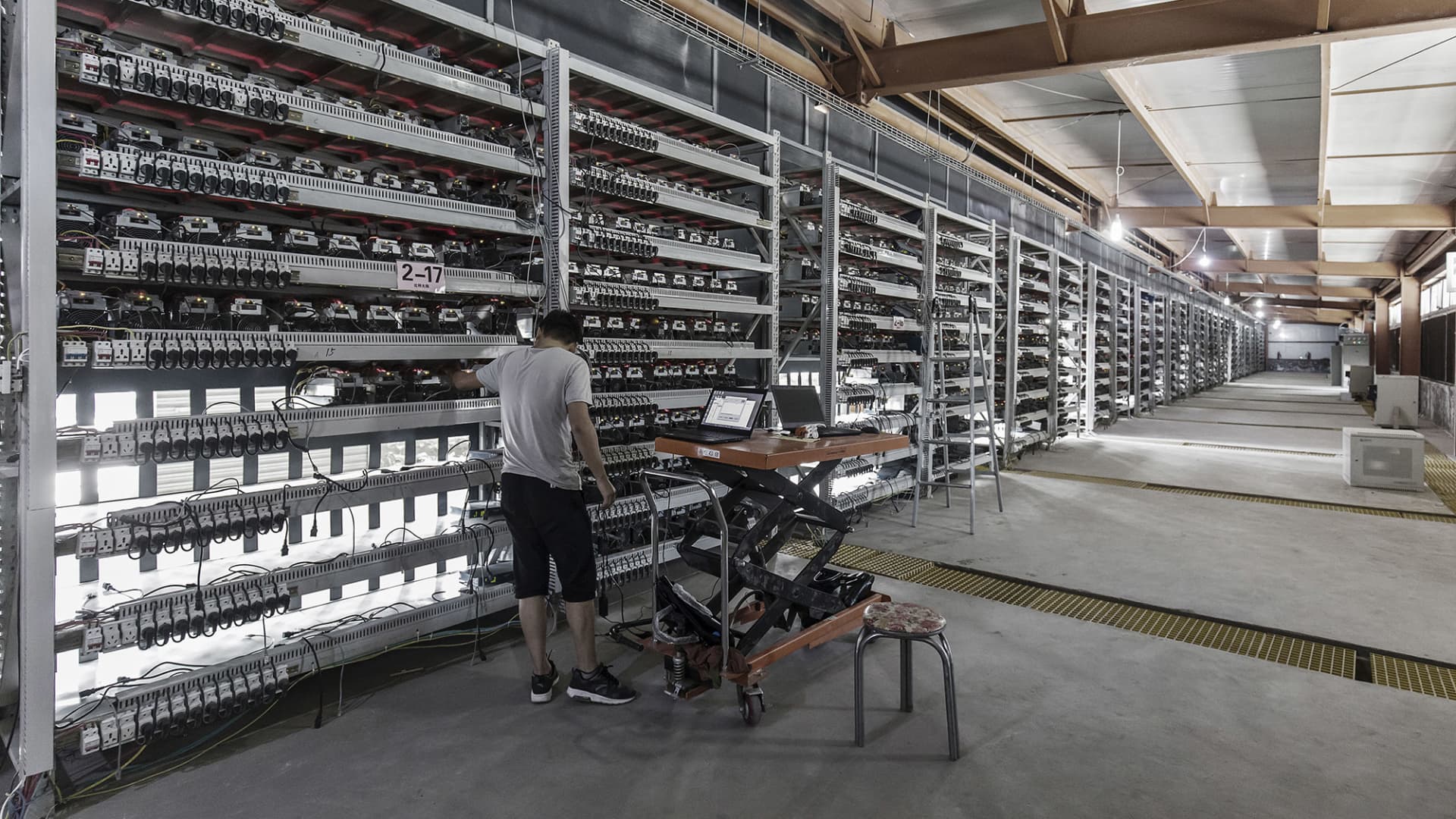
Mining Profitability Slumps: Which Miners Can Survive the Bear Market? A comprehensive Bitcoin miner stress indicator has recently hit a historically low "extreme stress" zone, aligning with the typical market cycle pattern where industry bottoms coincide with severe miner pressure. The current situation presents a direct survival test: if hashprice (daily USD revenue per PH/s of computing power) remains weak, only the most robust mining firms will endure. Hashprice, which incorporates block rewards, transaction fees, network difficulty, and BTC price, is the core metric for mining profitability. Despite Bitcoin's price holding above previous lows, profitability is shrinking due to rising difficulty and low fees. Recent data shows hashprice around $32-33/PH/s/day, with a significant divide: newer, energy-efficient rigs (<19 J/TH) generate ~$81 per megawatt, while older, inefficient models (25-38 J/TH) make only ~$43/MW. This gap is forcing inefficient operators to shut down. The industry has a self-correcting mechanism. As high-cost miners power down, the network's total computing power (hashrate) drops. This eventually triggers a downward adjustment in mining difficulty, increasing the rewards for remaining miners. Data from Q2 2026 shows the hashrate has already fallen by 5.8%, with an estimated 252 EH/s of inefficient mining capacity idled. Firms at risk of淘汰 (elimination) are those reliant on old hardware, high electricity costs, and significant debt. Survivors will likely be miners with newer equipment, low-cost power contracts, strong cash reserves, and flexible operations. A key trend is diversification into AI and high-performance computing (HPC) hosting, though this path is only viable for miners with the necessary infrastructure, capital, and clients. The miner stress indicator serves as a warning, not a precise timing tool for a market bottom. Key signals to watch are whether hashprice stabilizes above ~$30, difficulty continues to adjust downward, hashrate finds a floor, and miner Bitcoin selling subsides. The duration of this low-profitability period will act as a solvency test, determining which miners are positioned to survive and eventually benefit from the next cycle.

Foresight News9 dk önce

With Mining Profits Depressed, What Kind of Mining Companies Can Survive a Bear Market?

Foresight News9 dk önce

Blood Loss of $55 Million Selling 3,588 BTC, Strategy Becomes a Literal Scumbag

On July 6th, Strategy (formerly MicroStrategy) disclosed in an SEC filing that it sold 3,588 Bitcoin (BTC) between June 29th and July 5th for approximately $216 million, at an average price of ~$60,200. This marked the company's largest net sale since initiating its Bitcoin strategy in 2020 and its first institutionalized reduction of its core holding. The sale resulted in a realized loss of about $54.8 million, as the selling price was below its average cost basis of ~$75,476 per BTC. The proceeds were used to pay preferred stock dividends and replenish USD reserves. This move follows a new "Digital Credit Capital Framework" approved on June 29th, authorizing the sale of up to $1.25 billion in Bitcoin. The sale consumes roughly 17% of this authorized amount in its first week. Strategy's foundational narrative, built by founder Michael Saylor, was a commitment to "never sell" Bitcoin. The recent institutionalized selling framework and these substantial sales represent a significant shift from that original promise. While the amount sold is only 0.4% of Strategy's total holdings of 843,775 BTC, the action challenges the premium at which its stock (MSTR) trades relative to its Bitcoin holdings. Investors had priced in the "never sell" narrative. The company now faces a contradiction: it sells Bitcoin at a loss to pay dividends on the preferred stock it issued to fund Bitcoin purchases. Saylor has framed selling as a tool for future strategic purchases, but each sale erodes the credibility of the original commitment, potentially threatening the premium valuation of MSTR shares.

Foresight News1 saat önce

Blood Loss of $55 Million Selling 3,588 BTC, Strategy Becomes a Literal Scumbag

Foresight News1 saat önce

JP Morgan Tokenized Fund Surges 250% in TVL in One Month, Institutional Funds Are Treating Ethereum as the Default Underlying Layer

JPMorgan's tokenized money market fund, JLTXX, has seen its on-chain total value locked (TVL) surge approximately 250% in a month, reaching nearly $700 million from an initial $200 million since its launch seven weeks ago. The fund, which invests in short-term U.S. Treasuries and repos, operates exclusively on the public Ethereum mainnet, signaling growing institutional acceptance of Ethereum as a foundational layer for compliant financial products. A key driver of this growth is its inclusion as reserve assets for stablecoins like USDG, meeting requirements under U.S. stablecoin legislation. Simultaneously, despite a significant price decline—ETH has fallen over 50% from its 2025 high—institutional accumulation continues. BitMine Immersion Technologies, led by Tom Lee, purchased an additional $73 million worth of ETH last week, bringing its holdings to roughly 4.8% of Ethereum's circulating supply. The article highlights a divergence: while the tokenization of real-world assets and stablecoin reserves is driving long-term institutional adoption of Ethereum's infrastructure, short-term price action remains pressured by market sentiment and ETF outflows. This suggests that institutional on-chain activity, though a positive fundamental development, may not serve as a reliable signal for near-term price bottoms.

marsbit1 saat önce

JP Morgan Tokenized Fund Surges 250% in TVL in One Month, Institutional Funds Are Treating Ethereum as the Default Underlying Layer

marsbit1 saat önce

İşlemler

Spot
活动图片