Revisiting the Mean

insights.glassnode2024-10-07 tarihinde yayınlandı2024-10-15 tarihinde güncellendi

Executive Summary

  • Bull Market Drawdowns remain relatively shallow but in line with historical bull market uptrends. This highlights both the similarities and the relative resiliency of the current cycle.
  • Both Short-Term Holder positioning and their spending behaviour have largely improved as the spot price attempts to reclaim the Short-Term Holder cost-basis at $62.5k.
  • A significant amount of Futures Open Interest remains in place, which may expose the market to deleveraging and liquidation cascades if significant volatility breaks out.
💡
View all charts in this edition in The Week On-chain Dashboard.

Technical Damage Report

The Bitcoin market is truly unique in that it boasts the deepest liquidity profile at hours where traditional markets are closed for trading, and trades globally in all timezones and jurisdictions. This allows investors to express, trade, and speculate an opinion on the market at any time, which can lead to significant price fluctuations over weekends.

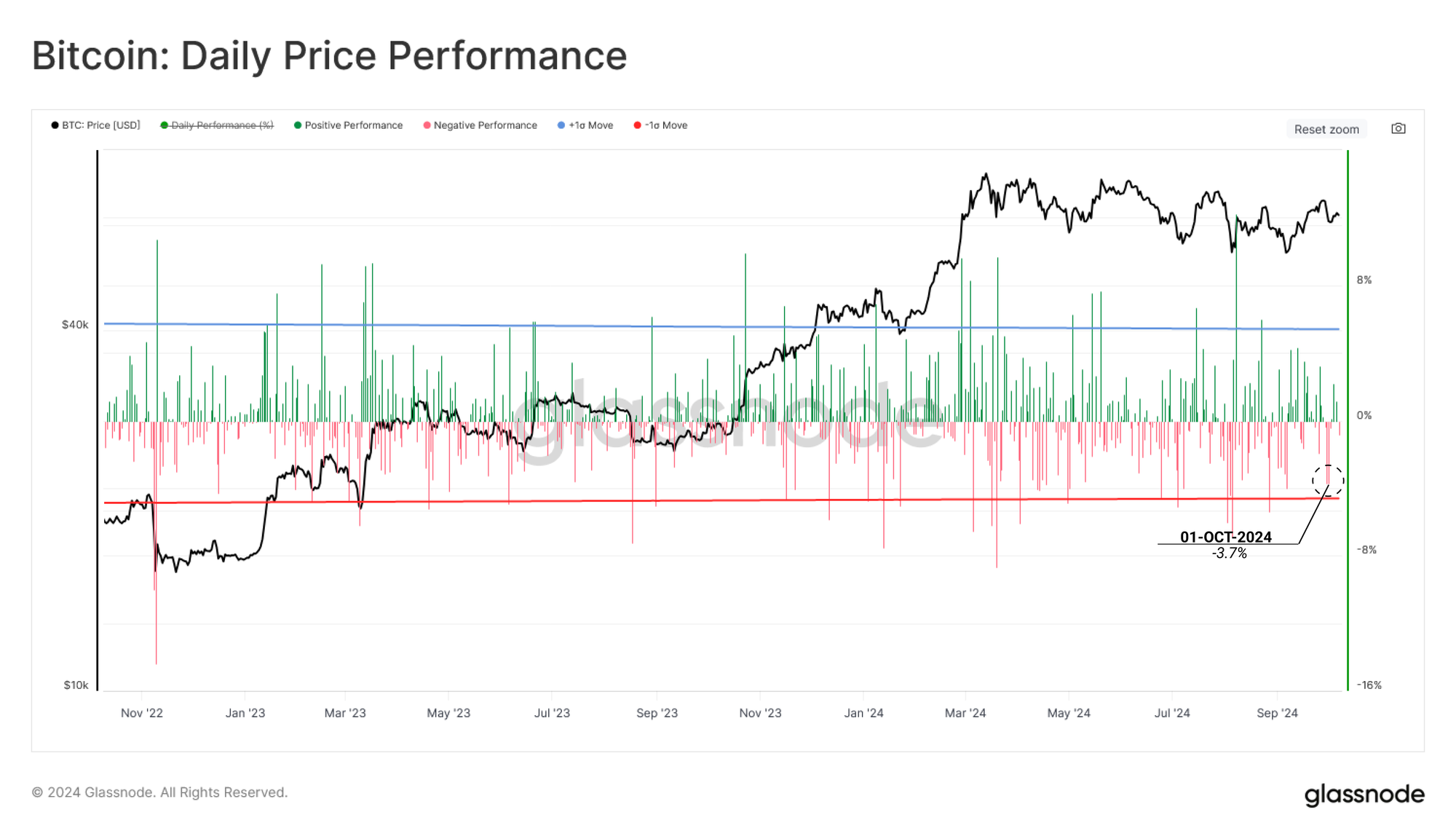
The recent pullback into the $60k region occurred late in the week and was one of the deepest one-day sell-off events since the 2022 cycle low. However, despite the lighter trade volume typically seen over weekends, the market has managed to recover back to close the week at $63.5k.
Live Chart

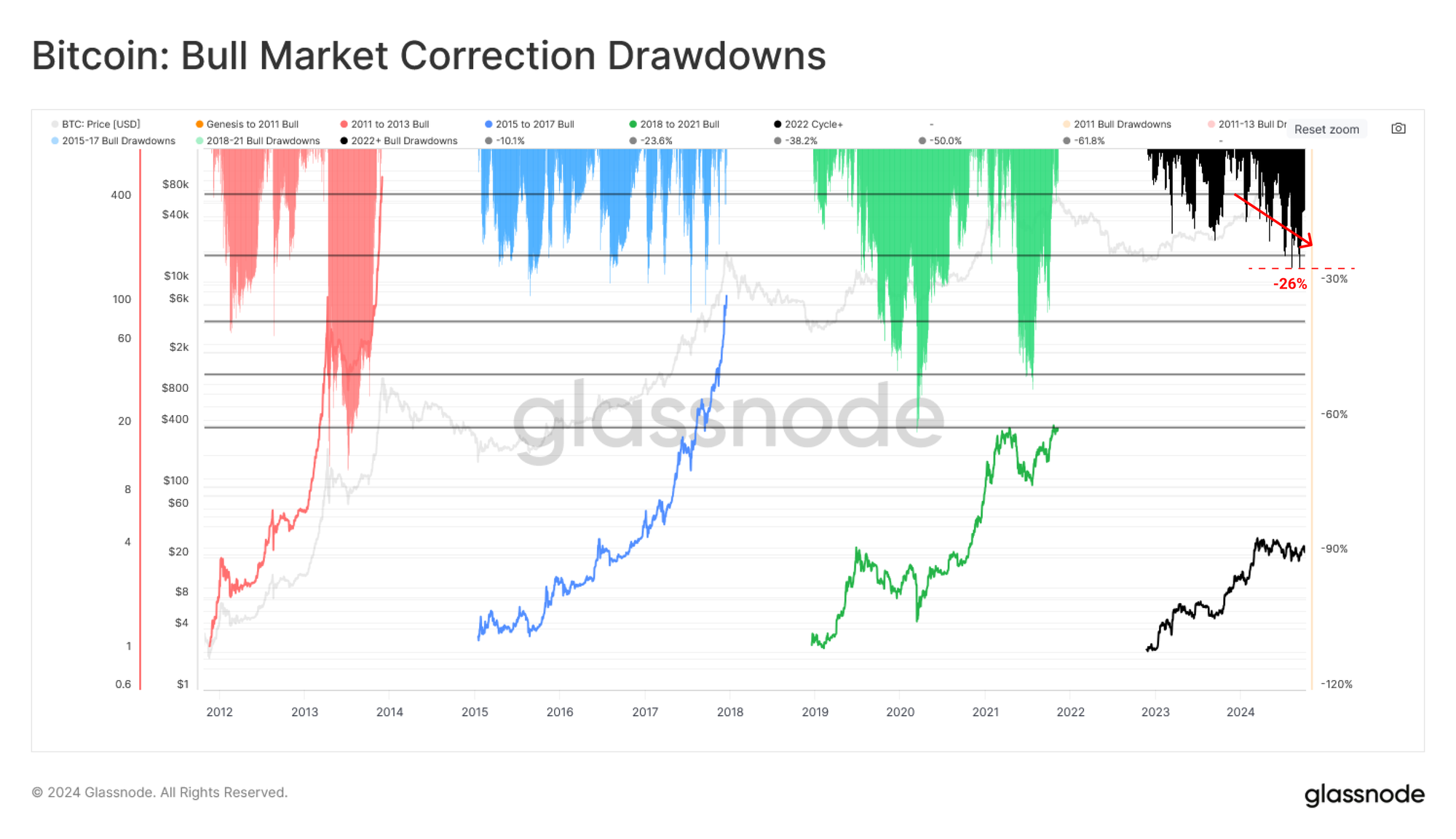
When we evaluate the depth of corrections measured from the local high during bull markets, the 2023-24 drawdown profile is largely in line with previous uptrend cycles. We can also see a relatively high degree of resiliency on the demand side. The maximum drawdown is -26% on a closing basis, which is somewhat shallower than is typically seen during prior cycles.

However, the last few months have been the deepest of this up-cycle, which suggests that this has been one of the more challenging periods since the FTX collapse in late 2022.
Live Chart

Key Pricing Levels

A key tool within the on-chain analysis toolbelt is our ability to assess the average cost basis of various investor cohorts. This provides insight into the financial pressure various groups of investors are experiencing, measured as a derivative of the unrealized paper gains/losses held.

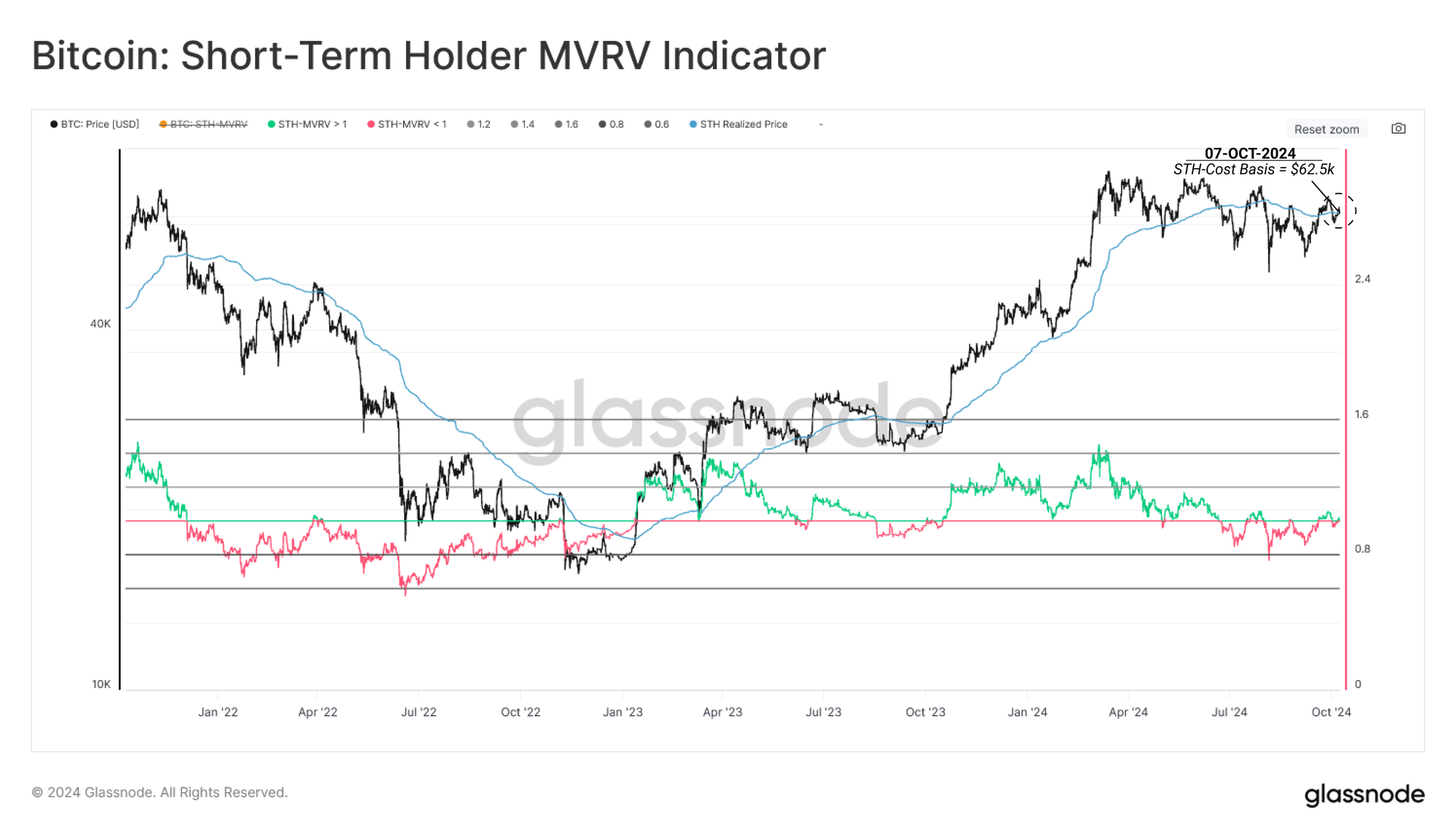
A particularly interesting cohort for understanding near-term price action is the Short-Term Holder cohort, typically characterized as new market demand. The spot price has just accelerated above and reclaimed its critical cost-basis of $62.5k, which is a sign of a relatively constructive nature.

If the market fails to hold above this level, however, it will put a large cohort of recent buyers under increasing pressure, especially considering the last few months of challenging conditions.
Live Chart

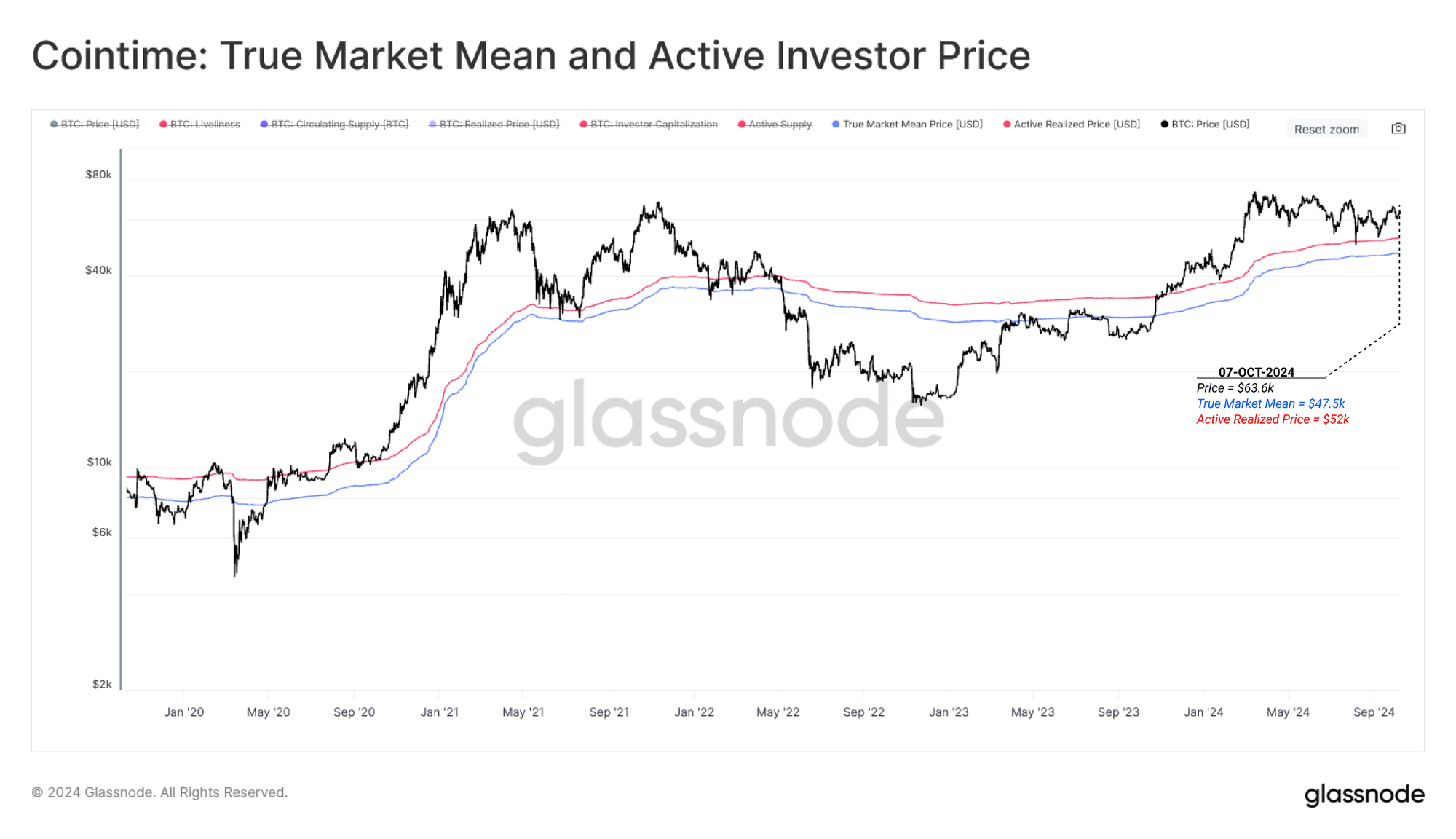
We can also gauge a more macro outlook by utilizing the True-Market Mean ($47k) and the Active Investor Price ($52.5k). Both of these models provide an estimate of the average cost basis for investors who are active within the current cycle (by discounting lost and long-dormant supply).

The position of the spot price relative to these two key pricing levels can be considered a zone of interest for differentiating between macro bull and bear markets.

Year to date, the spot price has traded above both of these price levels, except for a brief excursion below the Active Investor Price during the 5-Aug sell-off. This suggests a relatively robust market, which has tended to provide demand support during market drawdowns.
Live Chart

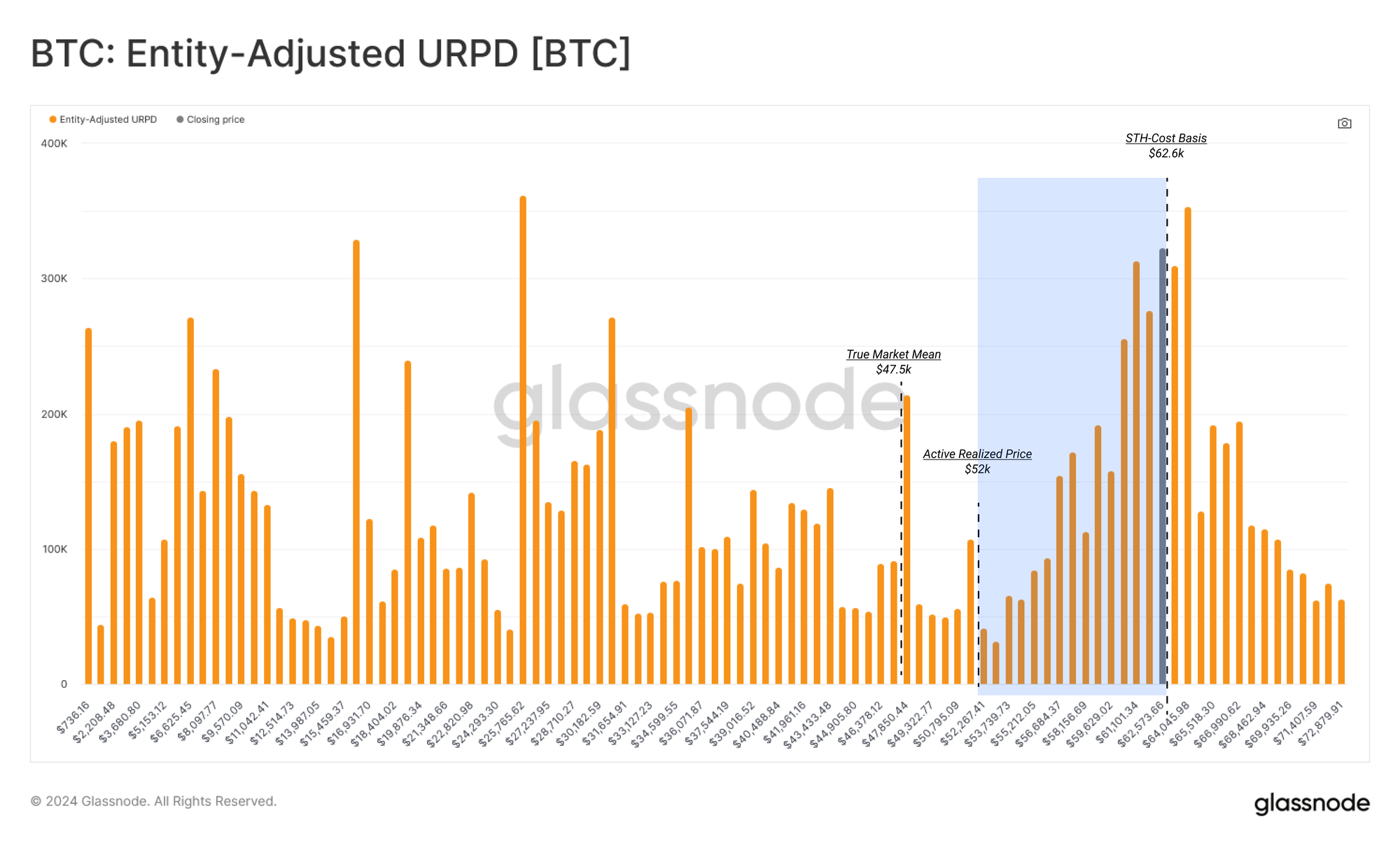
The URPD metric is an extremely useful tool, allowing us to profile the current cost basis of the circulating coin supply. The spot price is located within an extremely large cluster of coins. This suggests that small fluctuations in price can impact the profitability of a substantial number of investors.

The chart below has marked out the URPD with the critical pricing levels noted above, some key observations can be noted:

  • The STH cost basis resides within the middle of this dense cluster, highlighting its pivotal role in gauging near-term investor sentiment.
  • Two large supply nodes are located at the True Market Mean and Active Investor Price, underscoring their importance as support levels.
  • In close proximity to these pricing levels are large ‘air gaps,’ where very few coins have transacted, potentially marking them as points of interest in the event of downside volatility.

This paints a picture of a market that rests on delicate ground, with a large volume of supply likely to be sensitive to the next major market move.
Live Chart

A Short-Term Reset

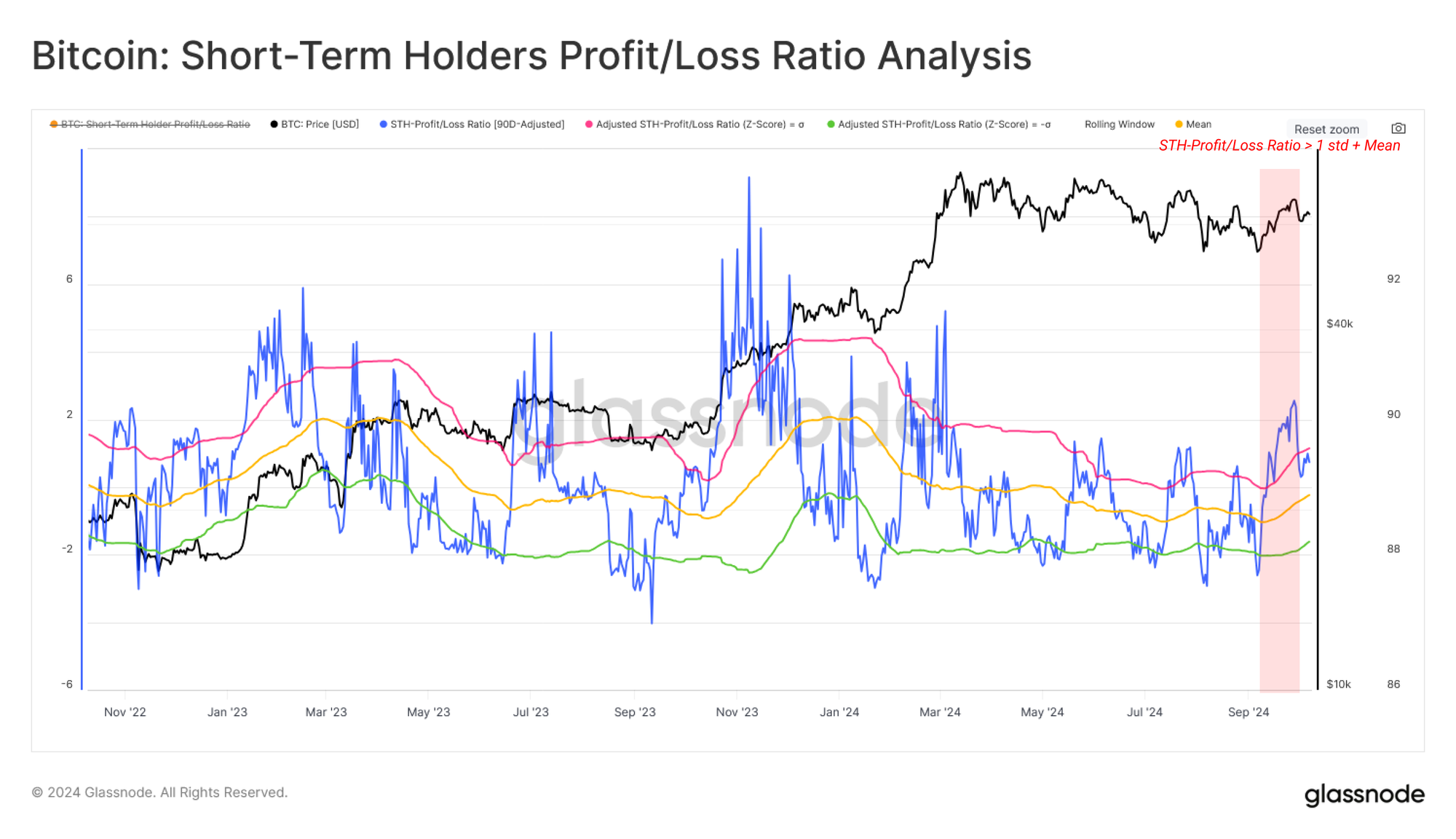
With Short-Term Holders playing an important role in defining local price action, the balance of their supply held in profit or loss can help distinguish positive or negative tipping points.

By this metric, there is a clear profit dominance amongst Short-Term holders, with this ratio trading at 1.2. This indicator has also recently broken more than one standard deviation above its 90-day mean, suggesting an initial positive boost to investor sentiment may be underway.
Live Chart

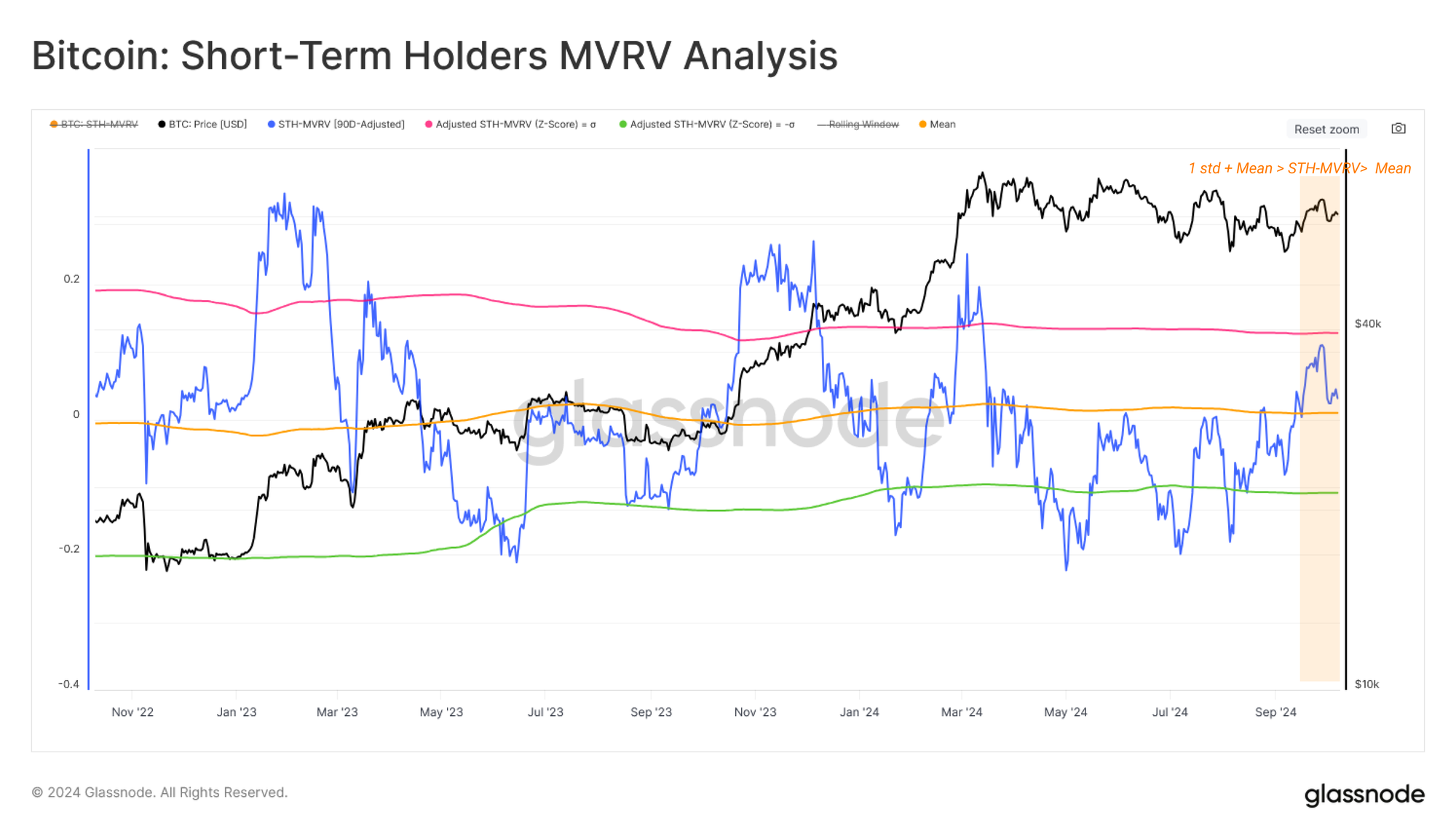
From the perspective of Short-Term Holder unrealized profit/loss, we can use a similar analysis framework applied to STH-MVRV. These tools assess the magnitude of unrealized paper gains/losses held by this cohort on average.

Here, we can also observe an improvement in the profitability of new investors, with their MVRV ratio rallying from the lows during the yen-carry trade unwind in early August. STH-MVRV has also reclaimed its 90d moving average, which is another positive sign.
Live Chart

With both the Supply in Profit/Loss Ratio and STH-MVRV reaching their respective upper statistical bands, we can theorize that new investors have a decent incentive to lock in profit during the prevailing rally.

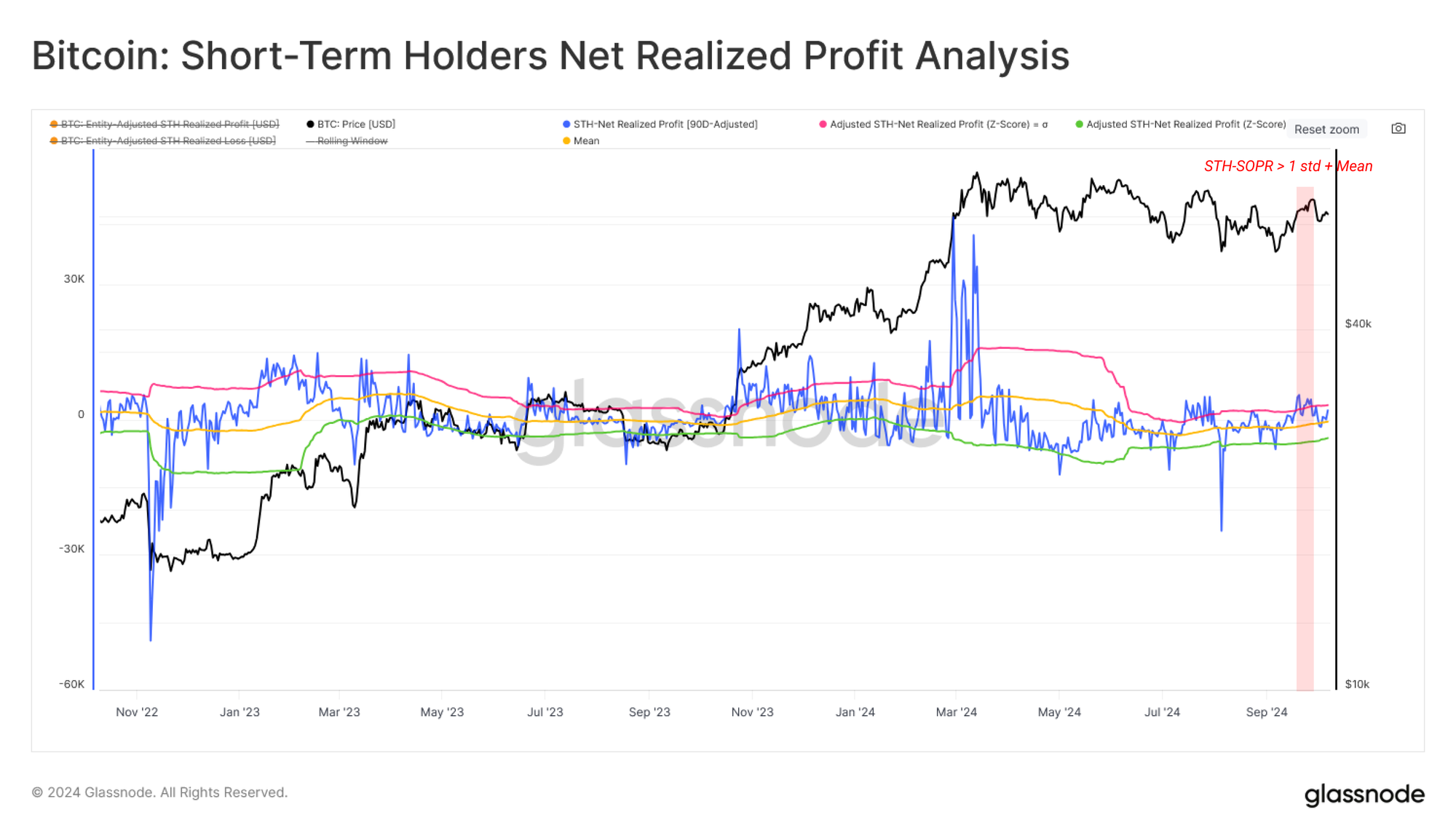
Using the same statistical bands applied to Net Realized Profit/Loss by STHs, it becomes evident that profit-taking has intensified during this rally. The magnitude of profit-taking remains relatively small when compared to the March ATH. However, it is still significant enough to reach the upper statistical band.
Live Chart

Increasing Speculation in Derivatives Markets

Derivative instruments for Bitcoin remain a crucial component of market structure and have grown significantly over recent years. Despite a surge in the usage of calendar expiring futures, primarily via CME Group instruments, the perpetual swap remains the contract of choice amongst crypto-native traders and speculators.

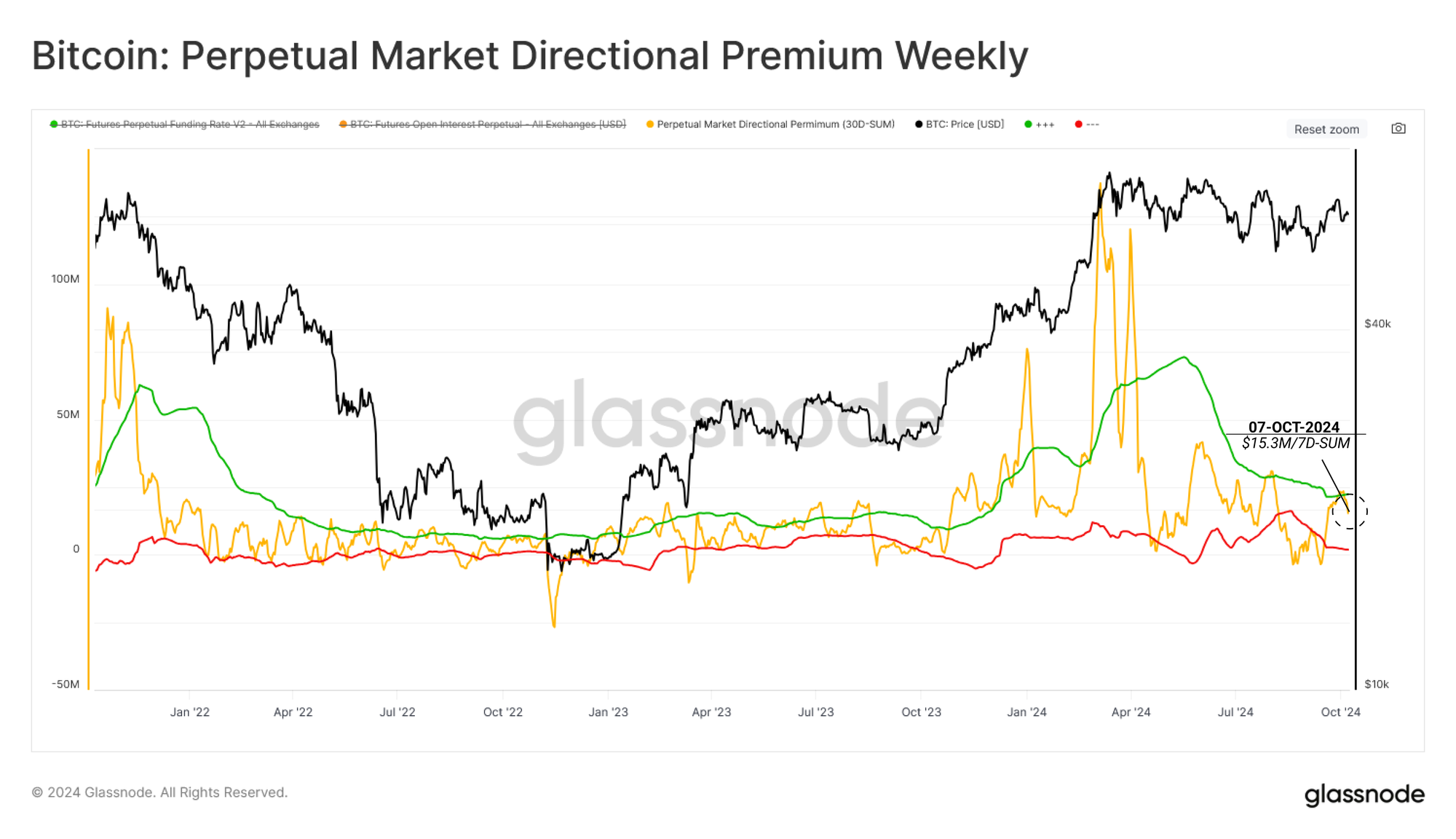
We can gauge speculation by futures investors by assessing the cumulative monthly premium that long-side contracts have paid to the short-side over the last 7 days.

We can see that the total cost of leverage around the March ATH peaked at around ~$120M per week. This has since declined to just $15.3M per week, reflecting a net reduction in long-biased speculation during the recent range-bound market conditions.

However, despite the meaningful reduction in trader long bias, the directional premium has recently exceeded its +1σ band, underscoring a potential return of speculative interest.
Live Chart

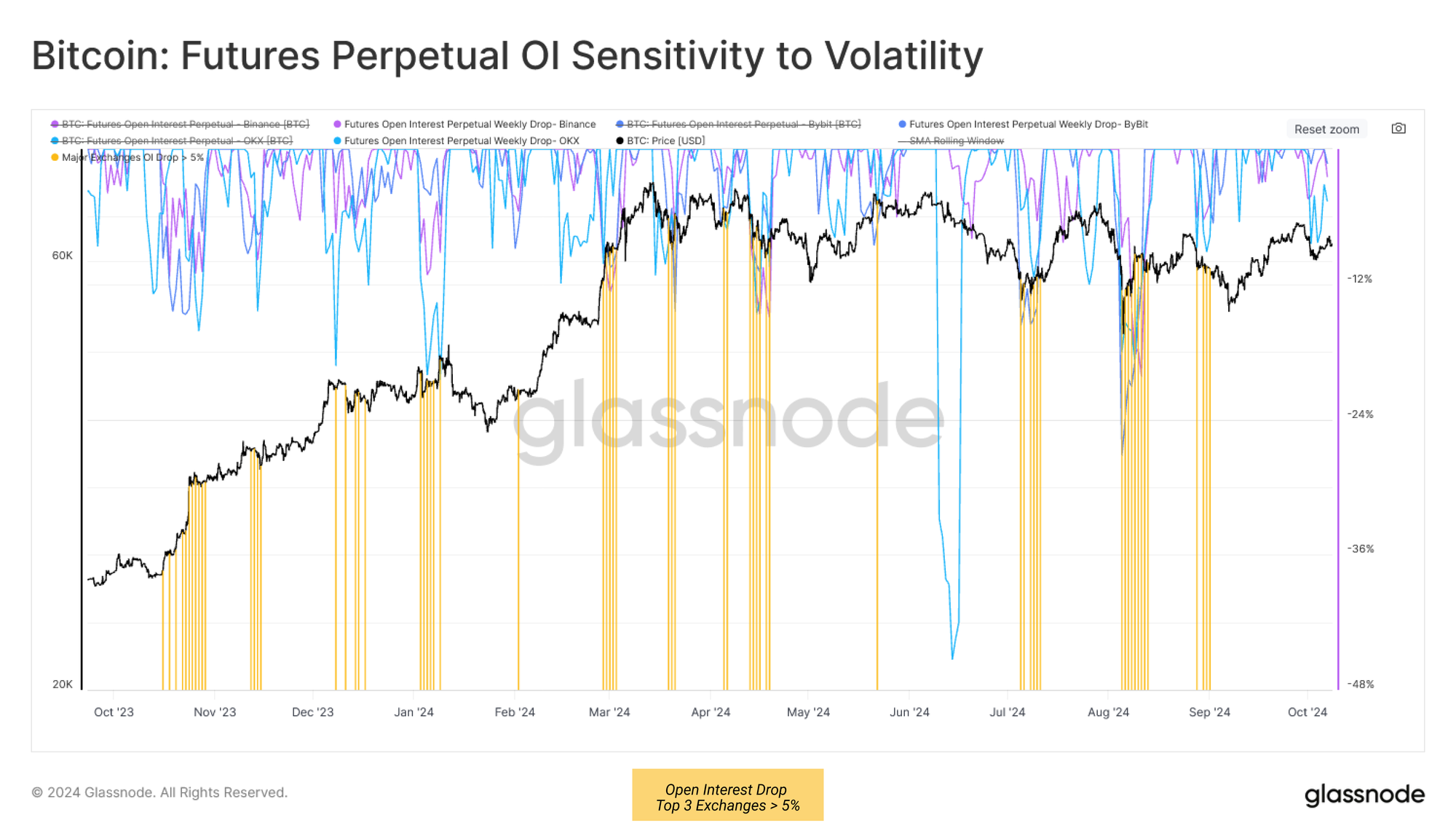
A substantial $2.5B of futures open interest was forcibly closed during the rally, suggesting a flushing out of short sellers. However, the percentage of OI reduction seen across the top three perpetual exchanges did not surpass the 5% threshold value 🟨.

From this, it could be argued that the market remains somewhat susceptible to heightened volatility in either direction, which could squeeze leveraged traders out of their positions.
Live Chart

Summary and Conclusions

Both Short-Term Holder's investment positioning and spending behaviour have seen a boost in profitability over the last month as the spot price rebounds above their cost-basis. Given the delicate position of the spot price relative to the cost basis of a large volume of the circulating supply, this may help tip the balance back in favor of the bulls.

However, speculation appears to be increasing in futures markets, with a significant amount of open interest still in open contracts. With the macro market direction still ambiguous, the market remains vulnerable to heightened volatility, which may fuel the next move in either direction due to deleveraging pressures and liquidations.


Disclaimer: This report does not provide any investment advice. All data is provided for information and educational purposes only. No investment decision shall be based on the information provided here and you are solely responsible for your own investment decisions.

Exchange balances presented are derived from Glassnode’s comprehensive database of address labels, which are amassed through both officially published exchange information and proprietary clustering algorithms. While we strive to ensure the utmost accuracy in representing exchange balances, it is important to note that these figures might not always encapsulate the entirety of an exchange’s reserves, particularly when exchanges refrain from disclosing their official addresses. We urge users to exercise caution and discretion when utilizing these metrics. Glassnode shall not be held responsible for any discrepancies or potential inaccuracies. Please read our Transparency Notice when using exchange data.


İlgili Okumalar

Confirmed: Claude Code Secretly Inspects Users, Time Zone and Chinese AI Labs Are Key Factors

Today was a significant day for Anthropic. The company announced the launch of Claude Sonnet 5, described as its most agentic model yet, and separately confirmed that the U.S. Department of Commerce has lifted export controls on its Claude Fable 5 and Mythos 5 models, allowing their distribution to resume. However, a separate controversy has emerged regarding its coding assistant, Claude Code. Developers have exposed that certain versions of the tool allegedly contain hidden code designed to detect specific user data. This code reportedly checks for the use of Chinese time zones (like Asia/Shanghai), the presence of custom API proxy URLs, and connections to domains associated with Chinese tech companies and AI labs. If triggered, this information is said to be encoded into the system prompt sent to the AI cloud, using subtle, nearly indistinguishable variations in characters (like different Unicode apostrophes in the "Today's date" line) as a form of steganography. The core issue is the covert nature of this data collection. While telemetry for security and abuse prevention is common, implementing it through hidden channels within the prompt—without user awareness or documented disclosure—fundamentally breaches trust. This is particularly sensitive for a coding assistant that operates with access to source code and system commands. Following the exposure, an Anthropic engineer acknowledged the code's existence and stated it would be removed in an upcoming release. The incident raises serious questions about transparency and the boundaries of data collection in AI developer tools.

marsbit37 dk önce

Confirmed: Claude Code Secretly Inspects Users, Time Zone and Chinese AI Labs Are Key Factors

marsbit37 dk önce

Grayscale: After Halving, BTC is Nearing the Bottom of This Cycle

Grayscale Research suggests Bitcoin's recent decline below $60,000, a >50% drop from its October peak, represents a cyclical correction within a long-term uptrend rather than a trend reversal. Key factors behind the pullback include a shift in market expectations toward Federal Reserve rate hikes under new Chair Kevin Warsh, uncertainty around the CLARITY Act's Senate passage, pressure on leveraged entities like Strategy, and concerns over quantum computing risks. The path out of the current bear market hinges on upcoming catalysts. An optimistic scenario, where the CLARITY Act passes, leverage is contained, and the Fed refrains from hiking, could mean Bitcoin is nearing its cycle bottom. A pessimistic scenario, featuring legislative failure, further deleveraging, and Fed rate hikes, could lead to additional moderate downside. Grayscale does not expect a historically deep ~80% drawdown due to a more measured prior bull run and stickier institutional demand. Despite short-term headwinds, Grayscale remains highly optimistic about crypto's long-term structural prospects, driven by institutional adoption of public blockchains, unsustainable government debt, declining trust in intermediaries, and AI's potential demand for alternative systems. The report concludes that while the exact cycle low depends on near-term catalysts, current valuations present an attractive entry point for long-term investors betting on the decade-ahead growth of digital assets.

marsbit1 saat önce

Grayscale: After Halving, BTC is Nearing the Bottom of This Cycle

marsbit1 saat önce

Web3 Bear Market Survival Guide: Ten Great Books to Help You Navigate the Cycles

"Web3 Bear Market Survival Guide: Ten Books to Help You Navigate the Cycle" This article presents a curated book list aimed at helping Web3 enthusiasts and professionals endure and grow during crypto market downturns. It argues that bear markets are not just periods of waiting but crucial times for deepening one's foundational understanding beyond technical whitepapers and price charts. The ten recommended books offer perspectives on technology, economics, philosophy, and strategy to build resilience and long-term vision. The list includes: 1. **"The Inevitable" by Kevin Kelly:** For using a long-term technological lens to combat uncertainty about the future, including the role of crypto and AI. 2. **"Human Action" by Ludwig von Mises:** To upgrade one's economic and philosophical framework, understanding action, speculation, and calculation in a bear market context. 3. **"The Nature of Technology" by W. Brian Arthur:** For viewing blockchain and crypto as combinatorial evolutions of existing technologies, understanding their modular and economic development. 4. **"The Distant Savior" (Chinese novel):** Explores the cultural attributes of self-reliance ("strong culture") versus dependency ("weak culture"), crucial for surviving industry cycles. 5. **"The Sovereign Individual" by James Dale Davidson & Lord William Rees-Mogg:** A prophetic 1997 work on how technology empowers individuals and challenges nation-states, foreshadowing Bitcoin's emergence. 6. **"Japanization: What the World Can Learn from Japan's Lost Decades" (Adapted title):** Uses Japan's economic history as a case study to identify structural opportunities that persist even during broader recessions. 7. **"Denationalisation of Money" by F.A. Hayek:** The ideological blueprint for Bitcoin, arguing for competitive currency issuance beyond state monopoly. 8. **"Duan Yongping Investment Q&A" (Chinese compilation):** Emphasizes the simple discipline of "doing the right things and doing things right," focusing on fundamentals and maintaining a "stop doing list." 9. **"The Network State: How To Start a New Country" by Balaji Srinivasan:** A visionary text from a crypto insider outlining bold predictions and concrete ideas for a blockchain-based future across media, governance, and identity. 10. **"Selected Works of Mao Zedong" (Vol. 1):** Analyzed as a strategic playbook for a weak force challenging a powerful establishment, offering lessons on strategy, alliance-building, and perseverance for the crypto movement. The conclusion states that bear markets filter out those with weak conviction, not weak skills. Survival depends on cognitive depth and mental fortitude, which these books aim to provide.

Foresight News1 saat önce

Web3 Bear Market Survival Guide: Ten Great Books to Help You Navigate the Cycles

Foresight News1 saat önce

Who is the Most Profitable Man in the Crypto World? Trump Rakes in Over $1.427 Billion in 2025

Who is the most profitable man in crypto? President Trump's 2025 financial disclosure, filed with the Office of Government Ethics, reveals crypto-related earnings exceeding $1.427 billion, starkly contrasting the broader market downturn. The bulk of this wealth stems not from passive investment but from his entities' roles as issuers and licensors. CIC Digital LLC, his memecoin operation, generated approximately $636 million in 2025, primarily from "Celebration Coins" royalty fees. DT Marks Defi LLC, a stakeholder in World Liberty Financial, earned about $594 million from asset sales and token distribution proceeds. Other entities held significant Bitcoin, Ethereum, and various altcoin wallets, along with substantial income from stablecoin ventures and his wife's NFT sales. This "issuer model" shields him from market downturns. While his namesake memecoin plummeted from ~$74 to ~$1.68, leaving many retail investors at a loss, his royalty income remained unaffected. The disclosure emerges as the U.S. Senate debates the CLARITY Act, which includes contentious ethics provisions aimed at preventing officials from profiting from the crypto sector they regulate. Critics argue Trump's earnings exemplify a critical conflict of interest, fueling demands for stricter rules to separate regulatory power from personal financial gain in the industry.

Foresight News1 saat önce

Who is the Most Profitable Man in the Crypto World? Trump Rakes in Over $1.427 Billion in 2025

Foresight News1 saat önce

Trump's 25-Year Financial Report: Family Earns Over $1 Billion Annually from Crypto, While Retail Investors Lose Money on $TRUMP

Former President Donald Trump's family earned approximately $1.2 billion from cryptocurrency ventures in 2025, according to a financial disclosure report. This revenue stream, outlined in a 927-page filing, now surpasses income from most of his long-established real estate holdings. The crypto earnings originated from two main sources: over $500 million from the sale of products like "governance tokens" by World Liberty Financial, a DeFi project co-owned by the Trump family, and roughly $635 million in royalties from the Trump-themed meme coin $TRUMP, issued by CIC Digital LLC. While Trump's entities profited, retail investors faced significant losses. The $TRUMP token, which peaked above $74 shortly after its January 2025 launch, has plummeted to around $1.68. World Liberty Financial's token has also fallen roughly 80% since its debut. Reports indicate that the majority of meme coin buyers have lost money, with Trump-linked entities still holding about 80% of $TRUMP's supply under vesting plans. The disclosure highlights a stark contrast: Trump's crypto and real estate businesses flourished—with new international property deals bringing in tens of millions—even as his administration shifted to crypto-friendly policies, relaxing the stringent regulatory stance of the previous Biden administration. The White House maintains that Trump acts only in the public interest, with his businesses placed in a trust managed by his sons, denying any conflict of interest. However, the report notes the difficulty of assessing such conflicts, particularly regarding foreign business dealings with countries that later received favorable U.S. policy decisions.

marsbit1 saat önce

Trump's 25-Year Financial Report: Family Earns Over $1 Billion Annually from Crypto, While Retail Investors Lose Money on $TRUMP

marsbit1 saat önce

İşlemler

Spot
活动图片