Hamster Kombat (HMSTR) упал на 50%, и это не предел

cryptonews.ru2024-06-02 tarihinde yayınlandı2024-10-02 tarihinde güncellendi

Медвежий настрой в отношении Hamster Kombat (HMSTR) усиливается. Разбираемся, почему токен, вероятно, продолжит падать

После аирдропа и старта торгов на криптобиржах Hamster Kombat не оправдал ожиданий. Несмотря на первоначальный интерес к проекту, активная продажа токенов HMSTR привела к их значительному обесценению на прошлой неделе.

Хомяк не смог удержать интерес инвесторов

26 сентября Hamster Kombat раздал 60 млн токенов своим игрокам, после чего монеты появились на криптовалютных биржах по цене $0,014.

Однако массовые продажи быстро снизили стоимость токена. За последние шесть дней он потерял в цене 50%, а за последние 24 часа подешевел на 11% на момент написания.

С момента аирдропа HMSTR столкнулся с пессимистичными настроениями. Это подтверждается и отрицательными взвешенными настроениями. Показатель отражает общее настроение рынка, и его отрицательное значение говорит о том, что большинство обсуждений актива в социальных сетях связаны со страхом, неопределенностью и сомнениями. Сейчас он равен -0,16. Это может быть знаком дальнейшего падения цены.
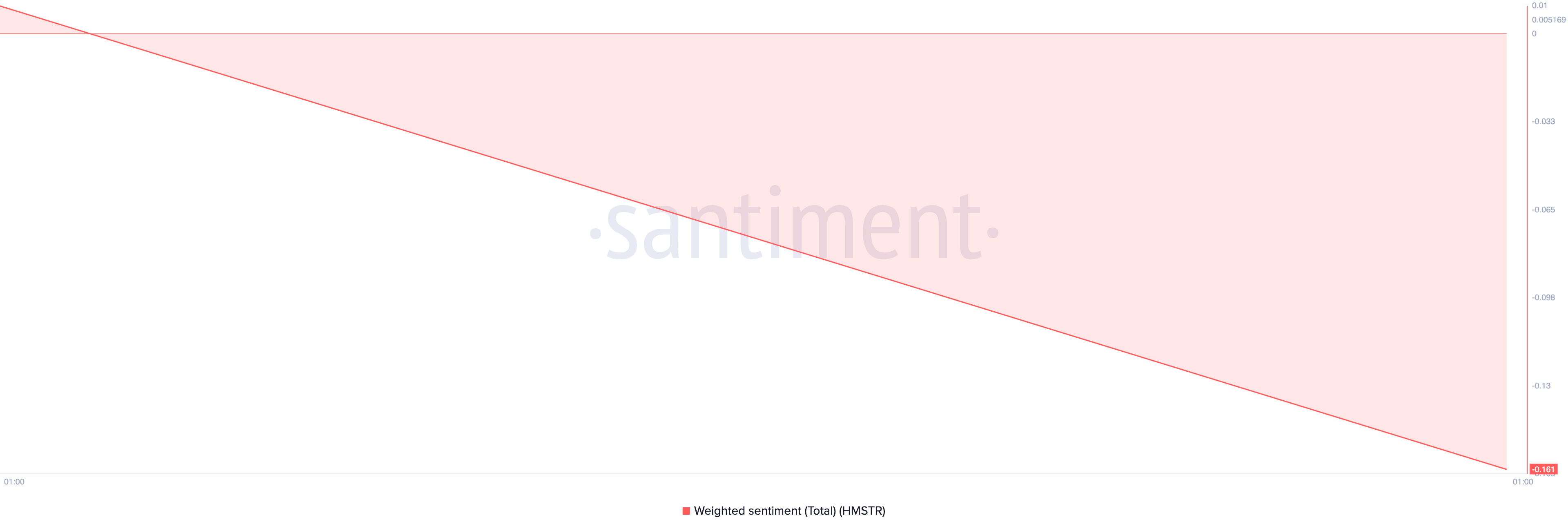
Взвешенные настроения по HMSTR. Источник: Santiment

Монета уже потеряла половину своей стоимости всего за неделю. Впрочем, фьючерсные трейдеры по-прежнему настроены оптимистично. По данным Coinglass, с начала торгов ставка финансирования HMSTR остается положительной. Этот механизм обеспечивает баланс между длинными и короткими позициями на рынке бессрочных фьючерсных контрактов. Положительные значения ставки указывают на доминирование длинных контрактов и на то, что цена контракта превышает спотовую цену. Это значит, что трейдеры покупают монету с расчетом продажи по более высокой цене.

Однако многие из этих длинных позиций оказались убыточными, так как ликвидации продолжаются. С 26 сентября из-за падения цены токена были ликвидированы длинные позиции на сумму $9 млн.

Читайте также: Чего ждать от Hamster Kombat (HMSTR) в октябре
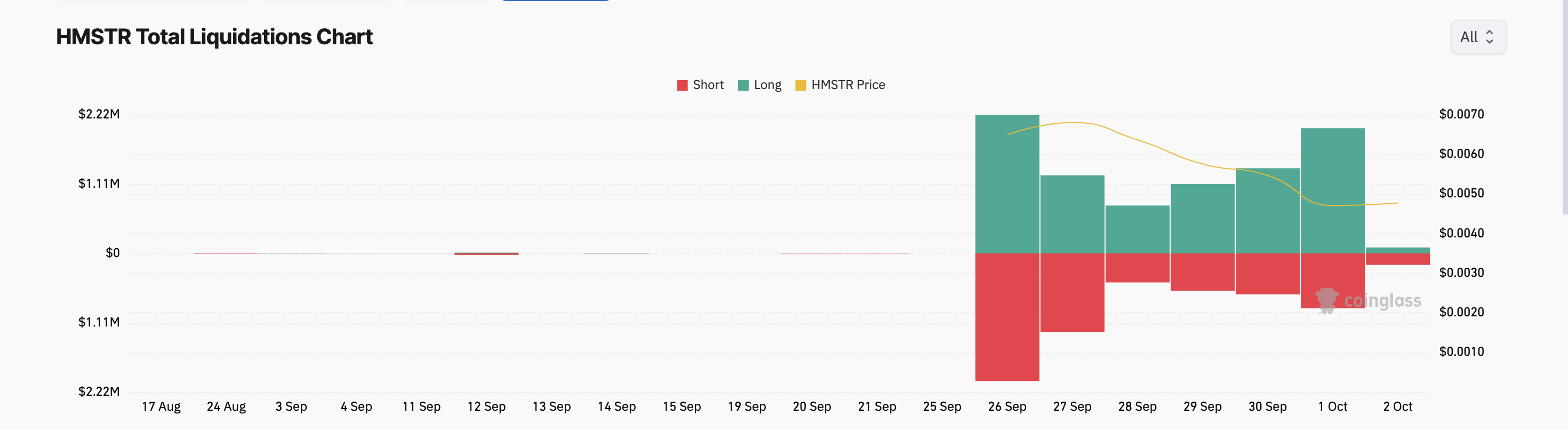
Общие ликвидации HMSTR. Источник: Coinglass

Прогноз HMSTR: ожидается дальнейшее падение

Часовой график показывает, что токен может продолжить падение. Индекс направленного движения (DMI), оценивающий силу тренда, подтверждает этот медвежий прогноз.

На момент публикации положительный индикатор направления (синий) находится ниже отрицательного (красного). Такое расположение чаще всего сулит цене снижение и указывает на доминирование продавцов. Если медведи сохранят контроль, они могут снизить цену HMSTR до минимума $0,0010.
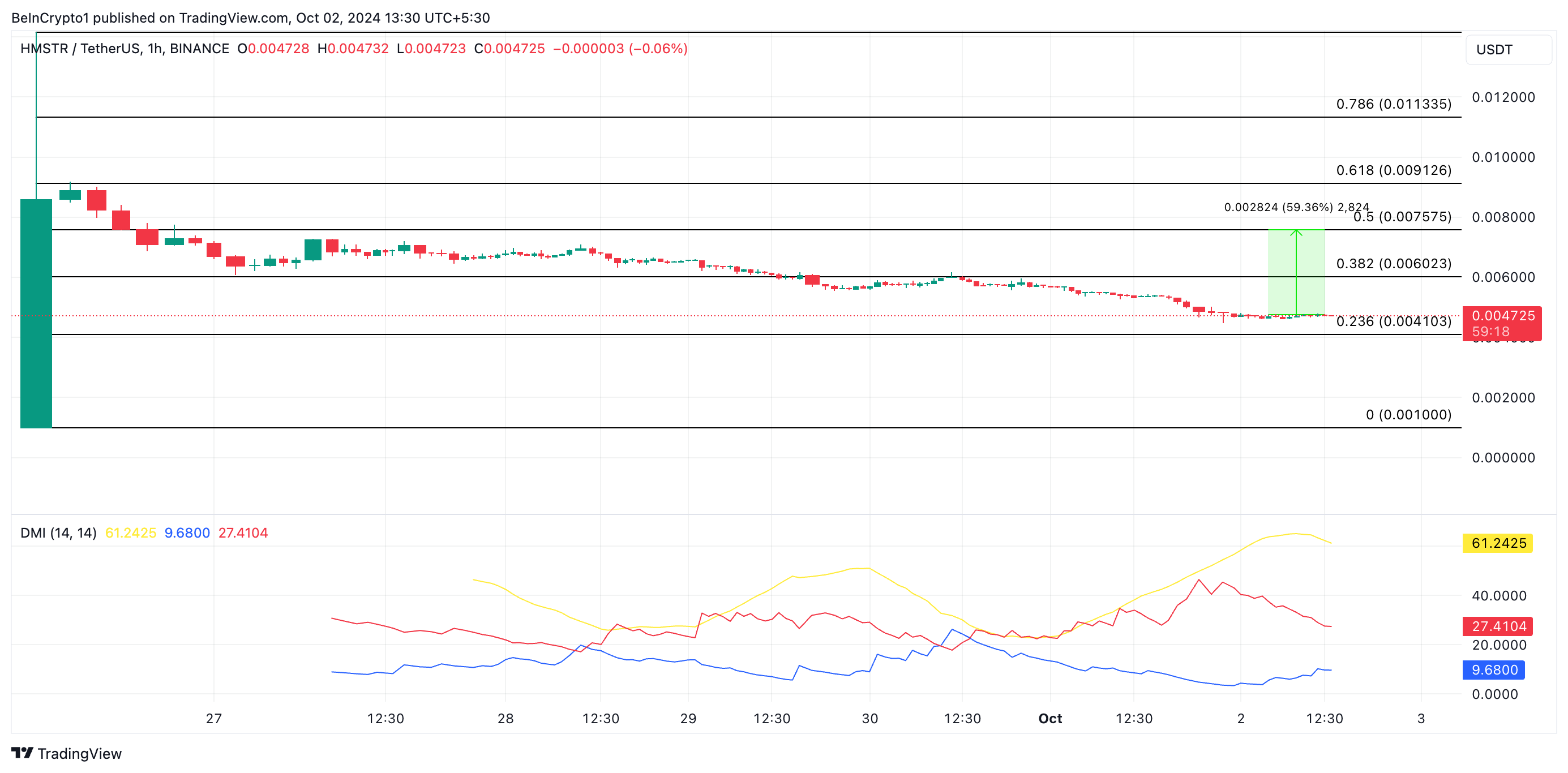
Анализ цены HMSTR. Источник: TradingView

Тем не менее, если настроение на рынке сменится на бычье, цена может подскочить на 59% и достичь уровня сопротивления на $0,0075.


İlgili Okumalar

A Decade of Change: The Demise of Crypto Startups

"The Decade-Long Transformation: The Demise of Crypto Startups" The article traces the dramatic evolution of the cryptocurrency industry from its anarchic beginnings to its current highly regulated and institutionalized state. In the early days (circa 2017), launching a crypto startup was remarkably simple: a whitepaper, a GitHub repository, and a Telegram group could attract thousands of retail investors via an Initial Coin Offering (ICO). Founders operated anonymously with near-zero regulatory and financial barriers, enabling rapid, global innovation but also widespread fraud. By 2026, the landscape is fundamentally different. To operate in major markets like the US, EU, and Asia, crypto businesses must now navigate a complex web of regulations akin to traditional finance. Compliance costs are prohibitive: estimates for a US multi-state operation range from $750,000 to $1.2 million in the first three years, with annual costs exceeding $2 million thereafter. Regulations like MiCA in the EU and New York's BitLicense have created high capital and operational hurdles that act as barriers to entry. Simultaneously, venture capital investment has shifted dramatically. Following the collapses of Terra and FTX, funding has concentrated in later-stage, established companies, creating a "barbell market." Early-stage and seed funding has shrunk significantly, while mega-funds like Andreessen Horowitz's $15 billion pool dominate. Most capital now flows to trading platforms, lending infrastructure, and B2B services. This environment favors mergers and acquisitions as the primary path for growth. Companies like Coinbase and Ripple are acquiring firms like Deribit and Hidden Road not for their technology, but for their licenses, banking relationships, and institutional trust—assets far more valuable than code. Distribution channels, compliance, and brand reputation have become the new moats, overshadowing pure technical innovation. The industry's maturation brings benefits: reduced scams, increased institutional participation, and clearer regulatory frameworks. However, it comes at a cost. The low-barrier, experimental ethos that defined crypto's first decade is fading. Entrepreneurs without substantial capital, pre-existing licenses, or institutional connections face immense challenges. Funding for exploratory fields like decentralized social media or novel governance models is drying up. Ultimately, the crypto industry is replicating the consolidation pattern seen in banking and tech after the 2008 financial crisis. While this brings stability and legitimacy, it raises a critical question: in this new, resource-intensive reality, is there still room for the disruptive, from-scratch innovation that gave birth to the sector?

Foresight News56 dk önce

A Decade of Change: The Demise of Crypto Startups

Foresight News56 dk önce

İşlemler

Spot
活动图片