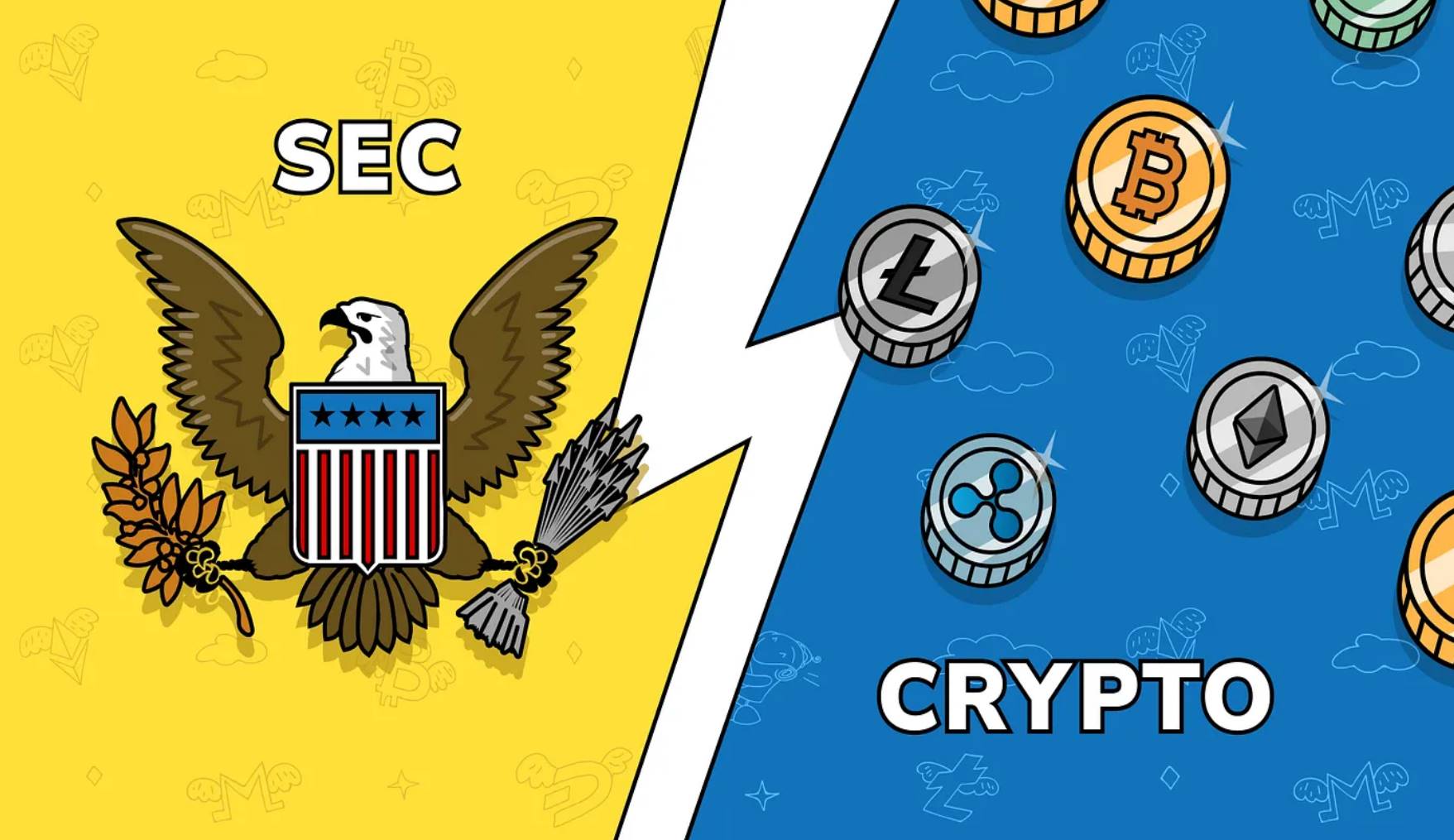
SEC 与加密的恩怨纠葛即将落幕,还是开启新的篇章?

深潮2024-09-26 tarihinde yayınlandı2024-09-26 tarihinde güncellendi

美国证券交易委员会(SEC)向 OpenSea 发出 Wells 通知,加剧了关于加密资产监管的争论,凸显了其长期在法律和监管上面临的挑战。

撰文:Eterna Capital

翻译:白话区块链

最近有消息称,美国证券交易委员会向流行的 NFT 市场 OpenSea 发出了 Wells 通知(正式指控的前奏),为多年来一直困扰区块链行业的法律传奇增添了新的篇章。

众所周知,SEC 的历史立场是「除了比特币之外的所有东西都是证券」——包括,根据给 OpenSea 的通知,包括 NFT。关于加密资产是证券还是商品的争论至关重要:它决定了 SEC 还是 CTFC 负责监管。从本质上讲,这是一种司法练习,用于理解什么可以被视为 1946 年定义的「证券」:因此,它很难应用于加密货币等现代技术。由此产生的不确定性和监管不连贯性一直是加密行业增长的主要上限,因为它降低了采用率、研发率、融资率等。

细心的投资者已经注意到,最近的司法发展表明,美国证券交易委员会(SEC)未能说服法院——而且它通过寻求进一步的诉讼而成功的机会正在减弱。

1、SEC 诉 CONSENSYS

1)ETH 2.0 之后

2024 年 6 月,美国证券交易委员会 (SEC) 放弃了对 Consensys 的以太坊 2.0(区块链过渡到权益证明)调查。根据 Consensys 自己的声明,「这意味着 SEC 不会以 ETH 销售是证券交易为由提出指控」。这当然是个好消息——

但精明的观察者们更倾向于等待 SEC 公布对 Consensys 的 ETH 2.0 交易及瑞波币的调查结果。

如今,我们对这些方面的乐观态度也是有理由的。

2)ETH 2.0 之前

在以太坊过渡到权益证明(即工作量证明时代)之前,SEC 仍可能对 Consensys 的以太坊交易进行调查。对于投资者来说,令人担忧的可能不是诉讼本身,而是诉讼内容:SEC 针对 Consensys 的工作量证明活动提起的诉讼可能包含令 ETH 投资者感到担忧的细节,即这些细节是否可以被视为证券。

幸运的是,这种诉讼发生的可能性越来越小,原因有二:

  1. 加密货币已经成为一个两极分化、政治化的话题,两位总统候选人都不会轻视它;

  2. 现货以太坊 ETF 的批准可以被看作是「证券与商品」之争的最终结论。

2、SEC 诉 RIPPLE

1)微妙的判决

2024 年 8 月,托雷斯法官发布了一项具有里程碑意义的裁决,裁定 Ripple 向机构投资者出售其 Token (XRP) 属于未注册证券发行。虽然这导致 1.25 亿美元的民事罚款,但鉴于罚款金额低于美国证券交易委员会要求的 25 亿美元,这一裁决被视为成功。

此外,法院裁定 XRP 在交易平台的二级销售不属于证券交易,这被视为 Ripple 和所有加密货币的胜利。

然而,这是一场惨胜:托雷斯法官的裁决承认 XRP 在某些情况下可以被视为一种证券——但它并不是所有交易的统一证券。这凸显了将传统(即「未经改革的」)证券法应用于加密货币的复杂性,并允许 SEC 在不同情况下采取行动。

2)法律含义

案件结束了吗?可能不会。双方必须在 10 月 6 日之前提出上诉。Ripple 可能会将「胜利」收入囊中,而不会上诉。相反,SEC 可能会上诉(事实上,它在审判结束前,即 2023 年 8 月就试图上诉——不出所料,Torres 法官驳回了上诉)。虽然上诉法院很可能会支持 Torres 法官的非正统裁决,但也不能保证一定会如此。

具有约束力的先例?与媒体经常误报的情况不同,需要注意的是,这项裁决不具有约束力(除非上诉法院批准)。另一方面,同样需要注意的是,势头显然是积极的:事实上,其他法官在其他案件中也引用了 SEC v Ripple 案(例如,在涉及 BNB Token 的案件中,Ripple 裁决在 SEC v BN 案中被引用,对被告有利,2024 年 7 月)。

其他山寨币怎么样?即使 Ripple 案以具有约束力的先例结束,它仍然会让大多数其他山寨币受到影响:事实上,XRP 是一个例外,它从未进行过 ICO,其共识也不基于权益证明。

3、SEC 的策略转变

Consensys 和 Ripple 案件可被视为对 SEC 执法策略的重大挑战,特别是在其寻求广泛处罚和在加密货币领域执行合规性的方法上。

1)政治支持

这两起案件都发生在 SEC 对加密货币的监管立场受到越来越多的政治审查的背景下。专家们经常忽视这样一个事实,即 SEC 是一个独立的监管机构,据说不受政治影响。尽管如此,在选举的推动下,我们看到国会两党不同寻常地共同推动限制 SEC 的权力并提供更明确的监管准则。

甚至连佩洛西和舒默等著名民主党人也与拜登政府分道扬镳,支持立法,为加密货币行业带来监管透明度,并减少 SEC 的广泛执法自由裁量权。与此同时,特朗普批评现任政府对 SEC 的处理方式,甚至暗示如果连任,将解雇加里·根斯勒——尽管美国总统无权解雇 SEC 主席。

2)一系列法律挫折

SEC 在加密货币领域的监管行动面临重大法律挑战。事实上,在 Consensys 和 Ripple 案件发生后不久,上诉法院裁定 SEC 拒绝 Grayscale 的现货比特币 ETF 申请是「武断和反复无常的」,这引发了人们对该机构决策过程的质疑。SEC 在撤销对 Ripple 联合创始人的指控后面临公众审查。几周后,犹他州一家法院因在涉及另一个加密货币项目的案件中「严重滥用权力」而对其进行谴责。SEC 在针对 Coinbase 的案件中似乎也遇到了类似的挑战。

这些事件,加上美国证券交易委员会最终勉强批准 BTC 和 ETH 现货 ETF,表明美国证券交易委员会的做法发生了转变。

4、结论:转折点?

Consensys 和 Ripple 的案件远未取得决定性的胜利,但标志着 SEC 和加密货币之间斗争的转折点。它们凸显了明确立法的必要性,为判例法的发展奠定基础:鉴于该行业尚处于萌芽阶段,依赖逐案法院判决将阻碍加密货币的长期发展。

尽管 SEC 可能会考虑上诉,并且其他案件仍在继续审理,但新兴趋势有利于该技术。这是司法发展、话题政治化以及现货 ETF 无可争议的成功(不仅仅是财务上的)的结果。

在此背景下,即使 SEC 随后对 OpenSea 发出通知并提起诉讼,人们也可以将其归咎于「死气沉沉」。无论 11 月大选结果如何,不确定性是唯一不变的因素,但机构投资者现在可以合理地期待这里考虑的司法发展,最终释放出他们多年来一直在等待的监管清晰度。

İlgili Okumalar

Trump, the "Stock Market Manipulator" in U.S. Stocks, Lifts Up the Entire Quantum Computing Sector

"Trump, the 'U.S. Stock Market Mastermind,' Boosts the Entire Quantum Computing Sector" This article details how former U.S. President Donald Trump's policies and public statements have significantly influenced the stock market, particularly in the quantum computing sector. A key example is the U.S. government's direct investment in Intel stock in August 2025, which yielded over $45 billion in gains within seven months. Trump publicly credited himself for this profit. Recently, the Trump administration announced a new $2 billion initiative. Through the Department of Commerce, funding from the CHIPS and Science Act will be provided to nine quantum computing companies in exchange for minority, non-controlling equity stakes. The recipients include IBM ($1B for its subsidiary Anderon), GlobalFoundries ($375M), and listed companies like D-Wave, Infleqtion, and Rigetti ($100M each). Private firms such as Atom Computing and PsiQuantum also received $100M. This "investment-for-equity" strategy marks a shift from pure subsidies to an "active investor" model under the CHIPS Act. The announcement immediately boosted quantum computing stocks. The article frames this as part of Trump's "America First" industrial policy, aimed at securing U.S. technological leadership, similar to past investments in semiconductors, rare earths, and lithium. The author suggests this pattern of government-backed market intervention, alongside Trump's personal stock endorsements, is a hallmark of his approach to driving market gains and may continue in sectors like defense and advanced energy.

marsbit12 dk önce

Trump, the "Stock Market Manipulator" in U.S. Stocks, Lifts Up the Entire Quantum Computing Sector

marsbit12 dk önce

2-Year Return of 225x? Uncovering Mysterious Researcher Serenity's AI 'Choke Point' Investment Strategy

"2 Years, 225x Returns? Decoding Serenity's AI 'Chokepoint' Investment Strategy" This article profiles Serenity (formerly AleaBito on Reddit's WallStreetBets), a pseudonymous researcher known for exceptional returns by applying a "Chokepoint Theory" to AI investments. His methodology involves a bottom-up, reverse-engineering approach of the AI hardware supply chain. He identifies critical, irreplaceable physical bottlenecks (chokepoints) that could cripple entire AI systems if disrupted, bypassing Wall Street's top-down focus on major tech firms. Key examples include pinpointing essential suppliers in the emerging Silicon Photonics and Co-Packaged Optics (CPO) sector—components vital for next-generation AI data center interconnects—such as niche companies providing external laser sources, molecular beam epitaxy equipment, or ultra-pure raw materials. Similarly, he highlights geopolitical "chokepoints" in the humanoid robotics supply chain, where key hardware components and rare earth elements are concentrated in Asia. Serenity validates his investment theses through rigorous adversarial AI debates before publication. He leverages institutional blind spots, directing a sophisticated network of retail followers toward undervalued, under-covered micro-cap stocks across global exchanges, driving significant price movements in names like Sivers ($SIVE), Soitec, and Raspberry Pi ($RPI). While presenting a powerful framework for finding critical system dependencies, the strategy carries inherent risks: extreme concentration on specific technological paths, liquidity issues in small-cap stocks, and accusations of market manipulation. Ultimately, the core takeaway is not to copy his trades, but to adopt his analytical lens: to ask which silent, physical switches hold irreplaceable power within a complex system and invest ahead of the market's recognition of their value.

链捕手14 dk önce

2-Year Return of 225x? Uncovering Mysterious Researcher Serenity's AI 'Choke Point' Investment Strategy

链捕手14 dk önce

Bitroot Public Chain Invited to Attend Tencent Cloud Singapore AI Conference, Discussing the Future Alongside Solana

On May 19, Bitroot, an emerging Layer 1 blockchain, participated in the Tencent Cloud AI Summit in Singapore alongside key industry players like Solana Foundation. The event explored the intersection of AI infrastructure, enterprise applications, AI Agents, and Web3. Bitroot's invitation, despite being pre-mainnet, highlights industry interest in its focus on high-performance, AI-native architecture tailored for future AI Agent execution and verifiable on-chain automation. Bitroot CEO Juan Jose emphasized that AI competition is shifting from model performance to data, real-world application scenarios, and trust infrastructure. He argued that for AI Agents to evolve from assistants to autonomous executors managing transactions and assets, they require low-latency, low-cost, and high-throughput blockchain environments. Bitroot aims to address this through its EVM-compatible design, optimistic parallel execution, and a consensus mechanism targeting high scalability. Currently in its Testnet 5.0 phase, Bitroot reports metrics like over 50,000 peak TPS and sub-0.3 second average block time. Its narrative positions it within a growing landscape where next-generation Layer 1s like Monad and Aptos also compete on performance, while Bitroot differentiates by integrating AI computational capabilities natively across its stack. The summit underscored that the fusion of AI and Web3 is moving from concept to infrastructure competition, where networks balancing performance, security, and verifiability will be crucial for enabling scalable AI-driven applications.

marsbit1 saat önce

Bitroot Public Chain Invited to Attend Tencent Cloud Singapore AI Conference, Discussing the Future Alongside Solana

marsbit1 saat önce

Hedge Fund Q1 Interpretation: Everyone Is Selling Software, Buying Chips

Hedge Funds and Mutual Funds Aligned in Q1: Dumping Software, Buying Chips A clear consensus emerged among major U.S. hedge funds and mutual funds in Q1: they were simultaneously selling software stocks and pouring capital into the semiconductor sector. This aggressive rotation pushed semiconductor exposure in hedge fund long portfolios to a record high. Hedge funds delivered a 7% return year-to-date, while only 30% of large-cap active mutual funds outperformed their benchmarks. The average short interest for S&P 500 constituents rose to 3% of market cap, the highest since 2011. Within technology, the structural shift was stark. Hedge funds' semiconductor weighting hit an all-time high, while software fell to its lowest since 2019. Excluding Microsoft, mutual funds' relative overexposure to semis vs. software was the largest since 2012. Microsoft was among the most net-sold stocks by both groups. Hedge funds net purchased semiconductor names like LRCX and AMAT. Strategies diverged on leverage and cash. Hedge funds increased their net exposure to near a one-year high after an initial cut. Mutual funds raised their cash allocation, though it remains historically low at 1.4%. Sector alignment was high in Industrials (both overweight) but divergent in Tech: hedge funds increased their Tech net tilt by a record 853 basis points, while mutual funds reduced theirs. Clear splits also appeared in Financials and Consumer Discretionary. Four stocks appeared on both Goldman's hedge fund VIP and mutual fund overweight lists: BA, MA, MRVL, and V. This "shared favorites" basket has returned 10% YTD, outperforming the equal-weight S&P 500. Notably, all "Magnificent Seven" stocks are on the hedge fund VIP list but are uniformly underweighted by mutual funds.

marsbit1 saat önce

Hedge Fund Q1 Interpretation: Everyone Is Selling Software, Buying Chips

marsbit1 saat önce

İşlemler

Spot
Futures
活动图片