SignalPlus宏观分析(20240919):FOMC会议重点摘要—Confidently Dovish

Odaily星球日报2024-09-19 tarihinde yayınlandı2024-09-19 tarihinde güncellendi

Özet

Powell主席以50个基点的降息满足了风险市场的期望,但对于这次选择较大幅度的降息,他同时也充满信心地强调经济软著陆仍然是基本情况,并多次重申美国经济表现“相当不错”...

SignalPlus宏观分析(20240919):FOMC会议重点摘要—Confidently Dovish

Powell 主席以 50 个基点的降息满足了风险市场的期望,但对于这次选择较大幅度的降息,他同时也充满信心地强调经济软著陆仍然是基本情况,并多次重申美国经济表现“相当不错”。

重点摘要:

  • 随著通胀下降,软著陆仍然是基本预期。“美国经济状况良好,我们今天的决策是为了保持这样的局面。”“美国经济基本上没问题。”“我相信通胀会降至 2% 。”

  • 保持领先。Powell 承诺在利率调整上“保持领先”,以应对就业市场的放缓,并特别关注招聘率(50 个基点的降息是我们不落后于形势的承诺)。美联储将 2024 年的失业率预期上调至 4.4% (之前为 4.0% ), 2025 年上调至 4.2% (之前为 4.0% ), 2026 年则上调至 4.3% (之前为 4.1% )。

  • 50 个基点的变动旨在传达“强有力的举措”。 Powell 承认 50 个基点的调整是较强力的举措,但他也表示未来不一定会以同样的步伐推进(“我们不应该假设这是新常态”),给美联储未来的会议留下回旋的空间。基本上,不要预期一直会是 50 个基点的调整,也不要预期 75 个基点的降息,但如果经济数据证明有必要,美联储也可能会进行多次 50 个基点的调整(“我们总是会在当下做我们认为对经济有利的事情,今天的决策也是如此。”)。

  • 关键在于硬数据。美联储将专注于硬经济数据而非软情绪数据,将特别关注市场对较低利率的反应。

  • 我们立场一致。 Powell 指出,所有 19 名成员都同意今年应多次降息,其中 17 名成员认为会进行 3 次完整降息, 2 名成员则认为将有 4 次,这与 6 月的情况有“显著不同”,唯一的异议者是 Bowman,他这次支持仅降息 25 个基点。

市场反应:

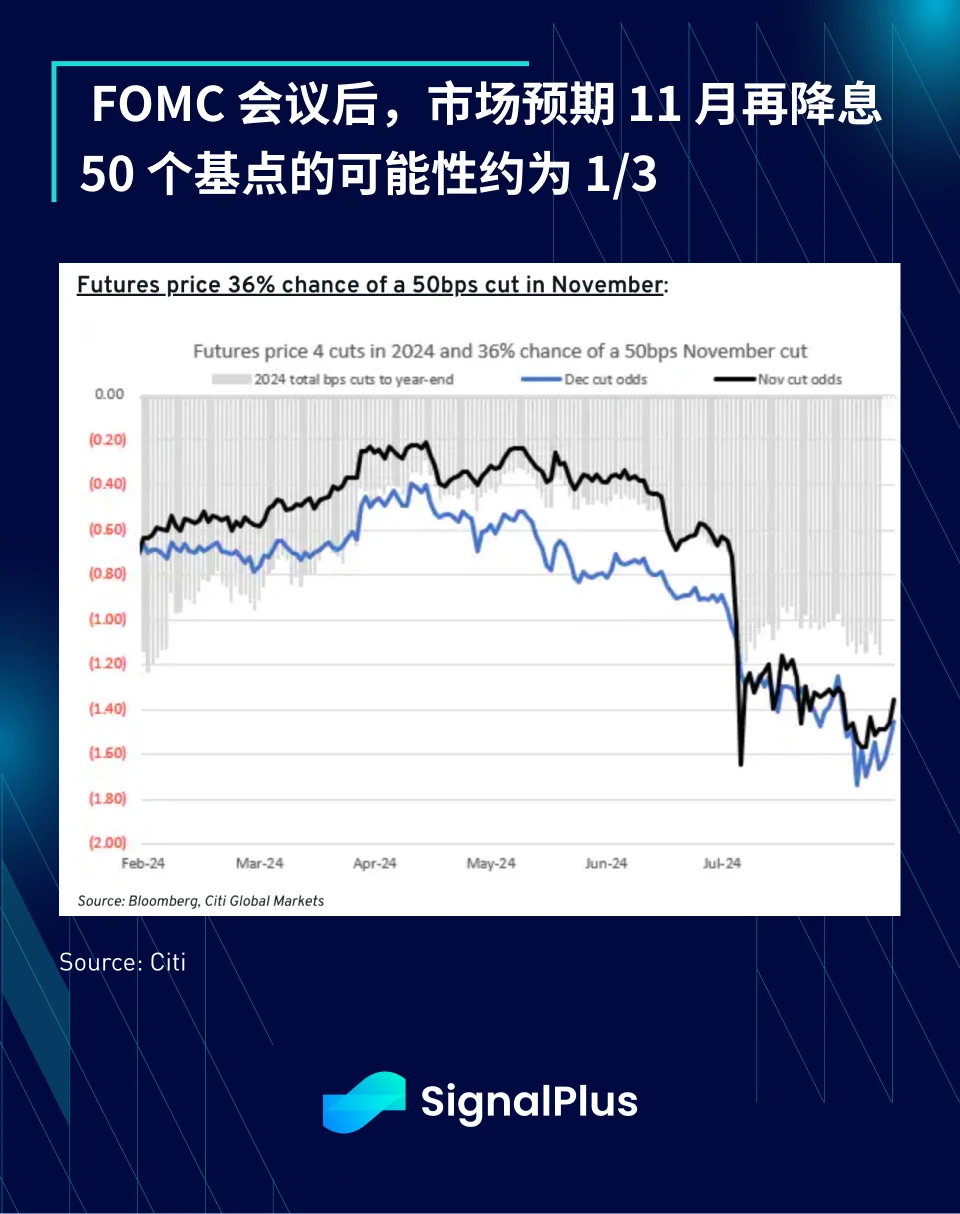
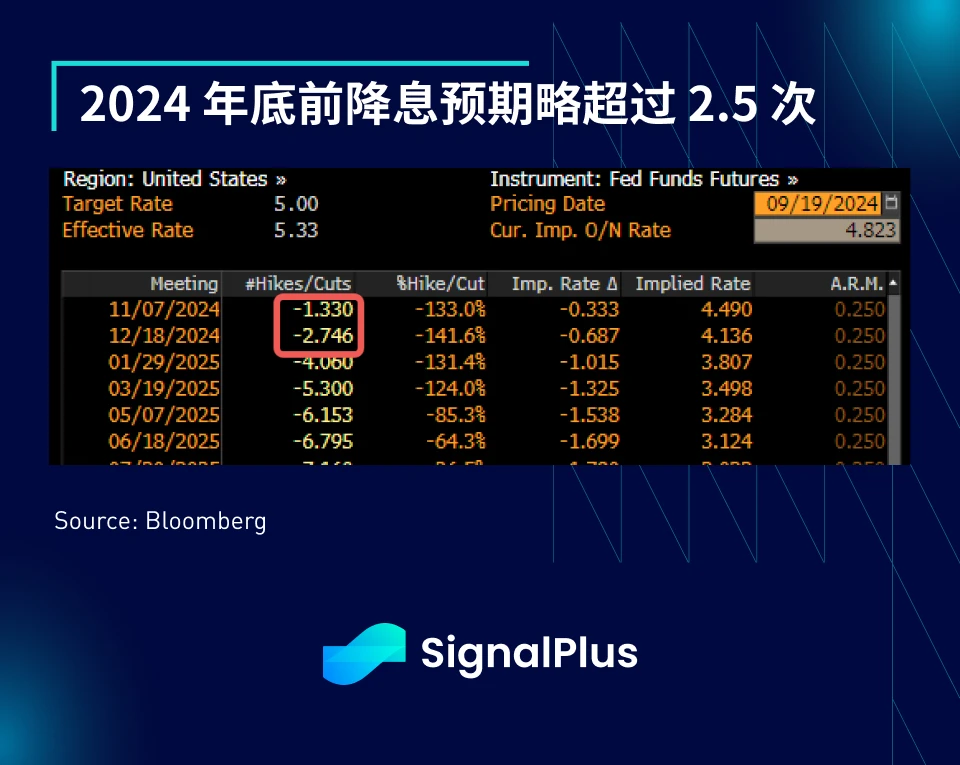
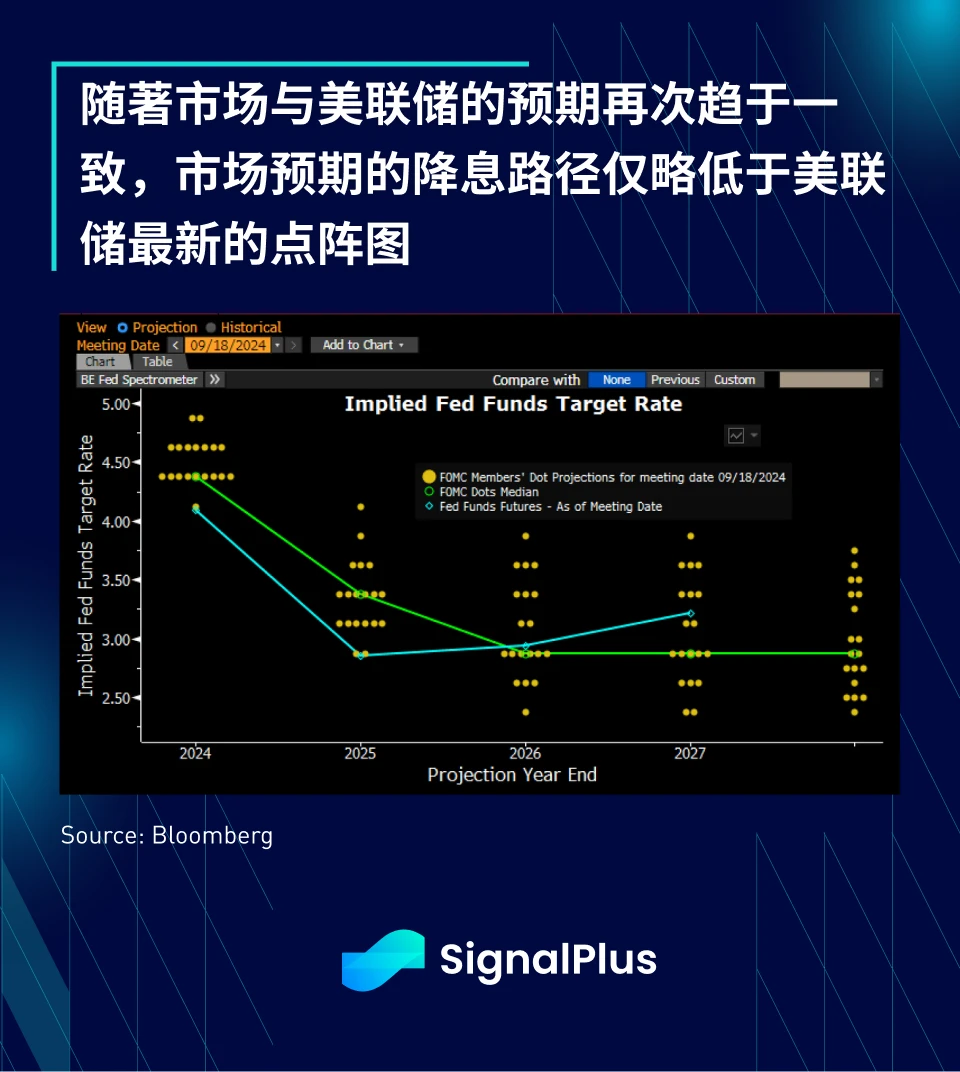
  • 利率: 市场仍然预计 2024 年会再有 2.5 次降息,略领先于美联储的点阵图中位数。债券收益率在 FOMC 会议后几乎没有变动,因为结果基本符合预期。

  • 外汇: 美联储的决策导致美元走弱,特别是考虑到日本央行在即将召开的会议上可能会保持鹰派立场,美元相对于日圆疲软。

  • 股票: 美联储实施“强有力”的宽松政策,并表示经济状况仍然良好且通胀预计会下降,促使股市上涨。

  • 加密货币: 受益于股市强势走高,BTC 回升至 60 k 美元,altcoins 也表现强劲,显示整体风险情绪有所提升。

SignalPlus宏观分析(20240919):FOMC会议重点摘要—Confidently Dovish

SignalPlus宏观分析(20240919):FOMC会议重点摘要—Confidently Dovish

SignalPlus宏观分析(20240919):FOMC会议重点摘要—Confidently Dovish

SignalPlus宏观分析(20240919):FOMC会议重点摘要—Confidently Dovish

SignalPlus宏观分析(20240919):FOMC会议重点摘要—Confidently Dovish

您可在 t.signalplus.com 使用 SignalPlus 交易风向标功能,获取更多实时加密资讯。如果想即时收到我们的更新,欢迎关注我们的推特账号@SignalPlusCN,或者加入我们的微信群(添加小助手微信:SignalPlus 123)、Telegram 群以及 Discord 社群,和更多朋友一起交流互动。SignalPlus Official Website:https://www.signalplus.com

İlgili Okumalar

Kelp DAO's $400 Million Bad Debt Was Covered, But at a $12 Billion Cost to Aave

On May 26th, Kelp DAO successfully transferred its final batch of rsETH, completing the 37-day process of fully backing rsETH 1:1 after a security incident. However, the resolution came at a significant cost to Aave. The protocol's TVL plummeted by over $12 billion in the following month. Furthermore, a separate legal battle over 30,766 frozen ETH continues in court, posing ongoing reputational risk. The recovery was enabled by an unprecedented, one-time coalition dubbed "DeFi United," involving major contributions from Aave's founder, treasury, Consensys, Mantle, and others. Despite this, the event triggered a major outflow of funds, with whales like Justin Sun moving capital to competitors like Spark. Aave's path to regaining its position relies heavily on the successful execution of its multi-pronged strategy. Its new V4 protocol, designed for open, heterogeneous asset markets, faces delays due to internal governance disputes. Meanwhile, the V3 version remains the core revenue generator, and the permissioned Horizon fork is targeting institutional RWA (Real-World Assets) growth—a segment less impacted by the rsETH incident but dependent on traditional finance adoption timelines. The key takeaway is that while the immediate bad debt was covered, Aave paid a steep price in lost trust and capital. Recovering market share depends on accelerating V4's rollout and advancing its institutional RWA offerings, both of which face external and internal hurdles. The "DeFi United" safety net is unlikely to be replicable for future crises.

marsbit3 dk önce

Kelp DAO's $400 Million Bad Debt Was Covered, But at a $12 Billion Cost to Aave

marsbit3 dk önce

TechFlow Intelligence Report: Xiaomi Announces 200 Billion HKD Stock Buyback Plan, Spot Gold Falls Nearly 1%

TechFlow Report: Xiaomi announced a HK$200 billion stock buyback plan, while spot gold fell nearly 1%. A wider range of tech headlines includes Google unveiling its powerful video editing model Gemini Omni and the original "Attention is All You Need" authors advocating for a move beyond Transformer architecture. In other AI news, IBM reported its first successful use of a quantum computer to train an AI model, and Qwen3.5 released uncensored local model versions. The crypto/Web3 sector saw discussions on opaque stablecoin products and DEX fee changes. Major tech companies are under scrutiny: Uber's COO publicly questioned the ROI of AI investments, Motorola was accused of hijacking Amazon app links for affiliate codes, and Google faced criticism for using web data to fuel its AI. U.S. markets are focused on high S&P 500 valuations (31.8x P/E) and an intense concentration of capital in semiconductor stocks, with warnings about the sustainability of the AI data center boom. Geopolitical tensions, featuring simultaneous U.S. airstrikes on Iran and peace talks, caused significant oil price volatility. Other notable developments include Ferrari's first pure EV priced at 4.35 million yuan and Boston Dynamics' Atlas robot learning soccer from videos. The underlying theme suggests the AI narrative is shifting from boundless potential to requiring tangible results, while traditional geopolitical risks remain a powerful force in markets.

marsbit6 dk önce

TechFlow Intelligence Report: Xiaomi Announces 200 Billion HKD Stock Buyback Plan, Spot Gold Falls Nearly 1%

marsbit6 dk önce

Coin & Stock Barometer: Bitcoin Miner MARA Holdings Spends Over $860,000 on Bulletproof Vehicle Services for Executives; Bitmine Included in Preliminary List for FTSE Russell 1000 Index (May 19)

Crypto Market Wrap & Key Corporate Updates (May 19) The crypto market saw a decline followed by a minor rebound, while U.S. crypto-related stocks fell broadly. In corporate news: **MARA Holdings**, a Bitcoin miner, disclosed spending over $869,000 on vehicle ballistic armor services for its CEO and CFO under its security program. The board cited higher risks associated with the company's public disclosure of holding substantial Bitcoin assets. According to BitcoinTreasuries.NET, Elon Musk's **SpaceX and Tesla** collectively hold 30,221 BTC ($2.3B), which would rank them as the fifth-largest public company holder if combined. **DDC Enterprise Limited** increased its Bitcoin holdings by 200 BTC, bringing its total to 2,583 BTC. The firm stated it plans to continue accumulating BTC based on liquidity, not short-term price movements. Bitcoin treasury company **Nakamoto** announced a 1-for-40 reverse stock split to regain compliance with Nasdaq's minimum bid price requirement. The company reported a Q1 2026 net loss of $238.8M, partly due to a $102.5M unrealized loss on its Bitcoin holdings. **Tether** acquired SoftBank's stake in **Twenty One Capital (XXI)**, increasing its control. Tether's CEO expressed strengthened confidence in XXI's long-term Bitcoin strategy. Fundstrat's **Tom Lee** stated that **Bitmine (BMNR)** has been included in the preliminary list for the FTSE Russell 1000 Index. Concurrently, two new wallets suspected to be linked to Bitmine withdrew 60,000 ETH ($126M) from Bitgo and Kraken. Solana treasury company **Solmate Infrastructure** announced a registered direct offering of shares to raise approximately $11.4 million. **AI Financial**, a WLFI treasury company, reported a Q1 2026 net loss of $271.5M and raised substantial doubt about its ability to continue as a going concern, partly due to unrealized losses on its WLFI token holdings. **SUI Group** disclosed it holds over 108.7 million SUI tokens (~$115M), with its market cap to net asset value ratio at 0.91x. *Disclaimer: This summary is for informational purposes only and does not constitute investment advice.*

marsbit22 dk önce

Coin & Stock Barometer: Bitcoin Miner MARA Holdings Spends Over $860,000 on Bulletproof Vehicle Services for Executives; Bitmine Included in Preliminary List for FTSE Russell 1000 Index (May 19)

marsbit22 dk önce

China's AI Fronts: From Yan'an to Midway

This article analyzes the competitive landscape of China's AI industry through a dual-front war analogy: the "Eastern Front" of business model competition and the "Western Front" of global strategic positioning. **The Eastern Front: The Scramble for Supply Lines and Monetization** The "Eastern Front" examines the contrasting strategies of three Chinese tech giants—Tencent, Alibaba, and ByteDance—in the face of AI's high marginal costs. Tencent integrates AI as a catalyst within its existing ecosystems (advertising, gaming, cloud) for monetization, prioritizing high-value scenarios over user growth. Alibaba bets on a full-stack, self-developed approach from chips to applications, aiming to control costs and ecosystem, though this requires immense patience and resources. ByteDance, with Doubao as its flagship, pursues a traditional traffic-driven, "super app" strategy but faces severe monetization challenges as its massive user base incurs unsustainable operational costs. The central challenge for all is building a reliable "supply line" (sustainable funding/profit) and achieving efficient monetization, moving beyond being mere "token factories." **The Western Front: "Preserving Land" vs. "Preserving People"** The "Western Front" frames a global strategic divergence. The U.S. model ("preserving land") focuses on closed-source, high-premium models (e.g., Anthropic) targeting lucrative enterprise markets. China's strategy ("preserving people") leverages open-source models (e.g., Alibaba's Qwen, DeepSeek) and extremely low pricing to attract global developers and capture long-tail markets, akin to a "surround the cities from the countryside" approach. The goal is to make Chinese models the default infrastructure, locking in future ecosystem value. However, the critical test is whether this open-source ecosystem can achieve a commercial闭环, converting developer adoption into tangible revenue (e.g., via cloud services), and bridging the monetization gap with Western models that charge for value, not just tokens. **Conclusion: The Long March from Factory to Brand** The article concludes that China's AI industry possesses technology, users, and scenarios but must integrate them to create and capture value. Its ultimate success depends on navigating both fronts: companies must establish sustainable monetization on the Eastern Front, while the industry's Western strategy must evolve from simply "preserving people" (developer adoption) to truly "preserving both people and land" — transforming open-source ecosystem dominance into commercial success and premium brand value. This journey from being a "token factory" to a "value highland" will require strategic patience and the ability to outlast competitors in a prolonged contest.

marsbit53 dk önce

China's AI Fronts: From Yan'an to Midway

marsbit53 dk önce

A History of Technological Evolution Powered by Electricity: Aluminum, Bitcoin, and AI

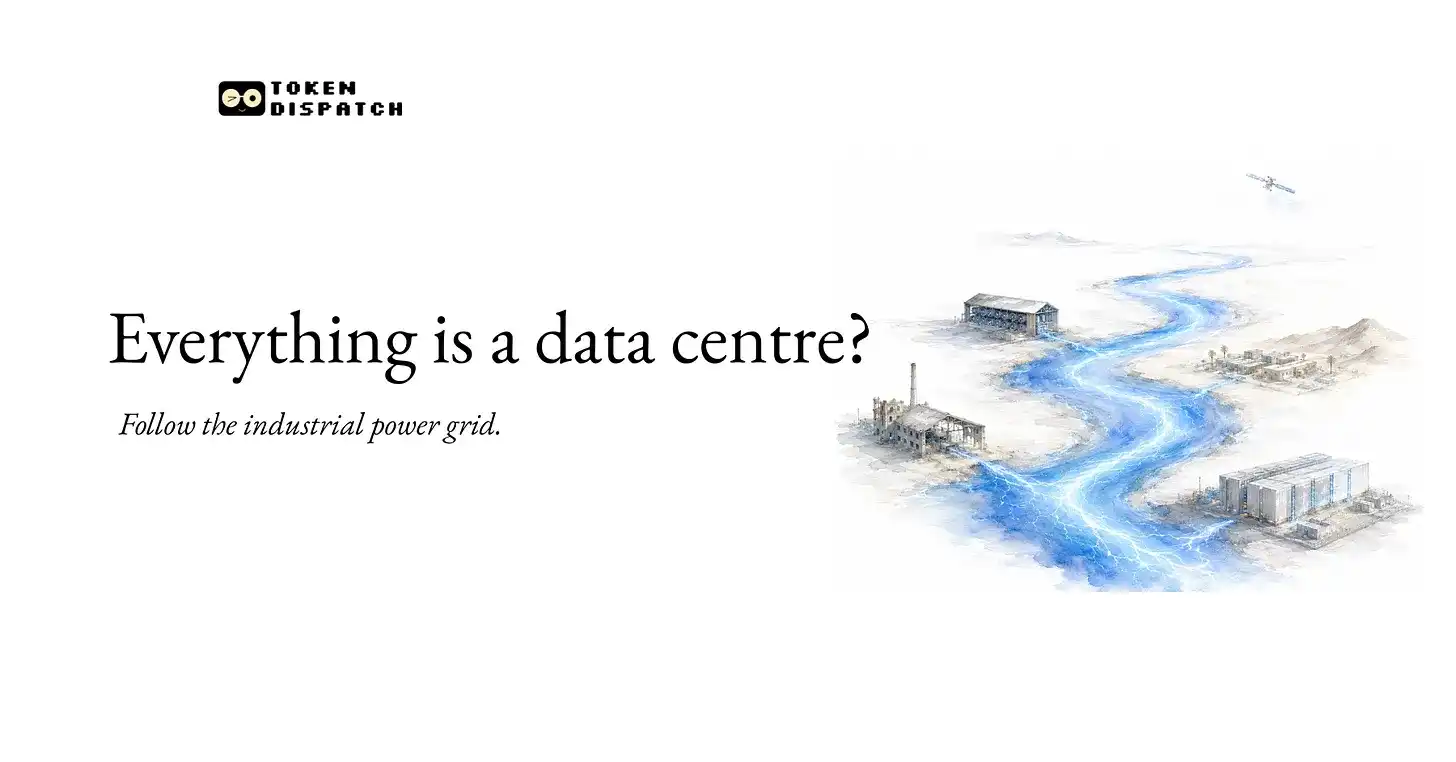
The journey from the Rockdale aluminum smelter in Texas to space-based data centers illustrates a core economic principle: whoever controls the cheapest electricity dictates the use of computing power. The evolution is clear. Old industrial sites with pre-existing, high-capacity power grids are being repurposed. In Rockdale, a former Alcoa plant now houses vast Bitcoin mining rigs, which are increasingly being replaced by AMD chips for AI training. The logic is purely financial: while smelting aluminum yields $0.17–0.27 per kWh and Bitcoin mining $0.05–0.11, AI inference on H100 GPUs generates $1.27–3.67 per kWh. Recent deals confirm the rush for power infrastructure. Riot Platforms leases space to AMD; TeraWulf bought an old Kentucky aluminum plant for its grid; NYDIG secured a New York site for its cheap hydropower to mine Bitcoin. As AI giants like Anthropic, Microsoft, Google, and Amazon aggressively expand, they now directly compete with crypto miners for the same industrial power resources, often outbidding them. This has led to a decline in Bitcoin's global hash rate and a wave of miner conversions to AI data centers. This "digital resource curse" extends globally. Gulf nations, long offering subsidized power to attract heavy industry like aluminum, are now pivoting to become AI and cloud computing hubs—exporting computational power instead of physical commodities. Similarly, Bhutan halted its sovereign Bitcoin mining to sell hydropower directly to India for a steadier return. The frontier is space. Projects like Starcloud plan orbital solar-powered data centers, leveraging constant sunlight and natural cooling, with Bitcoin mining as a secondary use for surplus power. Even consumer brands are transforming; Allbirds shifted from footwear to AI infrastructure, causing its stock to surge. Meanwhile, crypto projects like Bittensor, Render, and Akash propose a decentralized alternative, creating markets to aggregate distributed, idle computing resources from individual hardware. The underlying infrastructure—the power grid—remains constant. As profit margins shift, the facilities built upon it will continue to evolve, from aluminum to Bitcoin to AI and beyond, always chasing the highest yield per kilowatt-hour, whether in Texas, Abu Dhabi, or low Earth orbit.

marsbit1 saat önce

A History of Technological Evolution Powered by Electricity: Aluminum, Bitcoin, and AI

marsbit1 saat önce

İşlemler

Spot
Futures
活动图片