9 月市场紧张情绪袭来,走势严重依赖数据

深潮2024-09-04 tarihinde yayınlandı2024-09-04 tarihinde güncellendi

美国关键经济数据陆续出炉。

撰文:比推

周二加密市场延续跌势。

比推数据显示,比特币在周二凌晨触及 59,840 美元的日内高位,但在午盘后回落至 57,500 美元支撑位,随后有所反弹,截至发稿时,BTC 交易价格为 57,901 美元,24 小时跌幅 2%。
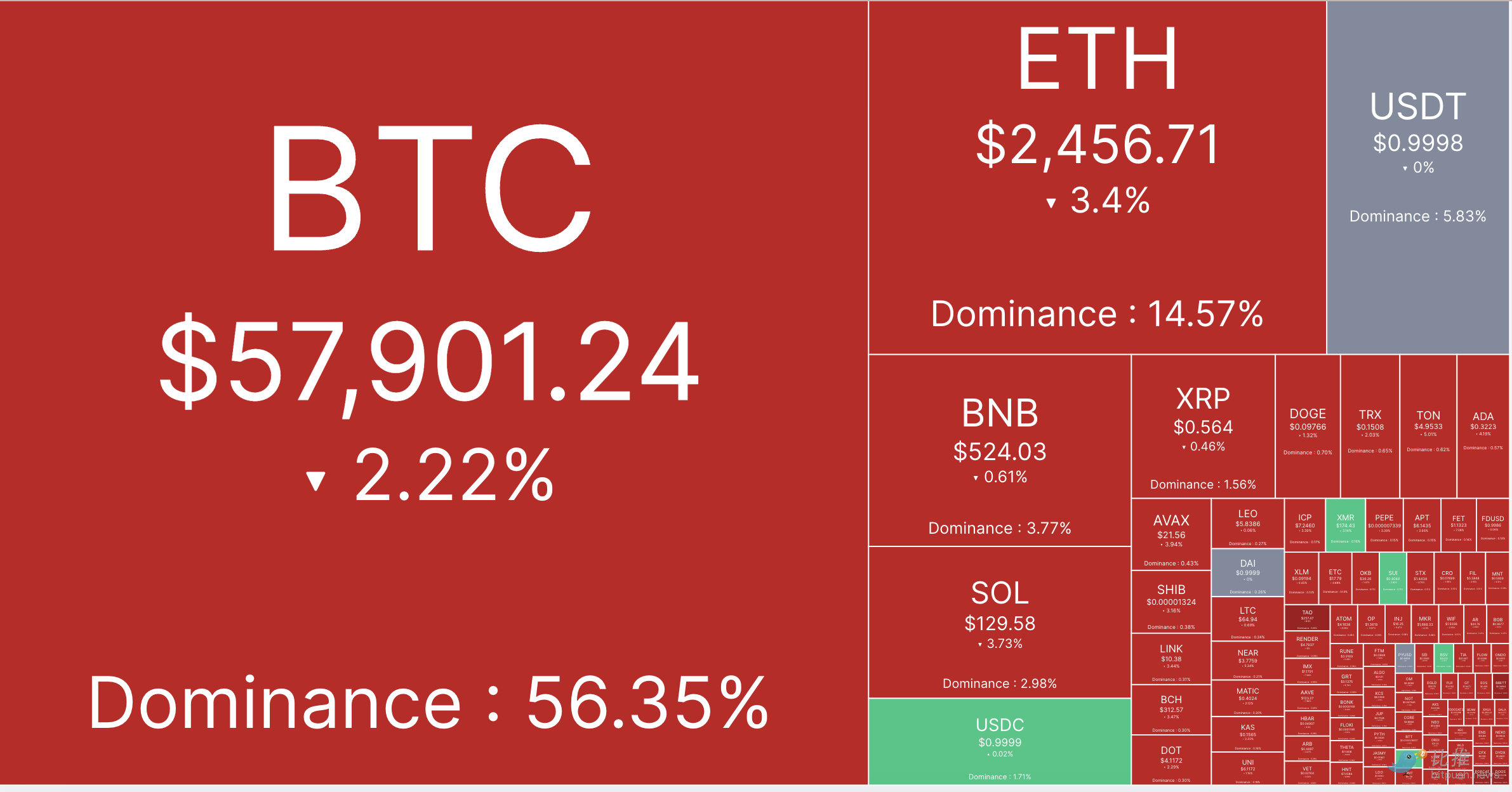
以太坊下跌 3% 至 2,456 美元,为 2 月初以来的最低水平。山寨币大多呈亏损状态,排名前 200 位的代币中只有 20 多种上涨。

Flux (FLUX) 上涨 18.6%,其次是 UMA (UMA) 和 Sui (SUI),分别上涨了 6.9% 和 5.7%。LayerZero (ZRO) 跌幅最大,下跌 9.3%, DOGS (DOGS) 下跌 8.4%,Pendle (PENDLE) 下跌 7%。

目前加密货币整体市值为 2.04 万亿美元,比特币的市场占有率为 56.4%。

美股、黄金均呈下跌趋势。截至收盘,标普 500 指数、道琼斯指数、纳斯达克指数分别下跌 2.12%、1.51% 和 3.26%。

历史上来看,金融市场通常在 9 月份表现欠佳,交易员正在等待美联储首次降息、可能影响降息轨迹的几个关键数据点,以及 11 月美国总统大选的倒计时。

美国关键经济数据陆续出炉

美国最新的经济数据重新引发人们对衰退的担忧。周二上午发布的 ISM 8 月制造业 PMI 报告显示,美国经济继续萎缩,实际值为 47.2,低于预期值 47.5 和 7 月的 46.8,新订单从 7 月的 47.4 降至 44.6,而支付价格从 52.9 升至 54.0。

根据芝加哥商品交易所 (CME) 的 FedWatch 数据,受疲软数据影响,交易员将美联储 9 月份降息 50 个基点的几率从一天前的 30% 提高至 39% 。不过押注热门仍为 25 个基点,概率为 61%。

最重要的宏观数据(也可能是美联储降息 25 或 50 个基点的最终决定因素)仍是周五的 8 月份就业报告,经济学家预测就业岗位将从 7 月份的 11.4 万个反弹至 16 万个。失业率预计将从 4.3% 降至 4.2%。

首席技术策略师 Larry Tentarelli 表示:「目前市场似乎对任何数据都非常敏感。我们已经成为一个非常依赖数据的市场。」

BTC 遵循过去周期的结构模式

TradingView 分析师 TradingShot 指出: 「比特币一直非常密切地遵循过去周期的结构模式」, 他对「与周期分形的相似序列」进行了分析。
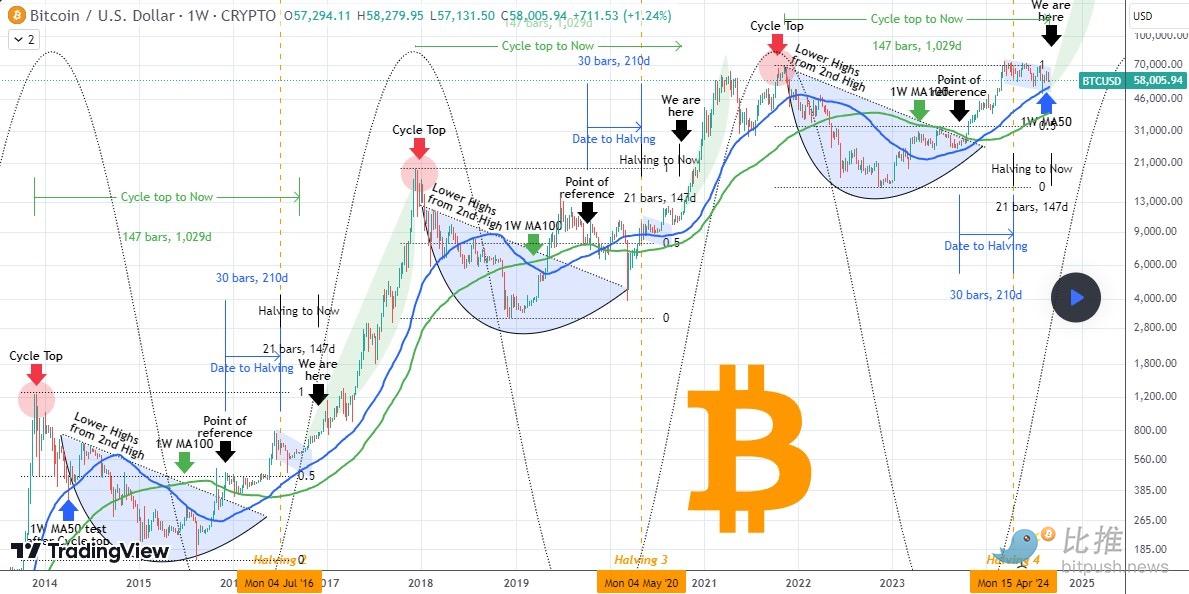
TradingShot 表示:“BTC 遵循了我们绘制的准确路径,并实现了预期,突破了 1W MA100(上图绿色趋势线)。由于价格在过去 6 个月内基本处于盘整状态(牛旗 / 下行通道),现在是时候重新审视这张图表,看看接下来会发生什么。”

分析师解释称:「经过一些修改,我们可以看到,在 8 月初的测试中成功守住 1W MA50 后,价格应该(相对于过去 2 个周期)开始新的抛物线反弹(上图绿色弧线),我们距离上一个周期顶部有 147 周(1029 天),距离减半有 21 周(147 天)。在过去的周期中,这正是比特币开始大幅上涨的确切时间点(上图‘we are here’标记处)。在所有情况下,1W MA50 都守住了,所以现在市场的目标是保持其不变,这样买家就不会失去心理支撑位,如果守住该水平,突破 10 万应该是最低预期,尤其是在本月开始降息周期和 11 月美国大选(传统上市场在大选后看涨)之前。」

至于近期的预期,市场分析师 Rekt Capital 指出,从历史上看,九月对比特币来说一直是一个负收益月份。
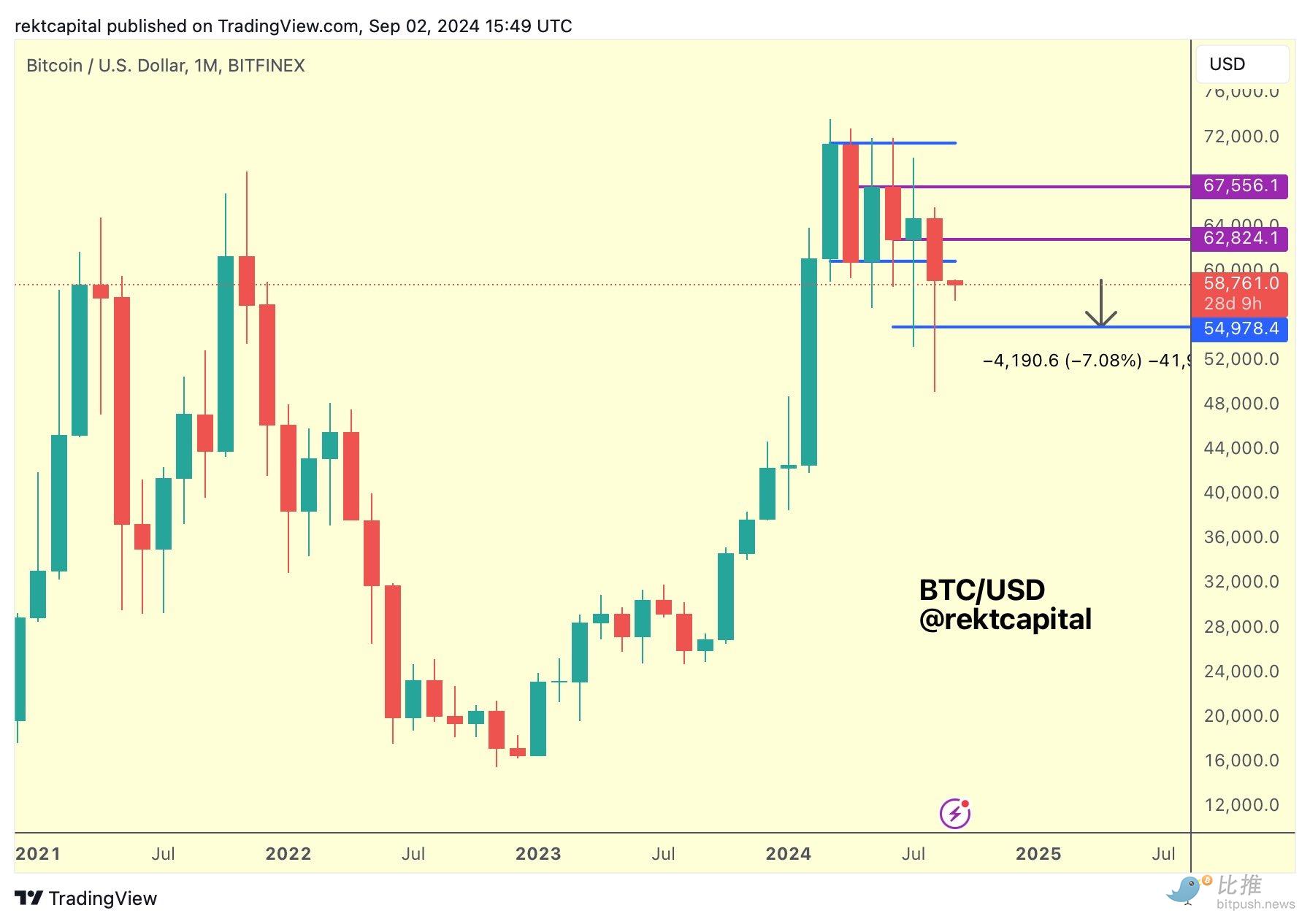
Rekt Capital 警告称:「如果比特币在今年 9 月份也出现历史上常见的 7% 的下跌……那就意味着比特币将再次跌至 55,000 美元左右。」


İlgili Okumalar

Why Did Zhipu Surge Nearly 30% in a Single Day?

"Global AI Model Unicorn" Zhipu's stock surged nearly 30% in a single day, reaching a new market cap high. The catalyst was the launch of its GLM-5.1-highspeed API, boasting a generation speed of **400 tokens per second**, setting a new global benchmark. This speed, roughly 3-5 times faster than industry leaders like OpenAI's GPT-4o and Anthropic's Claude, is achieved **without compromising the full-scale model's capabilities**. In the era of AI Agents requiring dozens of self-calls, such latency reduction is critical, transforming speed from a system metric into a determinant of intelligence limits. The breakthrough stems from a three-layer technical overhaul: 1. **TileRT Inference Engine**: Compiles the entire model into a continuous, always-on computation pipeline using "Warp Specialization," minimizing GPU idle time by having different processor groups handle data loading, computation, and communication in parallel. 2. **Heterogeneous Parallelism for MLA**: To efficiently run the GLM-5.1 model using the MLA attention mechanism, TileRT employs a heterogeneous strategy. One GPU handles sparse indexing/routing, while the others perform dense computation, optimizing for MLA's unique workflow. 3. **ZCube Network Architecture**: Replaces the standard Spine-Leaf (ROFT) network topology with a flat, dual-group interconnect. This design creates a single optimal path between any two GPUs, eliminating network congestion at scale and reducing latency. The business impact is significant: a 15% increase in cluster throughput (free extra capacity), a 40.6% reduction in tail latency (improved stability), and a one-third cut in networking hardware costs. Long-term, this innovation challenges the dominance of NVIDIA's integrated hardware-software stack (GPU+NVLink+InfiniBand), potentially benefiting manufacturers of high-density Leaf switches and optical modules while lowering the software barrier for domestic AI chips like Huawei's Ascend. The innovation proves that more can be achieved with the same compute, reshaping the infrastructure beyond just GPUs.

marsbit1 saat önce

Why Did Zhipu Surge Nearly 30% in a Single Day?

marsbit1 saat önce

Bidding Farewell to the 'Gray Gambling Game'! Polymarket Charges into the Compliance Track—How Will This Impact the Entire Crypto Industry?

From Gray to Regulated: How Polymarket’s Compliance Journey Reshapes Crypto The evolution of Polymarket, a decentralized prediction market platform, illustrates a critical trend in crypto: innovative, high-value sectors ultimately integrate into regulatory frameworks. Founded in 2020, Polymarket quickly gained traction by leveraging low-cost Layer 2 blockchain technology for event-based trading, notably during the 2024 US presidential election where its markets outperformed traditional polls. However, its "build first, comply later" approach led to a 2022 CFTC enforcement action, resulting in a $1.4 million fine and a ban from the US market. A pivotal shift occurred in 2025 under a new US administration. Polymarket strategically acquired CFTC-licensed derivatives exchange QCX for $112 million, securing a regulated pathway back into the US. This move coincided with a regulatory reversal, as the CFTC withdrew a prior proposal to ban political event contracts. The platform’s successful "regulatory acquisition" strategy, avoiding a lengthy independent licensing process, highlights a viable compliance path for crypto-native projects. Its journey from regulatory target to a CFTC-recognized entity—bolstered by a major data partnership and investment from Intercontinental Exchange (ICE)—signals the maturation of prediction markets from a "crypto novelty" into acknowledged financial infrastructure. The story underscores that genuine utility provides negotiating power with regulators and that embracing compliance does not necessarily mean sacrificing core technological advantages.

marsbit1 saat önce

Bidding Farewell to the 'Gray Gambling Game'! Polymarket Charges into the Compliance Track—How Will This Impact the Entire Crypto Industry?

marsbit1 saat önce

İşlemler

Spot
Futures
活动图片