Криптобиржи теряют биткоины: что готовит нам рынок?

cryptonews.ru2024-01-30 tarihinde yayınlandı2024-08-30 tarihinde güncellendi

Похоже, крипторынок готовится к чему-то грандиозному. Количество биткоинов на криптобиржах достигло нового минимума за 2024 год. И знаете, что это может означать? Правильно, бычье ралли на горизонте!

По данным аналитиков CryptoQuant, с начала года запасы биткоина на биржах сократились на впечатляющие 12,9%. Сейчас на крупнейших площадках хранится всего 2,62 миллиона BTC. Для сравнения: в январе эта цифра превышала 3,05 миллиона. Неплохое «похудение», не правда ли?

Что стоит за оттоком биткоинов с бирж?

Аналитик CryptoQuant под псевдонимом Gaah считает, что это может свидетельствовать о снижении давления продаж. А если спрос продолжит расти, то у нас на руках все козыри для нового бычьего рынка.

«Когда биткоины перемещаются в холодные кошельки, это обычно указывает на то, что инвесторы настроены на долгосрочное хранение и оптимистично смотрят на потенциал цены», — поясняет Gaah.
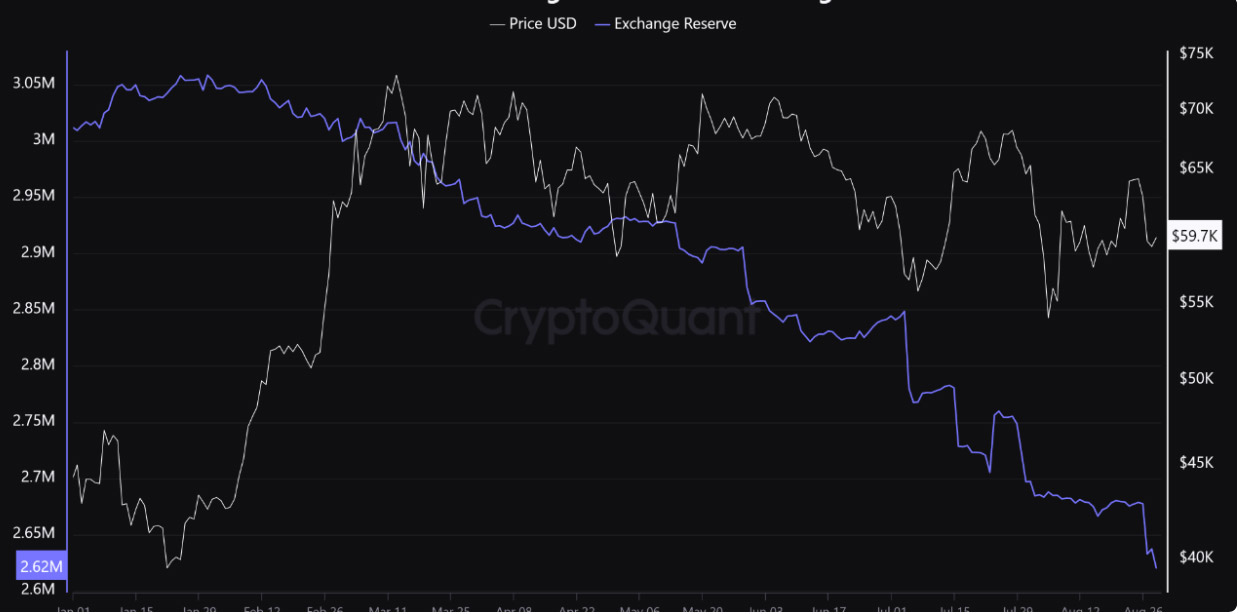
Динамика биржевых депозитов биткоина. Источник: CryptoQuant

Ходлеры закупаются по полной

Интересный факт: долгосрочные держатели биткоина уже потратили более $10 миллиардов на покупку криптовалюты. И, похоже, они не собираются останавливаться, несмотря на то, что цена BTC снова опустилась ниже $60 000.
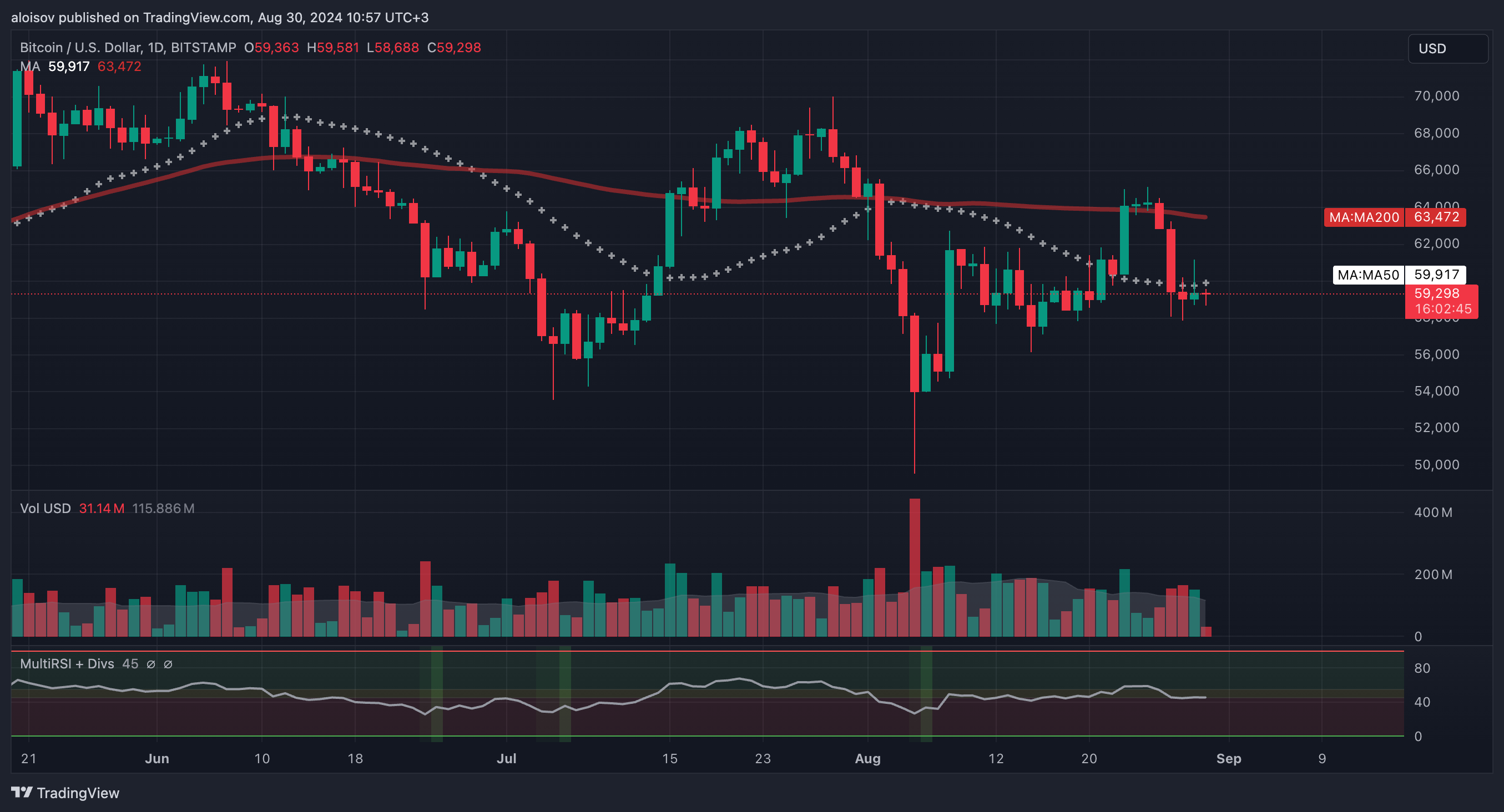
1-дневный график BTC/USD. Источник: Bitstamp/TradingView

«Впервые в истории реализованная капитализация долгосрочных держателей превысила $10 миллиардов», — констатировал аналитик CryptoQuant Амр Таха (Amr Taha).

Что дальше?

Многие аналитики проводят параллели с предыдущими циклами биткоина. Они отмечают, что в прошлом четвертый квартал года часто был благоприятным периодом для роста цены BTC. Например, в четвертом квартале 2020 года биткоин начал стремительный рост, который привел к историческому максимуму в апреле 2021 года.

Криптотрейдер MartyParty комментирует ситуацию так: «Что-то происходит». А пользователь под ником Bitcoin for Freedom предупреждает: «Грядет кризис предложения — текущий баланс слишком неусточив».

İlgili Okumalar

Robinhood Chain Mainnet Goes Live: Can Stocks Finally Be Moved Into Wallets?

Robinhood has officially launched its public mainnet, Robinhood Chain, along with stock-like tokens, the USDG yield product, and a DeFi lending portal. This marks a significant shift where a major online broker is integrating its user interface, regulatory compliance, self-custody wallet, and on-chain protocols into a single, streamlined experience. The goal is to simplify access to stock exposure, stablecoin yields, collateralized lending, and AMM trading for mainstream users. Eligible non-U.S. users can hold these "Stock Tokens"—structured as tokenized debt securities—in the Robinhood Wallet for 24/7 exposure to assets like U.S. stocks or ETFs. U.S. users can access an estimated ~7% APY on dollar-backed USDG through the Robinhood Earn program via self-custody wallets, with lending infrastructure powered by Morpho protocol. Built as a Layer 2 on Arbitrum, Robinhood Chain leverages existing DeFi protocols like Uniswap. The core strategy is not to reinvent DeFi but to channel Robinhood's large traditional finance user base (27.4 million funded customers as of Q1 2026) into on-chain finance, lowering the technical barriers. However, key limitations exist. The stock tokens are not direct equity ownership and are unavailable in the U.S. and some jurisdictions due to regulatory constraints. The ~7% yield is variable and carries inherent DeFi risks, not guaranteed principal protection. Furthermore, while AMMs enable trading, price discovery for major stocks will likely remain anchored in traditional markets like NASDAQ for the foreseeable future. Ultimately, Robinhood Chain is an early experiment in "on-chain brokerage." Its success will depend on real-world metrics like trading volume, sustained user migration to self-custody, stable yield performance, and regulatory feedback, rather than its launch narrative.

marsbit1 saat önce

Robinhood Chain Mainnet Goes Live: Can Stocks Finally Be Moved Into Wallets?

marsbit1 saat önce

Circle CEO Responds to OUSD Challenge: Stablecoin Market Is 'Winner-Takes-All', Consortium Model Doomed to Fail

Circle CEO Jeremy Allaire addresses market concerns following the announcement of the Open USD (OUSD) stablecoin project backed by 140 global companies. Allaire argues the stablecoin market exhibits "winner-takes-all" dynamics due to powerful network effects. He cites USDC's near-decade lead in three key areas: 1) **Application Integration & Protocol Development**: Thousands of integrated services and protocols (like CCTP) create utility and lock-in for developers and users. 2) **Liquidity Network Effects**: A deeply embedded, globally distributed liquidity infrastructure across primary and secondary markets, built over years. 3) **Regulatory Integration**: Extensive licensing and compliance groundwork ensuring USDC's acceptance in major markets like Europe and Japan. Allaire challenges OUSD's proposed advantages. He contends that promises of free redemption, while appealing, face market realities where such models can become exit routes for other stablecoins. He also questions the feasibility of fully distributing all revenue to an alliance, stating it would "starve" the critical infrastructure investments needed for scale and utility. Furthermore, he expresses skepticism about large alliance governance models, noting they often lead to slow decision-making and misaligned incentives. While welcoming OUSD to the ecosystem, Allaire reaffirms confidence in USDC's dominant position, backed by its long-term infrastructure investments and strong partnerships, including its ongoing collaboration with Coinbase.

marsbit1 saat önce

Circle CEO Responds to OUSD Challenge: Stablecoin Market Is 'Winner-Takes-All', Consortium Model Doomed to Fail

marsbit1 saat önce

Circle CEO Responds to OUSD Challenge: Alliance Model Doomed to Fail, It's a 'Winner-Takes-All' Game

Circle CEO Jeremy Allaire addresses the challenge posed by the new Open USD (OUSD) stablecoin project, backed by 140 global companies. He argues that the stablecoin market exhibits "winner-take-all" characteristics, where USDC's near-decade-long lead in application integrations, global liquidity, and regulatory compliance secures its dominant position. Allaire outlines three key network effects underpinning USDC's strength: 1) Extensive integration as an internet protocol layer, 2) Deep, globally distributed liquidity networks, and 3) Deep integration with global policy and regulatory frameworks. He cites data showing USDC facilitated 80% of on-chain USD stablecoin transaction volume in Q1 2026. He directly counters OUSD's proposed advantages: 1) "Free minting and redemption" may not be sustainable against market realities, which USDC addresses via contractual mechanisms. 2) "Sharing all revenue" risks starving the infrastructure of necessary investment for growth and reliability. 3) A "consortium model" often leads to slow innovation and poor coordination compared to focused, independent operators like Circle. Allaire reaffirms Circle's strong partnership with Coinbase and notes that Circle continues to collaborate with many OUSD founding members. He concludes by welcoming OUSD to the ecosystem while expressing confidence in USDC's entrenched network advantages and continued expansion.

Odaily星球日报1 saat önce

Circle CEO Responds to OUSD Challenge: Alliance Model Doomed to Fail, It's a 'Winner-Takes-All' Game

Odaily星球日报1 saat önce

İşlemler

Spot
活动图片