Закрытый Inferno Drainer возобновил активность на фоне бычьего рынка

cryptonews.ru2024-04-29 tarihinde yayınlandı2024-08-29 tarihinde güncellendi

Число вредоносных dapps, использующих сервис Inferno Drainer для кражи криптовалют, выросло втрое за полгода и достигло 40 000. Об этом пишет Cointelegraph со ссылкой на статистику компании Blockaid.
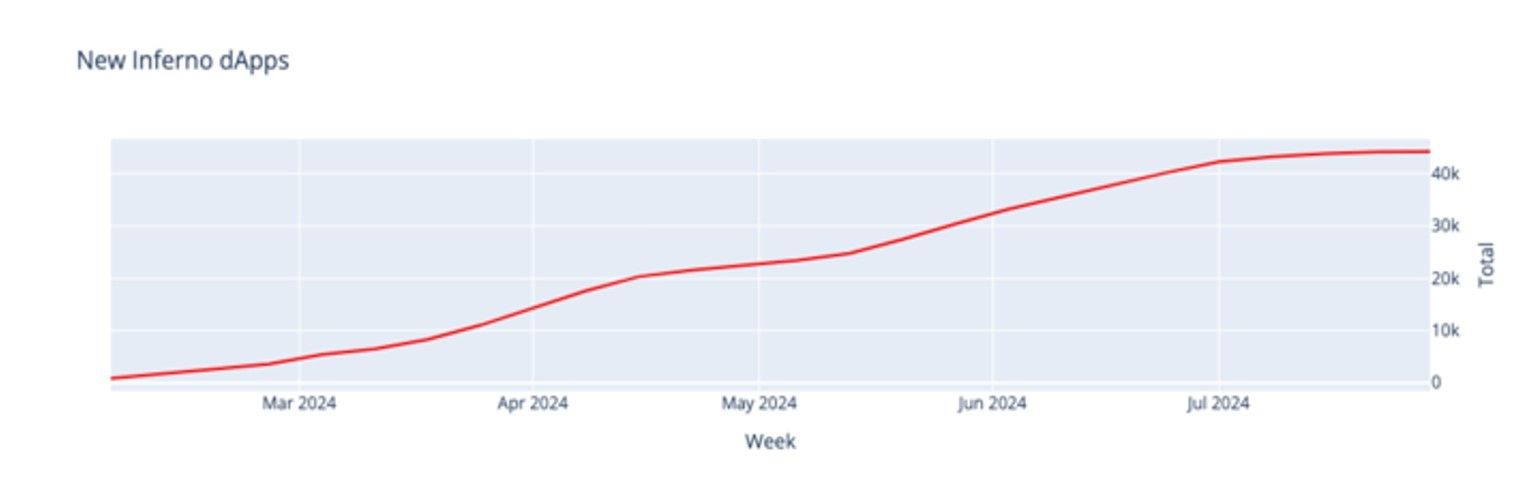
Данные: Blockaid.

В ноябре 2023 года команда криптодрейнера объявила о закрытии инструмента, однако в текущем году он снова активизировался.

«В начале года мы видели около 800 новых вредоносных dapps в неделю. Теперь это число — 2400 в неделю», — пояснил руководитель отдела исследований и разработок Blockaid Оз Тамир.

По его словам, Inferno Drainer вряд ли обладает особыми возможностями, привлекающими злоумышленников. Как правило, последние отдают предпочтение доступным инструментам с низкими комиссиями.

В целом Blockaid отмечает рост попыток мошенничества со стороны различных субъектов угроз — в среднем их сканирование обнаруживает 180 000 различных вредоносов в неделю. Тамир связывает тенденцию с «бычьими движениями» на рынке.

«В экосистему поступает все больше пользователей и денег, поэтому злоумышленники все больше мотивированы инвестировать в новые, нестандартные атаки», — объяснил он.

Исследователь добавил, что «меньшие меры безопасности» в новых сетях предоставляют хакерам возможность быстро заработать.

Напомним, Inferno Drainer рекламировался как мультичейн-скам. Его создатели предоставляли клиентам панель для администрирования с возможностью настройки фишинговых страниц и даже предлагали пробную версию. За свои услуги они получали 20% от украденных пользователями средств.

Только за 2023 год с его помощью были похищены активы на сумму почти $70 млн.

İlgili Okumalar

The Impact of OUSD on Circle, Tether, and Paxos: Not a Simple Negative, but a More Complex Competitive Landscape

OUSD's Impact on Circle, Tether, and Paxos: A Nuanced Competitive Reshuffle The launch of OUSD, a new stablecoin initiative, has complex implications for the stablecoin market. For Circle (CRCL), the initial 15-20% stock drop reflects legitimate competitive concerns but is not a "death sentence." Circle retains deep liquidity, existing integrations, and first-mover advantages. A potential restructuring or termination of its Coinbase partnership could even double its net revenue in the short term, providing more competitive freedom. However, OUSD, backed by Stripe's engineering and product strengths, could become the default stablecoin within the Stripe ecosystem for new adopters, challenging USDC's position. OUSD does not solve the core barrier for corporate adoption: it remains a credit exposure to its issuer (likely a Bridge-related entity), which, like Circle, is not an investment-grade entity. Large banks and asset managers could still capture the most lucrative enterprise use cases. Circle must accelerate its payment/fintech product development and consider defensive M&A. For Tether, OUSD targets a different market segment. Tether will continue focusing on distribution channels not prioritized by Stripe or Circle. Its market share may decline over time, but within a significantly growing total market. Paxos faces the greatest pressure. OUSD undermines the key selling points of its USDG stablecoin, and Paxos's regulatory advantages may diminish as frameworks mature. This poses a more existential challenge, explaining Paxos's recent shift back to its brokerage-as-a-service business.

marsbit2 saat önce

The Impact of OUSD on Circle, Tether, and Paxos: Not a Simple Negative, but a More Complex Competitive Landscape

marsbit2 saat önce

OUSD's Impact on Circle, Tether, and Paxos: Not a Simple Negative, but a More Complex Competitive Reshuffle

This article analyzes the impact of the newly announced stablecoin OUSD, backed by a consortium including Stripe, on major incumbents like Circle (USDC), Tether (USDT), and Paxos (USDG). For Circle, the announcement is not a simple negative. While the initial market reaction was rational, it's not a "death sentence." Circle retains deep liquidity, existing integrations, and first-mover advantage. A potential restructuring or termination of its exclusive revenue-sharing deal with Coinbase could even near-double its net income in the short term, providing more competitive flexibility. However, within the Stripe ecosystem, OUSD, with its strong engineering and product focus, could become the default choice, displacing USDC for new integrations. Circle must accelerate its own fintech product development and consider defensive M&A. OUSD does not directly threaten Tether's core markets, which focus on different distribution channels. Tether's market share may decline over time but within a significantly growing overall market. Paxos faces the greatest pressure. OUSD undermines the primary value proposition of its USDG stablecoin, and Paxos's regulatory advantages may erode as frameworks mature, posing a more existential challenge. This explains Paxos's recent strategic pivot towards brokerage-as-a-service. A fundamental unresolved issue for enterprise adoption remains: if issued by a Bridge-related entity, OUSD, like USDC, still represents a credit exposure to a non-investment-grade issuer, unless a parent company guarantee is provided. Large banks and asset managers entering the space later could still compete for the most lucrative enterprise use cases.

链捕手2 saat önce

OUSD's Impact on Circle, Tether, and Paxos: Not a Simple Negative, but a More Complex Competitive Reshuffle

链捕手2 saat önce

İşlemler

Spot
活动图片