如何从确定性中获利?从培养概率思维开始

币界网2024-08-23 tarihinde yayınlandı2024-08-23 tarihinde güncellendi

币界网报道:

作者:Game

编译:深潮TechFlow

交易中的概率思维

交易的核心在于在不确定性中做出决策。就像在扑克游戏中一样,你是在缺乏完整信息的情况下下注,这也是为什么许多成功的交易者往往有扑克背景或精通博弈论。这两者都教会我们如何进行战略思考、评估概率和有效管理风险。通过采用概率思维方式,你可以将关注点从预测结果转向根据可能情景管理风险。正如 Annie Duke 在《思考下注》中所说:“当你在思考下注时,你是在将未来视为一组可能性,而不是一个单一的、预定的结果”。

每笔交易都是一次下注

每一笔交易都是经过深思熟虑的下注,而不是一个必然的结果。要在交易中成功,你需要以概率的角度来看待问题。与其专注于单笔交易的结果,不如把它视为众多可能结果中的一种。这种思维方式有助于你避免因损失或收益而产生的情绪反应,因为你清楚地知道你的策略优势会在多笔交易中显现出来。Nassim Taleb 在《被随机性愚弄》中提醒我们:“我们常常认为世界比实际更可预测,并且我们理解的比我们实际理解的要多”。

示例

假设你发现了一种低成交量的山寨币的有前景的交易机会,强烈的技术信号指向突破。然而,你也意识到由于流动性低而存在风险。通过将这笔交易视为一次概率下注,你可以保守地设定头寸规模,从而确保交易与概率相符,最小化潜在损失的影响。

以概率思考

理解概率理论是采用概率思维的关键。这是关于估计各种结果的可能性,并认识到没有单一交易是可预测的,但随着时间的推移,模式会逐渐显现。正如 Peter L. Bernstein 在《与众神对抗:风险的非凡故事》中所说:“风险管理的本质在于最大化我们对结果有一定控制的领域,同时最小化我们对结果完全没有控制的领域”。

示例

设想你正在基于一种历史上获胜率为 55% 的策略交易一篮子货币对。你知道在任何给定的交易中,结果是不确定的,就像投掷一个加重的硬币。然而,由于你的策略具有统计优势,你的重点不在于任何单笔交易,而是在大量交易中持续执行这一策略。随着时间的推移,55% 的胜率应该会转化为利润,即使过程中会有亏损的情况。关键是要信任这个过程,让大数法则为你服务。

拥抱贝叶斯思维

概率思维的重要组成部分是贝叶斯推理,它涉及到随着新信息的到来更新你的信念。在交易中,这意味着根据市场条件和新数据不断调整预期。凯恩斯曾说:“当事实改变时,我改变我的想法。你呢,先生?”

示例

假设你看到一种主要加密货币的突破模式,并估计上涨的概率为 70%。然后,意外的宏观新闻出现。你迅速重新评估情况,将概率降低到 50%,并决定部分获利。这种持续的调整体现了贝叶斯思维的本质,你会随着新数据的出现不断细化你的概率。

胖尾风险(Fat-Tailed Risk)与不对称性

在交易中,你必须认识到并非所有风险都是相等的。市场通常表现出胖尾分布,极端事件的发生比你预期的更为频繁。理解这一点有助于你为可能显著影响你的投资组合的异常事件做好准备。Nassim Nicholas Taleb 在《黑天鹅》中警告我们:“无法预测异常事件意味着无法预测历史本身的发展”。

示例

加密市场充满了这样的案例,FTX 是一个大家都记得的例子。最初对该公司资产负债表的担忧迅速演变成全面的流动性危机,几乎一夜之间抹去了数十亿美元的市场价值。这一事件突显了加密市场中固有的胖尾风险,其中信用和杠杆可以将单一故障点升级为广泛的传染,触发整个资产类别的极端价格波动。

应对运气和不确定性

运气在交易中发挥着重要作用,虽然你的技能不可或缺,但承认随机性影响的必要性同样重要。通过认识到运气的角色,你可以避免过度自信,并保持自律。正如丹尼尔·卡尼曼在《思考,快与慢》中所提到的:“我们倾向于高估自己对世界的理解,并低估偶然性在事件中的作用”。

示例

假设你投资了一种 DeFi 代币,由于监管公告的影响,它的价值意外翻了一番。在这种情况下,你不应该增加对类似高风险资产的投资,而是要意识到运气的影响,保持谨慎,专注于那些你能更好评估概率的交易。

避免结果陷阱

仅仅根据结果来评判你的决策很容易陷入“结果主义”的陷阱。这种认知偏差使我们忽视了决策过程的重要性。为了避免这种情况,应该关注决策过程的质量,而不是单个交易的结果。正如 Annie Duke 在我最喜欢的书《思考下注》中所强调的:“我们生活的质量是决策质量与运气的总和”。

示例

你可能在当地市场反弹期间通过高风险的杠杆交易获利。尽管这让你容易将成功归功于自己的交易技能,但请停下来反思。通过过程导向的回顾,你可能会发现,这一结果更多是运气的结果,而非策略的成功。意识到这一点,可以帮助你避免因幸运结果而重复冒险行为。

整合思考

通过关注概率而非确定性,你能够做出更明智的决策,有效管理风险,并保持自律,无论结果如何。

“未来是不确定的。因此,决策无法做到完美自信。但它们可以以勇气做出。” - Peter L. Bernstein
İlgili Okumalar

From 'Address Clustering' to 'Evidence Standards': Why is Chainalysis Redefining Blockchain Tracing?

**Summary:** In June 2026, Chainalysis introduced the **Blockchain Tracing Ontology (BTO)**, a proposed data framework aiming to establish standardized, transparent, and verifiable models for blockchain analysis. This initiative addresses a core industry issue: despite public blockchain data, different firms often produce inconsistent results (e.g., differing entity labels for the same address) due to non-uniform methodologies, particularly in **address clustering**. This lack of standardization poses challenges for judicial investigations, AML, and enforcement. The BTO is not a new clustering algorithm but a **common "language" or conceptual framework**. It moves beyond the simplistic "cluster" model by introducing a hierarchical structure: **Entity → Wallet → Wallet Segment → Address**, which better reflects complex organizational wallet management. A key shift is from presenting mere results to ensuring **process trust and explainability**. The framework emphasizes documenting the **Evidence** and **Confidence** behind each analytical claim—specifying the on-chain/off-chain data, rules applied, and certainty levels—enabling third-party verification. This focus is partly informed by legal precedents like the **Bitcoin Fog** case, where Chainalysis's methods underwent rigorous judicial scrutiny (Daubert hearing), highlighting the need for reproducible, scientifically sound analysis. The proposal clarifies that on-chain analysis identifies address relationships and flow patterns, not real-world identities, which still require off-chain evidence (e.g., KYC data). Ultimately, Chainalysis envisions steering the industry from an "experience-driven" to a **"standards-driven"** future, where competition centers on **data quality, analytical transparency, and judicial admissibility** rather than just label coverage. Widespread adoption could facilitate cross-agency collaboration, reduce disputes, and provide a more reliable foundation for global compliance and enforcement.

marsbit25 dk önce

From 'Address Clustering' to 'Evidence Standards': Why is Chainalysis Redefining Blockchain Tracing?

marsbit25 dk önce

The 'Conference Circuit' for the Second Half of the Year Begins! A Complete Overview of the 2026 Web3 Global Summit Schedule

"Web3 Global Summit Calendar for the Second Half of 2026" provides a comprehensive list of major Web3 and blockchain conferences worldwide, focusing on events from July to December 2026. The schedule starts in July with IVS in Kyoto, WebX in Tokyo, Canada Crypto Week in Toronto, and Malaysia Blockchain Week in Kuala Lumpur. August features Conviction in Ho Chi Minh City, Coinfest Asia in Bali, and Bitcoin Hong Kong. September is the most intense month, with notable events like NFT NYC in New York, ETHRome in Rome, Money20/20 in Saudi Arabia, European Blockchain Convention in Barcelona, and Korea Blockchain Week in Seoul. The fourth quarter begins with the significant TOKEN2049 Singapore in October, which will be the sole TOKEN2049 event of the year following the cancellation of the Dubai edition. November includes Devcon 8 and Bitcoin Amsterdam in Amsterdam, Digital Asset Summit and Solana Breakpoint in London. The year concludes in December with Blockchain Life in Dubai and Bitcoin MENA in Abu Dhabi. The article also lists key events from the first half of the year (January to June, marked as concluded) for reference, including Consensus Hong Kong, ETHDenver, and Paris Blockchain Week. The guide serves as a resource for planning attendance at these industry gatherings across Asia, Europe, North America, and the Middle East.

Foresight News35 dk önce

The 'Conference Circuit' for the Second Half of the Year Begins! A Complete Overview of the 2026 Web3 Global Summit Schedule

Foresight News35 dk önce

Video Edition Nano Banana Arrives: Built-in Gemini World Knowledge, Original Banana Generates Images in Just 4 Seconds

Google has unveiled two new multimodal AI models: Gemini Omni Flash and Nano Banana 2 Lite. Gemini Omni Flash is a video generation and editing model that leverages Gemini's world knowledge. It allows for conversational video editing using natural language prompts, maintains scene consistency, and integrates text/graphics with video actions. Priced at $0.10 per second of output, its current limitations include a 10-second video cap. Nano Banana 2 Lite (gemini-3.1-flash-lite-image) is an optimized image generation model focused on speed and cost. It produces a 1K resolution image in about 4 seconds at a cost of roughly $0.034, making it significantly faster and cheaper than its predecessor. It retains strong text rendering capabilities. A key highlight is the combined workflow: users can rapidly generate images with Nano Banana 2 Lite and then seamlessly feed them into Gemini Omni Flash to create videos. Google demonstrated this with three application demos: "Anywhere" for creating travel videos from photos, "Space Lift" for generating interior design walkthroughs, and "Omni Product Studio" for automating e-commerce ad creation from product photos. The release underscores Google's strategic focus on advancing multimodal AI for practical, commercial applications in areas like marketing, design, and content creation, despite competitive pressures in other AI domains.

marsbit43 dk önce

Video Edition Nano Banana Arrives: Built-in Gemini World Knowledge, Original Banana Generates Images in Just 4 Seconds

marsbit43 dk önce

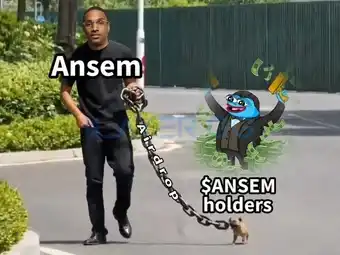
The Ansem Airdrop Brings Back the Celebrity Endorsement Effect: When the Market Is Stagnant, Smart Money Watches KOLs' Tweets

In the recent crypto bear market, a narrative-driven surge has emerged within the Solana meme coin sector, highlighted by the explosive performance of $ANSEM (The Black Bull). The token, associated with prominent trader Ansem, soared nearly 19,878% in a week following his announcement of a community airdrop funded by his creator fees from Pump.fun. This move, emphasizing social engagement over traditional on-chain metrics, distributed millions of tokens to hundreds of wallets, though distribution appeared concentrated with a few wallets receiving substantial portions. The event signals a resurgence of influencer-driven market movements. Similarly, BitMEX co-founder Arthur Hayes boosted tokens like $CARDS and $SYN through public endorsements and analysis, leading to significant price rallies. These cases underscore a current market dynamic: with major narratives stagnant and limited new capital, attention and "smart money" are increasingly focused on signals from key opinion leaders (KOLs) to identify asymmetric opportunities, despite the inherent risks of speculation and potential market manipulation. The landscape suggests that while old strategies for evaluating such pumps remain relevant, the reduced competition for attention may make these localized trends critical for participants seeking alpha in a sideways market.

marsbit1 saat önce

The Ansem Airdrop Brings Back the Celebrity Endorsement Effect: When the Market Is Stagnant, Smart Money Watches KOLs' Tweets

marsbit1 saat önce

İşlemler

Spot
活动图片