观点:走出山寨熊市,需要 DeFi 复兴

深潮2024-08-22 tarihinde yayınlandı2024-08-22 tarihinde güncellendi

没有 DeFi,以太坊的价格可能还在 400。

撰文:Alex Liu,Foresight News
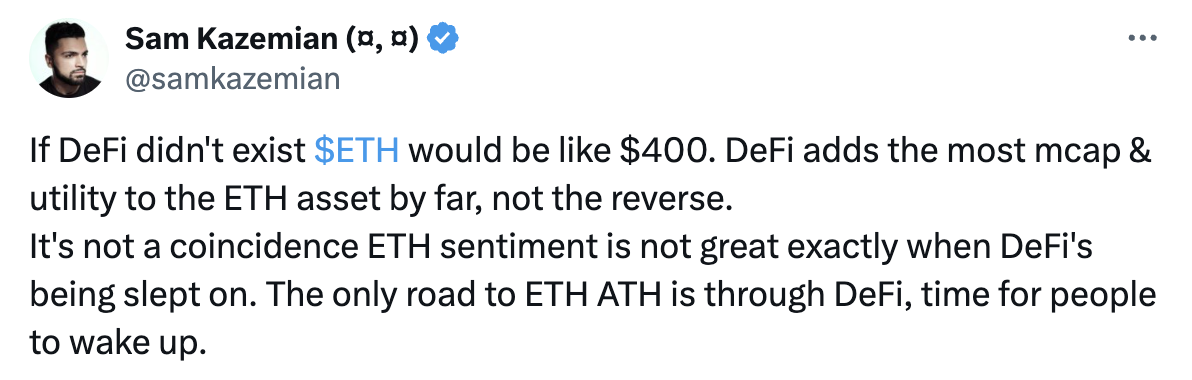
如果 DeFi 不存在,ETH 的价格可能是 400 美元。DeFi 迄今为止给 ETH 增添了最多的市值和用例,而非相反。在 DeFi 被忽视时,ETH 生态的情绪就低落,这不是巧合。想要 ETH 再创新高的唯一路径是通过 DeFi,大家该意识到这点了。—— Frax Finance 创始人 Sam Kazemian

当下的加密市场是怎样的?

  • 是山寨币的熊市—— 尽管 BTC 仍在 6 万美元高位震荡,不少山寨币已回撤掉本轮全部涨幅,甚至创阶段新低。新币更是大多「出道即巅峰」。

  • 赌徒多于信仰者—— 「价值投资一场空,梭哈 MEME 住皇宫。」并不是玩笑,是不少在行业中感到「财富焦虑」的朋友们的真实观点。炒新不炒旧,即使「群友互割」也不给 VC 「接盘」。

  • 缺乏资本的流入—— 没有所谓的「Mass Adoption」,没有 Retails 流入,只有场内的大家相互 PVP。A 想要赚钱则 B 必须要亏钱,没有共同做大的蛋糕。

怎样才能破局?我认为需要 DeFi 来一场文艺复兴。

DeFi 之困

DeFi 在这轮周期也异常挣扎。在流量为王的时代里失去了叙事热度,无人问津。这样的局面是怎样形成的?

加密市场的 90% 是叙事游戏,而令人沮丧的事实是 —— 大多数有影响力的 Shillers 和 KOL 与 DeFi 代币利益无关。推销他们几分钟前购买的模因币或与那些为 KOL 分配大量代币的新协议合作会更加有利可图。

那些制造叙事的人很少真正持有 DeFi 代币。KOL 也看不到提及 OG DeFi 项目的价值,因为成为早期内部人士才能够获得最大的好处:大量的代币供应由团队或 VC 持有,而多数已经解锁。

因此,推广 DeFi 代币的任务似乎属于项目构建者本身,以及 DeFi 的真正信徒们。

一句话:DeFi 的困局是市场风气浮躁,投机者占上风时的必然结果。但如果加密市场除了 90% 的叙事游戏外,还有 10 % 的实际用例追求的话 —— 当市场理性回归,局面将得到修正。

DeFi,未来

DeFi 有内在价值

DeFi 代币是有价值的,与人们厌恶的低流通、高 FDV 的 VC 币和模因币完全相反。

OG DeFi 代币(AAVE、MKR、COMP、CRV 等):

  • 大部分已流通

  • 逐渐受到关注的收益共享机制

  • 经过时间验证的 PMF(产品市场契合)和长期建设的韧性

不少 DeFi 协议已经实现盈利,且有回购机制(Maker)、ve 代币模型(协议收入和外部 Bribes 给到代币锁仓者,Curve),或正在计划中的收益共享机制(Aave)。持有这些代币,相当于拥有了源源不断的现金流。
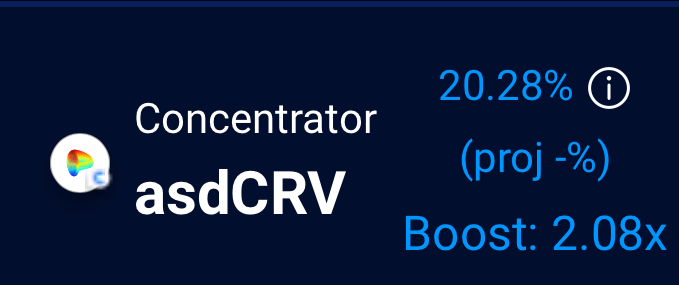
当前流动性锁仓 Curve 能获得 20% 年化收益

DeFi 是核心用例

区块链究竟是什么,解决什么问题?区块链为了解决大家谁也不信谁的问题,把传统行业只需中间人(银行、公司)存储几份的数据变为每个参与者都得存储一份,再通过共识机制确定一份大家都认可的公帐 —— 本质上是冗余存储。

冗余存储是成本更高,不经济的,在有人愿意支付这溢价的用例上才能竞争过中心化解决方案。而交易、转账、借贷等财产性强的金融活动能忍受一定程度的低效和高成本(相对中心化方案),追求绝对的安全性。去中心化金融(DeFi)是区块链天然的核心用例。

DeFi 是行业方向

当下市场存在的问题:赌徒多于信仰者、缺乏资本的流入,都是可以随着行业发展解决的。但行业会朝什么样的方向发展?

本轮周期的最大发起者,真正的「弄潮儿」,一手促进比特币 ETF 通过的华尔街巨头贝莱德(Blackrock)CEO Larry Fink 说,未来一切股票、债券等资产,都将通证化上链。

金融资产上链,能绕过现有的去中心化金融基础设施吗?

稳定资产兑换,例如链上美元和链上欧元间的外汇转换,是否会选择 Curve?

链上利率衍生品(在传统市场中有万亿美元规模)是否能直接 / 间接利用 Pendle?

金融资产的抵押借贷,不考虑代码身经百战未出差错的 Aave 吗?(传统金融不愿彻底去中心化,放弃所有权?Aave 能为 Lido 推出专用市场,不能为 Blackrock 定制专门市场吗?)
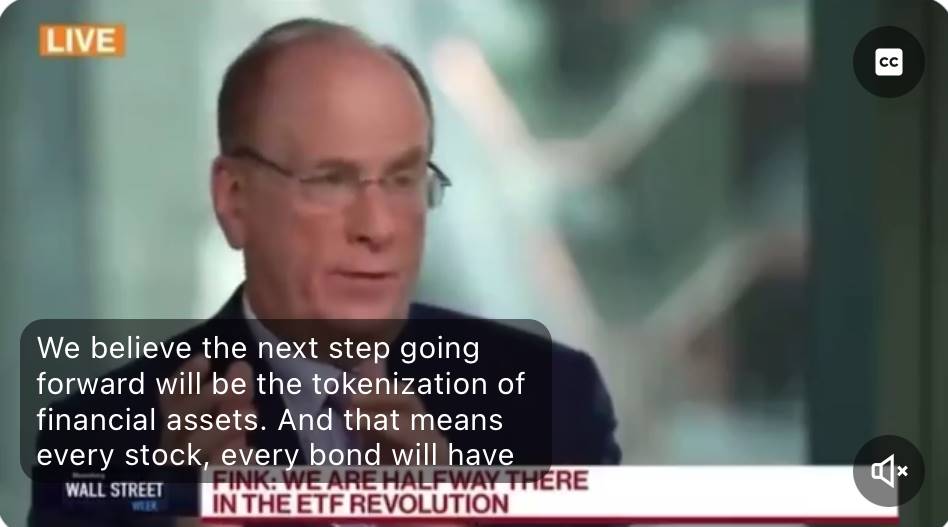
Larry Fink 接受采访

DeFi 就是行业方向,它有足以吸纳改变行业格局的资金的体量。

DeFi 正文艺复兴

DeFi 正在醒来。

自 Aave 提出收益共享计划后,币价自底部接近翻倍。Curve Finance 创始人的借贷仓位终于被完全清算,「利空」出尽后,CRV 自 0.18 USDT 回升至 0.34 USDT。各协议的链上数据也在好转:
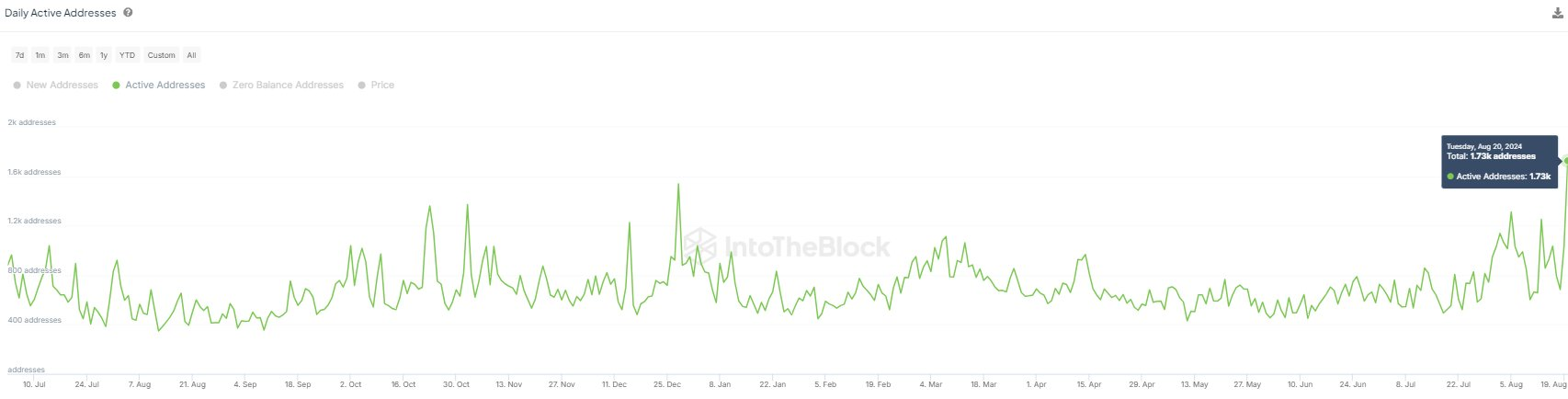
Aave 日活跃地址数在 8 月 19 日达到近一年高点

有了 DeFi 复兴,狂暴大牛市还远吗?

部分观点来自:https://x.com/DefiIgnas/status/1824447367417835559

İlgili Okumalar

Opinion: AI Bubble Bursts, Bitcoin and Other Risky Assets Are the First to Be Impacted

BIS Warns AI Investment Boom Could Trigger Market Stress, Impacting Bitcoin First The Bank for International Settlements (BIS) warns that a potential bursting of the "AI bubble" could tighten liquidity and severely impact risk assets like Bitcoin in the near term. Major tech firms are projected to spend over $1 trillion on AI infrastructure in 2025-2026. The BIS cautions that if returns fail to meet expectations, a sudden withdrawal of financing could turn this investment boom into a prolonged bust, creating ripple effects across financial markets. While AI holds long-term economic promise, the current scale and speed of investment, coupled with intense competition and physical bottlenecks (e.g., semiconductors, power grids), mirror historical bubbles. The report highlights that the AI funding web—spanning corporate debt, private credit, and complex vendor agreements—makes systemic risks harder to see. A disappointment in AI adoption could transmit stress through this chain, widening credit spreads and pressuring weaker borrowers. For Bitcoin, the initial reaction to such a market shock would likely be defensive. As liquidity tightens, investors typically sell liquid assets first, and Bitcoin often trades in line with other risk assets during portfolio de-risking. Recent correlations, like Bitcoin's drop following a sharp decline in South Korea's stock market, support this view. However, the longer-term outcome for Bitcoin depends on the policy response. If an AI-driven credit crunch forces central banks to inject liquidity and ease policy eventually, it could reignite Bitcoin's narrative as a hedge against monetary debasement. Yet, traders betting on this outcome may first have to endure significant market volatility and potential price declines.

marsbit1 saat önce

Opinion: AI Bubble Bursts, Bitcoin and Other Risky Assets Are the First to Be Impacted

marsbit1 saat önce

South Korea Reaps Riches, America Turns Hostile

The US has filed a collective antitrust lawsuit in California against Samsung, SK Hynix, and US-based Micron, alleging they colluded to create a "RAMpocalypse" by slashing traditional DRAM production and raising prices 700% over four years amid the AI boom. This lawsuit targets the heart of the AI supply chain: High Bandwidth Memory (HBM), critical for Nvidia's GPUs. Currently, SK Hynix (57%), Samsung (22%), and Micron (21%) dominate global HBM production. The case highlights a deeper US concern: in the AI era, South Korea, through its HBM dominance, is capturing an estimated 35% of global AI profits, second only to the US (49%). SK Hynix's operating profit margin recently hit a record 72%. In response to the lawsuit, South Korea announced a massive $800 trillion won investment to build four new chip plants, doubling down on its strategic position. Analysts see the lawsuit not merely as a consumer price issue but as strategic pressure. It aims to support Micron's US manufacturing expansion (subsidized by the CHIPS Act) and secure America's share of AI profits by bringing more HBM production onshore. However, South Korea's rapid execution and massive cash flow from current HBM sales give it a significant speed advantage over US build-out timelines. The conflict underscores a fundamental shift: AI infrastructure like GPUs and HBM is becoming a new form of strategic national resource, akin to oil. While Nvidia and Korean memory giants are interdependent, the struggle over profit distribution and industrial sovereignty in this new landscape is just beginning. This lawsuit may be the first major skirmish in the AI resource wars.

marsbit1 saat önce

South Korea Reaps Riches, America Turns Hostile

marsbit1 saat önce

İşlemler

Spot
活动图片