Optimism Foundation отключила защиту от мошенничества из-за уязвимостей

cryptonews.ru2023-12-19 tarihinde yayınlandı2024-08-19 tarihinde güncellendi

Организация Optimism Foundation вернула L2-сеть в разрешенное состояние после выявления аудиторами уязвимостей в децентрализованном механизме доказательства ошибок.

Today, @OPLabsPBC posted an upgrade proposal detailing findings from a recent series of community-driven audits on the Fault Proof System, including the plan to fix the bugs identified as part of the audits.https://t.co/Kylblb3Wyx

— Optimism (@Optimism) August 16, 2024

Внедренное в начале июля permissionless-решение Fault Proof позволяет пользователям оспаривать потенциально мошеннические и некорректные транзакции. В разрешенных блокчейн-экосистемах эти действия могут совершать только доверенные заявители.

Запуск функциональности Fault Proof ознаменовал собой реализацию первой стадии децентрализации OP Mainnet и OP Stack.

Но спустя два месяца Optimism Foundation активировала резервный разрешенный режим и выдвинула предложения по улучшению механизма из-за обнаруженных аудиторами из Spearbit, Cantina и Code4rena ошибок в коде.

Организация выдвинула управленческое предложение по проведению обновления для исправления багов, часть которых оказалась «серьезного уровня».

«Ни одна из уязвимостей не была использована, активы пользователей не подвергались и не подвергаются риску. Однако в качестве меры предосторожности был активирован механизм разрешенного отката, чтобы избежать любой потенциальной нестабильности до устранения багов», — написал инженер Optimism Foundation Мофи Тайво.

В случае принятия предложения сообществом апгрейд L2-сети под названием Granite состоится 10 сентября. Он включает несколько обновлений и хардфорк.

Напомним, в апреле команда Optimism оптимизм устранила две критические уязвимости в Fault Proof еще на уровне проверки в тестнете.

İlgili Okumalar

The Ansem Airdrop Brings Back the Celebrity Endorsement Effect: When the Market Is Stagnant, Smart Money Watches KOLs' Tweets

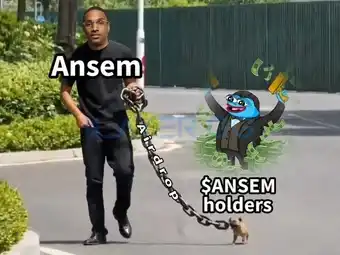
In the recent crypto bear market, a narrative-driven surge has emerged within the Solana meme coin sector, highlighted by the explosive performance of $ANSEM (The Black Bull). The token, associated with prominent trader Ansem, soared nearly 19,878% in a week following his announcement of a community airdrop funded by his creator fees from Pump.fun. This move, emphasizing social engagement over traditional on-chain metrics, distributed millions of tokens to hundreds of wallets, though distribution appeared concentrated with a few wallets receiving substantial portions. The event signals a resurgence of influencer-driven market movements. Similarly, BitMEX co-founder Arthur Hayes boosted tokens like $CARDS and $SYN through public endorsements and analysis, leading to significant price rallies. These cases underscore a current market dynamic: with major narratives stagnant and limited new capital, attention and "smart money" are increasingly focused on signals from key opinion leaders (KOLs) to identify asymmetric opportunities, despite the inherent risks of speculation and potential market manipulation. The landscape suggests that while old strategies for evaluating such pumps remain relevant, the reduced competition for attention may make these localized trends critical for participants seeking alpha in a sideways market.

marsbit33 dk önce

The Ansem Airdrop Brings Back the Celebrity Endorsement Effect: When the Market Is Stagnant, Smart Money Watches KOLs' Tweets

marsbit33 dk önce

Just Now, Anthropic Released Sonnet 5, Performance Close to Opus 4.8, but Not Necessarily Cheaper

Anthropic has officially released Claude Sonnet 5, describing it as the most "agentic" Sonnet model to date. It can plan, use tools like browsers and terminals, and autonomously perform tasks at a level previously requiring larger, more expensive models. Performance in reasoning, tool use, programming, and knowledge work has significantly improved compared to Sonnet 4.6, now approaching that of Opus 4.8. Evaluation results indicate that Sonnet 5, at medium "effort" levels, offers better cost efficiency than its predecessor. At higher effort levels, its performance in some tasks can match Opus 4.8. In terms of safety, Sonnet 5 shows improved rates of refusing malicious requests and resisting prompt injection attacks compared to Sonnet 4.6, though it has a slightly higher rate of policy-violating behavior than Opus 4.8 and Mythos Preview. Its cybersecurity capabilities remain weaker than those models. Notably, Sonnet 5 uses a new tokenizer. The same text input now results in approximately 1.0 to 1.35 times more tokens, depending on content. To offset this, Anthropic offers a promotional launch price until August 31, 2026, at $2 per million input tokens and $10 per million output tokens. The standard pricing will be $3/$15 per million tokens thereafter. However, some external analysis suggests that due to increased token usage, the actual cost per task for Sonnet 5 may be higher than both Sonnet 4.6 and Opus 4.8.

marsbit54 dk önce

Just Now, Anthropic Released Sonnet 5, Performance Close to Opus 4.8, but Not Necessarily Cheaper

marsbit54 dk önce

İşlemler

Spot
活动图片