今年美元的全球储备份额降至59%

币界网2024-08-11 tarihinde yayınlandı2024-08-11 tarihinde güncellendi

币界网报道:

美元正在失去对世界的控制。2024年,中国在全球外汇储备中的份额从2002年的72%降至59%。在过去的22年里,这一数字下降了13%。

数字很明显:各国,尤其是金砖国家,正在与美元保持距离。同期,人民币微涨3%。

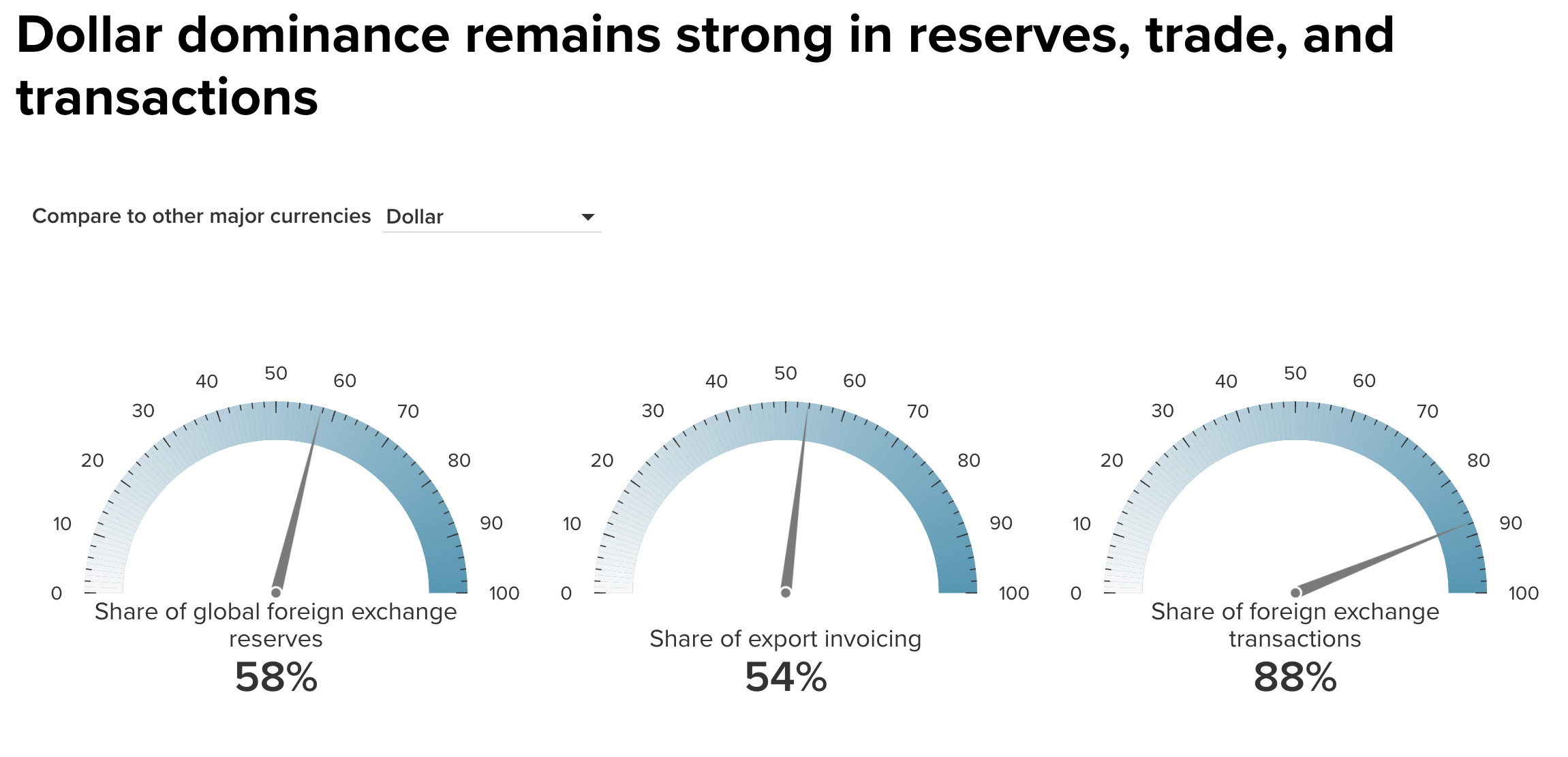
自第二次世界大战以来,美元一直是世界主要的储备货币。今天,它仍然占外汇储备价值的58%。但文字已经写在墙上了。
US dollar's global reserve share falls to 59% this year

紧随其后的欧元仅占20%。随着最近的全球事件,如俄罗斯入侵乌克兰,各国越来越多地寻求使其外汇储备多样化,减少对美元的依赖。

金砖国家及其去美元化

金砖国家一直是呼吁摆脱美元的呼声最高的国家。在过去的两年里,他们加大了促进本国货币在贸易中使用的力度。

特别是中国,一直在努力扩大其跨境银行间支付系统(CIPS)。

目标?创建一个不依赖美元或全球金融信息网络SWIFT的替代金融基础设施。

CIPS发展迅速。2023年6月至2024年5月,62名新参与者加入了该系统,使直接参与者总数达到142人,间接参与者总数达到1394人。

虽然SWIFT仍然是拥有11000多家互联银行的大狗,但CIPS正在采取行动。中国推动在国际交易中使用人民币是对美元主导地位的直接挑战。

尽管人民币在全球外汇储备中的份额从2022年的2.8%略微下降到2023年的2.3%,但推动去美元化的势头正在增强。

金砖国家也在探索新的支付系统,以进一步减少对美元的依赖。关于金砖国家内部潜在支付系统的谈判正在进行中。

该系统可能包括跨境央行数字货币(CBDC)和货币互换协议。

美元的主导地位真的受到威胁了吗?

美元不会不战而降。大西洋理事会得出结论,美元作为主要全球储备货币的作用在中短期内仍然是安全的。

美元继续主导外汇储备、贸易发票和全球货币交易。尽管欧元做出了最大的努力,但它并不是一个真正的威胁。

人民币也不是,至少现在还不是。
US dollar's global reserve share falls to 59% this year

美元的主导地位不仅仅在于储备。它深深植根于全球贸易和金融交易中。美元仍然是国际贸易结算的首选货币。

尽管像中国这样的国家正在推动替代品,但支持美元的基础设施是巨大的。这就是为什么尽管有人试图推翻美元,但美元在储备、贸易和交易方面仍然强劲。

尽管中国做出了最大努力,但人民币仍被视为一种有风险的赌注。对中国经济的担忧、对俄乌战争的立场以及与美国和七国集团国家日益紧张的关系阻碍了人民币的升值。

储备管理者持谨慎态度,这使得人民币在全球储备中的份额相对较低,尽管中国正在推动更多的国际使用。
US dollar's global reserve share falls to 59% this year

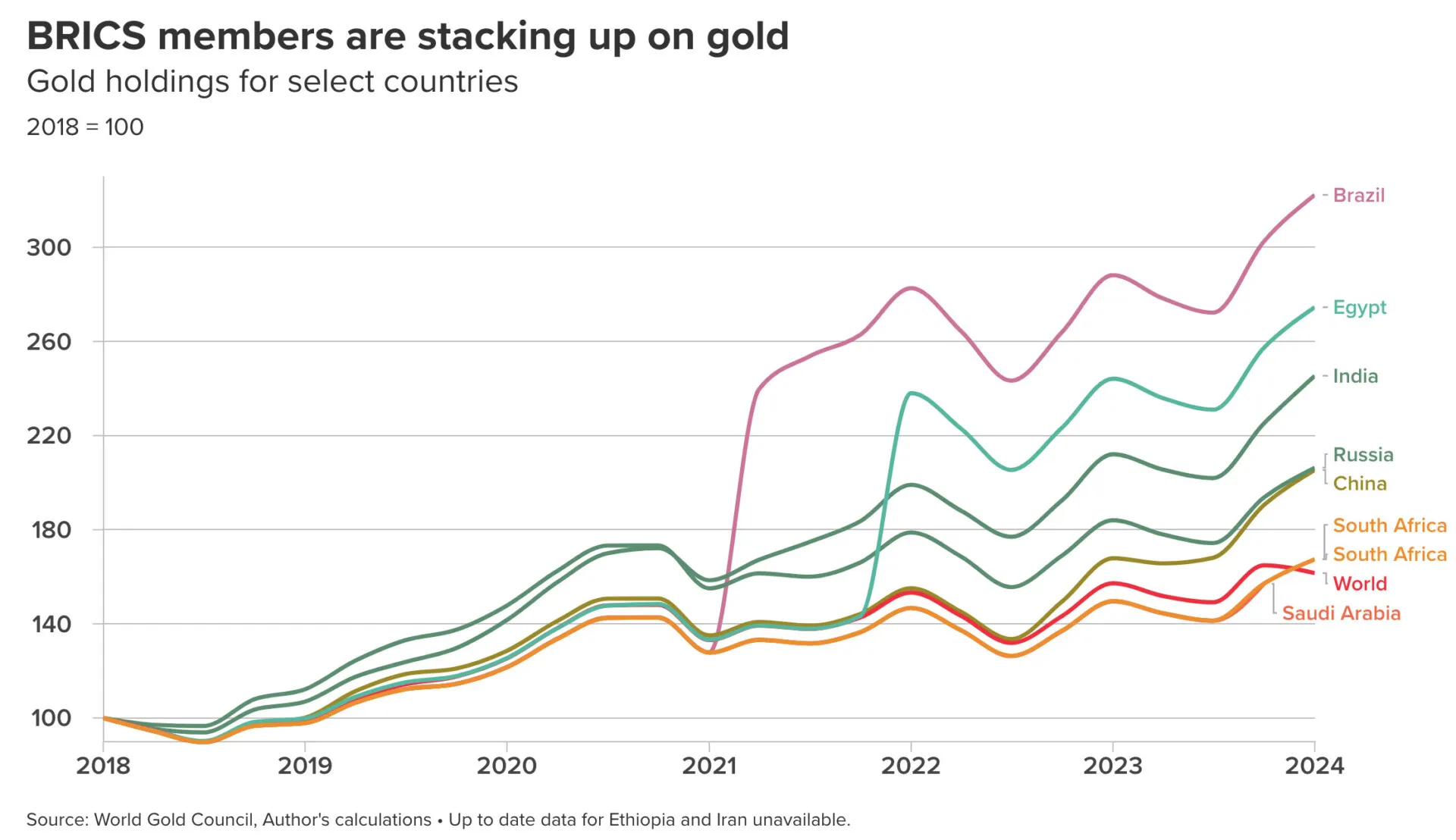
黄金也在卷土重来。近三分之一的央行计划在2024年增加黄金储备。2022年对俄罗斯的制裁表明,即使是欧元也与美元一样存在地缘政治风险。

这促使一些储备经理将黄金视为降低投资组合风险的一种方式。虽然黄金不能取代美元,但随着各国试图实现外汇储备多样化,黄金正成为其中的重要组成部分。

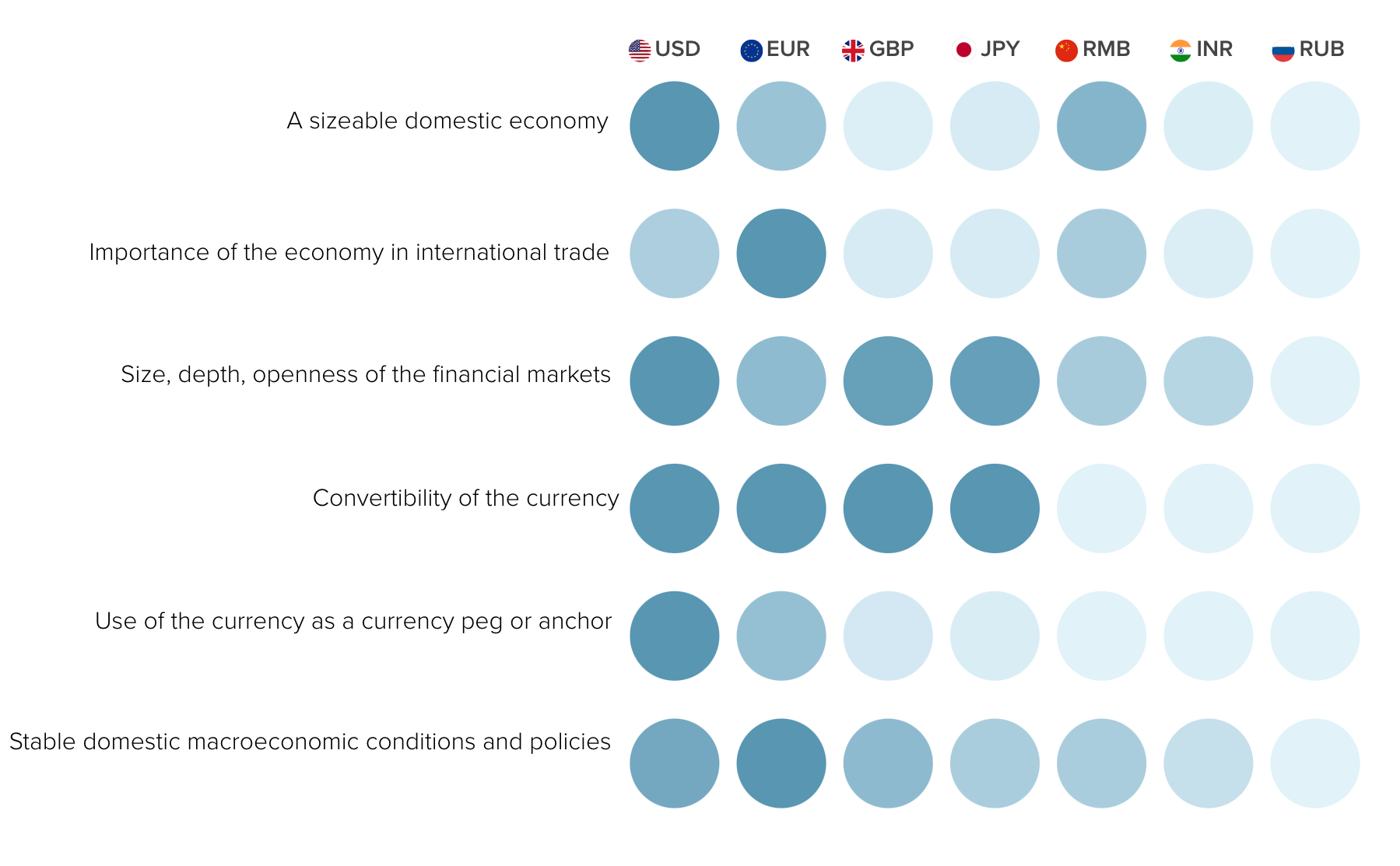
那么,怎样才能成为储备货币呢?稳定性、流动性和信任。美元拥有这些优势,这就是为什么它长时间保持榜首的原因。

国际货币基金组织的特别提款权篮子包括美元、欧元、人民币、日元和英镑。其中,美元仍然胜过其他货币。

İlgili Okumalar

Citi Research Report Analysis: U.S. Proposed Ban on Chinese Optical Modules Has No Substantial Progress, Short-term Enforcement Faces Supply Constraints

Citi Report Analysis: U.S. Proposed Ban on Chinese Optical Modules Lacks Substantive Progress, Faces Supply Bottlenecks in Short Term. Reuters reported on August 4th that the U.S. government and FCC are considering a ban on Chinese optical modules. Citi's August 9th report clarifies that optical modules are not listed on any effective FCC ban. The FCC's Order 26-50 established two restricted list mechanisms (based on manufacturer and production location), but optical modules were only mentioned once, as an example in a disclosure requirement, not as a restricted product. The reported ban remains at a proposal stage. Citi estimates Chinese suppliers provide 60-70% of high-speed optical modules for U.S. hyperscalers. Non-Chinese suppliers cannot fill this gap in the short term, making the immediate implementation of a genuine ban unlikely. Future regulatory paths could be manufacturer-based (least likely), location-based covering all offshore production (strictest), or location-based covering only China (more feasible but with unresolved definitions). A ban would pressure U.S. AI infrastructure, conflicting with stated policy goals. Citi sees low near-term implementation probability, with the issue potentially becoming a negotiation chip in bilateral talks. U.S. domestic capacity build-out is a key long-term variable. Among Chinese companies, XSENS and Dongshan Precision have the highest U.S. exposure, while Tianfu Communication, as a passive component supplier, is relatively insulated. Citi maintains Buy ratings on all three with respective price targets. The conclusion is that Chinese modules are currently irreplaceable in the U.S. AI supply chain, creating a longer timeline for potential restrictions than the market may expect.

marsbit26 dk önce

Citi Research Report Analysis: U.S. Proposed Ban on Chinese Optical Modules Has No Substantial Progress, Short-term Enforcement Faces Supply Constraints

marsbit26 dk önce

Lead Analyst Claims Bitcoin is at a Critical Stage: 'We are at the Bear Market Bottom, What Happens Next…'

Renowned cryptocurrency analyst Benjamin Cowen, in his latest analysis video, examined recent events and historical cycles in the Bitcoin market. Noting Bitcoin's trading range of $64,000 to $65,000, Cowen stated that market dynamics and investor interest show similarities to past cycles, suggesting the upcoming period marks a critical turning point. Cowen observed a significant decline in public interest and investor enthusiasm for the crypto market, with social risk metrics falling to 0.2, far below levels seen four years ago. He added that market volatility has notably decreased, and a sense of distrust prevails among investors, drawing parallels to the ends of bear markets in 2018 and 2022. Historical data indicates Bitcoin markets typically bottom in summer months, followed by a period of stagnation with low volatility, implying a major move could occur in the year's final quarter. However, Cowen noted on-chain indicators like the MVRV Z-Score have not yet signaled a definitive bottom. Cowen believes an event in the coming weeks could shake the market, potentially triggering a final sell-off wave. Such an event, he argues, would bring investors back and pave the way for a new bull cycle. He predicts October as the most likely bottoming period, while acknowledging September or November are also possible, advising crypto users to remain cautious and prepared for a decisive market moment.

cryptonews.ru34 dk önce

Lead Analyst Claims Bitcoin is at a Critical Stage: 'We are at the Bear Market Bottom, What Happens Next…'

cryptonews.ru34 dk önce

Bitcoin Community in Uproar: Deciphering the New Scaling War Sparked by BIP-110

On August 10, Luke Dashjr, a long-time Bitcoin Improvement Proposal (BIP) editor and co-founder of Ocean mining pool, was removed from the BIP editing team for bypassing discussion protocols and preemptively assigning a number to BIP-110, a controversial soft fork proposal he helped draft. The conflict stems from Bitcoin Core's version 30 release in October 2025, which removed the default 83-byte limit on OP_RETURN, a field used for embedding non-transaction data. In response, BIP-110 aimed to enforce this limit as a consensus rule. It controversially lowered the activation threshold for miners to 55% and included a mandatory activation clause, causing significant community backlash. Major mining pools like Foundry USA and AntPool did not support it, with public criticism from figures like F2Pool's Wang Chun and Michael Saylor, who argued it compromised Bitcoin's neutrality. On August 8, at block height 961,632, nodes running the BIP-110 patch rejected the main chain block, causing a chain split. The minority chain, supported by only about 2.53% of the network's hash rate, produced just one additional block before stalling. The main chain quickly outpaced it by over 240 blocks. No major exchanges have supported the minority chain. The event highlighted Bitcoin's governance reality: while rules can be proposed by a few, ultimate authority lies with the economic majority—miners willing to expend hash power and users/exchanges recognizing a chain's validity. Following the failed split, BIP-110 proponents, including Luke Dashjr, have begun discussing a change to the proof-of-work algorithm to create a separate coin, though this remains in early discussion stages.

marsbit56 dk önce

Bitcoin Community in Uproar: Deciphering the New Scaling War Sparked by BIP-110

marsbit56 dk önce

İşlemler

Spot
活动图片