英国FCA发布加密货币广告更新规则

币界网2024-08-08 tarihinde yayınlandı2024-08-08 tarihinde güncellendi

币界网报道:

英国金融监管机构金融行为监管局(FCA)已经取消了对加密货币公司宣传其服务的另一轮指导。

在2023年10月制定了关于加密货币促销的法律后,FCA表示,它一直在密切关注公司如何遵守这些规则。

他们一直在探究公司是如何坚持这些要求的。FCA挑选了一些公司,要求提供信息,甚至进行了一些访问,看看情况如何。

他们的规则要求公司记录特定的客户旅程数据。你猜怎么着?所有公司都在努力,但有些公司正在加倍努力。

记录客户行程数据

因此,公司需要记录客户如何与平台互动的详细信息。一些人正在认真对待这一点,在入职过程中捕获额外的数据。

这有助于他们了解客户的参与程度,比较购买量和资产类型等。顶级公司有一个使用这些数据的游戏计划。

例如,一家公司在入职过程中发现了一些误导性的措辞并进行了修正。但并不是每个人都能理解。许多公司不知道如何利用这些数据为客户做得更好。
UK's FCA releases updated rules for crypto advertisement

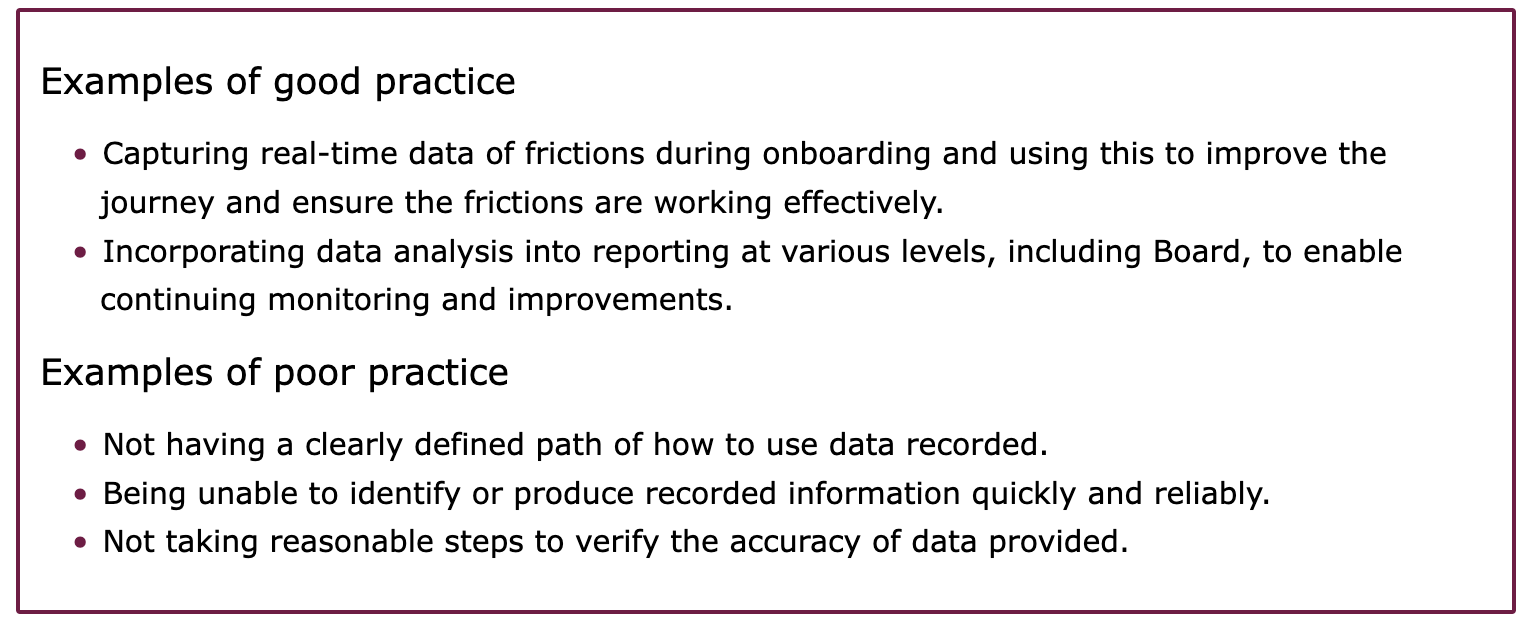
良好实践示例包括在入职过程中捕获摩擦的实时数据,并利用这些数据来改善旅程。

这些公司还将数据分析纳入包括董事会在内的各级报告中,以控制事态并做出改进。

另一方面,一些公司没有对记录的数据制定明确的计划,难以快速识别或生成信息,也未能验证数据的准确性,因此没有抓住重点。

加密货币尽职调查

尽职调查在金融促销制度中是一件大事。为了帮助公司做到这一点,FCA在FG23/3中就推广加密货币或服务之前要做什么制定了指导方针。

这包括检查加密货币本身和促销中的声明。大多数公司在开始推广加密货币之前都有一些尽职调查流程。

最好的人会深入挖掘,遵循FCA的指导,甚至更多。他们甚至为加密货币开发了自己的风险分类法,以发现主要风险或担忧。

但FCA表示,一些公司过于关注加密货币在其他地方是否被视为一种证券,而不是符合英国的规定。

顶级公司考虑了更广泛的因素,如消费者保护、金融犯罪和运营风险。其中一些是彻底的,让专家团队审查智能合约代码和网络稳定性。

一家公司认为他们不需要对加密货币进行尽职调查。另一位则跳过了考虑环境、社会或治理(ESG)因素。

最好的公司确切地知道什么时候拒绝不符合他们标准的加密货币。例如,一个人推广的加密货币不到他们审查的10%,因为他们有一个严格的流程。

大多数公司都依赖于白皮书或新闻服务等公共信息。最好的网站会查看各种来源,将链上和链下信息与第三方专家的数据混合在一起。但有些公司没有很好地验证这些信息,只是从表面上看。

FCA表示,尽职调查不应该是一个“设定后就忘记”的过程。公司需要考虑如何继续检查他们推广的加密货币。

他们应该有系统来监控可能影响促销公平性和加密货币风险状况的市场事件。

İlgili Okumalar

Bitcoin Trading Strategy Breakdown: Celebrity Predictions and Classic Models All Fail, Only These Four Indicators Remain

Analysis of Bitcoin Trading Strategies: Why Celebrity Forecasts and Classic Models Fail, Leaving Only These Four Reliable Indicators This analysis examines the failure of common Bitcoin prediction methods and identifies four reliable indicators for constructing a trading strategy. The author reviewed all major BTC prediction approaches from 2017-2025, categorizing them into three groups: celebrity price targets (consistently over-optimistic), analytical models like Stock-to-Flow (broken post-2022), and on-chain signals. The key finding is that more data often creates confusion, not clarity. The strategy discards unreliable elements: celebrity predictions (incentivized to be extreme), pure models (invalidated by post-ETF market changes), and the Fear & Greed Index used alone (too many false signals). Four reliable indicators were selected: 1. **MVRV Z-Score:** Accurately identifies cycle bottoms when entering its green zone (e.g., 2018, 2020, 2022). Note: Its ability to call tops is now ineffective post-2024. 2. **SOPR (28-day MA):** Consistently signals bottoms when below 1.0, indicating holders are selling at a loss. 3. **ETF Net Flow:** A crucial post-2024 metric showing institutional momentum (e.g., sustained inflows = buying). 4. **Macro Liquidity (Fed policy & M2):** Sets the overall directional bias (e.g., bullish during easing cycles). The core strategy involves waiting for a multi-signal共振 (resonance). For example, a bottom signal requires MVRV in the green zone + SOPR < 1.0. A top signal requires overheated on-chain data + sustained ETF outflows. Macro policy sets the overall direction. The Fear & Greed Index is only used as a weighted confirmatory signal, never alone. Action is only taken when three or more indicators align. The author automated this into a monitoring system that sends Telegram alerts only when signals trigger. As of the article's date (April 15, 2026), the system showed a strong bottom signal: extreme fear (F&G=12), MVRV in the buy zone, and SOPR < 1.0. The only contrary signal was weak ETF flows. Historically, such triple on-chain共振 has preceded 100%+ returns. The conclusion emphasizes building a personal framework over relying on external predictions, allowing for iterative improvement and customization based on individual risk tolerance.

marsbit1 saat önce

Bitcoin Trading Strategy Breakdown: Celebrity Predictions and Classic Models All Fail, Only These Four Indicators Remain

marsbit1 saat önce

İşlemler

Spot
Futures
活动图片