Крах иллюзий: почему биткоин — не цифровое золото

cryptonews.ru2022-01-06 tarihinde yayınlandı2024-08-06 tarihinde güncellendi

Криптовалютный рынок лихорадит, и это ставит под сомнение одну из самых популярных идей крипто-евангелистов — «биткоин как цифровое золото». Казалось бы, чем не идеальная страховка от биржевых штормов? Но не тут-то было!

В то время как фондовые рынки погружались в пучину паники, а инвесторы разматывали свои кэрри-трейды, биткоин повел себя как типичный рисковый актив. Главная криптовалюта рухнула на 17%, пробив психологическую отметку в $50 000, прежде чем немного отыграть падение. А как насчет корреляции с золотом? Она ушла в минус еще в июле.
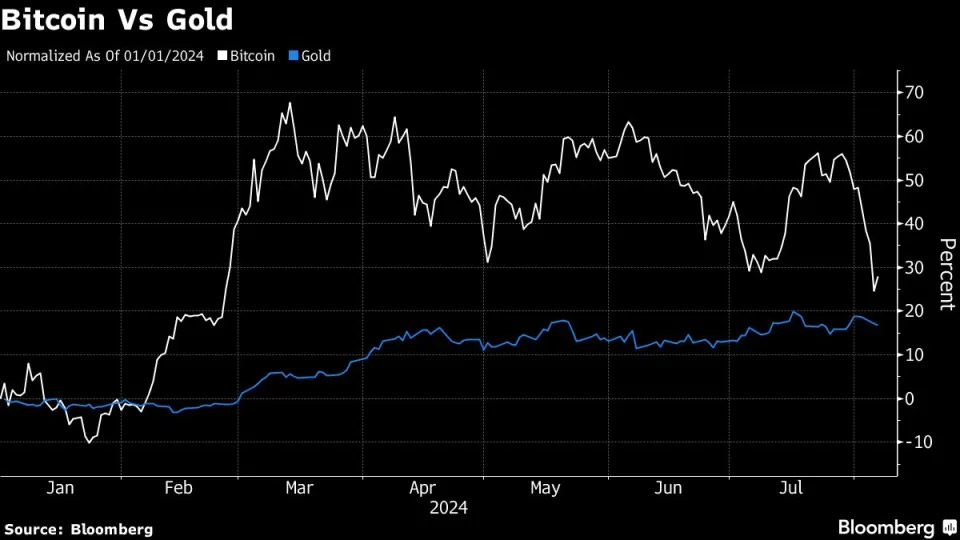
Сравнение графиков биткоина и золота

Джош Гилберт (Josh Gilbert), аналитик eToro, не стесняется в выражениях: «Наивно полагать, что институциональные инвесторы вкладываются в биткоин по тем же причинам, что и в золото. Эти активы играют совершенно разные роли в инвестиционных портфелях».

А что же тогда? Ряд экспертов выдвигает альтернативную теорию. Они утверждают, что резкое падение биткоина подтверждает мысль о том, что криптовалюты — это класс активов, особенно чувствительный к потенциальным опасностям. Например, к риску того, что Федеральная резервная система США слишком долго будет тянуть с снижением ставок и столкнет экономику в рецессию. «Если инвесторы паникуют или хотят снизить долговую нагрузку, криптовалюты часто первыми попадают под раздачу», — отмечает Гилберт.

Сравнения биткоина с золотом отчасти уходят корнями в их общую характеристику — ограниченное предложение. Подобно тому, как запасы золота в недрах Земли конечны, блокчейн биткоина запрограммирован на автоматическое замедление создания новых токенов через процесс, известный как халвинг, который происходит каждые четыре года. В конечном итоге в обращении будет 21 миллион биткоинов.

Некоторые аналитики не спешат отказываться от тезиса «биткоин как золото» — или, по крайней мере, от идеи, что когда-нибудь это может стать реальностью.

«Многие инвесторы рассматривают биткоин как венчурную ставку на его будущее в качестве цифрового золота», — написал в понедельник в заметке для инвесторов Алекс Торн (Alex Thorn), глава исследовательского отдела Galaxy Research. «В отличие от золота, биткоин пока не получил широкого распространения среди суверенных фондов, центральных банков или институциональных инвесторов».

Несмотря на выраженное падение с начала июля, биткоин остается одним из самых успешных крупных активов, который подорожал на 26% с начала года и легко обогнал по доходности золото. Однако этот рост был вызван запуском спотовых биткоин-ETF в США в начале января, а не чем-либо другим. В качестве хеджа от инфляции биткоин показал себя неважно, демонстрируя рост вместе с другими рынками и падая как раз тогда, когда появились первые признаки того, что высокие процентные ставки начали приносить свои неумолимые плоды.


İlgili Okumalar

Which Crypto Sectors Have Been "Eaten" by AI Agents?

The article examines which crypto sectors have been increasingly dominated by AI Agents and which remain human-centric. In certain high-speed, efficiency-driven areas, AI Agents have taken clear control. This includes derivatives/perpetuals trading, where bots outperform humans significantly (e.g., a contest showed 0% of AI Agents were liquidated vs. 43% of humans), arbitrage/MEV extraction, and yield optimization (with ~68% of new DeFi protocols in Q1 2026 featuring autonomous AI Agents). Spot trading and portfolio optimization are also seeing heavy Agent adoption. However, the shift is not universal. In "battleground" sectors, both Agents and humans coexist. In prediction markets, Agents dominate short-term arbitrage, but humans still outperform in long-term, nuanced judgment calls. In DeFi lending, while liquidation is automated, core deposit/borrow decisions remain largely human-driven. Sectors still firmly led by human activity include stablecoin payments and card-based spending (driven by real-world economic activity and remittances) and wallets, which serve as the crucial human-verification and approval layer. The rise of Agents increases the need for robust human-Agent verification layers. Projects like World/AgentKit, t54, Self Protocol, and Kite AI are building infrastructure to create trust, security, and accountability by binding Agents to verified human identities. In conclusion, while AI Agents have decisively "eaten" speed and optimization-focused crypto sectors, human judgment, trust, and real-world context remain dominant in areas that create broad economic value, such as payments and identity. The future likely involves a symbiotic relationship where Agents require human verification and oversight to operate effectively.

Foresight News5 dk önce

Which Crypto Sectors Have Been "Eaten" by AI Agents?

Foresight News5 dk önce

After Rising 11 Times in a Year, Micron's Earnings Report Becomes a Stress Test for the AI Memory Market

**Micron's Upcoming Earnings: A Crucial Test for the AI Memory Rally** Investors in AI memory stocks face a critical moment on June 24th, when Micron Technology reports quarterly earnings. The stock, having surged approximately 11-fold from $103 to $1,134 over the past year, carries immense market expectations. Wall Street consensus forecasts a staggering ~932% year-over-year jump in EPS to around $19.72 and ~270% revenue growth to ~$345 billion, largely driven by sold-out HBM (High Bandwidth Memory) capacity through 2026. Analysts have aggressively revised estimates upward over the last 90 days, with EPS expectations rising 68%. This creates a high bar: even strong results risk a sell-off if they fail to meet these elevated projections. Notably, price forecasts from institutions like Citi (predicting ~200% DRAM price increases in 2026) are already among the most bullish on Wall Street, not conservative. The key metric to watch is gross margin, guided to a record ~81%. Such peak profitability raises questions about sustainability in the historically cyclical memory sector. While management has signaled continued strength, the stock's direction post-earnings will likely hinge more on forward guidance for the next quarter and details on HBM capacity expansion for 2027, rather than the already-anticipated stellar past results. The report represents a major pressure test for the high-flying AI memory trade.

marsbit9 dk önce

After Rising 11 Times in a Year, Micron's Earnings Report Becomes a Stress Test for the AI Memory Market

marsbit9 dk önce

İşlemler

Spot
Futures
活动图片