Эксперт: текущая просадка биткоина соответствует началу «бычьего» цикла в 2016 году

cryptonews.ru2022-06-06 tarihinde yayınlandı2024-08-06 tarihinde güncellendi

  • Аналитик Питер Брандт прокомментировал спад на крипторынке.
  • Он привел в качестве примера цикл 2015-2017 годов.
  • По мнению эксперта, он похож с текущим.

Известный трейдер и аналитик Питер Брандт сравнил текущую фазу биткоин-рынка с циклом в период с 2015 по 2017 год. По его мнению, просадка от 4-5 августа соответствует аналогичной тенденции перед началом «бычьего» роста.

Please note that $BTC decline since halving is now similar to that of the 2015-2017 Halving Bull market cycle pic.twitter.com/cIm3WKzBog

— Peter Brandt (@PeterLBrandt) August 5, 2024

Брандт подкрепил свой прогноз рыночными данными. Эксперт проанализировал ряд показателей, включая следующие:

  • уровень, на котором закрылись торги через неделю после халвинга;
  • локальные минимумы в разные циклы;
  • процент просадки после халвинга;
  • уровни поддержки перед началом роста;
  • время до максимума в следующем цикле.

Второй халвинг в сети биткоина произошел в июле 2016 года. Непосредственно перед ним, в июне, курс актива был на уровне $770, согласно CoinMarketCap. Через неделю после халвинга цена упала до $650, а промежуточный минимум составил $474.

Просадка достигла 27%. После этого курс восстановился до барьера в $790 к концу 2016 года. Затем начался «бычий» цикл, который продлился год. К тому моменту стоимость актива превысила $16 000.

Брандт видит определенные параллели между этой фазой и текущей. Напомним, четвертый халвинг прошел 20 апреля 2024 года. Подробнее о нем:

Через неделю после него стоимость биткоина составила $64 962. В ходе глобального спада на крипторынке 4-5 августа курс актива достиг отметки в $49 050. Просадка составила 26%. Уровень барьера, в свою очередь, — $73 804.

В цикле 2015-2017 годов биткоину потребовалось 24 недели, чтобы пробить его и обновить максимум. В этом цикле прошло уже 16 недель по состоянию на 5 августа 2024 года.

На момент написания биткоин торгуется по $58 888. Как видно, актив частично восстановился после падения.
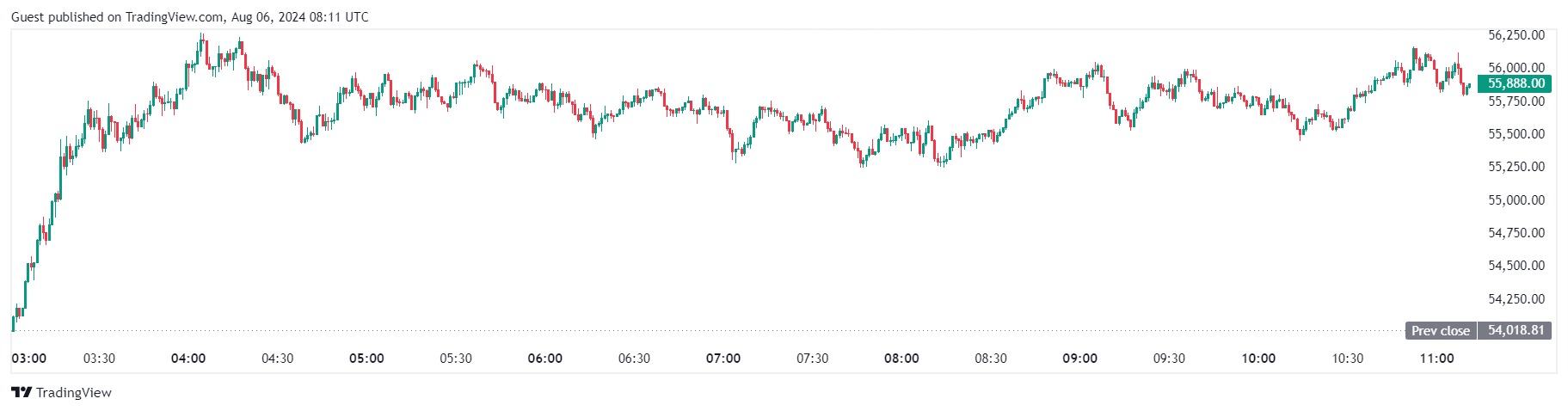
Курс BTC/USDT на бирже Binance. Источник: TradingView.

Подробнее о том, почему это произошло, читайте в нашем материале с мнениями экспертов:

İlgili Okumalar

'Bear' Doomsday Prophecy: AI 'Reaching Its Peak', U.S. Stocks to Top Out Fastest in Q3, Down 30-50%

"A Short Seller's Dire Prediction: AI Boom Fading, US Stocks to Peak by Q3 with 30-50% Decline" Prominent macro investors Jeffrey Gundlach and Felix Zulauf warn that the AI-driven market rally is nearing its end, forecasting a major US stock market correction of 30-50%, potentially beginning as early as Q3. Their analysis points to alarming parallels with historical market tops, citing extreme concentration in the top AI-related stocks within the S&P 500. Zulauf's bearish thesis hinges on unsustainable capital expenditure trends among major cloud companies, negative free cash flow emergence, and soaring semiconductor prices. Gundlach highlights dangerous parallels to the 1999 tech bubble peak. A key divergence from conventional wisdom is Gundlach's view that long-term Treasury yields will not fall meaningfully even during a recession, due to America's structurally out-of-control fiscal deficits and soaring interest costs. He warns this could force the government into yield curve control or even a sovereign debt restructuring. Both investors express severe concerns about the opaque private credit market, drawing parallels to the pre-2008 financial crisis environment. They allege widespread rating inflation, misrepresented credit quality, liquidity illusions, and fraudulent asset valuations within this sector. The analysis links the AI boom and private credit crisis through financing costs. They argue that as AI companies' cash flows weaken and they seek funding, a high and sticky long-term interest rate environment will severely stress lower-rated corporate borrowers, exposing cracks in credit markets. Finally, they predict a regime shift where the US dollar weakens and US equities underperform global markets, marking the end of their long dominance. The stage is set for a significant market reversal.

marsbit6 dk önce

'Bear' Doomsday Prophecy: AI 'Reaching Its Peak', U.S. Stocks to Top Out Fastest in Q3, Down 30-50%

marsbit6 dk önce

Why Does No One Buy DeFi Insurance?

**Title: Why Isn't DeFi Insurance Being Bought?** DeFi insurance, which promised automated, unbiased payouts via smart contracts, has failed to gain traction. The core issue is economic: high premiums severely erode the yields that attract users to DeFi in the first place. For example, insuring a USDC deposit on Aave V3 could cost 1.5–2.5% of the annual yield, leaving a net return barely above a savings account. For riskier platforms like Maple Finance or Ethena, premiums can even turn net yields negative. Consequently, users often forgo insurance, as it nullifies their profit motive. The market also suffers from structural flaws. First, DeFi risks are highly correlated (e.g., an oracle failure can impact multiple protocols simultaneously), unlike the independent risks in traditional insurance. This makes large-scale events potentially catastrophic for insurers. Second, the total capital in DeFi insurance pools (e.g., Nexus Mutual's ~$81.5M) is minuscule compared to the hundreds of billions in total value locked (TVL), creating a massive capacity gap. A single major hack could drain the entire industry's reserves. Furthermore, the governance model where tokenholders vote on claims creates a conflict of interest, incentivizing them to deny payouts to protect their own funds. As a result, the sector is shrinking. While pioneers like Nexus Mutual are pivoting to preventative measures (bug bounties) and seeking external capital via reinsurance, the fundamental problems remain. DeFi insurance represents a public good—its stability benefits the entire ecosystem—but without a mechanism to share costs, a "tragedy of the commons" ensues where no one is willing to pay, leaving the system vulnerable.

marsbit20 dk önce

Why Does No One Buy DeFi Insurance?

marsbit20 dk önce

İşlemler

Spot
Futures
活动图片