市场波动下的 DeFi 众生相:一波万波

深潮2024-08-06 tarihinde yayınlandı2024-08-06 tarihinde güncellendi

波涛汹涌的链上,DeFi 正直接迎战。

撰文:Pzai,Foresight News

昨日,随着全球市场经历巨大震荡,加密市场也没能独善其身。而在链上,仅以太坊生态上就创下单日清算超 3.5 亿美元的记录。市场的「一波」正在激发 DeFi 的「万波」,而 DeFi 项目是如何应对的?海啸退去之时又是谁在裸泳?故笔者撰写本文对 DeFi 在市场波动下的表现进行总结。

稳定币

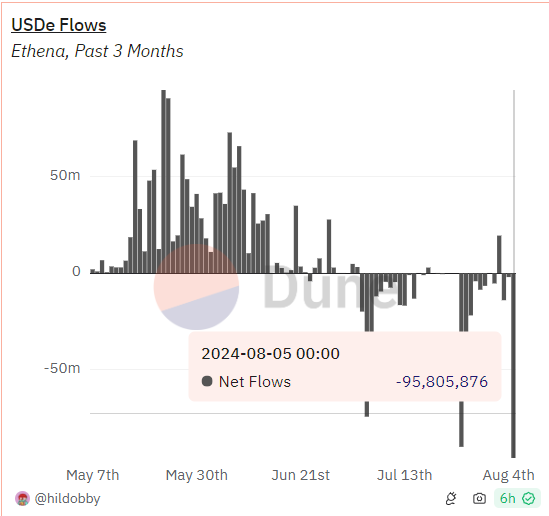
在 Ethena 方面,昨日其稳定币 USDe 创下单日流出 9580 万美元的记录,总供应量也从巅峰时期的 36 亿枚回落至 31 亿枚左右。由于 Ethena 的机制导致多头头寸必须保持在较高水平,随着市场的下跌,抵押物的潜在清算导致用户需要控制风险,继而赎回相关代币。
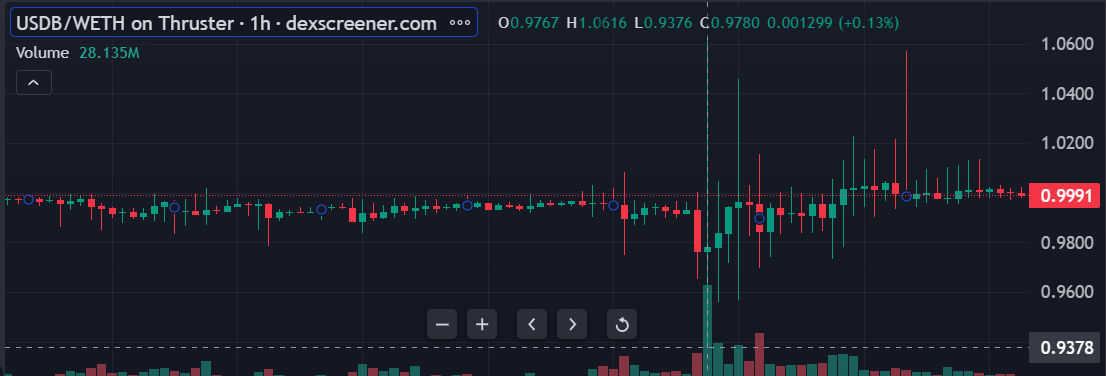
另外 Blast 上稳定币 USDB 在昨日短时脱锚至最低 0.937 美元。由于 Blast 的稳定币生态相对封闭,且 Blast 链启动初期项目方对 USDB 的激励较大,导致市场波动时资金流出的影响较大。现在 USDB 已经基本回锚。
借贷协议

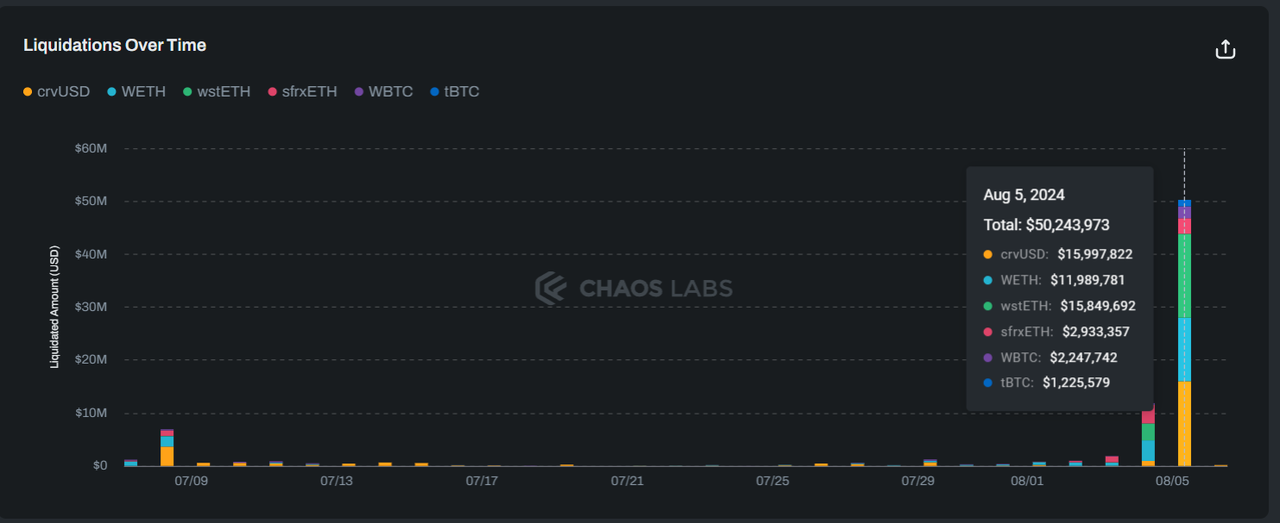
就清算情况而言,8 月 5 日的清算情况最为严重,整体规模超过 3.5 亿美元。按协议分配来看,Aave V3 的清算额最大,达到 2.5 亿美元。其次是 Compound 清算,总清算额达 7960 万美元。在 Aave V3 的清算中,主要集中于以太坊的大类资产清算,前三名分别为 WETH、wstETH 和 WBTC。
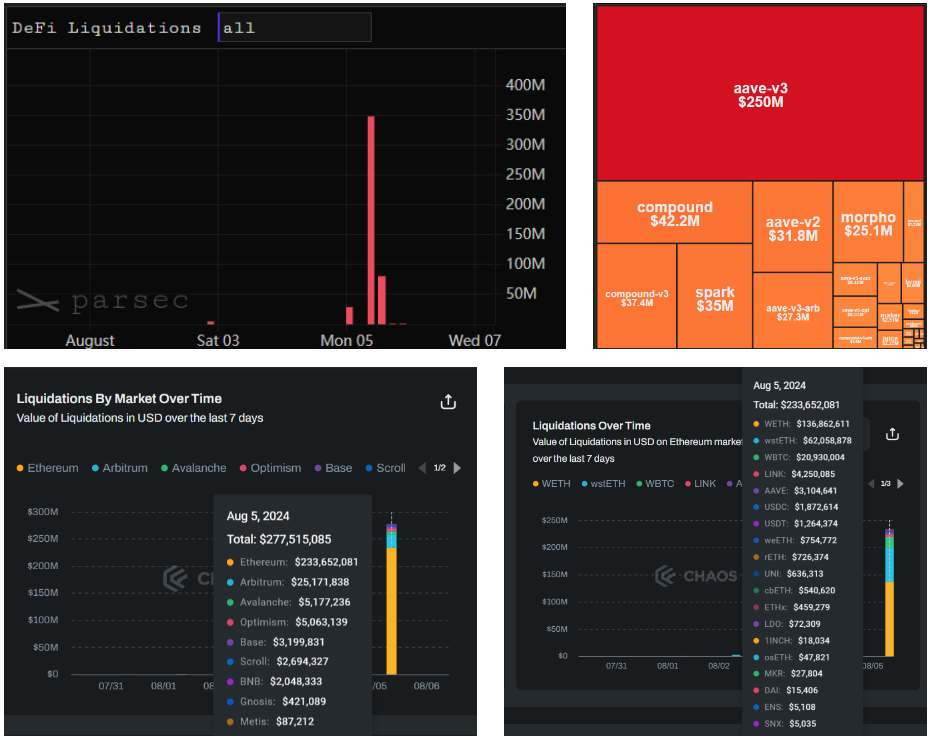
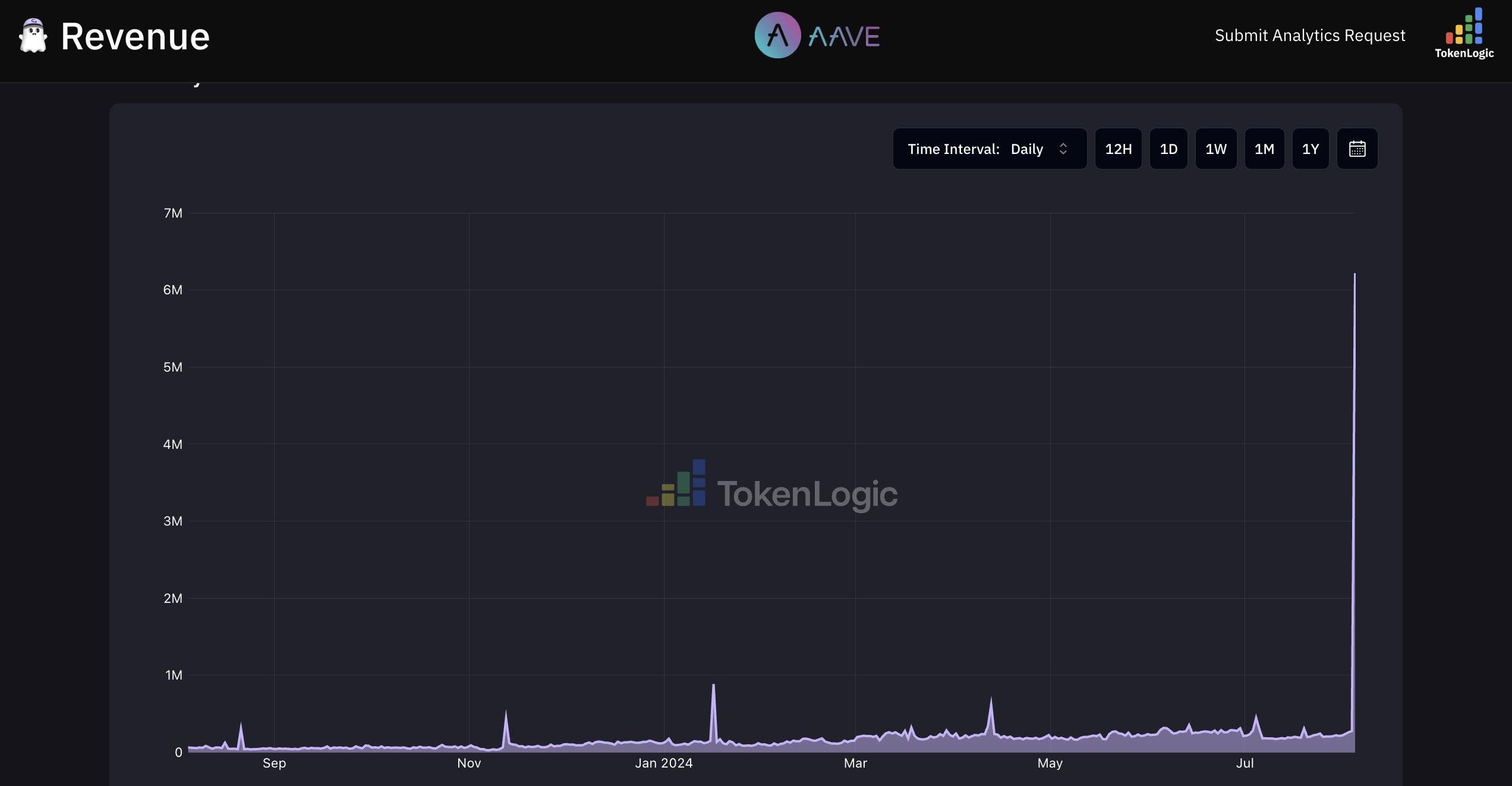
在市场波动中,Aave 也获得了超过 600 万美元的收入。
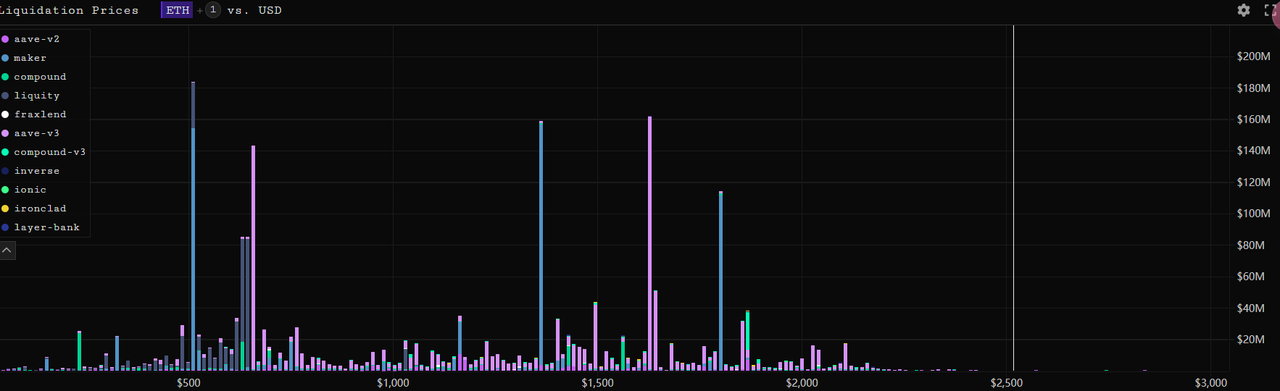
清算完成后,链上整体的清算线已经低于 2000 美元。在清算中,由于机制特性,在市场波动较大时容易出现坏账,如 Aave V3 近七天内共产生了 35 万美元的坏账。相比之下,Curve Llamalend 因为其软清算机制避免了大部分硬清算,其中软清算在 8 月 5 日承担了 5024 万美元的清算份额。
整体而言,借贷协议对本次市场波动的应对还算差强人意。

去中心化交易所(DEX)

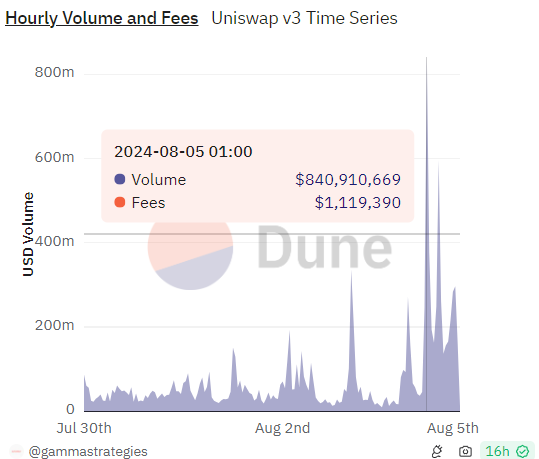
在 Uniswap V3 中,8 月 5 日达到最高峰值 8.4 亿美元,并为 LP 产生了 111.9 万美元的费用。
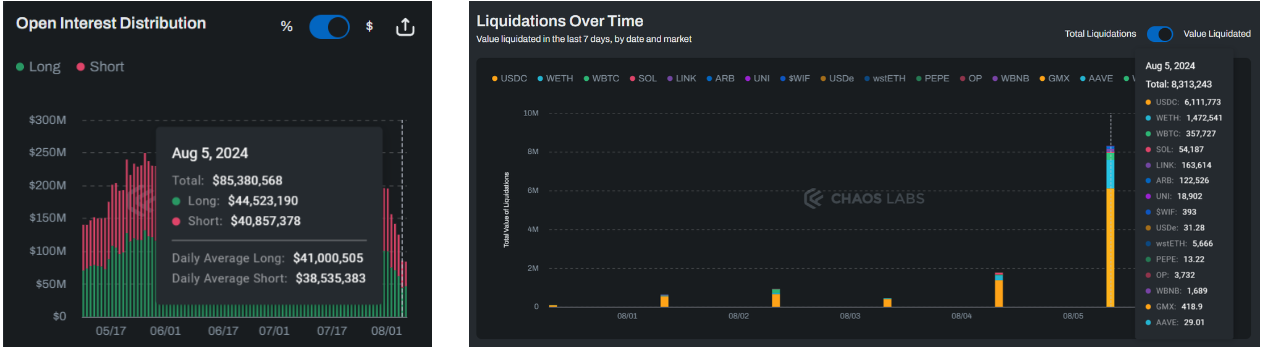
GMX 方面,8 月 5 日当天,持有头寸较前日下降了 30% 左右,并清算了 830 万美元的资产,主要以 USDC 为主。
 

再质押

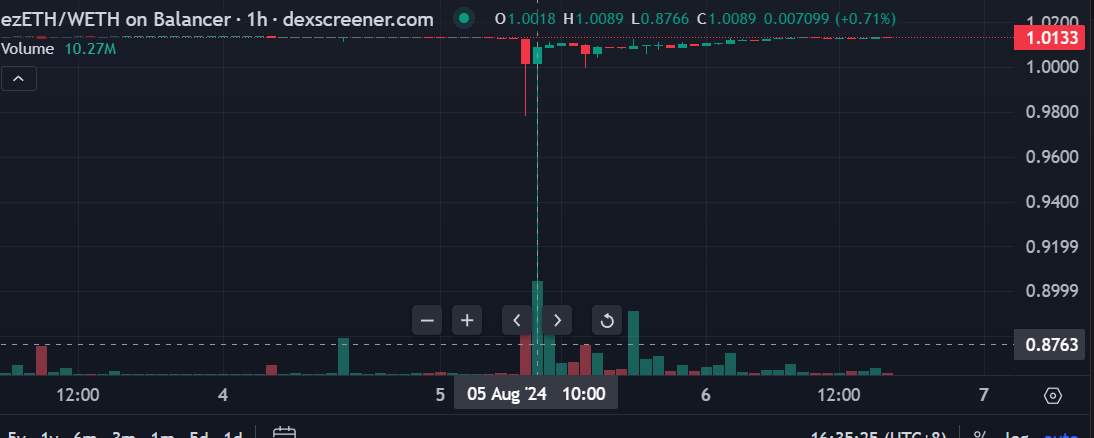
再质押资产作为现今以太坊的核心资产之一,市场波动下的流出也比较显著。例如 Renzo 的质押通证 ezETH 最低脱锚至 0.876 WETH 点位。
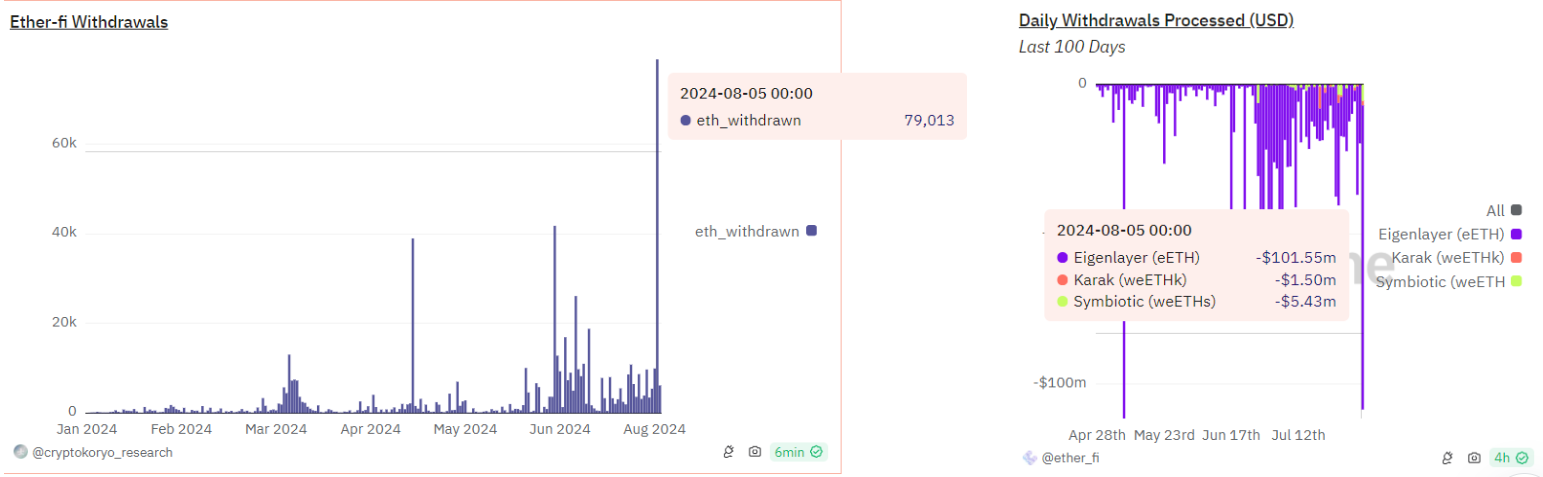
协议流出上,以 ether.fi 为例,8 月 5 日全天就提现了 79013 枚 ETH,总价值超过 1 亿美元,其中大部分是 Eigenlayer 的 eETH 提现。凭借着超过 7.7 万枚 ETH 的流动性和 73% 以上的 DeFi 利用率,协议不存在整体上的挤兑风险。
整体而言,Lido stETH 提现队列没有大幅增长的态势,且链上主要的 LST 一直保持稳定。所以整体上再质押生态没有系统性风险。


İlgili Okumalar

ArthurHayes新文:押注日元升值,ENA未来几月或涨5至10倍

Arthur Hayes argues that the Japanese Yen is significantly undervalued and posits that its appreciation against the US Dollar is imminent. He outlines three potential mechanisms for this shift, dismissing the first two—the Bank of Japan raising interest rates and domestic institutions selling foreign assets—as politically or economically unfeasible. He identifies the third and preferred method: the Japanese Ministry of Finance (MOF) using its holdings of US Treasuries as collateral in the Fed's FIMA repo facility to borrow US dollars, then selling those dollars to buy Yen in the forex market. Hayes believes US Treasury Secretary Bessant has signaled support for this approach, which requires the Fed's Foreign Currency Subcommittee, led by Chairman Walsh, to remove lending limits on the FIMA tool. Hayes asserts that implementing this "Scheme 3" would lead to a significant expansion of US dollar liquidity. He predicts this surge in liquidity will act as a catalyst, driving up the prices of assets like Bitcoin and physical gold. Within the crypto space, he views Ethereum (ETH) as undervalued and singles out Ethena's ENA token as a speculative play with potential for 5-10x gains in the coming months, contingent on a recovery in Bitcoin basis trades that would boost demand for its USDe stablecoin. He concludes that investors should watch for the Fed's rule change as the key trigger for these market movements.

marsbit14 dk önce

ArthurHayes新文:押注日元升值,ENA未来几月或涨5至10倍

marsbit14 dk önce

Is It Time to End the Era of Perp DEXes Burning Cash for Growth?

The article questions whether the era of perpetual decentralized exchanges (Perp DEXes) relying heavily on token incentives for growth should end. It argues that while token incentives (points, airdrops, farming) are useful for bootstrapping liquidity and attracting users, they often attract short-term, incentive-driven behavior rather than genuine, long-term traders. The piece analyzes how platforms use future token value to acquire current trading volume and liquidity, but notes this creates data that is difficult to interpret. A key test comes after the Token Generation Event (TGE), when the removal of incentive expectations reveals whether user retention is based on product quality or continued subsidies. Data from platforms like Hyperliquid, Lighter, and edgeX shows varying success in converting airdrop attention into sustained trading relationships post-TGE. Post-TGE, the focus often shifts from distributing tokens to supporting the token's value through mechanisms like fee revenue buybacks and burns. However, this ties value redistribution to token holdings rather than direct trading contributions. Analysis of user behavior on platforms like Hyperliquid reveals that holding a platform's token, participating in its financial products, and engaging in perpetual trading are often distinct activities, indicating that broad token ownership does not equate to genuine trading demand. This creates a tension for platforms, which must manage both a trading market and a token market with potentially conflicting goals. The article concludes by introducing PopDEX, an approach backed by Foresight Ventures, which proposes a different model. Instead of channeling value first through a platform token, PopDEX aims to establish a "100% value return" framework. This system is designed to directly and transparently redistribute the value generated from trading fees back to those who create it—such as active traders, referrers, and affiliates—based on verifiable market contributions. The piece suggests that as the Perp DEX industry matures, exploring alternative incentive structures that move beyond pure token-driven growth is a necessary evolution.

marsbit22 dk önce

Is It Time to End the Era of Perp DEXes Burning Cash for Growth?

marsbit22 dk önce

Chinese Data Generation Team Makes Debut in Nature Journal

A Hong Kong-based startup, Weina AI, has become China's first and the world's fourth data-generation technology company to publish in a leading Nature journal (IF>10 in recent three years) with a paper on AI-assisted kidney cancer surgery decision-making. Founded by Professor Liu Qifeng, who previously led the creation of the world's first thousand-card H800 SuperPod cluster at HKUST, the company focuses on enhancing AI's "questioning" ability to generate high-quality reasoning Q&A data, which is key for AI self-learning. The published Nature Communications paper, co-authored with medical experts, addressed a clinical challenge in renal surgery. Using an RDPM model on multi-source data from 1,621 patients, the AI achieved high predictive accuracy for long-term kidney function decline, providing a quantitative basis for surgical decisions. Professor Liu outlines AI development in three stages: from data to models, from models to token generation, and crucially, from tokens back to data—where AI actively generates questions, reasoning steps, and verified answers (cQrA: context, Question, reasoning, Answer). Weina AI's mission is to create this "data → model → token → data" feedback loop, enabling Agentic AI to autonomously evolve in professional domains. This moves beyond costly manual data annotation by using AI agents to generate scalable, chain-of-thought data. The company raised a HK$50 million seed round led by Lenovo Capital. Instead of focusing deeply on one sector, it adopted a "breadth-first" strategy, successfully deploying its technology across four high-accuracy, disparate fields: value-alignment safety, government affairs, insurance, and horse racing, proving cross-industry replicability. Liu argues that the future core of AI is not the model or data alone, but this self-reinforcing closed loop. This logic extends to embodied AI, where training shifts from imitation to autonomous generation of action data (cTrA: context, Task, reasoning, Action) through trial, error, and feedback. Weina AI's vision is to leverage this paradigm to "generate the world."

marsbit22 dk önce

Chinese Data Generation Team Makes Debut in Nature Journal

marsbit22 dk önce

İşlemler

Spot
活动图片