为什么加密货币市场崩溃?清算在24小时内达到10亿美元!

币界网2024-08-05 tarihinde yayınlandı2024-08-05 tarihinde güncellendi

币界网报道:
    加密货币市场正以比预期更高的速度崩溃。以下是导致加密货币市场下跌的三个原因。

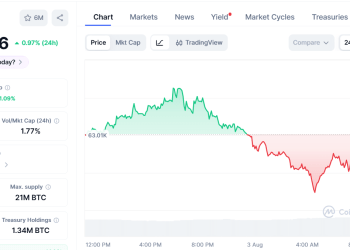
在过去的24小时里,加密货币市场经历了近几个月来最大的崩盘。比特币(BTC)从5万美元跌至6万美元,推动加密货币市场大幅下跌。

随着BTC在全球金融市场不确定性增加的情况下出现极端波动,山寨币受到的打击最大。Spectator Index报告称,加密货币市场在过去24小时内清算了约10亿美元。

这种下跌让交易员和分析师想知道是什么导致了如此巨大的下跌。AMBCrypto发现了加密货币市场在过去24小时内崩溃的三个主要原因。

Altcoins跌至新低

随着加密货币的日益衰落,大多数山寨币都经历了最大的打击,创下了新低。在过去的七天里,大多数山寨币都面临着看跌情绪,因此进入了熊市。

在这种下降中,所有主要的山寨币都受到了沉重打击。首先,截至发稿时,ETH的交易价格为2326美元,此前日线图下跌19.85%,周线图下跌30%。

这一下跌对ETH的市值产生了广泛影响。以太坊市场两周前为4100亿美元,现在为2800亿美元。这是1270亿美元的减持,超过了Solana和BNB的整个市值。

同样,BNB在日线图上下跌了15%,在周线图上下降了24%,交易价格为446美元。此外,Solana在周线图和日线图上分别下跌36%和14.77%后,价格大幅下跌至121美元。

是什么导致了加密货币的下跌?

三个主要原因正在推动加密货币市场下跌。

首先,日本股市崩盘影响了更广泛的加密货币行业。日本股市报告了其近期历史上最糟糕的两天跌幅。

Zerohedge表示,跌幅大于1987年的黑色星期一崩盘。

因此,这对那些购买廉价日元以利用其在股市头寸的交易员产生了负面影响。Adam Khoo谈到了这一发展,他指出,

“日本股市(日经225指数)从高点暴跌超过25%,至30900点支撑位。如果这一支撑位能够保持,可能会出现不错的反弹。”

因此,日本股市因各种原因下跌。首先,日本央行正在加息以控制通胀,预计将继续加息。其次,正如Adam Khoo所指出的那样,

“日元(JPY)的飙升可能会使日本大型跨国公司的出口竞争力下降,并减少海外收入的利润。”

日本市场引发恐慌性抛售,从而影响了包括台湾和韩国在内的其他市场。同样,有传言称美联储将宣布降息,以缓冲市场对日本市场的任何连锁反应。

地缘政治紧张局势加剧

当前的地缘政治紧张局势也影响了更广泛的加密货币市场,导致交易员恐慌性抛售。

上周,中东的紧张局势引发了人们对更广泛的地区战争的担忧。自从以色列在伊朗杀害哈马斯领导人和在黎巴嫩开展军事活动以来,随着美国军方向该地区派遣增援部队,人们对全面战争的担忧越来越大。

Patrick Bet-David在他的X页面上指出,地区紧张局势是影响市场的一个因素。他指出,

瓦拉新闻网站周日报道称,由于担心真主党和伊朗对以色列的袭击,辛贝特安全部门已经准备好在耶路撒冷建造一个地下掩体,高级领导人可以在战争期间在那里停留很长一段时间,并已全面投入使用

毫无疑问,地区战争的可能性将使加密货币市场和更广泛的金融市场崩溃。

市场不确定性

由于美联储未能宣布任何降息,市场经历了一段不确定时期。随着美国债务突破35万亿美元,市场对通货膨胀和美联储降息立场的担忧加剧,反应恐慌。

因此,日益加剧的股市恐慌引发了美联储将宣布降息以应对当前形势的传言。

同样,市场不确定性的增加导致了过去24小时加密货币清算的增加。

根据Coinglass的数据,加密货币市场的总清算额从每日图表上的2.694亿美元增加到4.825亿美元。Spectator Index的其他报告显示,加密货币市场清算金额超过10亿美元。

清算的增加表明投资者对加密货币的未来不确定,因此拒绝支付溢价来持有头寸,迫使他们退出这些头寸。

最后,根据Worldcoin指数,加密货币衍生品的累计未平仓合约从6672亿美元增加到1.7万亿美元。

当衍生品累计未平仓合约随着价格下跌而上涨时,这意味着进入市场的人正在押注价格上涨,因为他们预计市场将进一步下跌。
İlgili Okumalar

Report Interpretation: J.P. Morgan Details Micron's Pre-Earnings Sentiment, Current Hardware Sector Dynamics

Morgan Stanley analyst Joshua Meyers' report (June 21, 2026) highlights key trends in the hardware and semiconductor sector ahead of Micron's earnings. The core takeaways are: 1. **Micron & Memory:** Memory remains a high-conviction long theme, driven by strong AI demand and rising ASPs. However, investor focus is shifting to the sustainability of Micron's >80% gross margins and the specifics of potential new long-term supply agreements (SCAs). 2. **Hardware Supply Chain:** AI-related demand for servers, networking, and storage remains robust, but company performance is diverging. Celestica (CLS) shows improved margin confidence, Western Digital and Seagate benefit from pricing, Fabrinet (FN) sees predictable AI optics growth, and Teradyne (TER) anticipates a new Google customer. 3. **AI Capex & WFE Forecasts:** JPMorgan increased its Wafer Fab Equipment (WFE) market growth forecasts to 28% in 2026 and 29% in 2027. AI infrastructure financing is evolving, with higher project-level debt reducing constraints on capex expansion. The report signals that while the AI-driven hardware cycle is strong, the market is entering a phase focused on execution verification (e.g., Micron's SCA details, Fabrinet's ramp with Amazon) and valuation sustainability. Key near-term signals include Micron's guidance, Arista Networks' outlook, and the pace of demand normalization post potential tariff-related pull-ins.

marsbit3 saat önce

Report Interpretation: J.P. Morgan Details Micron's Pre-Earnings Sentiment, Current Hardware Sector Dynamics

marsbit3 saat önce

Research Report Analysis: The Fed's New Chair's Debut – New Leader, But Same Script?

Report Analysis: Federal Reserve's New Chair Debut – A New Captain, But the Same Script? Morgan Stanley's chief global economist Seth B. Carpenter analyzes the first FOMC meeting under new Fed Chair Kevin Warsh in a June 21 report. Warsh deliberately avoided providing forward guidance on interest rates, aligning with his philosophy. However, market expectations for a rate hike this year were reinforced. Key signals lie elsewhere: inflation may fall more than expected, and quantitative tightening (QT) could be more aggressive than anticipated. The FOMC's "dot plot" suggests only one rate hike in 2026. Carpenter argues that if inflation undershoots forecasts, the logic for even a single hike weakens, especially as projections indicate potential rate cuts in 2027. On QT, Warsh's stance is clear. Carpenter notes that measures like halving the Treasury's account balance could shrink the Fed's balance sheet by around $500 billion with minimal market impact. Combined with adjustments to reserve interest and liquidity rules, the ultimate QT scale may exceed expectations, though its market effect might be less disruptive unless the Fed actively sells Mortgage-Backed Securities (MBS). While Warsh initiated a review of the Fed's policy framework, the 2% inflation target remains intact for now. The report concludes that the market may be overestimating the significance of reduced forward guidance and the near-term rate hike risk, while potentially underestimating the scope and manageable nature of the coming balance sheet reduction. The key debates will hinge on upcoming core PCE data, the specifics of the QT path, and the framework review's findings.

marsbit3 saat önce

Research Report Analysis: The Fed's New Chair's Debut – New Leader, But Same Script?

marsbit3 saat önce

Critical Game Week: BTC Retracement Confirmation vs. HYPE Support Battle | Guest Analysis

This weekly analysis outlines a critical juncture for BTC and HYPE markets, focusing on key price level confirmations. **BTC Analysis:** BTC is at a pivotal point after a five-wave rally from the June 5th low of $59,100. The price has broken below a short-term rising channel's lower boundary, with the current move seen as a pullback to test this breakdown. Failure to reclaim this level could lead to a retest of the $59,000-$60,000 support zone. The core scenario hinges on this channel retest outcome. * **Key Levels:** Resistance at $64,500-$65,000 (channel boundary) and $69,500-$70,500. Support at $59,000-$60,000 and $55,000. * **Strategy:** A core bearish stance is maintained (20% short from last week), with short-term plans for tactical trades. Three detailed contingency plans (A/B/C) are provided for short positions on resistance tests or breakdowns, emphasizing strict stop-loss discipline. **HYPE Analysis:** HYPE shows strong momentum but is currently in a corrective phase after hitting a new high of $76.94. The price is retesting the crucial $64-$66 support area. * **Key Levels:** Resistance near $77 and $80-$82. Support at $64-$66 and $52-$54. * **Strategy:** The short-term approach is "buy on dips, avoid chasing rallies." A long position is considered only if clear stabilization signals appear at the $64-$66 or deeper $52-$54 support zones, with tight risk controls. **General Risk Management:** A standardized trailing stop-loss protocol is emphasized: set initial stop, breakeven at +1% profit, then trail stops upward to lock in gains. *Disclaimer: All analysis is presented as a personal trading framework, not investment advice. Market conditions are complex and require dynamic adjustment.*

marsbit4 saat önce

Critical Game Week: BTC Retracement Confirmation vs. HYPE Support Battle | Guest Analysis

marsbit4 saat önce

İşlemler

Spot
Futures
活动图片