Bankless:哪些区块链在赚钱?带来了多少收益?

币界网2024-08-02 tarihinde yayınlandı2024-08-02 tarihinde güncellendi

币界网报道:

作者:David C,Bankless;编译:白水,

两周前,我撰写了一篇关于具有强大基本面(例如超额收入或代币供应)的协议的文章,这些协议在最新一波价格上涨中显示出希望。

现在,我们采用相同的基本面驱动方法来更深入地研究 L1 和 L2。
dOsed8JY47AUlLIzYSRbNwazz8Gu2nmzfbEnLNtC.jpeg

无论是机构投资的涌入,还是对高 FDV 代币发行的普遍失望,最近的激增都提供了一个潜在的机会,让我们可以更仔细地研究区块链的整体基本面,不仅包括其收入,还包括其收益。

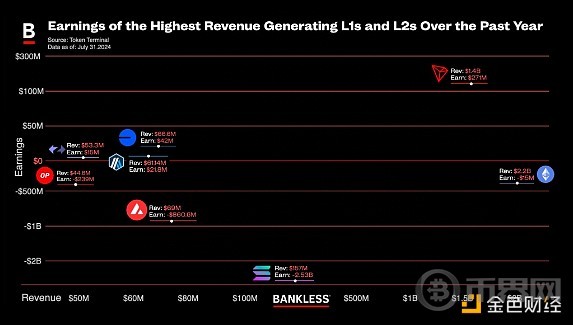
今天,我们将探讨这一点,分析收入排名前 4 位的 L1 和 L2,然后深入探讨这些区块链实际保留了多少收入(如果有的话)。

注意:就像 TradFi 一样,有很多复杂的方法来过滤各种项目的收益。在今天的文章中,我们保持简单,将收益定义为总收入减去代币发行(分发给用户的原生代币数量)和运营费用(开发、维护和升级协议的成本)。

哪些 L1 区块链可以盈利?

事不宜迟,让我们来看看这些数字。

以太坊
8GMzqarGYJnIRft1C8w8hvkjmwHpdvxfUgQmXDPN.jpeg

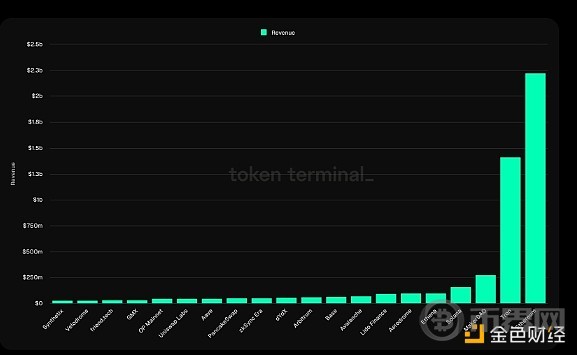
在产生的收入方面,以太坊远远领先于所有其他区块链(包括 L1 和 L2),过去一年的收入为 22.2 亿美元。

然而,尽管收入可观,以太坊却录得 1500 万美元的净亏损。原因何在?这一亏损主要是由于新代币的发行速度超过了其收入,在 2023 年下半年表现强劲之后,今年迄今为止的收益已转为负值。这在很大程度上可以归因于交易活动转移到 L2,从而减少了直接支付给世界计算机的费用。因此,尽管以太坊的交易量和网络活动量很大,但这种迁移导致其收益下降。

Tron
87UGp1zS2SnS7vvaHGqroB7xuFnuwFPe5KIvq13f.jpeg

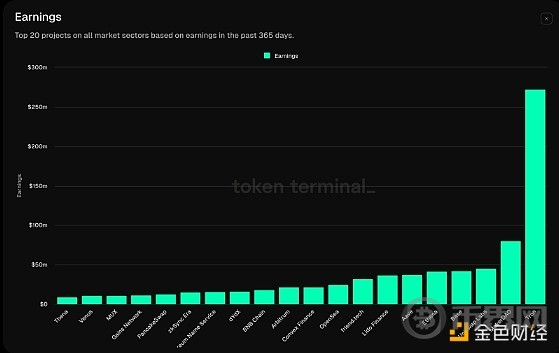
低调的巨头 Tron 在总收入方面排名第二,过去一年的收入为 14 亿美元。

这一成功可以直接归功于该网络广泛的稳定币活动,在拥有最多稳定币的网络中,Tron 仅次于以太坊,排名第二,这要归功于阿根廷、土耳其和各个非洲国家等发展中经济体的大量使用,这些国家的高通胀仍然是一个持续存在的问题。虽然有些人可能称它为一招鲜,但这一“绝招”在过去一年中创造了 2.71 亿美元的收益,使其成为迄今为止最赚钱的区块链。

Solana
eqPgEvnpfKoyEg8lx4ydUQBN0uxuaqqrlxcDO6QW.jpeg

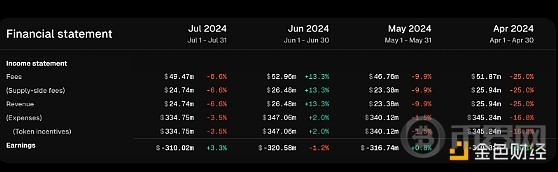
正如人们所料,Solana 也位居收入最高的协议之列,过去一年的收入为 1.57 亿美元。

作为 memecoin 中心的受欢迎程度、空投带来的资本增长、解决垃圾邮件问题的技术升级以及对 AI 等领先趋势的支持,都为其在本周期的突出知名度和强劲收入做出了贡献。然而,这种增长并没有转化为收益。考虑到向质押者发行代币和运营成本,Solana 在过去四个完整季度中净亏损高达 25.3 亿美元,完全抹去了其收入并陷入赤字。

Avalanche
GbzJJlSUO5uYzAIfkC0j7sIaeoQKZeCPcOYyYWAl.jpeg

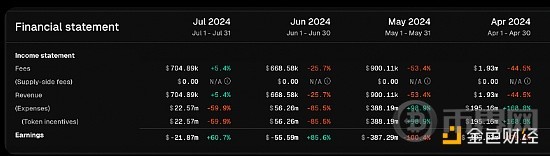
拥有自己的 memecoin 基金的 L1 Avalanche 排名第四,过去一年的收入为 6900 万美元。

Avalanche 以其子网扩展解决方案和对游戏的关注而闻名,即将推出一项名为 ACP-77 的重大升级,这将改善部署和管理子网的体验,使其更实惠,从而可能增加收入。考虑到这一点,该区块链还有很长的路要走,因为过去一年,由于代币发行和运营成本,它面临 8.606 亿美元的净亏损。

哪些 L2 区块链可以盈利?

Base
V4mhK0ffMjDmgb93prGpvHu0HVJvhqCoa9QmAgVz.jpeg

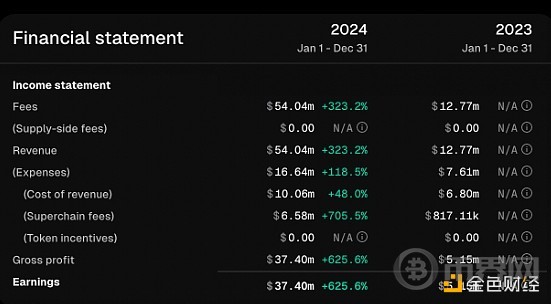
尽管成立不到一年,但 Coinbase 的 L2 Base 与 OP Stack 一起推出,自成立以来就迅速创造了 6660 万美元的收入。

值得注意的是,Base 成功保留了 63% 的收入,在同一时期净赚 4200 万美元。这一成功可以归因于两个关键因素。

  • 首先,Base 通过 EIP-4844 实施 blob 显著降低了成本,将这些成本从 2024 年第一季度的 934 万美元削减至 2024 年第二季度的 69.9 万美元。

  • 其次,Base 没有原生代币,这使其更具竞争力,避免了其他 L2 产生的与分发相关的费用。

Arbitrum
WWGJoPwD36AQB1jrXEDWt2tPtXOjBrTHImHkYkk1.jpeg

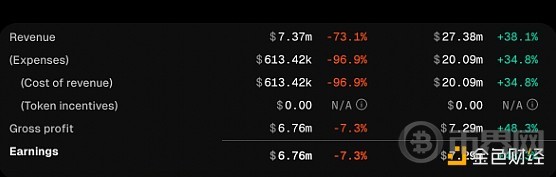
Arbitrum 是按 TVL 计算最大的 L2,锁定金额达 172 亿美元,过去一年创造了 6114 万美元的收入。

Arbitrum 是 DeFi 的中心,领先的 DeFi 协议(如 GMX 和 Pendle)都以它为家,而其 SDK 则是 Sanko、Degen chain 和 Xai 等 L3 的主要基础设施。虽然 Arbitrum 的收入水平仍未达到 Base,但过去一年实现了 2180 万美元的收益,第二季度的表现十分出色,其支出降至仅 61.3 万美元,而第一季度为 2000 万美元。

zkSync Era
JlSL331Ln3CaZ6FzOkF7fua686gRg25FxKY9ADDA.jpeg

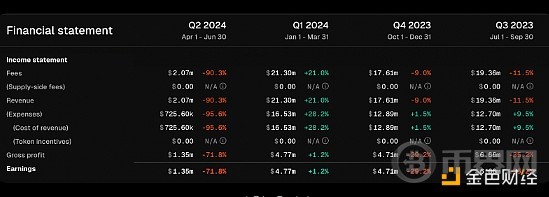
zkSync Era 是领先的基于 ZK 的 L2 之一,在过去一年中带来了 5330 万美元的收入。

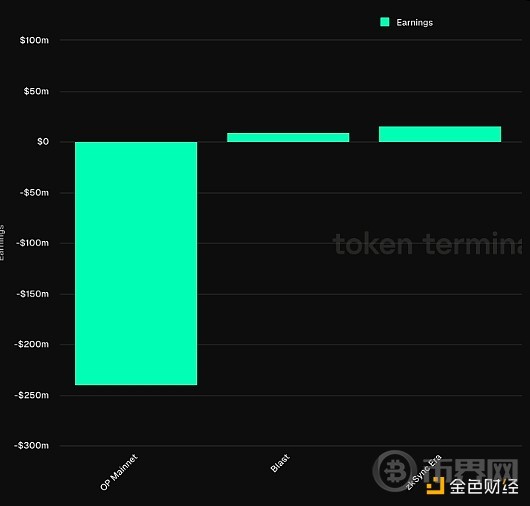
在 2023 年 6 月空投之后,随着 ZK 为该链增加了约 8.5 亿美元,该网络的 TVL 大幅飙升,尽管随着用户出售空投的代币,这一数字逐渐下降。不过,该链仍然盈利,过去一年净赚 1530 万美元——过去四个完整季度净赚 1750 万美元。这使 zkSync 成为第三大最赚钱的 L2。

OP Mainnet
U4iKqA6U0eNeqRnPSq4ABBaEN5r4biHAQUlJMv9M.jpeg

Optimism 是超级链的中心,在过去一年中,其主链上的排序器费用以及 Zora 和 Base 等网络中的排序器费用为其带来了 4460 万美元的收入。

2024 年第二季度,Optimism 的网络活动创下了历史新高。尽管市场低迷,但平均每日活跃地址激增至 121.6K,环比增长 37%,每日交易量上升至 601K,环比增长 28%。至于其他 L2,EIP-4844 对这一增长做出了重大贡献,导致费用降低,从而增加了网络活动,从而使 Optimism 的净盈利能力提高了 150% 以上。

尽管实现了增长,但 Optimism 仍然深陷赤字,过去一年因追溯空投、激励计划和运营成本而面临 2.39 亿美元的净亏损。

叙述和基本面

当你查看这些数字时,请记住,就像 TradFi 一样,盈利能力只是故事的一部分。没有人在 Nvidia 目前的财务状况上押注数万亿美元;正是叙述推动了其增长。

叙述驱动的投资通常是加密货币买家的默认选择,他们冒险投资以期获得超额回报,但仍然需要记住的是,仍有网络在当今的活动中建立起庞大的业务。

深入研究顶级 L1 和 L2 的收入和收益,我们可以更清楚地了解这些网络的基本健康状况及其在竞争格局中的地位。
İlgili Okumalar

Securitize's First Post-IPO Financial Report Bombshell: Is the 'Compliant Tokenization' Narrative Failing to Sell?

Securitize, a tokenization platform, released its first earnings report since going public in July 2026, revealing disappointing Q2 results. Revenue fell 5% year-over-year to $14.43 million, missing estimates, while the net loss widened significantly to $21.68 million. Despite achieving record tokenized assets under management of $4.3 billion and a 147% surge in platform trading volume, overall assets under administration declined by 20%. The company's stock (SECZ) dropped over 20% in after-hours trading following the report. The article highlights a key concern: Securitize's revenue declined despite substantial trading growth, suggesting either compressed fees or an unclear business model. While Securitize maintains its focus on regulatory compliance—securing key partnerships with entities like Computershare and NYSE, and obtaining an SEC investment advisor registration—its tangible progress in the new tokenized stock business has been slow. Apart from tokenizing its own stock (SECZ) upon listing, it has not launched other tokenized equities. Analysts note that SECZ's high on-chain market capitalization is misleading, as it resulted from a one-time distribution to shareholders rather than organic investor demand. The market's patience is waning as investors prioritize real business metrics like market share and user adoption over the "compliant tokenization" narrative. Securitize's market value has fallen 36% from its debut, reflecting growing concerns over its shrinking revenue and the delayed execution of its tokenized stock initiatives.

Odaily星球日报5 dk önce

Securitize's First Post-IPO Financial Report Bombshell: Is the 'Compliant Tokenization' Narrative Failing to Sell?

Odaily星球日报5 dk önce

Why Every Investor Needs to Pay Attention to the Federal Reserve

Why Every Investor Should Follow the Federal Reserve Key developments on August 12, 2026, demonstrate how crucial the Fed is. Following the CPI report that matched expectations, markets instantly repriced stocks, bonds, and currencies, adjusting the probability of a September Fed rate hike. The Federal Reserve controls the federal funds rate, the anchor for all borrowing costs. Its "dual mandate" is to maintain stable prices and maximum employment. The current policy rate is 3.50%-3.75% after a series of cuts from 2024-2025. Understanding Fed actions is vital for your portfolio: - **Rate Hikes:** Slow the economy to fight inflation. They pressure growth/tech stocks (due to higher discount rates) and lower bond prices but can initially benefit banks. - **Rate Cuts:** Stimulate the economy. They typically boost growth stocks and bond prices while lowering borrowing costs for consumers and businesses. - **Holding Steady:** Still impactful. Current restrictive policy, with positive real interest rates, continues to weigh on the economy. Market-moving signals now come more from economic data than official guidance. A key change is new Fed Chair Kevin Warsh, who has reduced forward guidance, making each data release (CPI, PCE, jobs reports, GDP) more critical for predicting Fed moves. In this environment, investors should track key reports, compare data to market expectations, and understand what is already "priced in." The focus now is on the September 15-16 FOMC meeting. The August CPI (due Sep 11) and jobs report (Sep 5) will be decisive. Ultimately, interest rates are a powerful, continuous force on all assets. Learning to interpret the data that drives Fed policy is an essential skill for navigating today's markets.

marsbit9 dk önce

Why Every Investor Needs to Pay Attention to the Federal Reserve

marsbit9 dk önce

MicroStrategy Sells BTC Without a Price Drop, Is STRC's Rebound Truly Good News?

The cryptocurrency market is currently experiencing extreme quiet, with BTC weekly trading volume at its lowest since 2023 and implied volatility hitting bottom. Liquidity is thin, as evidenced by a muted price reaction to CPI data. The market's primary issue is a lack of active participants, not just news. Options data shows traders are pricing in higher short-term downside risks. Market makers' gamma positioning suggests a critical support zone between $61,000 and $60,000; a break below could accelerate a downturn. Two developments are being interpreted bullishly: MicroStrategy (MSTR) selling a small portion of its BTC without causing a price crash, and the rebound of its preferred shares (STRC) from lows near $73 to over $95. However, an alternative bearish interpretation exists. The low liquidity means large entities cannot exit sizable positions easily. A STRK recovery towards $100 could provide the buying pressure these sellers need to finally offload BTC, making the apparent利好 (positive news) actually improve selling conditions. STRC faces a structural ceiling at $100 because MSTR has signaled it will issue new shares around that price, capping upside and inviting short sellers. While recent buybacks boosted the price, they haven't solved this core problem. If STRK cannot sustainably break $100, concerns will grow about MSTR needing to sell BTC for funding. Finally, the Bitfinex Long positions indicator, which typically moves inversely to BTC price, has become ineffective and flat-lined near multi-year lows, offering no directional signal. Large traders are not accumulating on dips as they once did.

marsbit10 dk önce

MicroStrategy Sells BTC Without a Price Drop, Is STRC's Rebound Truly Good News?

marsbit10 dk önce

Silicon Valley Tech Giants No Longer Need Ethicists

Silicon Valley tech giants are once again sidelining ethicists. Chloé Bakalar, OpenAI's dedicated AI Ethics Lead, left the company in July, a departure emblematic of a broader trend where ethics teams are being disbanded or marginalized in the race for AI dominance. Bakalar's career highlights the tensions between ethical governance and commercial speed. She first made her mark at Meta (formerly Facebook), where she pioneered "embedded ethics," developing tools like checklists to translate abstract principles like fairness and transparency into concrete engineering steps. Her framework aimed to embed ethical considerations throughout a product’s lifecycle—from initial design and data handling to user interaction and deployment. However, this approach faced significant internal resistance. At Meta, her Responsible AI team was eventually disbanded as the company prioritized rapid development, especially in the generative AI race with OpenAI. Bakalar then joined OpenAI in 2025, hoping to influence cutting-edge model development directly. Yet, as the company's sole dedicated ethicist, she reportedly struggled with limited influence and resources amidst intense commercial pressures, leading to her departure after roughly a year. Her exit is not isolated. Similar patterns have emerged across Silicon Valley, with ethics and safety teams at Twitter (post-Musk acquisition) and OpenAI's own "superalignment" team being dissolved. These departures reveal five core, unresolved tensions: 1) the fatal conflict between commercialization speed and ethical caution; 2) the role mismatch where ethicists have prestige but little real decision-making power; 3) the dilution of responsibility when ethics is decentralized as "everyone's job"; 4) the inevitable "translation loss" when complex philosophical values are reduced to quantifiable engineering metrics; and 5) the fundamental clash between academic independence and corporate secrecy. Bakalar’s trajectory suggests that embedding meaningful ethical oversight within hyper-competitive tech companies is profoundly difficult. Lasting change may require external regulatory pressure, like the EU's AI Act, or a fundamental reimagining of the ethicist's role from an internal auditor to a cross-disciplinary builder with genuine authority.

marsbit39 dk önce

Silicon Valley Tech Giants No Longer Need Ethicists

marsbit39 dk önce

İşlemler

Spot
活动图片