CoinDeskPolicy2024-04-18 tarihinde yayınlandı2024-04-19 tarihinde güncellendi

Özet

The rule that calls for the new 1099-DA isn't finished, yet, but the U.S. tax agency has shared what the form might look like to report brokered sales of digital assets.

The U.S. Internal Revenue Service (IRS) has previewed what crypto investors' future tax form might look like when it finishes its much-debated rule on how cryptocurrency transactions should be reported to the federal government.

The IRS offered a draft of the 1099-DA form that would be meant to figure out the taxable gains or losses when brokered digital assets change hands. The form reveals the agency will likely have an array of individual token codes that can be filled in, and it includes spaces for wallet addresses and where to find transactions on the relevant blockchain.

"Brokers must report proceeds from (and in some cases, basis for) digital asset dispositions to you and the IRS on Form 1099-DA," according to the instructions included with the form, which shows a 2025 date. "You may be required to recognize gain from these dispositions of digital assets."

Advertisement
Advertisement

This unveiling is preliminary and may still change depending on the final outcome of the tax rule proposed last year. While the establishment of U.S. tax practices for crypto is among the necessary steps toward ridding investors of uncertainty and confusion, cryptocurrency businesses are nervous about how the IRS will identify the digital asset brokers that would need to comply with the new system – potentially including wallet providers, decentralized platforms and payment processors.

This version of the form asks the filer to check a box that describes the type of broker they are: kiosk operator, digital asset payment processor, hosted wallet provider, unhosted wallet provider or "other."

"As expected, the look and feel are similar to the Form 1099-B for reporting sales of traditional financial products," said Jessalyn Dean, vice president of tax information reporting at Ledgible, in an analysis of the form that also noted the IRS has "packed a lot of lines and boxes into this form."

Dean pointed out references to so-called wash sales and that the form provides for transactions that are only recorded internally by crypto firms. She contended that at least one of the boxes on non-deductible losses would need more guidance on how it works.

Advertisement
Advertisement

Miles Fuller, the head of government solutions at TaxBit, welcomed the "long-awaited" draft in a posting on LinkedIn.

"The form also carries through the requirements in the current draft regulations that wallet addresses and transactions hashes will be provided where relevant," he wrote. "This was another point that received heavy feedback for a few different reasons. I am curious if this will change as the final regulations are released."

The IRS is inviting public comments about the draft form. It remains unclear when the tax agency will produce a final rule, though the 2025 form suggests a completion at some point this year.

Read More: New Form 1099-DA: What it Means for Digital Asset Brokers and Their Customers

Edited by Nikhilesh De.

İlgili Okumalar

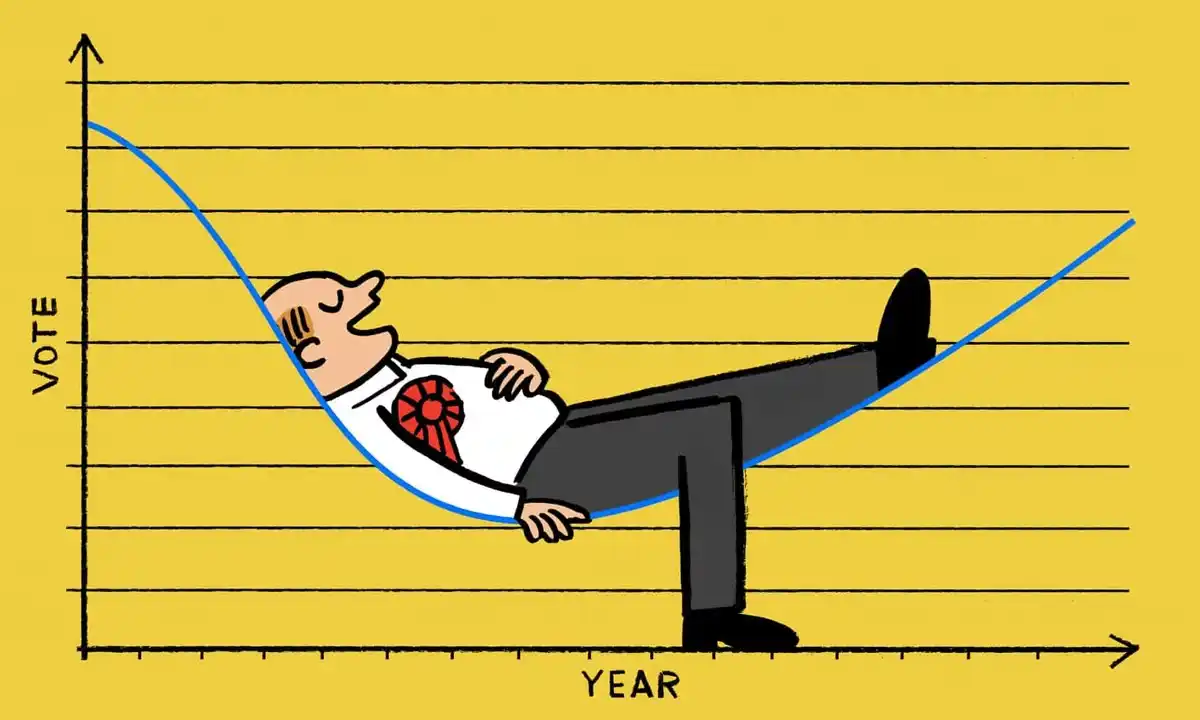
With Labour Changing Leaders, Is the Long-Suppressed UK Crypto Market About to Turn Around?

Labour leader change: Hope for UK crypto market? With Keir Starmer's resignation as Prime Minister and Labour leader, a leadership contest has begun. Andy Burnham, the former Mayor of Greater Manchester and now the overwhelming favourite to succeed, has sparked cautious optimism within the UK cryptocurrency industry. Industry figures hope Burnham, seen as more receptive to digital assets than much of the Labour establishment, could shift the party's traditionally harder line. The leadership transition is expected to be swift, with prediction markets like Polymarket assigning a 97% probability to Burnham becoming the next Prime Minister. However, this political shift comes as a comprehensive regulatory framework for crypto, established by law earlier this year, is in its final implementation phase. The Financial Conduct Authority (FCA) is finalizing detailed rules covering trading, custody, stablecoins, and market abuse, with the full regime set to go live in October 2027. While a new Prime Minister can reshuffle ministers and adjust policy priorities, the core regulatory architecture is now law and unlikely to be fundamentally overturned without significant, deliberate government intervention. The main industry hope is that a Burnham government, focusing on economic growth, will ensure the FCA's implementation is pragmatic and growth-oriented. Industry advocates seek proportionate capital requirements, a streamlined licensing process, and clear rules for staking and stablecoins. They argue that embracing the crypto sector could attract investment and listings to London's struggling markets. Despite the optimism, concerns remain that regulatory implementation may still be influenced by more sceptical factions within the Labour party.

Foresight News26 dk önce

With Labour Changing Leaders, Is the Long-Suppressed UK Crypto Market About to Turn Around?

Foresight News26 dk önce

A 60-Day Window Depresses Oil Prices, So Why Is the Market Falling Instead?

International oil prices continued to decline on June 23, extending significant losses from the previous session. The market shifted focus from Middle East military risks to actual supply changes following a temporary U.S.-Iran arrangement. The immediate trigger was the resumption of traffic through the Strait of Hormuz, a critical oil shipping chokepoint, with two tankers passing through, signaling eased near-term supply disruption fears. Prices retreated as the "worst-case scenario" was temporarily averted. A reported 60-day window in a U.S.-Iran understanding allows Iran to sell oil during this period, further dampening supply concerns. However, this arrangement is temporary, linked to nuclear talks, and does not guarantee a long-term solution. Market sentiment remains cautious because the deal could still unravel, potentially reinstating sanctions or disrupting shipping. While these developments have lowered immediate risk premiums, prices have not fully returned to pre-conflict levels. Geopolitical news, particularly regarding the stability of the Strait of Hormuz or the progress of negotiations, could quickly reverse the price drop. Additionally, low U.S. strategic petroleum reserves limit the emergency buffer available if supply shocks reemerge. Therefore, the current price decline reflects a reduction in near-term panic, not a complete elimination of Middle East supply risks.

marsbit41 dk önce

A 60-Day Window Depresses Oil Prices, So Why Is the Market Falling Instead?

marsbit41 dk önce

SK Hynix Market Cap Exceeds Samsung for First Time in 26 Years, Korean Broker Calls for 50% More Upside

SK Hynix's market capitalization surpassed Samsung Electronics for the first time in 26 years on June 22, reaching 208.1 trillion won. The shift reflects a market trend where companies directly benefiting from AI infrastructure, like SK Hynix, are receiving higher valuation premiums than diversified giants. The surge is driven by AI-driven demand for High Bandwidth Memory (HBM), where SK Hynix holds a dominant 70-80% market share. Its Q1 2026 revenue exceeded 50 trillion won for the first time, with an operating profit margin of 72%. Hanwha Investment & Securities significantly raised its price target for SK Hynix to 430,000 won, the highest among Korean brokerages. The key rationale is that Long-Term Supply Agreements (LTAs) and robust HBM demand have fundamentally reduced the company's historical profit volatility. Several other brokers have also raised targets, arguing the valuation framework for memory semiconductors is being rewritten, moving away from a cyclical model. Despite the bullish outlook, the stock experienced a pullback of over 5% in regular trading on June 23 after briefly surpassing 3 million won pre-market, amid broader tech sector weakness. Some analysts caution that the市值 overtaking Samsung, whose profit scale and growth forecasts remain higher, could signal short-term overheating. However, high-return investors viewed the dip as a buying opportunity.

marsbit1 saat önce

SK Hynix Market Cap Exceeds Samsung for First Time in 26 Years, Korean Broker Calls for 50% More Upside

marsbit1 saat önce

GPU Rental Prices Drop 30% in Three Weeks: AI Value Chain Migrating from Nvidia to Memory Chips

GPU rental prices for Nvidia's flagship B200 chip have fallen by approximately 30% over three weeks, dropping from a high of $6.11/hour to $4.22/hour. This decline signals a potential easing of the "compute scarcity" narrative that has long supported AI hardware valuations. Concurrently, the semiconductor market is witnessing a significant divergence: while the VanEck Semiconductor ETF (SMH) has risen 15% in the past month, with memory giants Micron and SanDisk each surging nearly 60%, Nvidia's stock has declined about 3% over the same period. Analysts suggest this shift indicates that the AI value chain's bottleneck and profits are migrating from compute (GPUs) to memory. Demand for high-bandwidth memory (HBM) remains intensely strong, with contract prices soaring over 100% in H1 2026, granting memory manufacturers significant pricing power. In contrast, increased B200 supply from improved manufacturing yields and competitive pressure from new cloud providers are softening GPU rental rates. While long-term contracts, like SpaceX's $30 billion deal with Google, show sustained large-scale demand for Nvidia hardware, the softening spot prices pressure the margins of cloud providers and could eventually impact Nvidia's order flow if chip prices don't adjust. The key takeaway for investors is not a weakening AI thesis, but a recalibration within the sector: pricing power appears to be strengthening for memory chipmakers while showing signs of strain for leading GPU suppliers.

marsbit1 saat önce

GPU Rental Prices Drop 30% in Three Weeks: AI Value Chain Migrating from Nvidia to Memory Chips

marsbit1 saat önce

İşlemler

Spot
Futures
活动图片