「符文」上线在即,Ordinals战争拉开帷幕

Odaily星球日报2024-04-02 tarihinde yayınlandı2024-04-02 tarihinde güncellendi

Özet

关于「符文」,你需要了解的一切

原文作者:Cookie

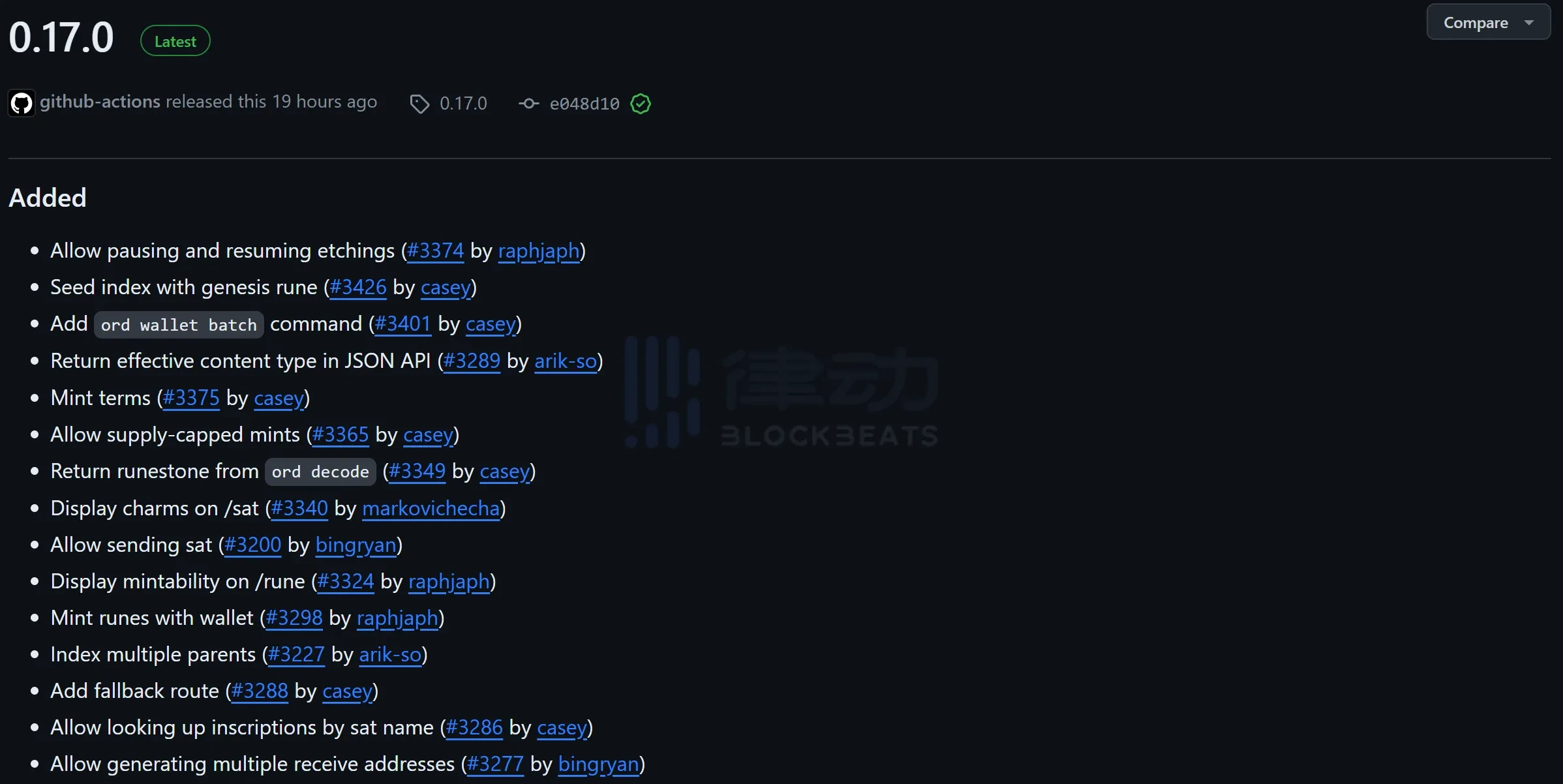
昨天,Ordinals 协议 v.017.0 版本正式发布,包含了大家期待已久的「符文」协议的最终实现方案。
「符文」上线在即,Ordinals战争拉开帷幕

小编为您快速整理了几个关于「符文」的 Q&A:

现在可以打「符文」了吗?还不可以,「符文」将在比特币区块高度 840, 000 正式激活,预计还有 19 天左右的时间。

第一个「符文」会是什么?第一个「符文」是 Ordinals 协议创始人 Casey Rodarmor「硬编码」(也就是直接写在代码里)的「UNCOMMON•GOODS」,我们可以从比特币区块高度 840, 000 开始打这个「创世符文」。但是必须要注意,「创世符文」是限时不限量的,将从 2024 年的即将到来的这个减半区块打到下一个减半区块,每笔交易打 1 个。Casey 仍在考虑是否实行先前的规划,对 0-9 号也就是全部前 10 个「符文」进行「硬编码」的计划。

「符文」是和 BRC-20 一样被部署以后大家都公平打吗?取决于部署者的设置。既支持部署的时候同时一次性打完,方便项目方做中心化的分发,也支持像 BRC-20 那样部署了以后大家公平铸造。在这一点上,「符文」比 BRC-20 要灵活许多,还支持公开铸造但项目方预留(这样的「符文」Token 会被标记),以及前面提到的「限时不限量」。

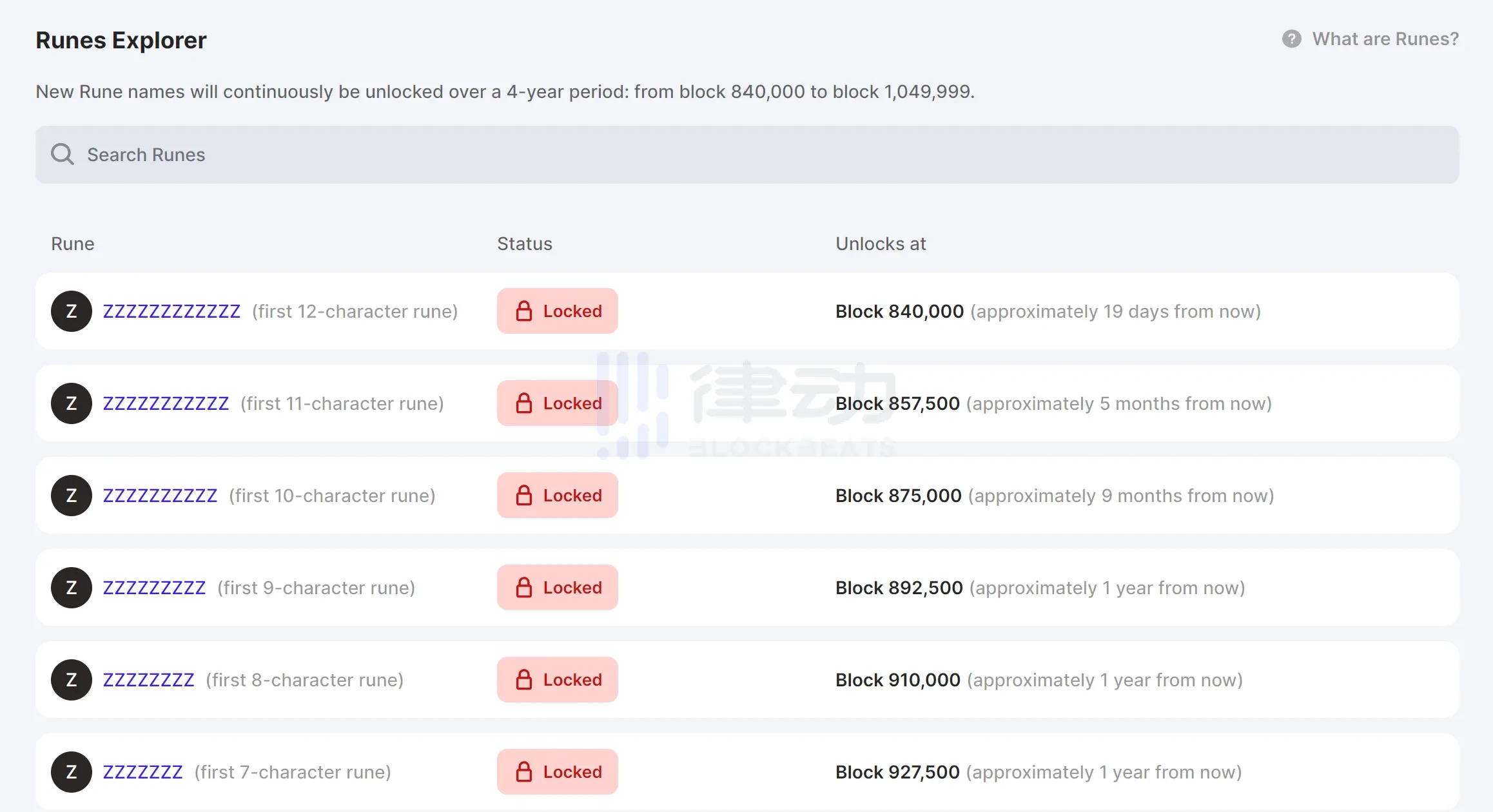
第一个被正式解锁的「符文」ticker 为什么会是「ZZZZZZZZZZZZ」?「符文」ticker 的最大长度是 26 字符(Casey 硬编码的「UNCOMMON•GOODS」和此规则无关,另外值得注意的是「•」作为分隔符不算在 12 字符内,这是为了让 ticker 更有辨识度,比如「WO•YAO•DISS•YOU」),但是它是一个随时间(区块)反向解锁的过程,从长 ticker 逐渐解锁到短 ticker。简单来说,在区块高度 840, 000 「符文」正式激活后,所有 13 - 26 字符的 ticker 都可以立即被部署,但「ZZZZZZZZZZZZ」是第一个可以被部署的 12 字符 ticker。12 字符的 ticker 将在区块 840, 000 - 857, 500 被全部解锁,也就是每 17, 500 个区块后,更短 1 个字符的 ticker 将开始逐渐被解锁。所以对于熟悉的 4 字符 ticker,比如 $PEPE,我们需要等待大约 3 年的时间。
「符文」上线在即,Ordinals战争拉开帷幕

这个 ticker 解锁方式和 BRC-20 比起来,完全是反向的。BRC-20 刚刚开放了 5 字符 ticker,如果 BRC-20 在未来的几年也持续开放更长的 ticker 部署,两者会在某个时间点碰到一块吗?这还蛮有趣的。

BRC-20 最近的更新中,不但支持了 5 字符 ticker,还支持了「自发行」,也就是项目方自己部署一把打完,同时还支持了燃烧机制。从短期来看,BRC-20 的这几项更新相比于 Runes 更利于形成炒作,不但方便了项目方的中心化发行,还使老项目方可以整出一些通缩玩法来刺激市场表现,这是 BRC-20 当前的优势。

而 Runes 的优势在于,首先这是 Ordinals 协议层面的标准,用一个不是很恰当的类比就是以太坊上的 ERC 404 和 DN 404 ,前者是不久前「图币一体」热潮的创造者,而后者则是更便宜且完全遵守以太坊标准,朝着正式变成 EIP 而努力的协议。Runes 作为 Ordinals 官方的「亲儿子」,不会有 BRC-20 那样受到 Ordinals 协议变动产生稳定性的问题,而且完全可以在第一时间享受 Ordinals 协议新特性对其带来的可能改进,同时还基于 UTXO,玩家们无需先刻转移铭文然后再发走转移铭文来完成交易,大大节省成本。

更重要的是,Runes 虽然是 Ordinals 协议层面的标准,但其实现本身并不依赖于 Ordinals 协议,它像 Taproot Assets 和 RGB 那样,是独立的。而 BRC-20 的实现是依赖于 Ordinals 协议的,长期来看,BRC-20 的发展就显得被动。

在过去的文章中,小编曾提到过 Casey 对 BRC-20 的不满——产生大量的「垃圾」UTXO。因此, 2023 年 9 月,Casey 发布了「符文」的构想,原生于比特币的未花费交易输出(UTXO)模型,最大限度地减少了「垃圾」UTXO 的产生,从而实现更负责任的 UTXO 管理和更小的链上足迹。

现在,「符文」就要来了。大家常开玩笑说,Ordinals 是一个「吵架吵不停」的生态,而「符文」的上线在即,也意味着这种观念冲突要变成真正的战争,Runes 和 BRC-20 的竞争就要开始了。

İlgili Okumalar

'Bear' Doomsday Prophecy: AI 'Reaching Its Peak', U.S. Stocks to Top Out Fastest in Q3, Down 30-50%

"A Short Seller's Dire Prediction: AI Boom Fading, US Stocks to Peak by Q3 with 30-50% Decline" Prominent macro investors Jeffrey Gundlach and Felix Zulauf warn that the AI-driven market rally is nearing its end, forecasting a major US stock market correction of 30-50%, potentially beginning as early as Q3. Their analysis points to alarming parallels with historical market tops, citing extreme concentration in the top AI-related stocks within the S&P 500. Zulauf's bearish thesis hinges on unsustainable capital expenditure trends among major cloud companies, negative free cash flow emergence, and soaring semiconductor prices. Gundlach highlights dangerous parallels to the 1999 tech bubble peak. A key divergence from conventional wisdom is Gundlach's view that long-term Treasury yields will not fall meaningfully even during a recession, due to America's structurally out-of-control fiscal deficits and soaring interest costs. He warns this could force the government into yield curve control or even a sovereign debt restructuring. Both investors express severe concerns about the opaque private credit market, drawing parallels to the pre-2008 financial crisis environment. They allege widespread rating inflation, misrepresented credit quality, liquidity illusions, and fraudulent asset valuations within this sector. The analysis links the AI boom and private credit crisis through financing costs. They argue that as AI companies' cash flows weaken and they seek funding, a high and sticky long-term interest rate environment will severely stress lower-rated corporate borrowers, exposing cracks in credit markets. Finally, they predict a regime shift where the US dollar weakens and US equities underperform global markets, marking the end of their long dominance. The stage is set for a significant market reversal.

marsbit6 dk önce

'Bear' Doomsday Prophecy: AI 'Reaching Its Peak', U.S. Stocks to Top Out Fastest in Q3, Down 30-50%

marsbit6 dk önce

Why Does No One Buy DeFi Insurance?

**Title: Why Isn't DeFi Insurance Being Bought?** DeFi insurance, which promised automated, unbiased payouts via smart contracts, has failed to gain traction. The core issue is economic: high premiums severely erode the yields that attract users to DeFi in the first place. For example, insuring a USDC deposit on Aave V3 could cost 1.5–2.5% of the annual yield, leaving a net return barely above a savings account. For riskier platforms like Maple Finance or Ethena, premiums can even turn net yields negative. Consequently, users often forgo insurance, as it nullifies their profit motive. The market also suffers from structural flaws. First, DeFi risks are highly correlated (e.g., an oracle failure can impact multiple protocols simultaneously), unlike the independent risks in traditional insurance. This makes large-scale events potentially catastrophic for insurers. Second, the total capital in DeFi insurance pools (e.g., Nexus Mutual's ~$81.5M) is minuscule compared to the hundreds of billions in total value locked (TVL), creating a massive capacity gap. A single major hack could drain the entire industry's reserves. Furthermore, the governance model where tokenholders vote on claims creates a conflict of interest, incentivizing them to deny payouts to protect their own funds. As a result, the sector is shrinking. While pioneers like Nexus Mutual are pivoting to preventative measures (bug bounties) and seeking external capital via reinsurance, the fundamental problems remain. DeFi insurance represents a public good—its stability benefits the entire ecosystem—but without a mechanism to share costs, a "tragedy of the commons" ensues where no one is willing to pay, leaving the system vulnerable.

marsbit20 dk önce

Why Does No One Buy DeFi Insurance?

marsbit20 dk önce

İşlemler

Spot
Futures
活动图片