2026 Opening with Millions in Profit: 'God of War' Vida Reviews the Entire Trading Process of the BROCCOLI714 Incident

比推2026-01-01 tarihinde yayınlandı2026-01-01 tarihinde güncellendi

Özet

In January 2026, crypto trader Vida profited over $1 million during the BROCCOLI714 incident, which involved a suspected hacked market maker account on Binance. Vida’s pre-existing $200,000 long position in BROCCOLI714 and a $500,000 funding rate arbitrage position were already in place. Alert systems triggered when the token’s price surged abnormally and a massive spot-contract price gap emerged. Recognizing the order book showed a highly unusual $26 million in buy orders—indicating a hack or system error rather than legitimate market activity—Vida quickly closed his arbitrage positions for a $300,000 gain. He then capitalized on the volatility by adding long positions in Binance perpetual contracts during a brief “reduce-only” lift and later selling his holdings for $1.5 million as signs of the attacker’s withdrawal emerged. Anticipating a crash once Binance risk controls intervened, Vida opened $400,000 in short positions around $0.065 and closed near $0.02, further boosting profits. Key factors included his automated alert systems, real-time order book analysis, collaboration with other traders, and correctly predicting the attacker’s exit strategy.

Vida : Born after 2000, founder of Equation News, skilled in program trading. He has shared stories of making tens of millions of dollars in the crypto market.

Preliminary Context: At 01:23 AM Beijing Time on January 1, 2026, Equation News monitored: A market maker's Binance account was highly suspected to be compromised. The potential attacker was疑似 using approximately $10 million to $20 million from the account to集中 pump the price of the BROCCOLI714-USDT trading pair on the Binance spot market.

Below is the full text by Vida:

《Review: Making $1 Million in the Recent BROCCOLI714 Hack Incident》

Preconditions and Infrastructure:

- I had a long-term accumulated position of $200,000 in BROCCOLI714 at a cost of 0.016, purchased around early November this year. It included both spot and contract holdings. After buying, I was trapped and too afraid to even look at it.

- The market maker's manipulation style in October-November was to rapidly pump the price within a few hours and then immediately dump with a large bearish candle. So, I set up an alert for my small-cap holdings that would wake me up if the price increased by over 30% within 1800 seconds.

- I also had a Binance perpetual contract funding rate arbitrage position for BROCCOLI714USDT with an average entry price of around 0.015 and a size of $500,000.

When the huge spot-contract price disparity occurred: My short-term surge alert program and my spot-contract spread alert program were both疯狂 alarming > prompting me to focus fully and rush to my computer to start working.

I第一时间 mentioned this situation in a core Chinese group on带带:

- My first reaction was to quickly close my funding rate arbitrage position. Because my original $500,000 arbitrage hedge position had become $800,000 in spot value and $500,000 in contracts. I immediately closed all arbitrage positions to lock in a profit of $300,000.

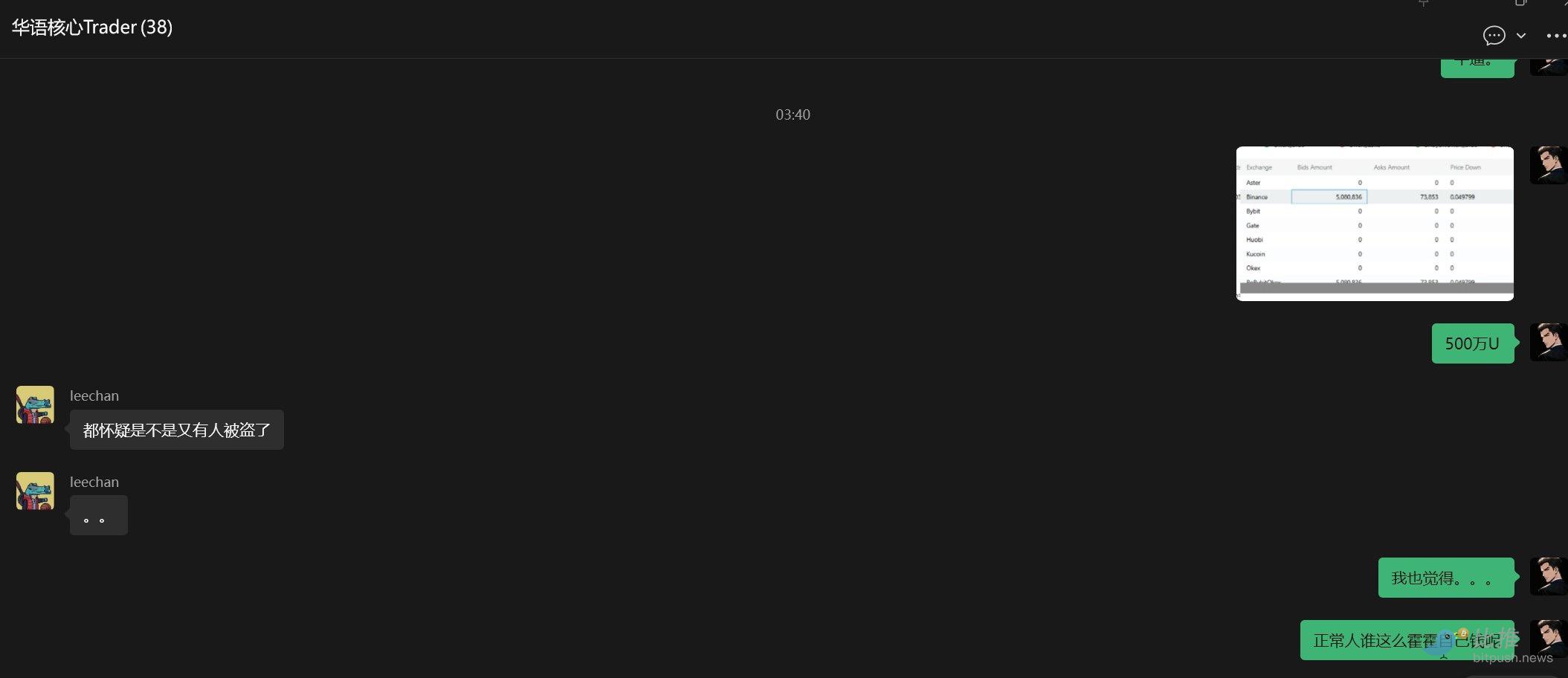
– But upon second thought, it felt very反常 because historically, no market maker would pump the spot market so violently regardless of the spread. I took a look at the order book depth and was震惊 to find that the bid-side 10% depth on Binance spot had $5 million in buy orders, while the contract side's bid 10% depth was only $50,000. Someone suggested a suspected Binance account hack, which I also found reasonable.

– I looked at the order book on the Binance main site again and was shocked to find that for BROCCOLI714, a coin with a market cap of $40m at the time, there were $26 million in bid orders. From this, I inferred that it must be either a hacked account or a market maker program bug, because no market maker would be foolish enough to play charity like this in the spot market.
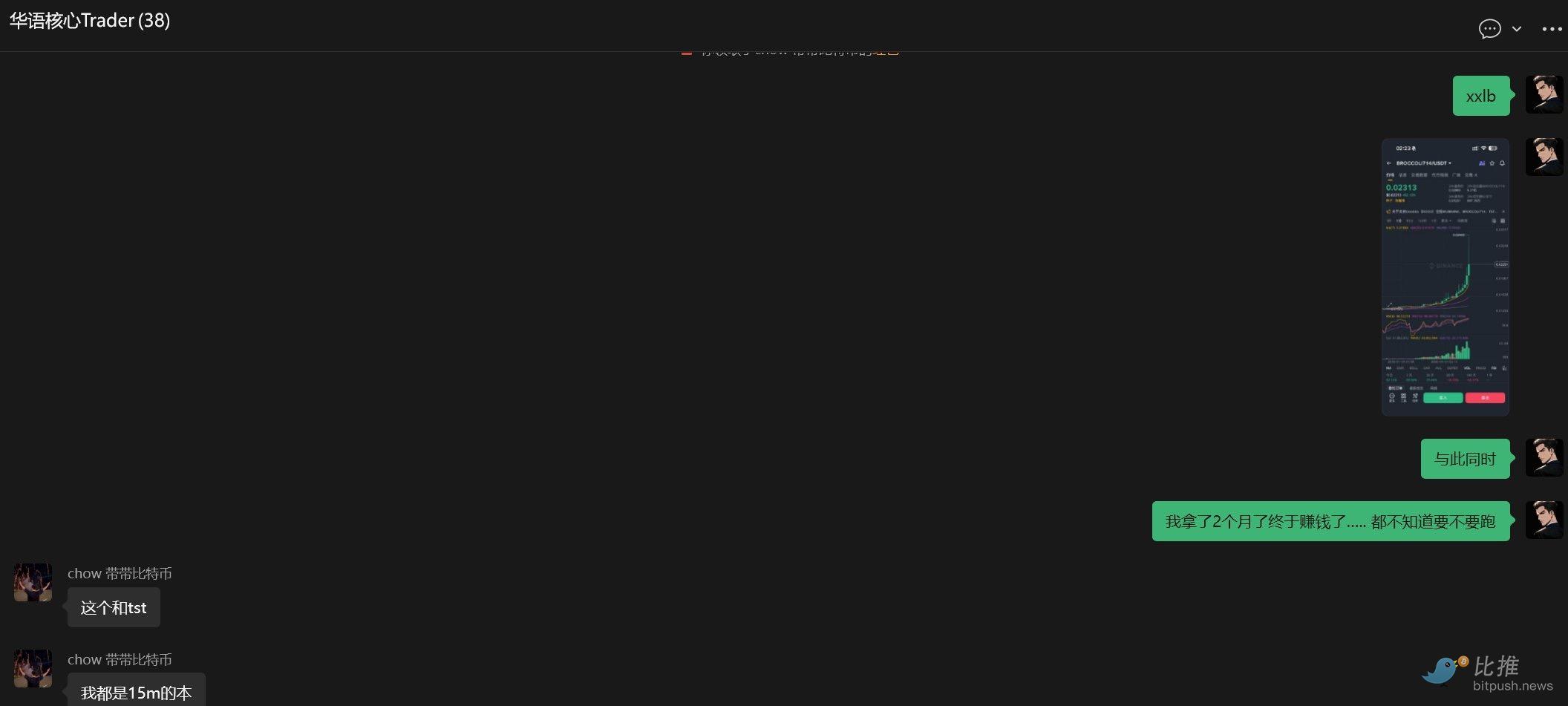
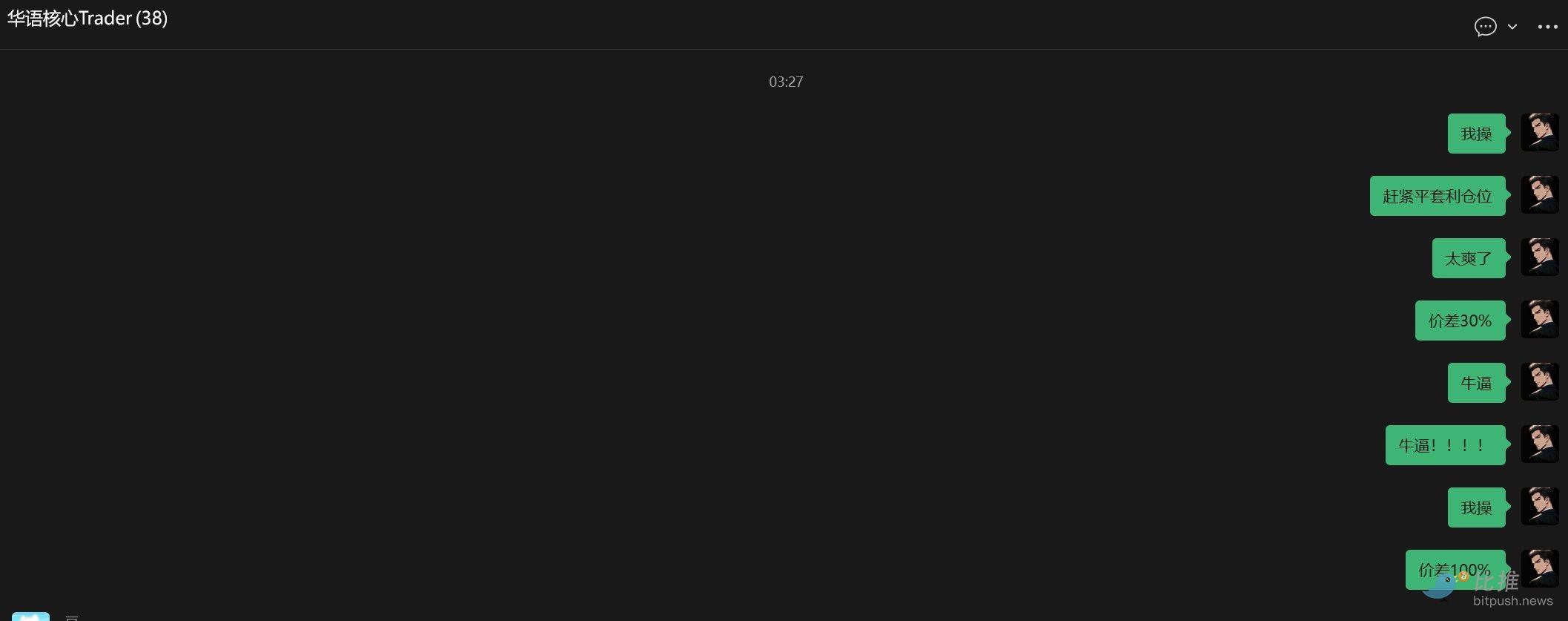
- Seeing that the hacker had $26 million in ammunition on the spot order book, I knew his goal was to pump the spot market > lift the contract price > exit his position on the contracts.

So I monitored the changes in Binance's order book on one screen. I knew that as long as the hacker didn't withdraw the $20 million in buy orders on the spot market, the price of BROCCOLI714 would keep rising.

My first thought at this point was to go long on Binance contracts, but I found that the Binance contracts had already triggered the "circuit breaker protection mechanism" (reduce-only mode).

At that time, BROCCOLI spot was already at 0.07, while Binance contracts were capped at 0.038 by the circuit breaker mechanism, and Bybit contracts had risen to 0.055. So I chose to attempt a long position on the Binance BROCCOLI714USDT perpetual contract every 5-10 seconds on my trading terminal. If the order succeeded, it meant the circuit breaker period was over, meaning the Binance contract would pump.

I successfully蹲守到 this opportunity and added approximately $200,000 in long positions at a contract entry cost of 0.046.
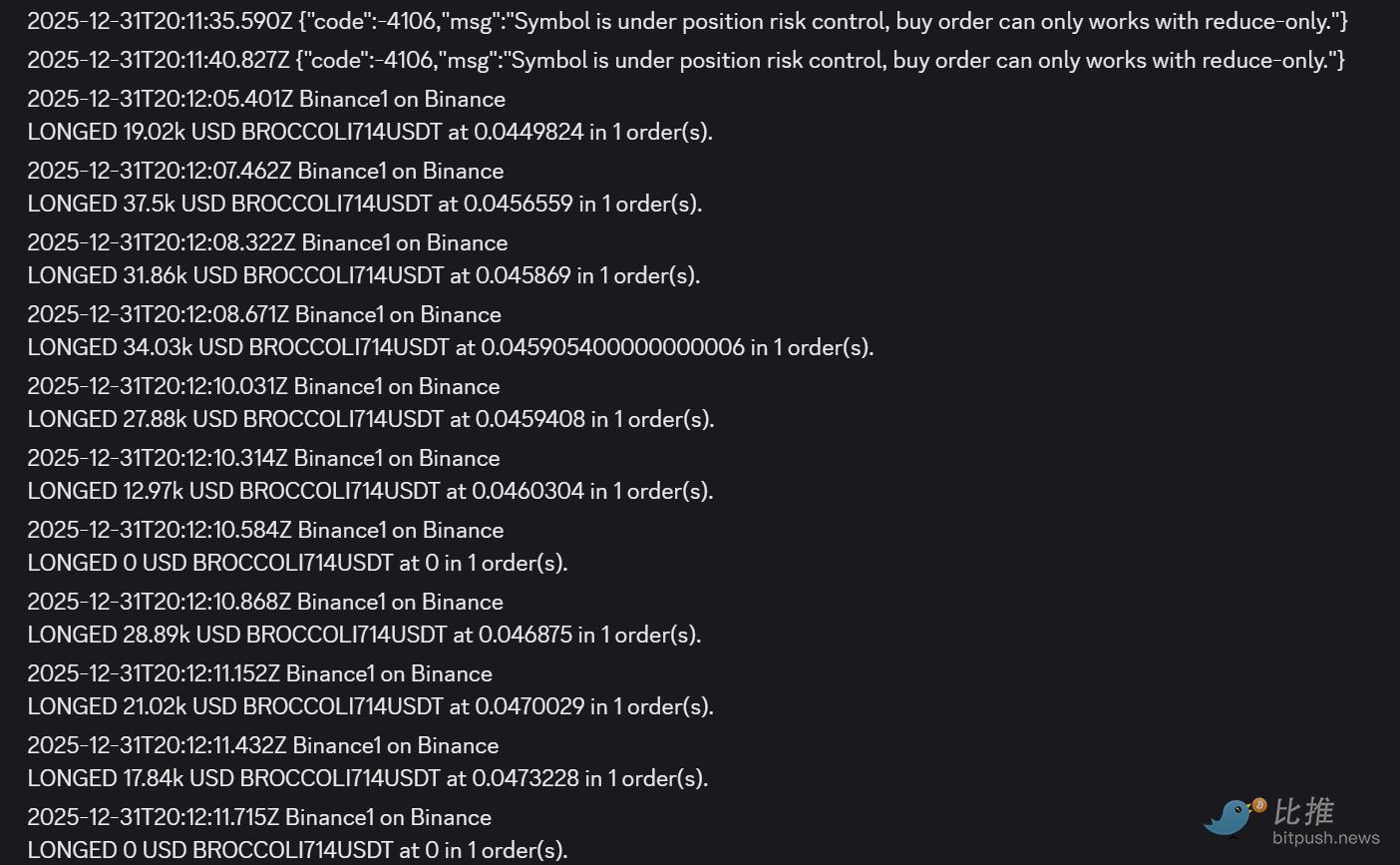
- I knew this incident was必然 caused by a hacker or a market maker program bug, and the short-term surge was too high. The final outcome would inevitably be a complete mess.

So I kept watching the Binance spot order book.

The hacker withdrew his orders once midway, leading me to believe he had been sanctioned by Binance's risk control department. So, at Beijing Time 2026-01-01 04:20:52.732, I started using my trading program to疯狂 sell > liquidate all my previously held + later added long BROCCOLI714 spot and contract positions regardless of cost.

My original $200,000 accumulated position + the later added $200,000 roughly cashed out to $1.5 million. (A lot of the original accumulated position was opened in the contract market, so I didn't capture as much premium)

After being scared off by the hacker's withdrawal of buy orders at 4:21, the不讲武德 hacker挂回 the buy orders about 1 minute later and directly pumped the price to 0.15.

But I knew he would eventually be sanctioned by Binance's risk control department. And once his account was risk-controlled > bids withdrawn > broccoli would crash, it was just that the staff might be lazy at 1.1 AM so he hadn't been risk-controlled yet.

So I kept a close eye on the order book.

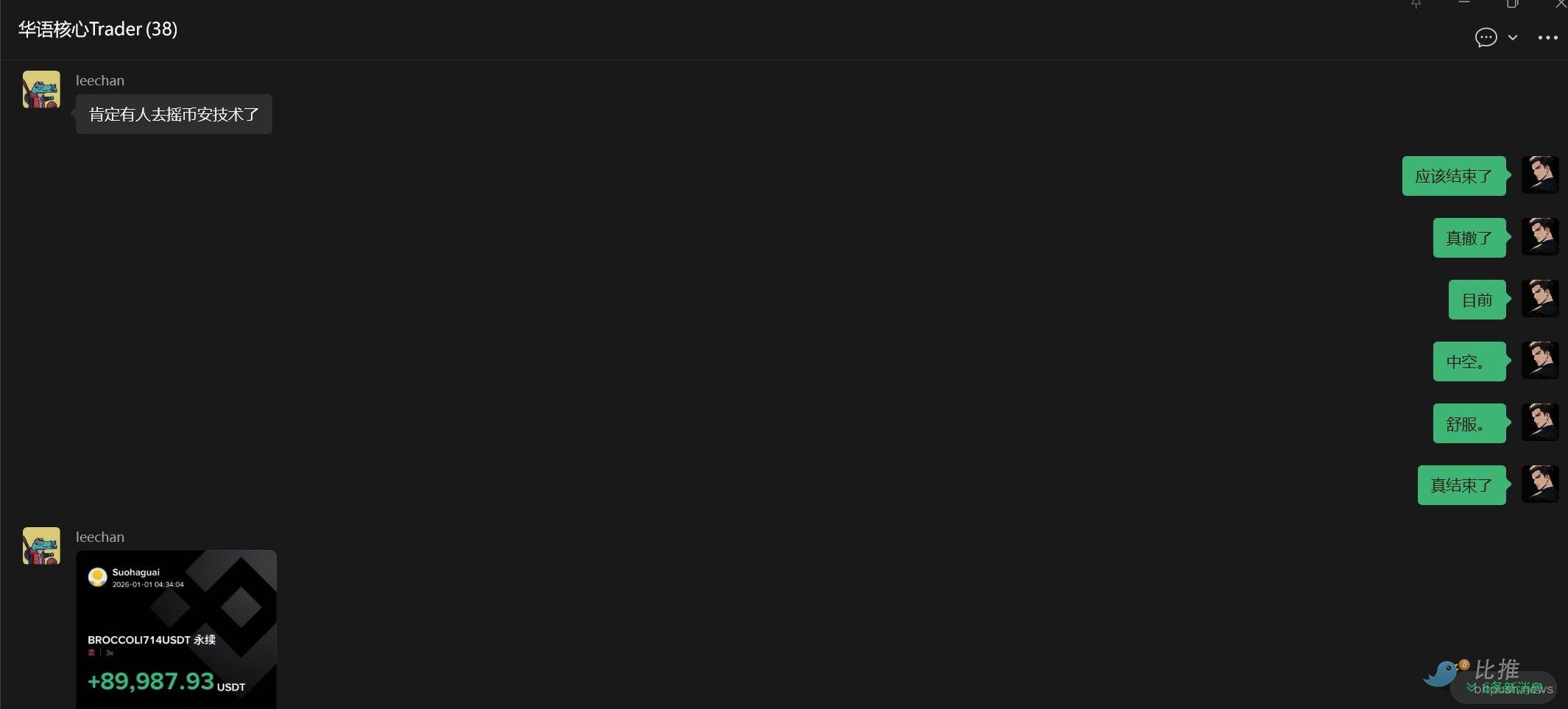
Later, at 4:31, I noticed the hacker really withdrew all the bids. At 4:32, they were completely withdrawn. And this time, they didn't reappear for a long time + group friends said someone probably contacted Binance tech, and he was likely sanctioned.

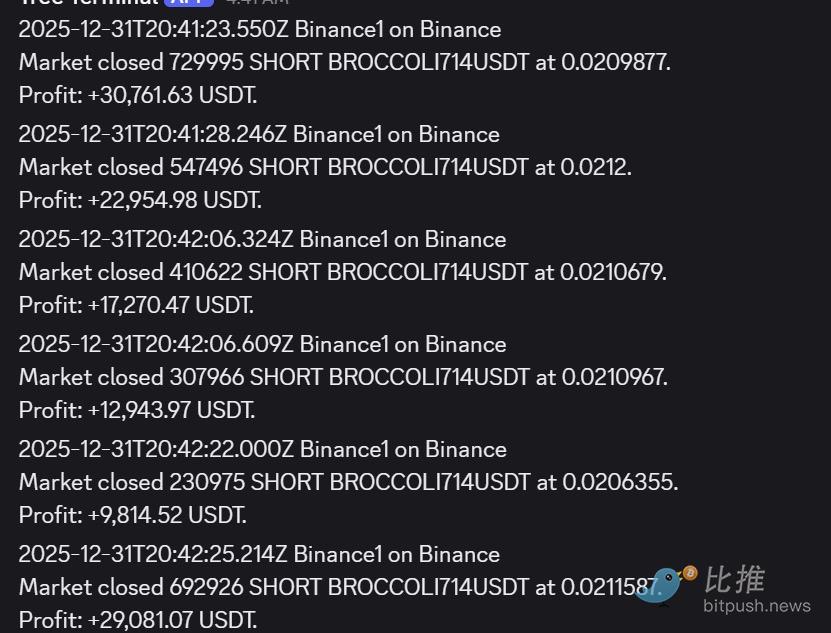
So I started shorting. I opened roughly $400,000 in short positions on Binance contracts at an average cost of around 0.065. The final closing price was approximately 0.02.
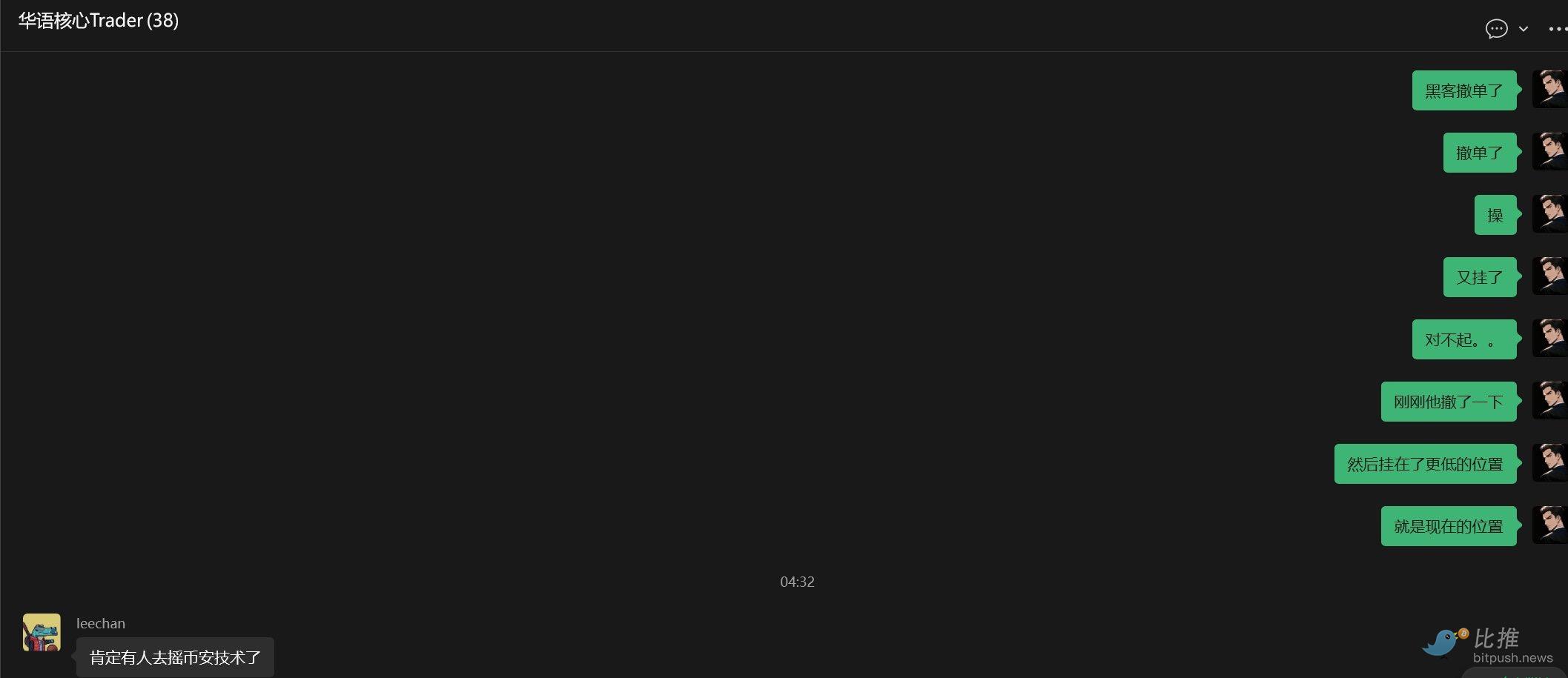
Revisiting why I was able to seize this opportunity:

1. Price anomaly alerts for small-cap strategies
- I set up short-term price surge alerts for small-cap strategies. As long as a held small-cap coin experiences an ultra-large price increase in a short time, it triggers a mandatory alert, 100% guaranteed to wake me up. – In the funding rate arbitrage strategy, I also set up monitoring: once a huge spread between spot and contract is detected, it triggers a mandatory alert.

2. Identifying反常 price action and verifying the order book
When I saw clearly反常 price action, the first thing I did was look at the order book to judge how much ammunition the "market maker" actually had. The result: For a coin with only a $30 million market cap, there were $20 million USDT in bids on the Binance spot side. From this, I judged this couldn't be normal market maker manipulation, but more like hacker behavior or a market maker's system bug (no market maker would pump the spot so recklessly and foolishly regardless of cost).

3. Still need to communicate more with experts. Brainstorming among several experts often helps figure out the entire剧本玩法 in the first moment.

4. I was very clear about the second phase玩法:
Wait for the hacker to be sanctioned by Binance's risk control department and withdraw the bid orders, then蹲守 this opportunity to short. So after completing the first phase of selling, I kept staring at the order book, waiting for this opportunity to appear. I waited over ten minutes and really managed to蹲守到 it.

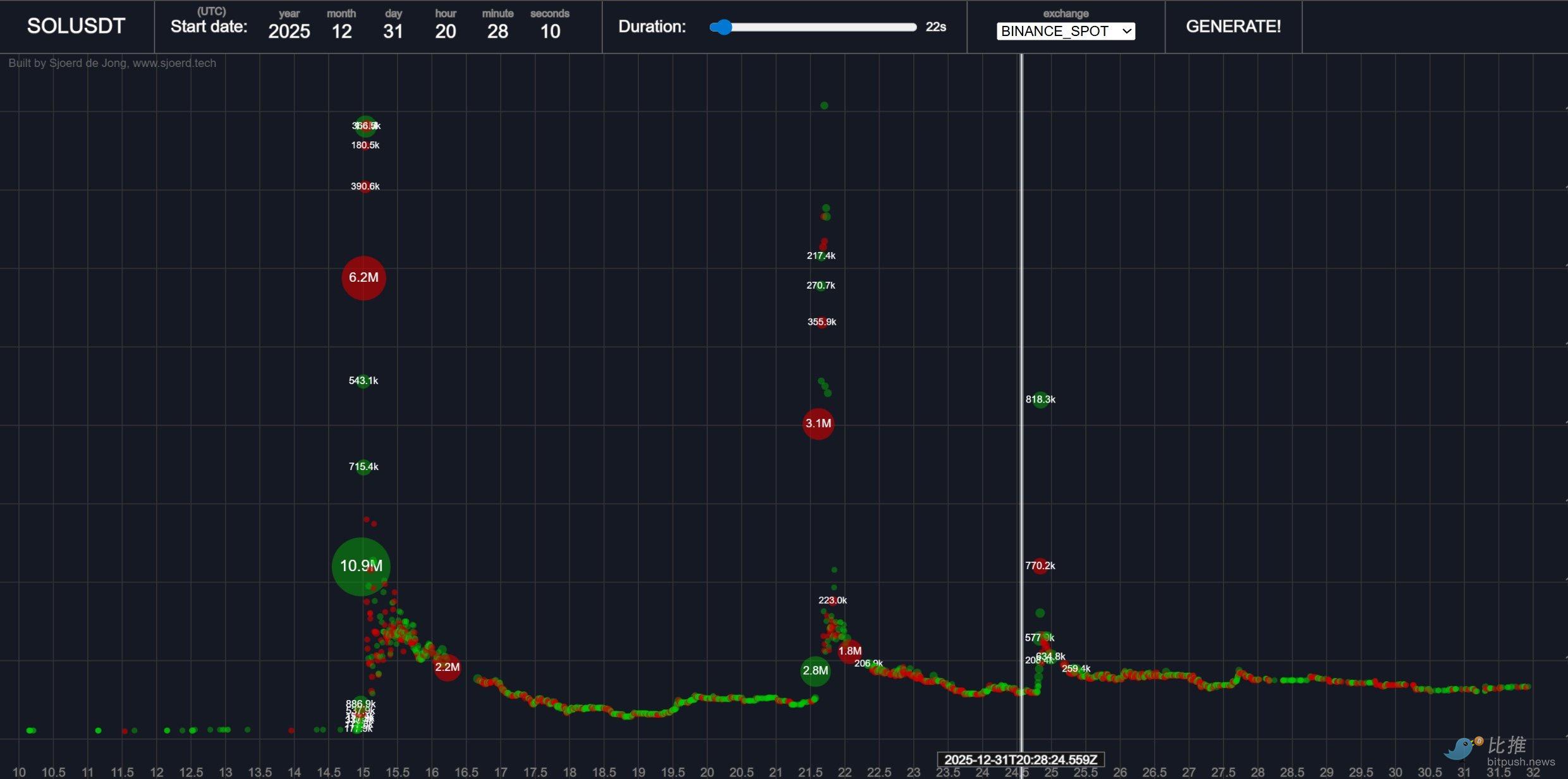
One behavior made me guess the BROCCOLI714 hacker was probably wrapping up, because at Beijing Time 4:28:15, he不计成本 bought SOLUSDT spot, pumping it by about 5% >>> which triggered my pre-set alert again, letting me know.

I guessed that his account might have been partially restricted by Binance from placing new orders in the BROCCOLI714 market, so he狗急跳墙 and bought SOL instead.

结果真的 (Sure enough), 3 minutes later the BROCCOLI price collapsed.

Twitter:https://twitter.com/BitpushNewsCN

Bitpush TG Discussion Group:https://t.me/BitPushCommunity

Bitpush TG Subscription: https://t.me/bitpush

Original article link:https://www.bitpush.news/articles/7599510

İlgili Sorular

QWhat was the initial position and cost basis of Vida's long-term BROCCOLI714 holdings?

AVida had a long-term BROCCOLI714 position with a cost basis of $0.016, totaling $200,000, which was accumulated in early November.

QWhat two types of alerts did Vida have set up that helped him detect the unusual market activity?

AHe had two alerts: one for a price increase of over 30% within 1800 seconds for his small-cap holdings, and another for a significant spot-contract price difference in his funding rate arbitrage strategy.

QWhat observation in the order book led Vida to conclude this was not normal market maker activity but likely a hack or bug?

AHe observed that for a coin with a market cap of around $40 million, there was an unusually large bid of $26 million USDT on the Binance spot order book, which no rational market maker would place.

QWhy did Vida decide to short BROCCOLI714 after initially selling his long positions?

AHe anticipated that the hacker's buy orders would eventually be withdrawn after being sanctioned by Binance's risk control department, causing the price to crash, which would create an opportunity to profit from a short position.

QWhat final clue suggested to Vida that the hacker was being restricted and that the BROCCOLI714 price was about to collapse?

AThe hacker made an irrational large purchase of SOLUSDT, spiking its price by 5%, which Vida interpreted as the hacker being blocked from trading BROCCOLI714 and acting out of desperation. The price of BROCCOLI714 collapsed shortly after.

İlgili Okumalar

Gensyn AI: Don't Let AI Repeat the Mistakes of the Internet

In recent months, the rapid growth of the AI industry has attracted significant talent from the crypto sector. A persistent question among researchers intersecting both fields is whether blockchain can become a foundational part of AI infrastructure. While many previous AI and Crypto projects focused on application layers (like AI Agents, on-chain reasoning, data markets, and compute rentals), few achieved viable commercial models. Gensyn differentiates itself by targeting the most critical and expensive layer of AI: model training. Gensyn aims to organize globally distributed GPU resources into an open AI training network. Developers can submit training tasks, nodes provide computational power, and the network verifies results while distributing incentives. The core issue addressed is not decentralization for its own sake, but the increasing centralization of compute power among tech giants. In the era of large models, access to GPUs (like the H100) has become a decisive bottleneck, dictating the pace of AI development. Major AI companies are heavily dependent on large cloud providers for compute resources. Gensyn's approach is significant for several reasons: 1) It operates at the core infrastructure layer (model training), the most resource-intensive and technically demanding part of the AI value chain. 2) It proposes a more open, collaborative model for compute, potentially increasing resource utilization by dynamically pooling idle GPUs, similar to early cloud computing logic. 3) Its technical moat lies in solving complex challenges like verifying training results, ensuring node honesty, and maintaining reliability in a distributed environment—making it more of a deep-tech infrastructure company. 4) It targets a validated, high-growth market with genuine demand, rather than pursuing blockchain integration without purpose. Ultimately, the boundaries between Crypto and AI are blurring. AI requires global resource coordination, incentive mechanisms, and collaborative systems—areas where crypto-native solutions excel. Gensyn represents a step toward making advanced training capabilities more accessible and collaborative, moving beyond a niche controlled by a few giants. If successful, it could evolve into a fundamental piece of AI infrastructure, where the most enduring value in the AI era is often created.

marsbit12 saat önce

Gensyn AI: Don't Let AI Repeat the Mistakes of the Internet

marsbit12 saat önce

Why is China's AI Developing So Fast? The Answer Lies Inside the Labs

A US researcher's visit to China's top AI labs reveals distinct cultural and organizational factors driving China's rapid AI development. While talent, data, and compute are similar to the West, Chinese labs excel through a pragmatic, execution-focused culture: less emphasis on individual stardom and conceptual debate, and more on teamwork, engineering optimization, and mastering the full tech stack. A key advantage is the integration of young students and researchers who approach model-building with fresh perspectives and low ego, prioritizing collective progress over personal credit. This contrasts with the US culture of self-promotion and "star scientist" narratives. Chinese labs also exhibit a strong "build, don't buy" mentality, preferring to develop core capabilities—like data pipelines and environments—in-house rather than relying on external services. The ecosystem feels more collaborative than tribal, with mutual respect among labs. While government support exists, its scale is unclear, and technical decisions appear driven by labs, not state mandates. Chinese companies across sectors, from platforms to consumer tech, are building their own foundational models to control their tech destiny, reflecting a broader cultural drive for technological sovereignty. Demand for AI is emerging, with spending patterns potentially mirroring cloud infrastructure more than traditional SaaS. Despite challenges like a less mature data industry and GPU shortages, Chinese labs are propelled by vast talent, rapid iteration, and deep integration with the open-source community. The competition is evolving beyond a pure model race into a contest of organizational execution, developer ecosystems, and industrial pragmatism.

marsbit13 saat önce

Why is China's AI Developing So Fast? The Answer Lies Inside the Labs

marsbit13 saat önce

3 Years, 5 Times: The Rebirth of a Century-Old Glass Factory

Corning, a 175-year-old glass company, is experiencing a dramatic revival as a key player in AI infrastructure, driven by surging demand for high-performance optical fiber in data centers. AI data centers require vastly more fiber than traditional ones—5 to 10 times as much per rack—to handle high-speed data transmission between GPUs. This structural demand shift, coupled with supply constraints from the lengthy expansion cycle for fiber preforms, has created a significant supply-demand gap. Nvidia has invested in Corning, along with Lumentum and Coherent, in a $4.5 billion total commitment to secure the optical supply chain for AI. Corning's competitive edge lies in its expertise in producing ultra-low-loss, high-density, and bend-resistant specialty fiber, which is critical for 800G+ and future 1.6T data rates. Its deep involvement in co-packaged optics (CPO) with partners like Nvidia further solidifies its position. While not the largest fiber manufacturer globally, Corning's revenue from enterprise/data center clients now exceeds 40% of its optical communications sales, and it has secured multi-year supply agreements with major hyperscalers including Meta and Nvidia. Financially, Corning's optical communications revenue has surged, doubling from $1.3 billion in 2023 to over $3 billion in 2025. Its stock price has risen nearly 6-fold since late 2023. Key future catalysts include the rollout of Nvidia's CPO products and the scale of undisclosed customer agreements. However, risks include high current valuations and potential disruption from next-generation technologies like hollow-core fiber. The company's long-term bet on light over electricity, maintained even through the telecom bubble crash, is now being validated by the AI boom.

marsbit14 saat önce

3 Years, 5 Times: The Rebirth of a Century-Old Glass Factory

marsbit14 saat önce

İşlemler

Spot
Futures
活动图片