2026 Megatrends Outlook: Privacy Public Chains, Prediction Markets, and New Transformations

比推2026-01-05 tarihinde yayınlandı2026-01-05 tarihinde güncellendi

Özet

In this outlook for 2026, three key crypto and Web3 trends are highlighted. First, prediction markets like Polymarket and Kalshi have proven to be more than a temporary phenomenon, with trading volumes surging beyond election cycles due to sports, politics, and economic events. Their simplicity and 24/7 operation make them attractive for integration into consumer platforms like Robinhood and Coinbase. Second, privacy-focused stablecoins and blockchains are gaining traction by enabling "selective disclosure" through zero-knowledge proofs and encrypted mempools. This addresses the transparency issue of public ledgers, making blockchain more acceptable for enterprise use in payments and settlements. Third, the narrative of "unbundling" in crypto is shifting toward rebundling. Companies like Coinbase and Robinhood are consolidating fragmented services—trading, custody, staking, wallets—into unified apps to reduce user friction and leverage distribution advantages. These developments indicate a move toward broader, more practical adoption of blockchain technology in the coming year.

Source: The Token Dispatch

Author: Prathik Desai

Compiled and Edited by: BitpushNews


We just had a long holiday.

Rather than rushing into the biggest news or staring at price charts to comment on the market, I prefer to start the new year in a more measured way.

Therefore, this article will take you through several core themes from 2025 that impressed me and hold great potential to shine in 2026.

These themes are not exhaustive; they simply represent the topics that occupied most of my thinking space in the crypto and Web3 space over the past year.

Here are the details......

1. Prediction Markets: More Than a Flash in the Pan

I clearly remember the final 45 days before the 2024 US election, where the odds between Harris and Trump fluctuated wildly every day.

The names Polymarket and Kalshi dominated almost all news headlines. Polymarket's monthly trading volume soared to $2.3 billion and $2.6 billion in October and November 2024, respectively, with each single month's volume exceeding the cumulative total before that.

Although trading volume peaked on election day and subsequently fell to an average of around $1 billion per month until September 2025, few foresaw what the next three months would bring.

From October to December 2025, the world's two largest prediction markets—Polymarket and Kalshi—both hit new all-time highs, with trading volumes even surpassing those of the same period during last year's election month.
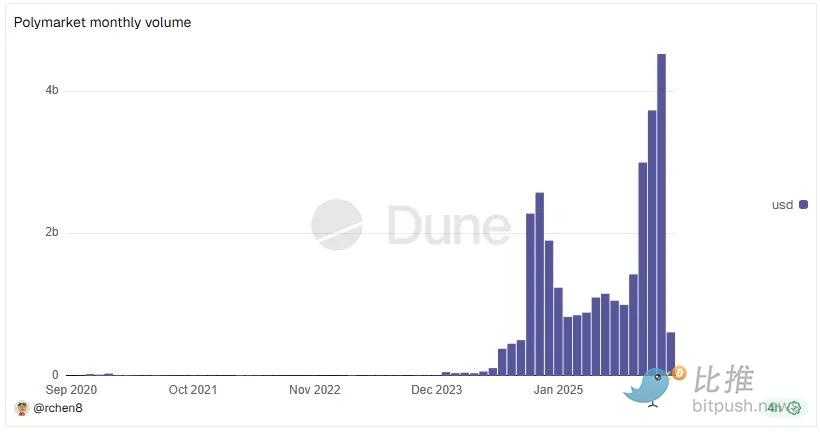
At the beginning of last year, many began writing "obituaries" for prediction markets, believing they would die out after the election.

However, prediction markets have solidified their position by offering a product that aligns perfectly with human nature: gaming based on speculative skill (which many euphemistically call "monetized speculation"). They simplify complex trading into: "Do you think this event will happen?" Bettors just choose "Yes" or "No".

What drove this wave? A core category: Sports. Additionally, bolstered by politics, economics, and crypto-related events.

Although new account openings and daily active users in prediction markets declined from December 2024 to September 2025, regular sports calendar kept the average daily Open Interest stable at around $100 million during this period.

There is never a shortage of sporting events globally. Coupled with the occasional release of economic data, political games, and fiscal policies, prediction platforms consistently receive a steady inflow of capital.

Combine this reality with "natural timeframes," "24/7 trading," "clear opposing stances," and "ultra-fast settlement," and prediction markets become ubiquitous.

This also explains why brokerages, wallets, and consumer platforms are trying to integrate prediction features. They understand that speculation, once reduced to "one-click," is the most efficient way to acquire and monetize user engagement.

Last year, we saw mainstream listed crypto companies Robinhood (HOOD) and Coinbase (COIN) integrate prediction markets in some form.

  • In March 2025, Robinhood directly launched a Prediction Markets Hub within its app, allowing customers to trade on the outcomes of real-world events (including college sports).

  • Just in the last week of last year, Coinbase announced its foray into prediction markets as part of its "The Everything Exchange" vision.

Looking ahead to 2026, sports will remain the foundational category driving stable trading volume for prediction markets, while macroeconomic events will provide periodic spikes. How crypto consumer platforms package prediction markets into their existing ecosystems will be the key differentiator for attracting the majority of users.

2. Privacy Stablecoins: Bringing Blockchain Back to Its Peak

For a long time, "privacy" has been a moral pillar of cryptocurrency. Its core advocates defend it as a means of resisting surveillance.

However, most blockchains have an inherent "privacy flaw." The chain provides extreme transparency and maximum composability, which in turn makes privacy-sensitive traditional businesses hesitant.

This is precisely why the corporate world, despite recognizing the advantages of stablecoins—"second-level settlement" and "extremely low cost"—has been reluctant to use them for daily business transactions.

I wrote in a previous article:

"Every stablecoin transfer becomes a ledger entry permanently recorded on a public chain. It allows anyone to monitor the flow of dollars in real time, even though settlement takes seconds and fees are almost zero."

Public ledgers excel at the settlement layer, but their highly transparent nature also leaves all transaction details exposed.

"Stablecoins are faster and cheaper than the traditional systems they compete with, but the treasury managers responsible for payroll and paying suppliers remain wary of switching to the blockchain path."

This situation began to change in 2025.

A new generation of developers is no longer promoting privacy as "complete anonymity," but rather offering blockchains with "selective disclosure." They focus on hiding key information while retaining the advantages of public settlement.

These technologies allow businesses to execute transactions privately, settle on a public ledger, and disclose necessary information only to auditors or regulators. Zero-Knowledge Proofs (ZK), private state, encrypted mempools, and permissioned visibility saw a surge last year; even when the broader market was sluggish, the tokens of these privacy protocols still rallied against the trend.
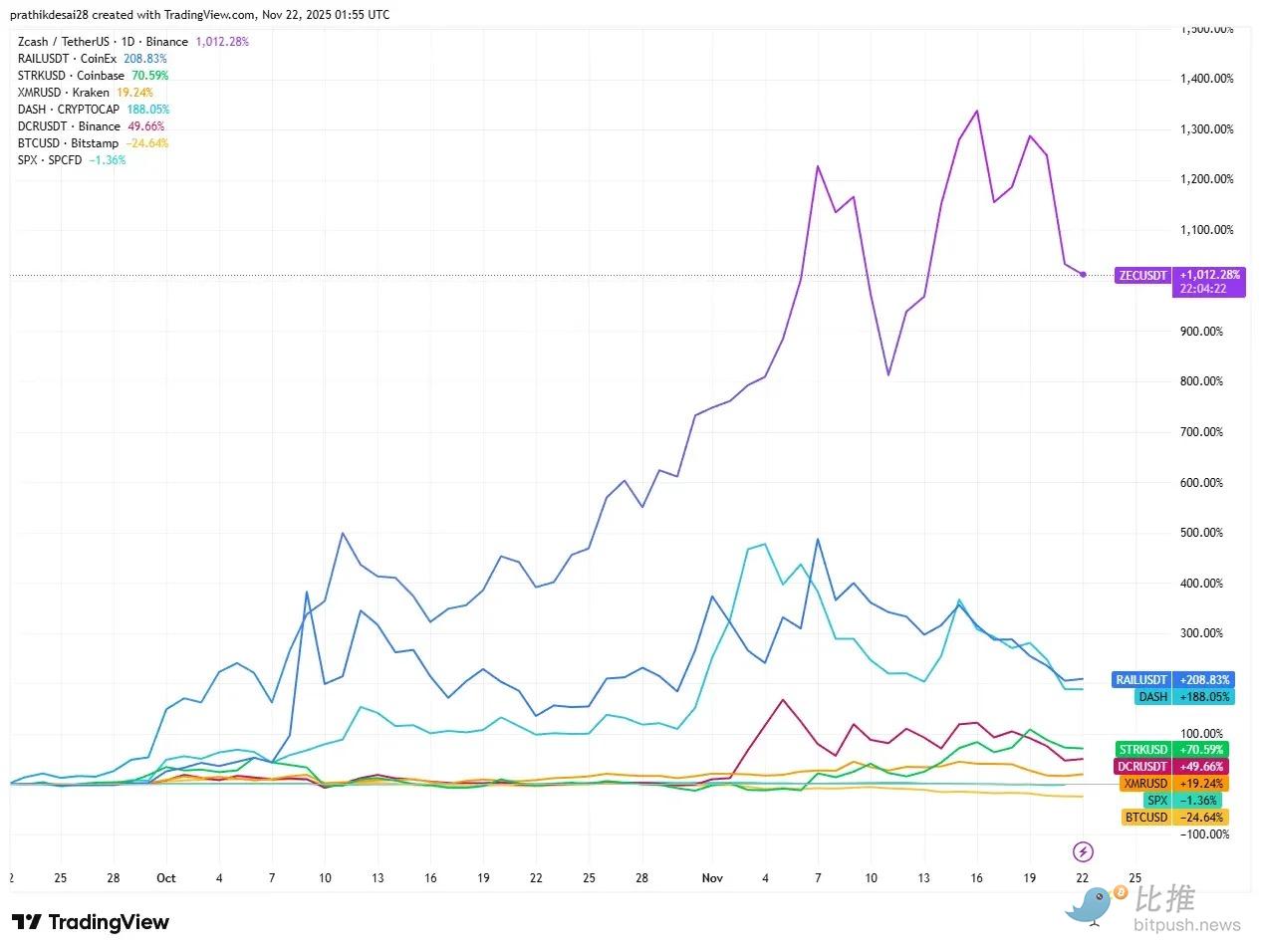
Crypto privacy can help blockchain evolve from a "niche experiment" to "widely adopted infrastructure."

If you add privacy to blockchain payments, stablecoins, and enterprise applications, what follows is a broader payments revolution. No traditional payment system operates without confidentiality. No company wants to build its core financial workflows on an architecture that defaults to exposing data to competitors.

In 2026, privacy is likely to shed the "rebellious" label given to it by early advocates. Only then can we see blockchain truly replace the inefficient, high-cost traditional systems that businesses are still trapped in today.

3. Crypto's "Unbundling" Narrative Nears Its End

For most of the past decade, "unbundling" has been a core narrative promise of cryptocurrency.

Banks were unbundled into basic modules, and basic modules were unbundled into protocols.

Builders followed a logical model: break down monolithic, giant financial institutions into modular, composable building blocks, allowing users to build their own financial systems.

By 2025, it gradually became clear that the unbundling model, while serving developers and early adopters, overwhelmed other users. Most users are not willing to manually string together a dozen protocols just to perform five basic, repetitive financial operations.

When users hold funds, transfer funds, invest, or speculate, they need less friction. This realization marks the beginning of a re-bundling of the unbundled crypto world.

In 2025, we saw top crypto companies trying to integrate fragmented crypto experiences into unified, coherent applications. This was particularly evident in companies that already had advantages in user reach, compliance, and capital.

Over the years, Coinbase has gradually accumulated a series of businesses including custody, spot trading, derivatives (via the acquisition of Deribit), staking, wallets, payments, and developer tools. The company announced its "Everything Exchange" vision, serving all users through a one-stop app—whether they want to access a wallet, market, or protocol.

In 2025, top crypto companies纷纷 tried to compress the fragmented crypto experience into a coherent app. This trend was particularly evident in those companies that occupied traffic inlets, compliant status, and capital advantages:

  • Coinbase: Over the years, Coinbase has accumulated custody, spot trading, derivatives (via the acquisition of Deribit), staking, wallets, payments, and developer tools. Last year, the company announced its "Everything Exchange" vision, aiming to provide users with a one-stop app, whether users want to access a wallet, market, or protocol.

  • Robinhood: Starting as a zero-commission broker, its empire now encompasses stocks, options, cryptocurrencies, gold, retirement accounts, cash management, and prediction markets. Its users are retail users who want to manage their entire financial lives with minimal friction. In this context, "bundling" becomes a rational economic choice.

Once protocols mature, distribution becomes the moat. Places where traffic aggregates begin to generate network effects, making it easier for companies to monetize users across various products under one roof.

Summary Outlook:

This year, the crypto space will still generate a lot of noise and bubbles, as well as many "brilliant ideas" that seem like they might only last three weeks. But some of the ideas we saw last year—perhaps those that didn't attract much attention and seemed a bit boring—will change the way businesses and individuals use blockchain products in 2026.

This year, we will continue to monitor these developments and break down the stories behind them for you.


Twitter:https://twitter.com/BitpushNewsCN

Bitpush TG Discussion Group:https://t.me/BitPushCommunity

Bitpush TG Subscription: https://t.me/bitpush

Original link:https://www.bitpush.news/articles/7600229

İlgili Sorular

QWhat are the three core themes discussed in the article that are expected to shine in 2026?

AThe three core themes are prediction markets, privacy stablecoins, and the rebundling of the crypto narrative.

QHow did prediction markets like Polymarket and Kalshi perform after the 2024 US election, and what drove their sustained growth?

AAfter an initial dip post-election, Polymarket and Kalshi hit new all-time highs in the last three months of 2025, surpassing their election-month volumes. This was driven primarily by sports betting, supplemented by political, economic, and crypto-related events.

QWhy is privacy considered crucial for the wider adoption of stablecoins and blockchain by traditional businesses?

ATraditional businesses are hesitant to use public blockchains for daily transactions due to their extreme transparency, which exposes all financial data to competitors. Privacy technologies like zero-knowledge proofs allow for 'selective disclosure,' enabling private transactions on a public ledger, which is essential for corporate adoption.

QWhat is the shift in the crypto narrative from 'unbundling' to 'rebundling,' and which companies exemplify this trend?

AThe shift is from breaking down financial services into modular protocols (unbundling) to integrating these fragmented crypto experiences into unified, coherent applications (rebundling). Companies like Coinbase, with its 'Everything Exchange' vision, and Robinhood, which offers a wide range of financial services, exemplify this trend.

QAccording to the author, what role will sports and macroeconomic events play in prediction markets in 2026?

AIn 2026, sports will serve as the foundational category providing stable, consistent trading volume for prediction markets, while macroeconomic events will provide periodic spikes in activity and user engagement.

İlgili Okumalar

SemiAnalysis Dissects Huawei's Kirin 9030: Process Technology Halted, So They Folded the Chip

SemiAnalysis has published a detailed teardown report on the HiSilicon Kirin 9030 Pro chipset found in Huawei's Mate 80 Pro. Fabricated using SMIC's most advanced N+3 node without EUV lithography, the analysis reveals significant technical achievements and strategic shifts. The report indicates SMIC's N+3 has achieved transistor density comparable to TSMC's N6 (113.4 vs 107.7 MTr/mm²), primarily through aggressive use of Self-Aligned Quadruple Patterning (SAQP) for its metal layers. This results in a notably small 32.5nm M0 metal pitch. However, SemiAnalysis notes this achievement comes with significantly higher process complexity, cost, and potential yield challenges compared to competitors using more advanced tools. The Kirin 9030 design maximizes this constrained density. While its GPU performance has improved ~70% and matches Qualcomm's 2022 flagship level, the CPU core's IPC lags behind current top-tier designs from Apple and Qualcomm, a gap attributed to the underlying manufacturing technology rather than design capability. Facing long-term restrictions on advanced tools, Huawei is charting a new path. The report highlights the company's "LogicFolding" roadmap, a 3D stacking technique aimed at shortening signal paths to boost performance and efficiency. The goal is to reach 5GHz frequency and a projected density of 295 MTr/mm² by 2031. SemiAnalysis concludes that export controls have not halted China's chip progress but have fundamentally altered its trajectory, making it more expensive and complex. This has spurred innovation in alternative areas like 3D stacking and domestic EDA tool development, with Huawei's supply chain also beginning to integrate Chinese memory from CXMT.

marsbit35 dk önce

SemiAnalysis Dissects Huawei's Kirin 9030: Process Technology Halted, So They Folded the Chip

marsbit35 dk önce

How Will the Price Move Before SpaceX's Next Share Unlock?

TL;DR Investors buying SPCX after SpaceX's IPO are not simply investing in a typical tech stock. It’s a high-valuation asset driven by Musk's narrative, Starlink, and space transport potential, but with a key twist: a very small initial float of ~4% has led to significant post-listing price appreciation. The current price action reflects a timing gap. Before the first lock-up expiration (estimated around August, subject to official confirmation), scarcity and high demand could continue to push prices up. Short-term bulls focus on low float, FOMO, and potential index inclusion. However, bears point to the supply dynamics that will change post-lockup. Existing shareholders still hold over 95% of shares, which will be released in stages starting from the first unlock window. This introduces future selling pressure from low-cost holders. The upcoming Q2 earnings report is a critical catalyst before the unlock. It will test whether the company's fundamentals can justify the current ~$2.1T valuation. Strong results could support the pre-unlock momentum, while weak figures could amplify concerns about future supply. The trading thesis is shifting from immediate scarcity ("can't buy enough") to evaluating future absorption capacity ("who will buy when more supply hits"). The path ahead hinges on the specifics of the unlock schedule, Q2 earnings performance, and whether anticipated passive index buying materializes.

marsbit55 dk önce

How Will the Price Move Before SpaceX's Next Share Unlock?

marsbit55 dk önce

Bitcoin Short-Term Bullish Structure Validated, HYPE Low-Entry Window Opens | Guest Analysis

**Market Analysis Summary (Week of June 2026)** **Overall Market Context:** The market environment is exceptionally complex, with the unexpected US-Iran agreement and the reopening of the Strait of Hormuz triggering a global asset repricing and significant volatility. This heightened noise underscores the importance of a structured analytical framework. **Bitcoin (BTC) Analysis & Strategy:** * **Current Status:** The price has climbed above $65,000, currently in a rebound phase (segment 38-39) following a complex 12-segment correction from the May high of $82,850. * **Key Levels:** * **Primary Resistance:** $69,500–$70,500. A successful breakout above $65,000 targets this zone. * **Primary Support:** $65,000 (immediate), followed by $59,000–$60,000 and $55,000. * **Weekly Outlook & Strategy:** The focus is on the confirmation of the $65,000 level. * **Bullish Scenario (Hold $65K):** A move toward the $69.5K–$70.5K resistance zone is anticipated, which is a potential area for initiating medium-term short positions. * **Bearish Scenario (Break below $65K):** A retest of the $60,000–$62,000 support range is likely. * **Medium-Term Strategy:** Currently neutral. Plan to establish short positions (up to 60% allocation) either in the $69.5K–$70.5K resistance zone upon signs of rejection, or on a confirmed breakdown below $65,000 and further below $59K–$60K. * **Short-Term Strategy:** Utilize 30% capital for scalping opportunities based on support/resistance levels, using 30/60-minute charts. **HYPE Analysis & Strategy:** * **Current Status:** The price has stabilized around $52 after a four-segment decline from the June high of $75.87 and is now in a rebound (segment 50-51). * **Key Levels:** * **Primary Resistance:** $62.50–$64.57. Watch for potential rejection here to form a lower high. * **Primary Support:** $52–$55.50, followed by $47–$49. * **Weekly Outlook & Strategy:** Adopt a "buy on dips, avoid chasing rallies" approach. * **Core View:** Monitor the price action and potential formation of a lower high ("endpoint 51") in the $62.50–$64.57 resistance zone. * **Short-Term Strategy:** Consider light long positions (max 30% allocation) if the price finds support and shows reversal signals in the $52–$54.50 or deeper $47–$49 support zones, confirmed by proprietary quantitative bottom signals. **Trade Review:** Last week's HYPE short-term long trade, executed based on proprietary "Price Difference" and "Momentum" model signals, yielded a profit of approximately 11.88%. The entry was near $54.39 and exit near $60.85. **Risk Management Reminder:** Always set an initial stop-loss upon entry. Move stop-loss to breakeven at +1% profit, then trail it upwards to lock in gains as the trade progresses. *Disclaimer: All analysis, models, and strategies are based on personal technical analysis for educational purposes only, not investment advice. The market carries inherent risk.*

Odaily星球日报1 saat önce

Bitcoin Short-Term Bullish Structure Validated, HYPE Low-Entry Window Opens | Guest Analysis

Odaily星球日报1 saat önce

Bitcoin Short-Term Bullish Structure Validated, HYPE Accumulation Window Opens | Guest Analysis

**Bitcoin and HYPE Market Analysis: Short-Term Outlook and Trading Strategies** This market analysis examines Bitcoin (BTC) and HYPE amid volatile conditions, providing short-term outlooks and specific trading strategies. **Key Outlooks:** * **Bitcoin (BTC):** Focus is on whether BTC's recent move above $65,000 holds. A successful breakout could lead to a test of the $69,500-$70,500 resistance zone, where medium-term short positions are considered. A failure, breaking below $65,000, may trigger a decline towards the $59,000-$60,000 support area. * **HYPE:** The token completed a four-wave correction and is now rebounding. The key resistance zone is $62.5-$64.57. The trading strategy is "buy on dips," looking for entry opportunities near the $52-$54.5 or deeper $47-$49 support zones, pending confirmation from proprietary models. **BTC Trading Strategy:** * **Medium-term:** Primarily looking to establish short positions (up to 60% allocated capital) if price rallies to the $69,500-$70,500 resistance area and shows signs of reversal. Alternative plans involve initiating shorts on a breakdown below $65,000. * **Short-term:** Allocate up to 30% capital for intraday "spread" trades based on support/resistance levels on 30/60-minute charts. **HYPE Trading Strategy:** * **Short-term:** Adopt a dip-buying approach. Consider light long positions (under 30% capital) when price tests key support levels ($52-$54.5 or $47-$49) and shows stabilization, confirmed by proprietary "Price Spread" and "Momentum Quant" models. **Trade Recap:** The analysis reviews a successful HYPE long trade from the previous week, executed at ~$54.39 and closed at ~$60.85 for an ~11.88% gain, based on signals from the aforementioned models. **Risk Management Emphasis:** The article stresses strict capital allocation (under 30-60%), immediate initial stop-loss placement, and a trailing stop-loss protocol to lock in profits as trades move favorably. ***Disclaimer:** All analysis, models, and strategies are for educational purposes based on technical analysis, not investment advice. Markets are volatile; trade with caution.*

marsbit1 saat önce

Bitcoin Short-Term Bullish Structure Validated, HYPE Accumulation Window Opens | Guest Analysis

marsbit1 saat önce

İşlemler

Spot
Futures
活动图片





