2026 Davos Annual Meeting: How Did Web3 Giants Discuss the Future?

marsbit2026-01-26 tarihinde yayınlandı2026-01-26 tarihinde güncellendi

Özet

At the 2026 World Economic Forum in Davos, Web3 leaders and traditional finance executives debated the mainstream integration of blockchain technology. Binance founder Changpeng Zhao (CZ) argued that banks must adopt blockchain infrastructure to improve efficiency and prevent liquidity crises, advocating for 100% reserve models. He highlighted discussions with multiple governments on national asset tokenization and predicted a Bitcoin "super cycle," with crypto becoming essential "fuel" for AI-driven economies. Coinbase CEO Brian Armstrong clashed with the French Central Bank Governor, defending Bitcoin's decentralization and the right for stablecoin holders to earn interest. He asserted that tokenization enhances financial efficiency and democratizes investment access. Key traditional finance figures, including BlackRock's Larry Fink and Standard Chartered's Bill Winters, endorsed tokenization as the future of finance, emphasizing its potential to boost liquidity and reduce costs. However, they stressed the need for collaboration between banks and blockchain. The event also saw the signing of the "Davos Declaration 2026" by Web3 leaders, committing to principles like inclusivity, decentralization, sustainability, and regulatory compliance in advancing blockchain and AI technologies.

Original Author: Eric, Foresight News

2025 was considered a landmark year for Web3 practitioners to enter the main agenda of the World Economic Forum (WEF) on a large scale for the first time. "Crypto at a Crossroads" appeared in the main agenda for the first time, discussing whether cryptocurrencies have entered the mainstream era. One year later, with the entry of Western financial giants, Web3 has evolved from last year's crossroads to truly becoming mainstream.

At this year's World Economic Forum main venue, tokenization and stablecoins became two important topics. Binance founder Changpeng Zhao (CZ) was also invited to participate in a discussion titled "New Era for Finance." Unlike speaking freely on CT (Crypto Twitter), the remarks of Web3 representatives on such a large occasion were noticeably more restrained, but they still did not hide the ambition that "Web3 will change the world."

So, at the 2026 Davos Annual Meeting, where Crypto was recognized as mainstream by traditional finance with a scale of trillions of dollars, what exactly did the big shots say?

Changpeng Zhao: "If Banks Don't Change, We Will Change Banks"

The last time a well-known entrepreneur criticized banks at a large economic and financial conference may date back to the 2020 Bund Financial Summit.
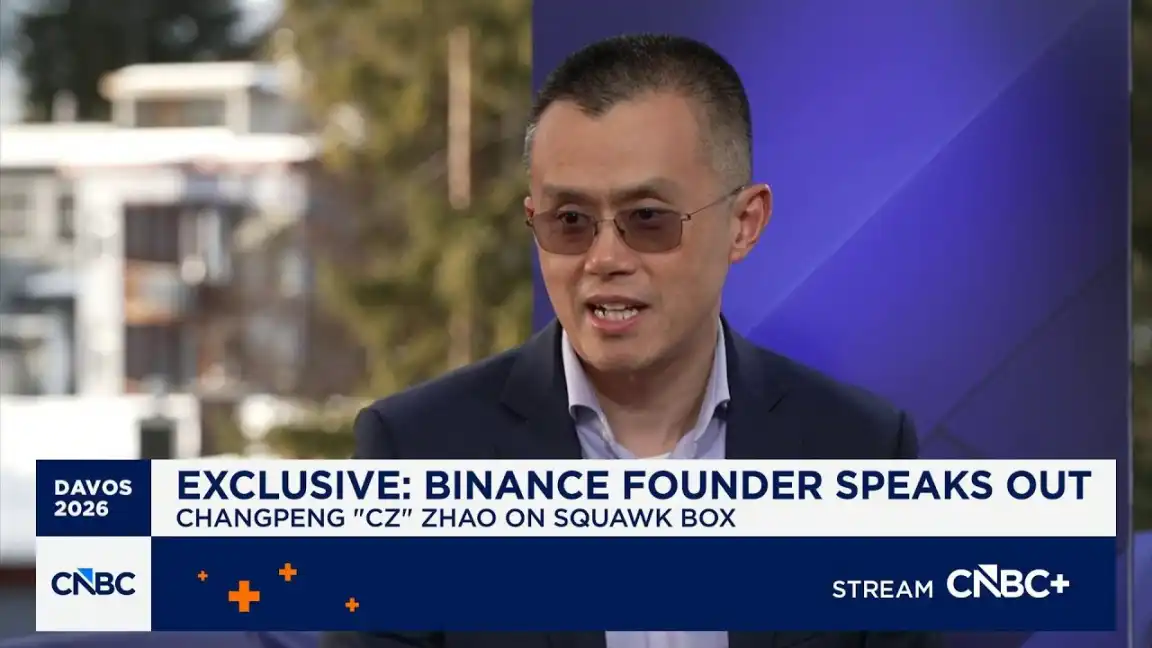
Changpeng Zhao (CZ) participated in the main venue roundtable titled "New Era for Finance" at this Davos Annual Meeting and also gave interviews to media outlets including CNBC. Overall, CZ's viewpoint was not to "replace banks" but rather that banks should embrace blockchain infrastructure, as the two are complementary. His main points include:

  • The reserve system of banks is the root cause of liquidity crises, making it difficult to handle billion-dollar-level withdrawals in a short time without issues, unlike Binance. The 100% reserve model of cryptocurrency exchanges is safer and more reliable. Traditional banks have their value but should embrace blockchain as their infrastructure to improve efficiency and reduce costs;
  • CZ is currently discussing national asset tokenization with governments of more than a dozen countries (such as Pakistan, Malaysia, Kyrgyzstan, etc.), including infrastructure, real estate, commodities, and government bonds. Tokenization can avoid debt issues and improve liquidity, attracting a broader range of investors;
  • Bitcoin's 4-year cycle will be broken, and 2026 will be Bitcoin's "super cycle." Meme tokens are similar to previous NFTs and the metaverse, being highly risky and speculative. Meme tokens with cultural value may exist long-term, but most meme tokens will disappear;
  • Traditional payments are merging with crypto payments, but risk awareness is necessary. AI Agents will use cryptocurrencies as a native payment method. In the future, AI will rely on blockchain for real-time, reliable payments, and cryptocurrencies will become the "fuel" for the AI economy;
  • The crypto industry needs to focus on risk management and regulatory reality, rather than blind optimism, balancing innovation and compliance.

In addition to these points, CZ also revealed details such as his mindset during his previous imprisonment in an interview with CNBC and mentioned on X that more details would be disclosed in his new book to be published in late February or early March.

Coinbase Founder Debates with French Central Bank Governor

In a discussion titled "Is Tokenization the Future," Coinbase founder Brian Armstrong repeatedly interrupted French Central Bank Governor François Villeroy de Galhau and refuted his views on Bitcoin and stablecoin yields.

François Villeroy de Galhau expressed the following views:

  • Strongly opposes private companies paying interest to holders of their issued stablecoins, believing this threatens monetary sovereignty and financial stability;
  • Emphasizes that trust in currency must come from public institutions (central banks) with democratic mandates, not private issuers;
  • Criticizes stablecoins and Bitcoin as private currencies that could lead to systemic risks, promoting the digital euro as a tool to maintain sovereignty;
  • Warns that without improving financial literacy, tokenization could become a "disaster."
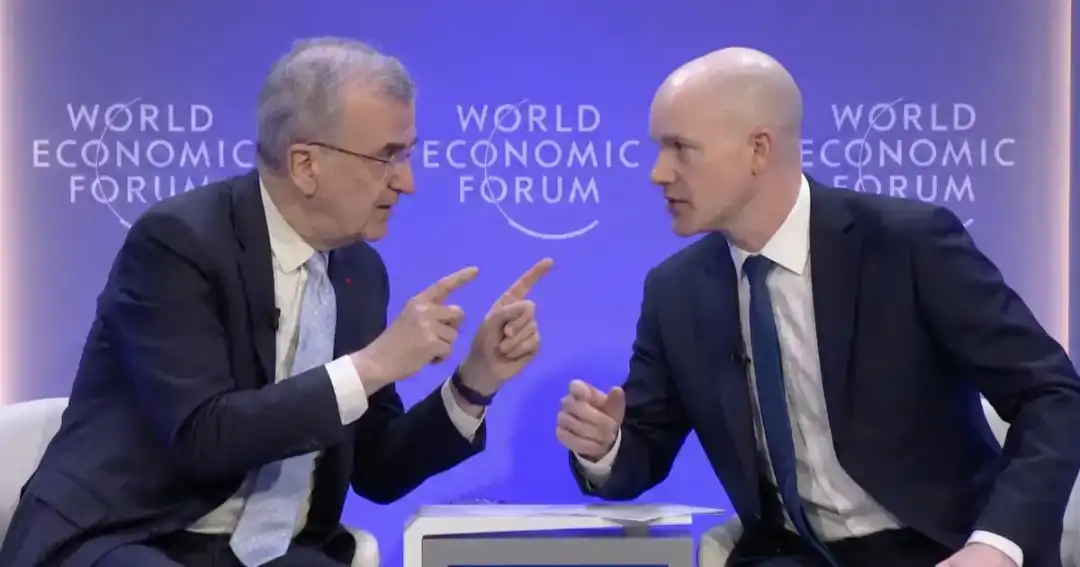
Brian Armstrong's "counterarguments" included:

  • Arguing that Bitcoin has no issuer, and its decentralized nature makes it more independent and anti-inflationary than traditional currencies;
  • Asserting that users have the right to earn yields from stablecoins and that allowing stablecoin interest is part of a country's competitiveness;
  • Emphasizing that Bitcoin and central banks should be in "healthy competition," with public choice becoming the strongest accountability mechanism for fiscal deficits and pushing central banks to be more responsible;
  • Refuting that stablecoins are fully backed by reserves, unlike bank deposits;
  • Tokenization can solve financial efficiency issues, achieve real-time settlement, reduce costs, and "democratize investment access," providing investment channels for 4 billion adults without access to brokerage services, and predicting significant progress in this technology in 2026.

In addition to this highly anticipated clash between "old finance" and "new finance," Brian Armstrong also mentioned in interviews or other occasions that during the meeting, a senior executive from a global top-ten bank told him that cryptocurrencies have now become the bank's "top priority," even seen as a "matter of survival." Armstrong stated that many financial leaders he met at the conference were not only open to cryptocurrencies but were actively seeking ways to enter the market.

Furthermore, Armstrong mentioned that although AI has diverted some attention from cryptocurrencies, the two are closely connected, and in the future, AI will likely use stablecoins by default instead of the existing banking payment system for payments.

In addition to the two main figures, many other well-known figures in the Web3 industry attended the meeting and expressed their views. Ripple CEO Brad Garlinghouse stated that the role of cryptocurrencies has shifted from a "threat" to economic infrastructure, believing that stablecoins will become a global payment bridge but need to protect monetary sovereignty. Brad Garlinghouse did not express the view that crypto payments would "replace" traditional payments but consistently emphasized that Ripple is building a bridge between the two.

Web3 Industry Representatives Sign the "Davos Declaration 2026"

During the side event "Davos Web3 Roundtable" at the Davos Annual Meeting, dozens of Web3 industry leaders, investors, and policymakers, including Animoca Brands co-founder Yat Siu, Unstoppable Domains executive Sandy Carter, and 0G Foundation representative Jonathan Chang, signed the "Davos Declaration 2026."

The declaration emphasizes that when embracing powerful technologies like blockchain and AI, the following principles must be adhered to ensure that technology serves human well-being:

  • Inclusivity: Enable more people (especially in developing countries and marginalized groups) to benefit from Web3 technology.
  • Decentralization: Uphold the core value of Web3 and avoid concentration of power.
  • Sustainability: Promote environmentally friendly and long-term viable innovation.
  • Accountability and Trust: Emphasize compliance, transparency, and responsible development.
  • Long-Term Value Creation: Shift from "hype" to practicality, regulatory friendliness, and institutional-grade infrastructure.

Traditional Finance's View on Web3

In addition to some criticisms of Web3 by the French Central Bank Governor, the meeting also saw recognition of Web3 by financial giants.
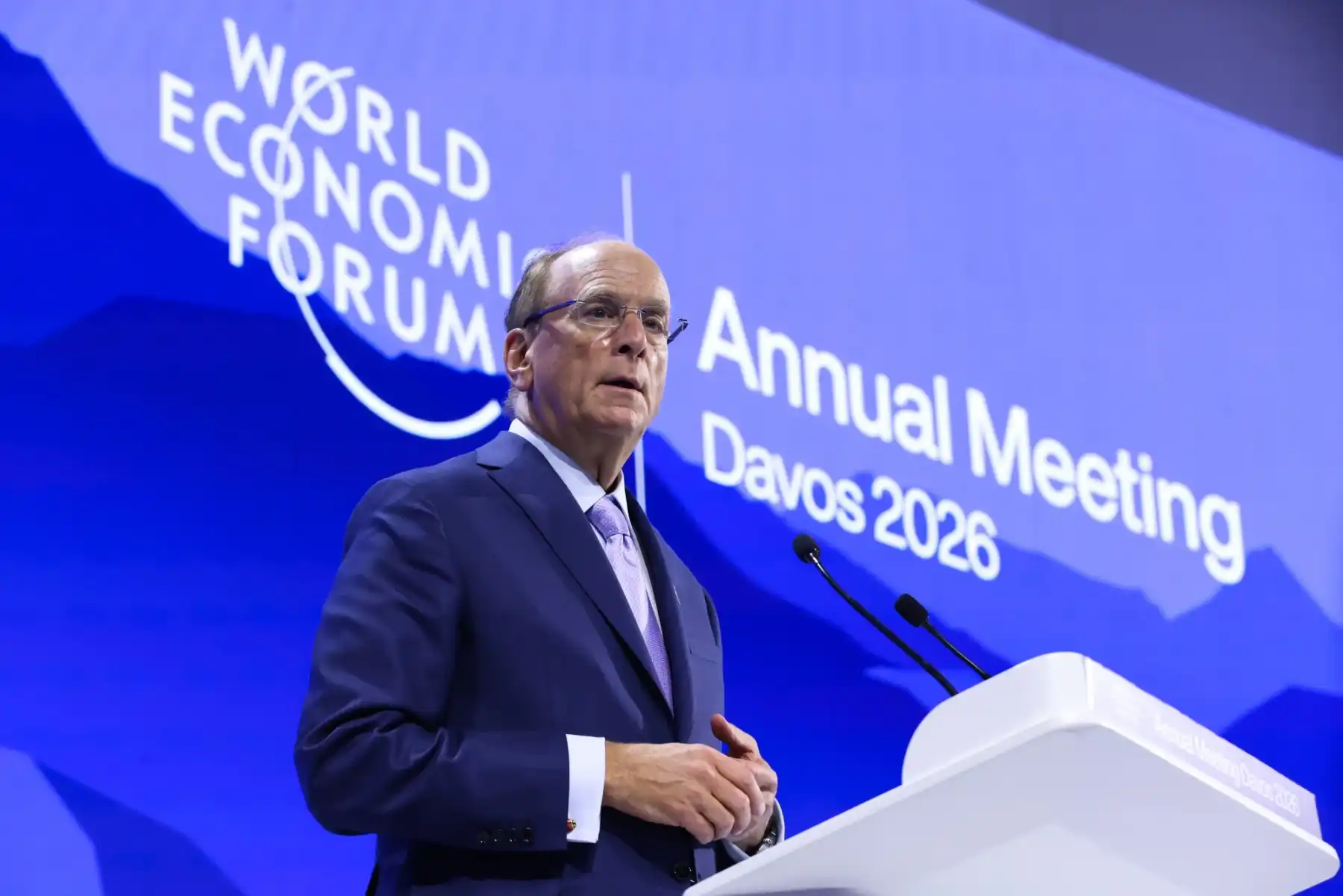
BlackRock CEO Larry Fink believes that tokenization is the future of the financial system, and the entire financial system should migrate to "a common blockchain" (Garrett Jin stated that this blockchain refers to Ethereum) as soon as possible to achieve seamless asset transfers. Tokenization will solve liquidity issues, reduce costs, and make asset transfers between money market funds more efficient. Crypto and tokenization have become themes driving the market, and BlackRock views them as institutional-grade infrastructure.
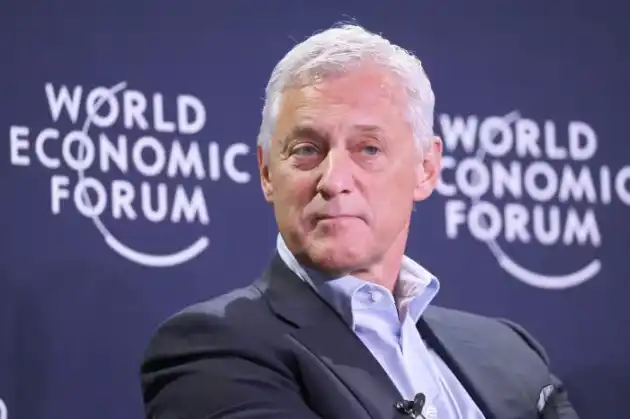
Standard Chartered Bank Group CEO Bill Winters stated that tokenization and stablecoins will bring progress in global financial delivery, including reducing transaction costs and improving cross-border payment efficiency. The integration of traditional banking and blockchain has become a reality, and stablecoins have become the first truly universal blockchain use case.

Other traditional financial giants participating in the main venue roundtable mostly expressed recognition of tokenization, digital assets, and programmable currency in reshaping financial capabilities but also believed that banks should collaborate with blockchain rather than oppose it.


İlgili Sorular

QWhat were the main topics discussed by Web3 leaders at the 2026 Davos Annual Meeting?

AThe main topics included tokenization, stablecoins, the role of banks, Bitcoin's future, and the integration of AI with cryptocurrency payments. Key figures like CZ and Brian Armstrong emphasized the importance of blockchain infrastructure, regulatory compliance, and the transformative potential of Web3 technologies.

QWhat was CZ's (Changpeng Zhao) stance on traditional banks and blockchain technology?

ACZ argued that banks should embrace blockchain infrastructure to improve efficiency and reduce costs. He criticized the fractional reserve system as the root of liquidity crises and advocated for 100% reserve models like those used by crypto exchanges. He also highlighted his discussions with several governments on national asset tokenization.

QHow did Brian Armstrong respond to the French Central Bank Governor's criticism of stablecoins and Bitcoin?

ABrian Armstrong defended Bitcoin's decentralized nature as more independent and inflation-resistant than traditional currencies. He argued that users should have the right to earn interest on stablecoins, viewing it as a matter of national competitiveness. He also emphasized that stablecoins are fully backed by reserves, unlike bank deposits, and that tokenization can democratize investment access.

QWhat principles were outlined in the 'Davos Declaration 2026' signed by Web3 leaders?

AThe declaration emphasized inclusivity, decentralization, sustainability, accountability and trust, and long-term value creation. It called for ensuring that Web3 technologies serve human welfare, particularly benefiting developing countries and marginalized groups, while maintaining core values and avoiding centralization of power.

QHow did traditional financial leaders like Larry Fink and Bill Winters view the future of Web3 and tokenization?

ALarry Fink, CEO of BlackRock, stated that tokenization is the future of the financial system and should migrate to a common blockchain (likely Ethereum) for seamless asset transfers. Bill Winters, CEO of Standard Chartered, highlighted that tokenization and stablecoins would advance global finance by reducing costs and improving cross-border payment efficiency, with stablecoins being the first truly universal blockchain use case.

İlgili Okumalar

Must-Watch Events Next Week|CLARITY Act Could Face Senate Vote; SpaceX, Circle to Report Earnings (8.3-8.9)

**Summary: Key Events and Developments to Watch (August 3-9)** The upcoming week is marked by significant financial disclosures, key legislative deadlines, and notable product updates. **Major Financial Events:** Several companies are scheduled to release their Q2 2026 earnings. American Bitcoin (ABTC) will report on August 3, followed by SpaceX and Hut 8 Mining Corp. on August 4, and Circle on August 5. Notably, a significant portion of SpaceX shares (up to 12% of total shares) will be unlocked on August 6 following their earnings release. **Key Legislative Deadline:** The U.S. Senate faces an August 7 deadline to secure 60 votes for the CLARITY Act, a bipartisan bill aiming to establish a federal regulatory framework for cryptocurrencies. The Senate may hold a full vote on the bill during the week. **Economic Data:** The U.S. July Non-Farm Payrolls report will be released on August 7, providing crucial labor market data. **Technology & Product Updates:** * **Shutdowns:** DeFi portfolio tracker Zapper and wallet app Ctrl Wallet will cease operations on August 3. * **Upgrades:** LayerZero will deprecate its v1 relayers on August 3. XRP Ledger's new version 3.3.0, featuring five new functions, is expected next week. * **AI:** Elon Musk announced that the advanced Grok 4.6 AI model is set for release around August 7. * **Bitcoin:** The BIP-110 forced signaling for a potential Bitcoin network change is scheduled to begin around August 8. **Other Notable Events:** Chinese robotics firm Unitree Tech has set its preliminary price inquiry for its IPO for August 5. South Korean exchange Upbit will delist AQT and AERGO tokens on August 3.

marsbit1 saat önce

Must-Watch Events Next Week|CLARITY Act Could Face Senate Vote; SpaceX, Circle to Report Earnings (8.3-8.9)

marsbit1 saat önce

Stocks Are Plummeting More Sharply Than Cryptocurrencies. Where Has the Money Gone?

Stock Markets Plunge Deeper Than Cryptocurrencies: Where Did the Money Go? In late July, Seoul's Kospi index triggered circuit breakers for two consecutive days, plummeting over 40% from its June high. The collapse was led by heavyweight stocks like SK Hynix, whose record profits still disappointed investors, and devastating leveraged ETFs, with one major product losing over 83% of its value. This signaled a global, forced deleveraging targeting the most crowded trades. Interestingly, while stocks exhibited extreme volatility akin to crypto markets, Bitcoin rose nearly 15% in July after a prior steep drop. Analysis shows the money fleeing equities did not flow into Bitcoin. Instead, Bitcoin had already absorbed its sell-off in May-June, when U.S. spot Bitcoin ETFs saw historic outflows. The true safe-haven beneficiary was gold, whose price rose over 20% year-on-year, highlighting a decoupling between Bitcoin and gold as "digital gold." The sell-off was a targeted unwinding of leveraged positions in tech and semiconductors, accelerated by broker-dealer risk management and shifts in the AI narrative, including new competition from Chinese memory chipmakers. The retreat path was clear: from high-valuation tech stocks to cash and U.S. Treasuries, then to gold. For Bitcoin to attract sustained institutional inflows, conditions like eased global liquidity pressure, a "soft-landing" Fed rate cut, and U.S. regulatory clarity via legislation like the stalled CLARITY Act are needed. Currently, Bitcoin is not a safe haven but an already-cleared asset. Its low correlation with tech stocks, however, makes it a potential diversification play for institutional portfolios once the storm passes. The money isn't here yet, but the positioning is underway.

marsbit1 saat önce

Stocks Are Plummeting More Sharply Than Cryptocurrencies. Where Has the Money Gone?

marsbit1 saat önce

In Conversation with Ray Dalio: We Are Currently in an AI Bubble, with 1% of My Portfolio in Bitcoin

Ray Dalio, founder of Bridgewater Associates, warns in an interview that the current AI boom shows classic bubble characteristics, which could lead to significant economic downturns as seen in past cycles like 1929 or 2000. He explains that speculative enthusiasm, fueled by debt and overvaluation, often precedes a crash when rising rates or taxation force asset sales, causing widespread losses and recession. Dalio also outlines his "Big Cycle" theory, describing an approximate 80-year pattern where widening wealth gaps, massive government deficits, and shifting geopolitical power (like China's rise) create internal conflict and global instability. He emphasizes that we are in a late-cycle, transitional phase where traditional powers like the US and UK face decline. For personal wealth protection, Dalio advises diversification beyond cash into assets like stocks, bonds, real estate, and particularly gold, which he prefers over Bitcoin. While he holds about 1% of his portfolio in Bitcoin as a non-printable hard asset, he views gold as more secure from technological or governmental threats. Regarding AI's impact, Dalio believes it will disproportionately benefit capital owners, worsening inequality by replacing both physical and cognitive labor. He suggests that human intuition and emotional intelligence, combined with AI, will be key for future workers. On taxation, Dalio argues that wealth taxes are impractical and risk triggering asset sell-offs, reducing productive investment. He points to the UK as a cautionary example of debt, low productivity, and political strife. Geopolitically, Dalio foresees a more regionalized world, with the US showing weakness in prolonged conflicts like with Iran, akin to past imperial declines. The ideal outcome, he suggests, is coexisting powerful blocs (e.g., Americas, China-Asia Pacific) without major war.

marsbit5 saat önce

In Conversation with Ray Dalio: We Are Currently in an AI Bubble, with 1% of My Portfolio in Bitcoin

marsbit5 saat önce

İşlemler

Spot
活动图片




