2026年迈阿密共识大会重要观点集锦

marsbit2026-05-07 tarihinde yayınlandı2026-05-07 tarihinde güncellendi

Consensus Miami 2026 于 2026 年 5 月 5-7 日在迈阿密隆重举行。此次共识大会有超过 20,000 名与会者,众多机构重量级人物、联邦政策制定者和加密领域先锋参与,共描绘传统金融与数字资产的融合图景。大会聚焦于全球机构金融、自主 AI 代理与加密货币的深度融合,并且强调了迈阿密作为全球科技金融中心的角色。
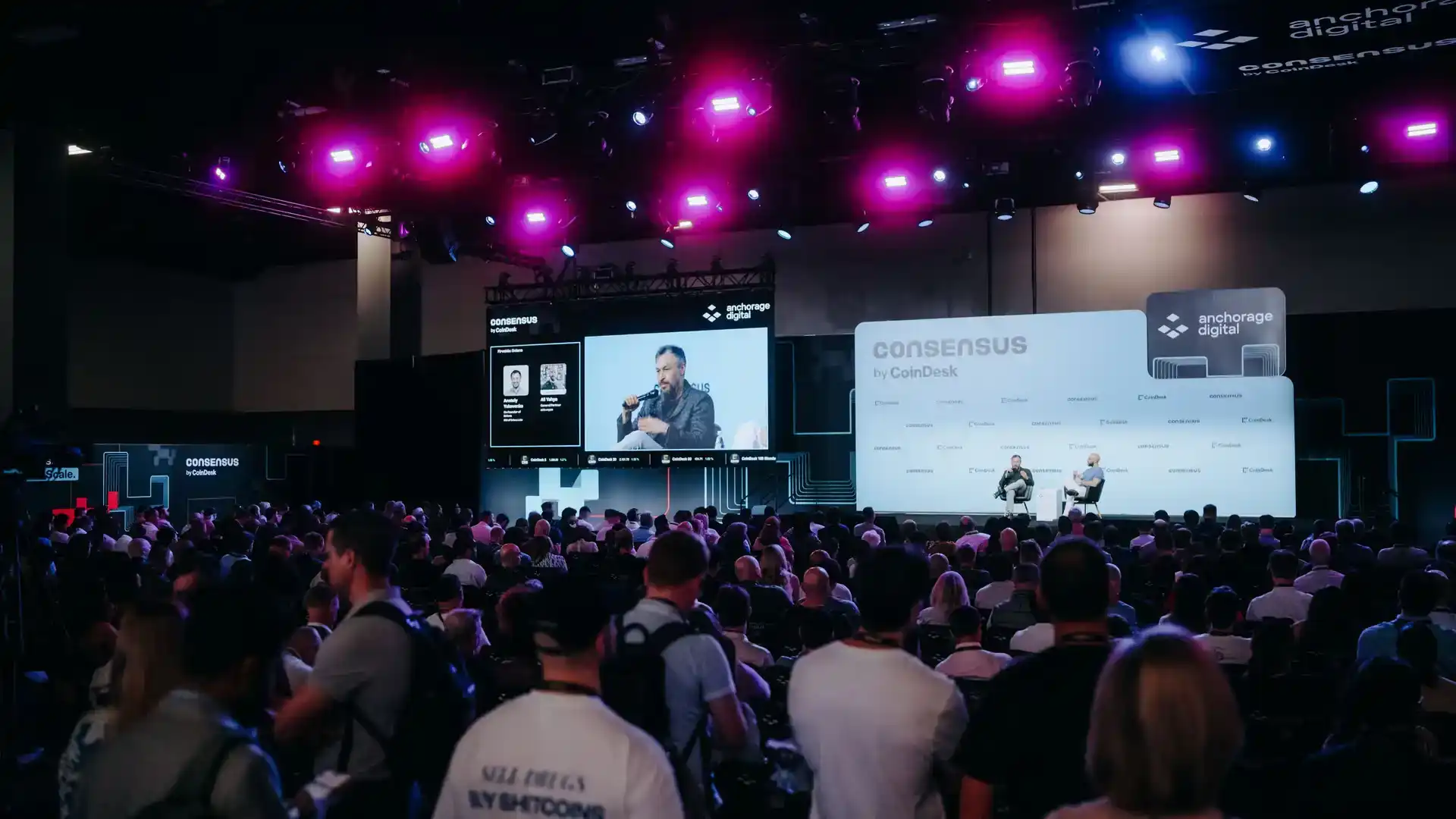
Consensus Miami 2026 的议程设计紧密围绕着重塑全球金融的三大核心力量展开:规模化加密货币应用、机构级整合和代理式商业。Arthur Hayes(BitMEX 联合创始人)、Lily Liu(Solana 基金会主席)、Jesse Pollak(Coinbase 工程副总裁)等嘉宾将发表主题演讲或参与炉边谈话。以下是 BlockBetas 为大家整理的大会重要观点:

5 月 7 日

Raoul Pal:加密货币是 AI 时代的「全民基本股权」,5 年内 Agent 将占 DeFi 用户的五分之三

Real Vision 联合创始人兼首席执行官 Raoul Pal 在迈阿密 Consensus 2026 大会上表示:

人类正处于历史上前所未有的拐点,我们即将迎来比人类更聪明、更灵活、更强大的 AGI 实体,而 AI 能力目前每年的提升幅度已超过翻倍。2028 年 AI 的年产文字量将超越人类有史以来的全部产出总量,且这一切将在 5 年内发生。

当 AI 大规模替代劳动力后,解决方案不是传统意义上的全民基本收入(UBI),而是「全民基本股权(Universal Basic Equity)」。这是人类历史上第一次,普通人可以通过持有加密基础设施代币直接拥有底层网络,随着 Agent 经济的扩张同步受益。机构入场并未背离加密精神,反而是第一次让全球任何人都能与贝莱德等站在同一起跑线上购买 BTC、ETH、SOL。

在快问快答环节,Pal 表示若只能二选一,他会选择 Solana 而非比特币,并预计 5 年内 Agent 与人类将以 3:2 的比例成为 DeFi 的主要用户群体。

Arthur Hayes:影响比特币价格的是流动性而非监管利好

BitMEX 联合创始人 Arthur Hayes 在 Consensus 2026 大会上表示:

加密行业并不需要监管,监管对于比特币的价值主张而言基本无关紧要。决定比特币价格的核心因素只有两个:技术可靠性与法币流动性,而后者才是真正的驱动力。

无论是奥巴马时期的量化宽松、特朗普首任期间的「直升机撒钱」,还是拜登时代财政部长耶伦通过以短期债券替代长期债务所释放的约 2.5 万亿美元逆回购资金,每一轮货币扩张都与比特币的大幅上涨高度吻合。尽管特朗普政府已签署加密相关法案并释放监管明确化信号,比特币价格在过去约 18 个月内仍下跌约 25%,证明监管利好并不直接影响价格上涨,流动性才是根本原因。

特朗普家族此前遭遇去银行化、资产冻结及大量诉讼,正是这段经历让其认识到比特币作为脱离国家管控资产的价值所在。若比特币最终沦为银行资产负债表上的又一种衍生品,将失去其真正的意义。

Cardano 创始人:到 2035 年 AI Agent 对互联网的重要性将超过人类,谷歌等巨头「非常恐慌」

Cardano 创始人 Charles Hoskinson 在 Consensus 2026 大会上表示,到 2035 年,互联网中的大多数搜索、交易和活动都将由 AI Agent 完成,而非人类用户,这将彻底冲击 Google、Amazon、Facebook 等科技巨头的商业模式。

Hoskinson 表示,AI Agent 不会点击广告,也没有品牌忠诚度,因此会直接削弱依赖广告收入的平台模式。「Amazon、Google、Facebook 对 Agent 革命感到恐慌,因为他们所有商业模式都会被颠覆。」

他认为,AI Agent 将越来越多地承担加密行业中的尽调、交易执行及 DeFi 交互等工作,并称 AI 是「加密货币有史以来最好的事情之一」,因为其有望极大改善当前复杂的用户体验。

Hoskinson 同时强调,用户应继续掌控自己的数据、身份与资产,而非依赖托管钱包或第三方平台。他批评当前加密行业生态过度碎片化,「这些年已经发行了 1100 万种代币,我们已经不缺代币了,现在需要的是合作。」

此外,他还提到传统金融机构态度正在转变,以摩根大通为例,「过去会关闭用户加密相关银行账户,现在却开始推出区块链产品」。

华尔街清算巨头 DTCC 正与多条 Layer1 合作,推动股息等公司行为上链

美国证券清算巨头 DTCC(美国存管信托与清算公司)CEO Frank La Salla 表示,公司正与多条高性能 Layer1 区块链合作,探索将股息发放、要约收购等复杂公司行为迁移至链上处理。

La Salla 在 Consensus 2026 大会上表示,目前多数区块链在处理公司行为时效率仍不足,而 DTCC 每天需处理数百万笔股息支付,因此需要具备高吞吐与高稳定性的 Layer1 网络支持。DTCC 是美国资本市场核心基础设施之一,每日处理约 20 万亿美元的美债及证券交易。

该机构计划于今年 7 月启动代币化证券平台测试,并目标于 10 月进行更大范围推广。La Salla 认为,「代币化抵押品」可能成为区块链首个大规模机构级应用场景。未来,亚洲机构甚至可在纽约周日时间,通过链上抵押品实时获取美元流动性。

不过,他也警告称,区块链仍面临可扩展性、流动性碎片化及风险管理等问题,尤其是传统金融体系中的「净额结算」效率,在去中心化环境下仍难以复制。

美参议员:若无道德条款,加密货币市场结构立法将不会获得通过

美参议员 Kirsten Gillibrand 在 Consensus 大会上表示,若加密货币市场结构立法中不包含道德条款,该法案将无法获得投票通过。其指出,必须禁止国会议员、政府高层及正副总统利用其内部身份在加密行业牟利。目前,多位民主党参议员对美国总统特朗普及其家人的加密联系表示担忧,彭博社估计特朗普已通过加密风投获利至少 14 亿美元。

法案此前因稳定币奖励处理问题在参议院受阻,现已达成折衷方案,但伦理条款成为新障碍。Gillibrand 表示正与白宫及两党合作确保相关内容纳入,并推动加入消费者保护及反恐融资条款,法案有望在 8 月休会前通过。

5 月 6 日

CFTC 拟通过正式规则确认非托管软件开发者保护

美国商品期货交易委员会(CFTC)主席 Michael Selig 在 Consensus Miami 大会上表示,正计划将针对非托管软件开发者的友好立场转化为正式规则。此前 3 月 CFTC 已向加密钱包提供商 Phantom 发出无行动信函,明确表示满足特定条件的自托管钱包软件开发者无需注册为经纪商。相比临时指导意见,CFTC 更倾向于通过正式建立规则的方式快速 确立监管立场,以便为美国开发者提供明确指引,促进相关软件的开发与上线。

此举与 SEC 上个月发布的类似指导意见呼应——SEC 指出 DeFi 钱包等接口通常不被视为经纪商。目前两家监管机构都在努力澄清对软件开发者的监管立场,有利于非托管钱包和 DeFi 工具在美国发展。

Kraken:IPO 准备工作已完成约 80%

Kraken 联合首席执行官 Arjun Sethi 在 Consensus Miami 会议上表示,IPO 准备工作「已完成约 80%」,公司已向 SEC 提交申请,正在等待合适的市场时机。

Kraken 此前曾于 3 月暂停 IPO 计划。

Toly:Solana 网络重大升级「Alpenglow」最早下一季度上线

Solana 联创 Toly 在 Consensus Miami 2026 上表示,Solana 网络重大升级「Alpenglow」预计将于今年推出,最早可能在下一季度上线。Toly 称,Alpenglow 升级将使交易确认速度接近物理极限的「光速」,提高网络的速度、可靠性和交易确定性,从 Solana 早期的创新转向更成熟的注重性能保证和可靠性的阶段,这对金融应用等时间敏感型应用至关重要。

5 月 5 日

Arthur Hayes:山寨币不会消亡,市场将持续洗牌

Arthur Hayes 在 Consensus 2026 上表示,尽管「99% 的山寨币可能归零」,但这一现象与历史上标普 500 成分公司更替类似,并不意味着行业终结。

Hayes 指出,自 1929 年以来约 98% 的标普 500 公司已被淘汰,市场出清属于正常周期,山寨币生态仍将持续存在并演化。
İlgili Okumalar

Gensyn AI: Don't Let AI Repeat the Mistakes of the Internet

In recent months, the rapid growth of the AI industry has attracted significant talent from the crypto sector. A persistent question among researchers intersecting both fields is whether blockchain can become a foundational part of AI infrastructure. While many previous AI and Crypto projects focused on application layers (like AI Agents, on-chain reasoning, data markets, and compute rentals), few achieved viable commercial models. Gensyn differentiates itself by targeting the most critical and expensive layer of AI: model training. Gensyn aims to organize globally distributed GPU resources into an open AI training network. Developers can submit training tasks, nodes provide computational power, and the network verifies results while distributing incentives. The core issue addressed is not decentralization for its own sake, but the increasing centralization of compute power among tech giants. In the era of large models, access to GPUs (like the H100) has become a decisive bottleneck, dictating the pace of AI development. Major AI companies are heavily dependent on large cloud providers for compute resources. Gensyn's approach is significant for several reasons: 1) It operates at the core infrastructure layer (model training), the most resource-intensive and technically demanding part of the AI value chain. 2) It proposes a more open, collaborative model for compute, potentially increasing resource utilization by dynamically pooling idle GPUs, similar to early cloud computing logic. 3) Its technical moat lies in solving complex challenges like verifying training results, ensuring node honesty, and maintaining reliability in a distributed environment—making it more of a deep-tech infrastructure company. 4) It targets a validated, high-growth market with genuine demand, rather than pursuing blockchain integration without purpose. Ultimately, the boundaries between Crypto and AI are blurring. AI requires global resource coordination, incentive mechanisms, and collaborative systems—areas where crypto-native solutions excel. Gensyn represents a step toward making advanced training capabilities more accessible and collaborative, moving beyond a niche controlled by a few giants. If successful, it could evolve into a fundamental piece of AI infrastructure, where the most enduring value in the AI era is often created.

marsbit5 saat önce

Gensyn AI: Don't Let AI Repeat the Mistakes of the Internet

marsbit5 saat önce

Why is China's AI Developing So Fast? The Answer Lies Inside the Labs

A US researcher's visit to China's top AI labs reveals distinct cultural and organizational factors driving China's rapid AI development. While talent, data, and compute are similar to the West, Chinese labs excel through a pragmatic, execution-focused culture: less emphasis on individual stardom and conceptual debate, and more on teamwork, engineering optimization, and mastering the full tech stack. A key advantage is the integration of young students and researchers who approach model-building with fresh perspectives and low ego, prioritizing collective progress over personal credit. This contrasts with the US culture of self-promotion and "star scientist" narratives. Chinese labs also exhibit a strong "build, don't buy" mentality, preferring to develop core capabilities—like data pipelines and environments—in-house rather than relying on external services. The ecosystem feels more collaborative than tribal, with mutual respect among labs. While government support exists, its scale is unclear, and technical decisions appear driven by labs, not state mandates. Chinese companies across sectors, from platforms to consumer tech, are building their own foundational models to control their tech destiny, reflecting a broader cultural drive for technological sovereignty. Demand for AI is emerging, with spending patterns potentially mirroring cloud infrastructure more than traditional SaaS. Despite challenges like a less mature data industry and GPU shortages, Chinese labs are propelled by vast talent, rapid iteration, and deep integration with the open-source community. The competition is evolving beyond a pure model race into a contest of organizational execution, developer ecosystems, and industrial pragmatism.

marsbit6 saat önce

Why is China's AI Developing So Fast? The Answer Lies Inside the Labs

marsbit6 saat önce

3 Years, 5 Times: The Rebirth of a Century-Old Glass Factory

Corning, a 175-year-old glass company, is experiencing a dramatic revival as a key player in AI infrastructure, driven by surging demand for high-performance optical fiber in data centers. AI data centers require vastly more fiber than traditional ones—5 to 10 times as much per rack—to handle high-speed data transmission between GPUs. This structural demand shift, coupled with supply constraints from the lengthy expansion cycle for fiber preforms, has created a significant supply-demand gap. Nvidia has invested in Corning, along with Lumentum and Coherent, in a $4.5 billion total commitment to secure the optical supply chain for AI. Corning's competitive edge lies in its expertise in producing ultra-low-loss, high-density, and bend-resistant specialty fiber, which is critical for 800G+ and future 1.6T data rates. Its deep involvement in co-packaged optics (CPO) with partners like Nvidia further solidifies its position. While not the largest fiber manufacturer globally, Corning's revenue from enterprise/data center clients now exceeds 40% of its optical communications sales, and it has secured multi-year supply agreements with major hyperscalers including Meta and Nvidia. Financially, Corning's optical communications revenue has surged, doubling from $1.3 billion in 2023 to over $3 billion in 2025. Its stock price has risen nearly 6-fold since late 2023. Key future catalysts include the rollout of Nvidia's CPO products and the scale of undisclosed customer agreements. However, risks include high current valuations and potential disruption from next-generation technologies like hollow-core fiber. The company's long-term bet on light over electricity, maintained even through the telecom bubble crash, is now being validated by the AI boom.

marsbit7 saat önce

3 Years, 5 Times: The Rebirth of a Century-Old Glass Factory

marsbit7 saat önce

İşlemler

Spot
Futures
活动图片