两年多首次!比特币上破5万美元大关

金十2024-02-13 tarihinde yayınlandı2024-02-13 tarihinde güncellendi

周一,比特币在两年多来首次突破5万美元。在经历了诸多加密丑闻和市场对该行业生存能力产生怀疑的惨败中,这无疑是一次引人注目的反弹。

在2022年暴跌64%后,比特币的价格已经增长了两倍,但仍低于2021年11月达到的近6.9万美元的历史高点。

自十多年前比特币问世以来,其价格的剧烈波动一直是吸引投机者的主要因素之一。尽管比特币最初被宣传为传统金融体系的替代品,但其最近的涨势受到了乐观情绪的推动,即上个月美国批准了比特币现货ETF,这将导致比特币得到更大程度的主流接受。

Miller Tabak & Co.首席市场策略师Matt Maley称,“有很多关于资金流入这一资产的传言。我还注意到,动能投资者也开始兴奋起来。”

行业潜在风险减少?

加密货币价格反弹之际,市场对宽松货币政策的预期增强了风险资产的吸引力。Cumberland Labs DeFi分析师Chris Newhouse表示,“风险偏好也蔓延到了数字资产领域。”

自2022年5月稳定币TerraUSD崩溃以来,比特币已经收复了所有损失,那次崩溃最终导致萨姆·班克曼-弗里德(SBF)的FTX交易所在2022年11月倒闭。

当FTX倒闭时,加密市场已经经历了几个月的溃败,对冲基金三箭资本(Three Arrows Capital)和贷款机构Celsius Network也被波及。但曾经是交易量最大的加密货币交易所之一的FTX的破产更具破坏性,随着流动性枯竭,比特币价格停滞不前。

如今,SBF被判犯有欺诈罪,币安交易所联合创始人赵长鹏因违反美国制裁和未能执行反洗钱政策而等待判决,分析师认为,该行业面临的潜在风险已经开始减少,这可能是加密货币价格上升的一大可能。

多重因素貌似正提振比特币?

1月11日,9只美国比特币现货ETF首次亮相,而成立十多年的灰度比特币信托(Grayscale Bitcoin Trust)在同一天转换为ETF。ETF的便利性有望扩大比特币的投资者基础。到目前为止,新基金已经吸引了大约90亿美元的资金

阻碍比特币此前涨势的灰度比特币投资信托(GBTC)抛售已经减少,比特币现货ETF的流入量再次激增超过5亿美元,其中富达FBTC ETF流入2.5亿美元,使得净流入总量(不包括GBTC的持续流出)达到2月份的最高水平,也是有记录以来的第二高水平。

加密货币托管公司Copper Technologies Ltd.的研究主管Fadi Aboualfa表示:

“狂热的买家带来了更多狂热买家,并进一步推高了比特币价格。在连续数周的上涨之下,加密货币势头强劲,当市场每周波动幅度超过10%,就像我们上周看到的那样时,加密货币很有可能进一步上涨。”

比特币将于4月份“减半”的四年一度的乐观情绪,也在加密货币领域蔓延开来,即矿工通过开采新区块而获得的比特币奖励数量减少了一半。基于历史先例,这一事件通常被视为对价格的支撑。

此外,季节性因素也可能正发挥作用,Fundstrat Global Advisors在一份报告中写道,除了ETF资金流入,在目前亚洲正在进行的农历新年假期期间,比特币的情绪“通常是积极的”。

İlgili Okumalar

TechFlow Intelligence Bureau: Anthropic IPO Odds Exceed 80%, Iran Closes Strait of Hormuz Again, Triggering Oil Price Volatility

**Market Digest** **AI & Tech:** Anthropic is widely expected to announce an IPO before November 2026, raising questions about balancing its trillion-dollar valuation ambitions with its core "AI safety" mission. Brands are increasingly adopting AI-generated virtual influencers for marketing. Cloudflare introduced temporary accounts for AI agents to ease automation workflows. **Infrastructure & Hardware:** Google's IPv6 traffic surpassed 50%, marking a major internet milestone. Goldman Sachs warned that massive projected AI capital expenditure ($5.3T) is approaching credit saturation limits, potentially curbing the "AI arms race." **Space & Robotics:** SpaceX's IPO saw a historic $370M retail buying frenzy in three days. Hyundai Motor Group plans to acquire full ownership of Boston Dynamics. Elon Musk speculated about future "septillion-dollar" investments in antimatter for interstellar travel. **Energy & Geopolitics:** Iran's military announced another closure of the strategic Strait of Hormuz, accusing Israel of violating a ceasefire, causing oil market volatility. However, ship-tracking data indicated some traffic continued. Concurrently, Iran resumed crude loadings at Kharg Island, potentially releasing up to 20 million barrels to the market. **Finance & Macro:** A European CLO (collateralized loan obligation) experienced its first post-2008-crisis-era equity tranche default, raising alarms in credit markets. Nomura warned that new Federal Reserve Chair Wash's perceived hawkish debut speech could signal a significant policy shift. **The Undercurrent:** Seemingly disparate events—the Strait of Hormuz tension, the European CLO default, and warnings on AI spending—point to a tightening of global liquidity and rising marginal costs across energy, credit, and tech investment. Meanwhile, capital continues chasing grand narratives like space exploration and advanced AI, highlighting a divergence where old-world leverage frays as new-world stories grow more ambitious.

marsbit34 dk önce

TechFlow Intelligence Bureau: Anthropic IPO Odds Exceed 80%, Iran Closes Strait of Hormuz Again, Triggering Oil Price Volatility

marsbit34 dk önce

The Hunter Becomes the Hunted: The Most Profitable MEV Bot Gets Hacked

A well-known and highly profitable Ethereum MEV Bot, Jaredfromsubway.eth, suffered a sophisticated on-chain attack this Saturday, losing over $7.5 million. Analysis by Blockaid and others reveals this was not a conventional phishing or smart contract exploit, but a targeted "counter-MEV honeypot attack." The attacker meticulously laid a trap over several weeks, deploying 66 fake token contracts and liquidity pools disguised as major assets like WETH and USDC. These pools created the illusion of arbitrage opportunities. The MEV Bot's automated system detected these signals, executed trades, and in the process, granted approval permissions to attacker-controlled contracts. These approvals were not revoked, creating a persistent vulnerability. The attacker then exploited this in a single transaction, draining the bot's ETH, USDC, and USDT holdings. Jaredfromsubway.eth is notorious as one of Ethereum's most active and profitable MEV Bots, primarily known for executing "sandwich attacks" to profit from transaction slippage. Estimates suggest it has earned tens of millions in MEV revenue. The incident highlights escalating crypto security threats, demonstrating that even top-tier automated "predators" are vulnerable to novel, logic-based attacks designed to exploit their own operational rules. Following the hack, an unverified X account impersonating Jaredfromsubway.eth emerged, falsely offering a bounty for the return of funds, prompting developer warnings for users to stay vigilant.

marsbit1 saat önce

The Hunter Becomes the Hunted: The Most Profitable MEV Bot Gets Hacked

marsbit1 saat önce

The Reality of Payments in Latin America Is Not What You Think

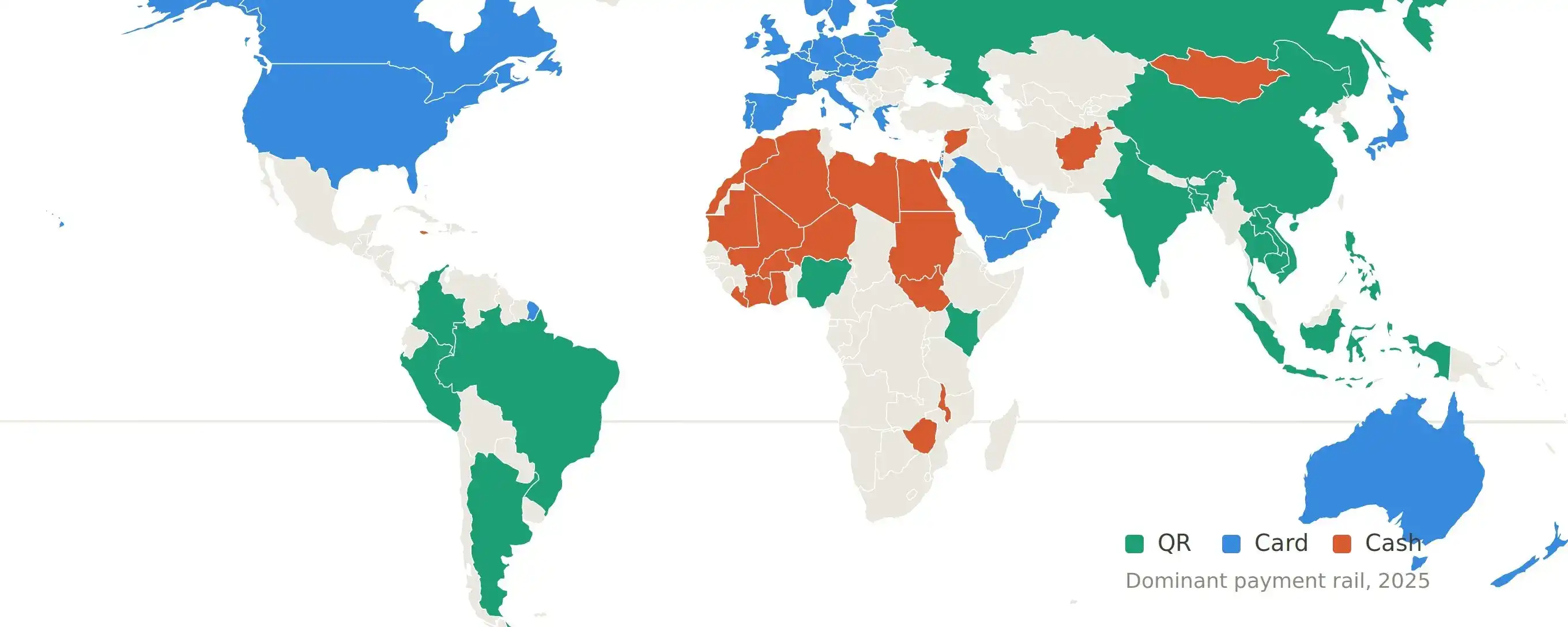
The payment landscape in Latin America is undergoing a fundamental shift, driven by on-the-ground realities that challenge common perceptions. Based on over 500 hours of field research across the region, key insights emerge. Firstly, QR code payments, like Brazil's Pix, are becoming the dominant payment method in most emerging markets, overtaking cards. However, these domestic instant payment systems lack international interoperability, creating a significant gap for cross-border users. Secondly, the narrative around crypto cards is often misunderstood; their primary volume comes from high-net-worth professionals using them for salary conversions (e.g., USDT to local currency via Pix), not retail micro-payments. Competition in payments is shifting from customer acquisition to controlling the settlement layer, leading fintechs to acquire banking licenses for efficiency. Thirdly, treating "Latin America" as a single market is a mistake. Countries like Argentina, Brazil, and Mexico have distinct economic realities, user segments, and regulatory approaches. Brazil alone has at least five distinct user segments with different financial flows. Overlooked markets like Guatemala, Honduras, and El Salvador (the "forgotten five") offer high remittance volumes with lower competitive density. Finally, regulation in Latin America is often ahead of the US, with clearer frameworks for digital assets and a pragmatic approach from regulators focused on safety rather than obstruction. The margin on stablecoin forex is rapidly compressing toward zero, meaning future winners will be those building value-added services on top of the infrastructure, not just the cheapest exchange.

marsbit2 saat önce

The Reality of Payments in Latin America Is Not What You Think

marsbit2 saat önce

İşlemler

Spot
Futures
活动图片