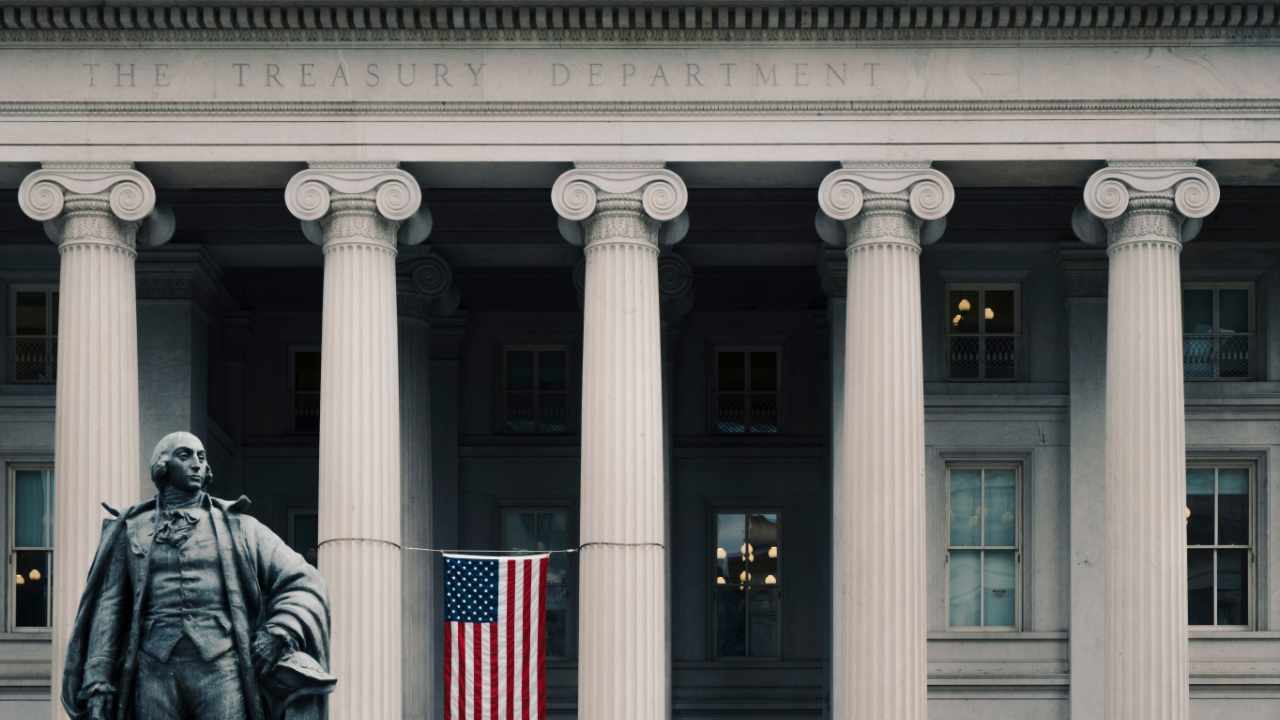
US Treasury Sanctions First Crypto Mixer

newsbtc2022-05-08 tarihinde yayınlandı2022-05-08 tarihinde güncellendi

Özet

The U.S. Department of the Treasury’s Office of Foreign Assets Control (OFAC) has issued its first-ever sanctions on a crypto mixer.

US Treasury Sanctions First Crypto Mixer

The U.S. Department of the Treasury’s Office of Foreign Assets Control (OFAC) has issued its first-ever sanctions on a crypto mixer. The mixing service was used by Lazarus Group to process illicit proceeds from the $620 million crypto heist of the online game Axie Infinity, said the Treasury Department.

Treasury Department Sanctions Crypto Mixer

The U.S. Department of the Treasury’s Office of Foreign Assets Control (OFAC) announced Friday that it has sanctioned crypto mixer Blender.io (Blender). According to the OFAC, this mixing service is used by the Democratic People’s Republic of Korea (DPRK) “to support its malicious cyber activities and money-laundering of stolen virtual currency.”

The announcement explains that on March 23, Lazarus Group, a DPRK state-sponsored cyber hacking group, carried out the largest cryptocurrency heist to date, worth almost $620 million, of a blockchain project linked to the online game Axie Infinity. The OFAC added:

Blender was used in processing over $20.5 million of the illicit proceeds.

The OFAC sanctioned the Lazarus Group on Sept. 13, 2019, and “identified it as an agency, instrumentality, or controlled entity of the government of the DPRK,” the announcement adds. The designation is based on the group’s “relationship to the U.S.- and UN-designated Reconnaissance General Bureau, the DPRK’s premiere intelligence organization.”

Under Secretary of the Treasury for Terrorism and Financial Intelligence Brian E. Nelson commented:

Today, for the first time ever, Treasury is sanctioning a virtual currency mixer.

The investigation by the OFAC also found that Blender facilitated money laundering for Russian-linked malign ransomware groups including Trickbot, Conti, Ryuk, Sodinokibi, and Gandcrab.

The U.S. Treasury Department clarified:

While most virtual currency activity is licit, it can be used for illicit activity, including sanctions evasion, through mixers, peer-to-peer exchangers, darknet markets, and exchanges.

“This includes the facilitation of heists, ransomware schemes, and other cybercrimes,” the Treasury noted.

The announcement details that as a result of the sanctions, all property and interests in property of Blender.io, in the U.S. or in the possession or control of U.S. persons, are blocked and must be reported to the OFAC. Moreover, any entities that are 50% owned or more by one or more blocked persons are also blocked, and all transactions by U.S. persons or within the U.S. involving designated or blocked persons are prohibited.


İlgili Okumalar

Why Is the World Nervous About Japan Raising Interest Rates?

In June 2026, the Bank of Japan raised its policy rate to 1%, marking its first hike to this level since 1995. While this rate remains low compared to global peers like the US and Europe, the move signals a profound shift for a nation that has been a global source of ultra-cheap funding for decades. Japan's long-standing near-zero or negative interest rates had facilitated massive "yen carry trades," where international investors borrowed low-cost yen to invest in higher-yielding assets worldwide, such as US tech stocks and emerging market bonds. This made Japan a critical, often overlooked, source of global liquidity. Japan's ultra-loose policy stemmed from structural challenges post-1990s asset bubble: aging demographics, chronic low inflation/deflation, and high public debt. Recent shifts, including sustained wage growth (exceeding 5% in recent years) and inflation consistently above the 2% target, have created a "wage-price spiral" possibility, prompting the policy normalization. The global market's concern lies not in the absolute rate but in the potential unwinding of the yen carry trade. As Japanese borrowing costs rise, the economics of these leveraged global investments change, potentially triggering deleveraging and capital outflows from risk assets. Market anxiety focuses on the end of a thirty-year consensus that Japan would perpetually provide cheap funding. Ultimately, the global impact will depend on the interplay with US monetary policy. While Japan is tightening, the significant interest rate differential with the US remains. The key future dynamic is whether simultaneous Japanese hikes and eventual US rate cuts will narrow this gap, forcing a major recalibration of global capital flows and asset pricing built on an era of abundant, cheap yen liquidity.

marsbit2 saat önce

Why Is the World Nervous About Japan Raising Interest Rates?

marsbit2 saat önce

Research Report Analysis: MRVL's Optical AI Booming, Why High Valuation Keeps Morgan Stanley's Star Analyst Sidelined?

Report Recap: MRVL Optical AI Boom - Why High Valuation Led Morgan Stanley's Star Analyst to Stay Neutral? Morgan Stanley analyst Joseph Moore maintained an "Equal-weight" (Neutral) rating on Marvell Technology (MRVL) on May 28, raising the price target from $172 to $195, below the trading price. This stance comes despite Marvell reporting a record quarter and significantly raising its full-year outlook (FY27 revenue ~$11.5B, up ~40%). Moore's neutral view is based on valuation. The $195 target implies ~40x CY2027 P/E. He contrasts MRVL with NVDA: both trade near ~$200, but Nvidia's forward EPS is more than double Marvell's. For MRVL's valuation to hold, it needs consistent earnings upgrades, proof of networking market share gains, or certainty on large-scale custom AI chip shipments—none of which are confirmed yet. Growth is driven by two pillars: **1) Optical Interconnect** (the faster runner): Moore raised FY27 growth expectations to >70%, with the optical module product line nearing a $1B annualized run rate. **2) Custom AI Chips** (the climber): Confidence in FY28 is growing, but a major new customer project only ramps in FY28, with no current revenue visibility. Key risks are the underperforming Storage, Enterprise, and legacy Networking segments. Moore acknowledges the real AI opportunity but believes the current price already reflects it. For the stock to work from here, investors need to see the optical business hit its targets, custom chips ramp as planned, and a recovery in the weaker business units.

marsbit3 saat önce

Research Report Analysis: MRVL's Optical AI Booming, Why High Valuation Keeps Morgan Stanley's Star Analyst Sidelined?

marsbit3 saat önce

İşlemler

Spot
Futures
活动图片