Huobi Strategy Weekly Report How will the May FOMC meeting affect Bitcoin (Part 1)

Huobi Research2022-05-05 tarihinde yayınlandı2022-05-05 tarihinde güncellendi

Özet

Fed expected to raise interest rates aggressively; global capital market in turmoil Since April, the performance of the global capital market has not been satisfactory.

I. Fed expected to raise interest rates aggressively; global capital market in turmoil

Since April, the performance of the global capital market has not been satisfactory. Be it the S&P 500, Nasdaq 100 or Bitcoin, there has been a certain degree of decline observed. Bitcoin fell from a high of US$48,000 to a low of US$38,000, with a drop of more than 17%. On the other hand, the U.S. dollar continues to show strength, and has now risen above 103.00, hittinga five-year high.
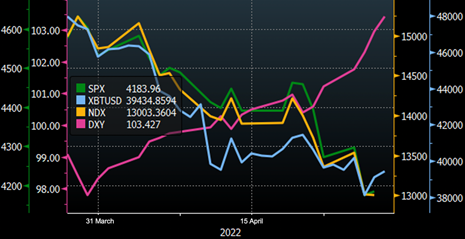
(Figure 1. S&P 500,NDX、BTC, and US Dollar Index trend in 1 month, Source: Bloomberg)

In addition, compared with the decline of the capital market, a more dangerous sign is the emergence of the Inverted Yield Curve, wherethe two-year/ten-year yield curve spread inverted in the last week of March. The Inverted Yield Curve refers to the condition when the two-year treasury yield tops the ten-year rate. In general, the longer the bond's maturity, the higher its yield. When the yield inversion occurs, it often signals that the market is pessimistic about long-term economic development.

In the past 30 years, the two-year and ten-year U.S. treasury yield curves have inverted five times, which occurred in 1989, 1998, 2000, 2006, and 2019 respectively. These five inversions correspond to five famous crises-the 1990 Savings and Loan Crisis, the 1998 Asian financial crisis , the 2000 Nasdaq Dot-com bubble crisis, the 2008 global financial crisis, and the 2020 COVID-19 economic recession.

While the yield curve inversion remains a controversial measurement , it is still one of the most popular economic recession predictors in the market. The yield curve inversion at the end of March raises concern about whether the global economy will go into recession in the future.
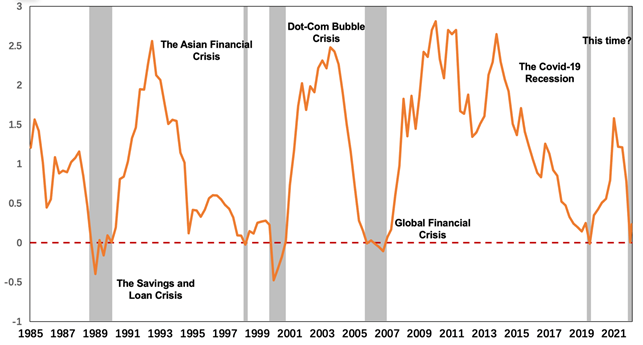
(Figure 2. US Treasury yield curve inversion and recession, Source: Bloomberg)

In a volatile capital market,, the reason of a recession intensifying is that the market is expecting the Fed to raise interest rates more aggressively. Before reviewing the reasons for the changes in the Fed's monetary policy, we need to understand the Fed's monetary policy decision-making framework — the Taylor Rule. Taylor's rule is expressed as follows:

where 〖FFR〗_t is the nominal fed funds rate, 〖r_t〗^* is the real federal funds rate, 〖π_t〗^* is the target inflation rate, 〖〖(π-π〗_t〗^*) is the inflation gap, y is the unemployment rate, 〖y_t〗^* is the natural unemployment rate, 〖〖(y-y〗_t〗^*) is the unemployment gap. The coefficients, a (positive value) and b (negative value), refers to the responsiveness of the nominal fed funds rate in respect to the two types of gaps. This formula demonstrates that when the inflation rate is above the target value, the central bank should implement a tight monetary policy. If the unemployment rate is above the natural rate of unemployment, it should implement a loose monetary policy.

Since 2012, the Federal Reserve has maintained a relatively stable long-term goal for eight years. It consistently holds the inflation rate target of 2% in the long run and reduces its forecast for the long-term natural unemployment rate annually according to the structure and changes of the labor market. In August 2020, the Federal Reserve initially proposed the concept of an average inflation rate. While emphasizing the long-term inflation expectation of 2%, it allowed an inflation rate moderately higher than 2% during a period of time. Therefore, Fed’s tolerance for short-term high inflation has increased. Even so, , the U.S. CPI has repeatedly hit record highs since the second half of 2021. The CPI in March increased by 8.5% year-on-year, which can no longer be explained by "transitory inflation". On the other hand, the employment market in the U.Scontinues to improve, and the unemployment rate is also gradually declining. The current unemployment rate is 3.8%, returning to pre-pandemic levels.
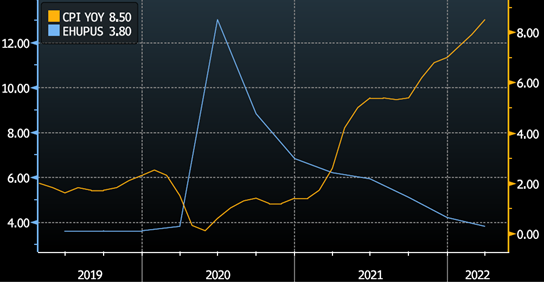
(Figure 3. Changes of the U.S. CPI and unemployment rate, Source: Bloomberg)

In this case, the Fed's monetary policy trend has been determined. The clues can also be found from the Fed's meeting statements in January and March. The Fed has not yet clearly raised interest rates in January, and the measures are relatively modest when it comes to two key indicators of "employment" and "inflation." However, the wording on "employment" and "inflation" in March statement was more intense, with an explicit increase of interest rate by 25bps and a hint to start a balance sheet reduction.

Table 1. Comparison between FOMC meeting statement in January and March
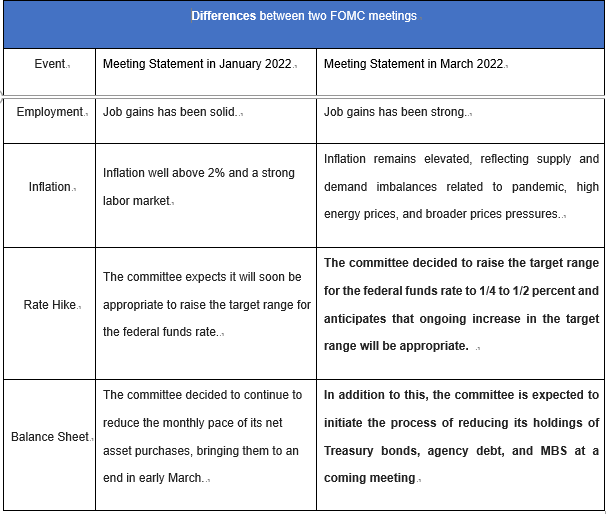
Source:Huobi Research, Bloomberg

II. Highlights of the FOMC meeting in May

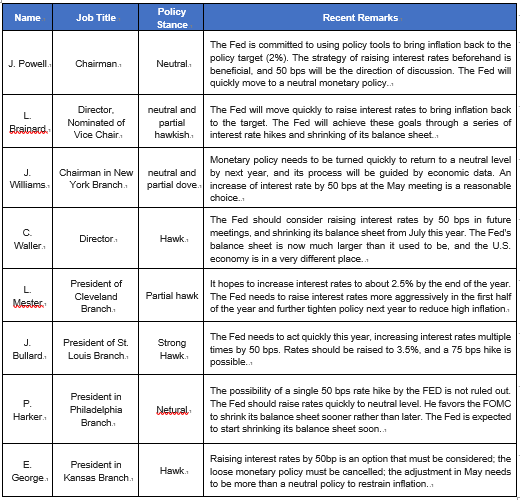
From the decision-making framework of the Taylor Rule, we know that further rate hikes in the May FOMC meeting are being determined. So, is the May FOMC meeting still worth paying attention to? We look at the recent public statements of Fed executives. According to the arrangement of the table below, we can see that the keywords frequently mentioned by Fed officials are "50BP" and "shrinking balance sheet". These two keywords are also the main highlights of the May FOMC:

 Will the Fed increase interest rate by more than 50 bps?

 Will the Fed start to shrink its balance sheet? What is the path and scale of the reduced balance sheet?

Table 2. The Fed’s senior officials' policy stance and recent remarks
Source: Huobi Research

Guided by the intensive speeches of Fed officials, a 50bp rate hike in May seems to be a certainty, and there are many views that the Fed will hit a combination of "50bp rate hike + balance sheet reduction" in May. In this paper, , we will analyze the impact of a 50BP hike.

Looking back at history, it is not common for the Federal Reserve to raise interest rates by 50bp in a single meeting. In the past 20 years, there have been five interest rate hikes equal to or more than 50, mainly in the two rounds of interest rate hike cycles from February 1994 to February 1995 and June 1999 to May 2000. May 1994 (3.75% to 4.25%), August 1994 (4.25% to 4.75%), November 1994 (4.75% to 5.5%), January 1995 (5.5% to 6%) and May 2000 (6% to 6.5%).

Interestingly, the two 50BP hikes in 1994 and 2000 produced different policy effects. The rate hike in 1994 was exceptionally successful and achieved a "soft landing" of the U.S. economy. The economy continued to grow strongly, and to a certain extent created the economic glory of the 1990s in the U.S. This rate hike was also praised as the "Greenspan Moment." ". However, the rate hike in 2000 was an unsuccessful one —I t directly punctured the tech bubble in the U.Ss and triggered the 2001 recession. At this critical moment of the impending FOMC interest rate hike in May, we review the two interest rate hikes in 1994 and 2000, and make a forecast analysis of this round of interest rate hike.
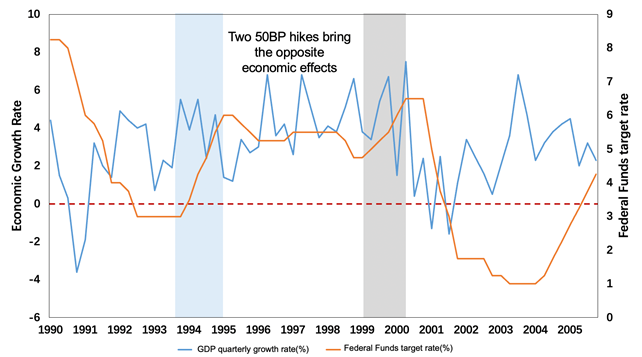
(Figure 5. Economic effects of two 50BP hikes in 1994 and 2000, source: Bloomberg)

(1)Interest rate hike cycle in 1994 (1994.2-1995.2)

After the recession in the early 1990s, the U.S. economy began to recover in 1993, and the quarterly growth rate of the U.S. GDP in Q1 1994 reached 3.4%. It is worth noting that although the U.S economy as a whole is in the process of recovery, ithas not yet shown the characteristics of overheating in 1994.

From the perspective of inflation data, the CPI rose by 2.5% year-on-year in the first quarter of 1994, which was better than the data during the recession in 1991. However, it was still lower than the level before the recession. In addition, the year-on-year CPI growth rate fluctuated in the range of 2.5%-3.2% as a whole, and there was no obvious upward trend. From the unemployment rate data, the unemployment rate reached 6.6% in the first quarter of 1994. It was still at a high level, but the labor market has recovered significantly compared to 1991.

From the above data, it can be seen that when the Federal Reserve started raising interest rates in 1994, the economy had not yet overheated, so in essence, this interest rate hike was a "pre-emptive" precautionary interest rate hike. The Federal Reserve raised interest rates by 25bp in April 1994, and raised interest rates by 50bp in the subsequent interest rate meeting. In November, it raised interest rates by 75bp, and stopped in February 1995. On hindsight, the rate hike was very successful. Themonetary policy smoothed the economic cycle and the economy achieved a "soft landing". The U.S economy maintained a growth rate of 4%-6%, which was very rare in developed countries. On the other hand, the U.S. stock market remained buoyant during the rate hike, with the S&P 500 rising..
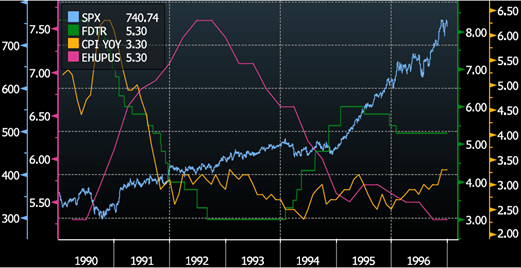
(Figure 6. The 1994 rate hike cycle, Source: Bloomberg)

Of course, the success of raising interest rates in 1994, in addition to Greenspan's "flexible and precise" manipulation, was also inseparable from the stability of the external environment. At that time, the Cold War had just ended. Following the wave of globalization in the 1910s, major countries reached multilateral trade agreements. The countries of the former socialist camp have started economic market-oriented reforms one after another. Internet technology began to develop rapidly, high-tech companies were established one after another, and the global economy was thriving. It is precisely with the stability of the external environment that the U.S economy showed huge potential for growth, which supported the adjustment of monetary policy.

(2)Interest rate hike cycle in 1999 (1999.6-2000.5)

In 1998, the Federal Reserve cut interest rates by 75BP in response to the Asian financial crisis. With low interest rates and the Internet boom at the time, the U.S. economy remained prosperous. Although the U.S. CPI in the second quarter of 1999 only increased by 2% year-on-year, which was at a normal level, the stock market was overheated, especially where technology stocks were wildly sought after by the market,. In view of the above situation, the Federal Reserve raised interest rates by 25BP five times between June 1999 and March 2000, but the CPI and the stock market remained high, and the economy did not cool down. To this end, the Federal Reserve decided to raise interest rates by 50BP to 6.5% in May 2000.

However, this move bursted the Internet bubble. Nearly half a month after raising interest rates by 50BP, U.S. stocks fell by 5% and entered a bear market. Then the U.S. economy entered a recession and unemployment was high. In order to save the economy, the Federal Reserve began an emergency rate cut six months after announcing a 50BP hike. By 2003, the federal funds target rate had fallen to 1%. Although it saved the U.S economy to a certain extent, it also paved the way for the crisis. Low interest rates led to an increase in the scale of housing loans, which became one of the triggers for the subprime mortgage crisis in 2008.
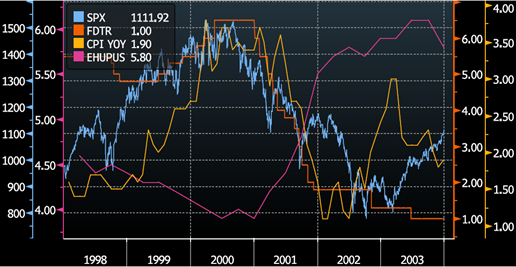
(Figure 7. The 1999 rate hike cycle, Source: Bloomberg)

(3)What is the impact of this 50BP hike?

As mentioned earlier, the 50BP interest rate hike in 1994 was successful for two main reasons: one was a precautionary advance rate hike, and the other was a stable external environment. The failure of the 50BP interest rate hike in 2000 was mainly due to the fact that the U.S. stock market was already volatile at that time, and the 9/11 incident in 2001 shook the security and market confidence of the U.S.

Compared to 1994 and 2000, the macroeconomic backdrop in 2022 is volatile and highly uncertain.

Since the outbreak of COVID-19 in 2020, the Omicron virus has spread significantly.. Although many countries have eased community and mobility restrictions, China is still imposing large-scale lockdowns as part of its Zero-Covid strategy. This weakened consumer confidence.

In addition, the Russian-Ukrainian war directly affected the supply of oil and natural gas to a large extent, resulting in rising energy costs. Global energy demand has increased and energy prices have risen. At the same time, commodity prices continued to climb. Among the 22 major commodities, nine have seen their prices rise by more than 50% — coffee rose by 91%, cotton rose by 58%, and aluminium rose by 53%. In November 2021, the U.S. inflation rate reached 6.8%,=. At this time, the rate hike is no longer a precautionary rate hike, which happened in 1994. The impact of the COVID-19 and the Russian-Ukrainian war has amplified the uncertainties of the stock market. will The expected effect of this hike will not reach the heights similar to the one in 1994.
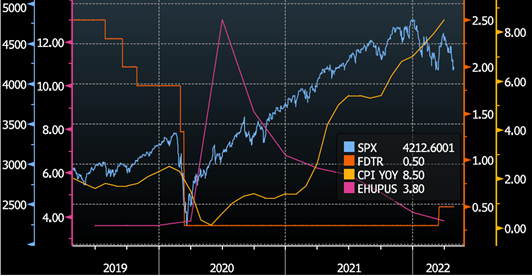
(Figure 8. The 2022 rate hike cycle, Source: Bloomberg)

III. The impact of interest rate hikes on the cryptocurrency market

Generally speaking, monetary policy has a certain external time lag, that is, there is a certain time interval from when the monetary authority takes action until it has an impact on the policy objective.

According to the statistics of some scholars, it takes an average of nine to 10 months from the change of money supply to the change of economic growth rate or price. For example, the central bank implemented an accommodative monetary policy in March 2020, but the CPI did not start to rise until February 2021.
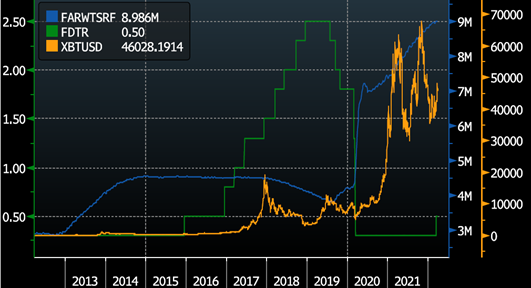
(Figure 9. Bitcoin price trend in the last rate hike cycle, source: Bloomberg)

Judging from the actual situation of the cryptocurrency market, , cryptocurrencies were not affected after the Federal Reserve started raising interest rates in December 2015. Instead, they ushered in a big bull market in 2017. It did not plummet and entered a bear market until nearly a year after the rate hike began (November 2017). Therefore, it is expected that in the six months to one year after the rate hike in March, the effect of the implementation of monetary policy will begin to showin the market.

About Huobi Research Institute

Huobi Blockchain Application Research Institute (referred to as "Huobi Research Institute") was established in April 2016. Since March 2018, it has been committed to comprehensively expanding the research and exploration of various fields of blockchain. As the research object, the research goal is to accelerate the research and development of blockchain technology, promote the application of blockchain industry, and promote the ecological optimization of the blockchain industry. The main research content includes industry trends, technology paths, application innovations in the blockchain field, Model exploration, etc. Based on the principles of public welfare, rigor and innovation, Huobi Research Institute will carry out extensive and in-depth cooperation with governments, enterprises, universities and other institutions through various forms to build a research platform covering the complete industrial chain of the blockchain. Industry professionals provide a solid theoretical basis and trend judgments to promote the healthy and sustainable development of the entire blockchain industry.

Official website:

https://research.huobi.com/

Consulting email:

research@huobi.com

Twitter: @Huobi_Research

https://twitter.com/Huobi_Research

Medium: Huobi Research

https://medium.com/huobi-research

Disclaimer

1. The author of this report and his organization do not have any relationship that affects the objectivity, independence, and fairness of the report with other third parties involved in this report.

2. The information and data cited in this report are from compliance channels. The sources of the information and data are considered reliable by the author, and necessary verifications have been made for their authenticity, accuracy and completeness, but the author makes no guarantee for their authenticity, accuracy or completeness.

3. The content of the report is for reference only, and the facts and opinions in the report do not constitute business, investment and other related recommendations. The author does not assume any responsibility for the losses caused by the use of the contents of this report, unless clearly stipulated by laws and regulations. Readers should not only make business and investment decisions based on this report, nor should they lose their ability to make independent judgments based on this report.

4. The information, opinions and inferences contained in this report only reflect the judgments of the researchers on the date of finalizing this report. In the future, based on industry changes and data and information updates, there is the possibility of updates of opinions and judgments.

5. The copyright of this report is only owned by Huobi Blockchain Research Institute. If you need to quote the content of this report, please indicate the source. If you need a large amount of reference, please inform in advance (see "About Huobi Blockchain Research Institute" for contact information), and use it within the allowed scope. Under no circumstances shall this report be quoted, deleted or modified contrary to the original intent.


İlgili Okumalar

The Value Distribution of Stablecoins

**Summary: The Value Distribution of Stablecoins** The article argues that stablecoins are evolving from mere trading tools into broader channels for dollar access. It divides the stablecoin ecosystem into four layers to analyze how value is distributed: 1. **Issuance Layer:** Mints stablecoins, holds reserve assets, and captures the spread between reserve yield and user costs (e.g., Tether, Circle). This layer currently earns the largest profit margin. 2. **Infrastructure Layer:** Connects stablecoins to the traditional financial system, handling fiat on/off-ramps, banking integration, compliance (KYC/AML), and asset management (e.g., Bridge, BVNK). This is the "unglamorous" but critical work, building the essential bridges between crypto and real-world finance. 3. **Acquiring/Distribution Layer:** Integrates stablecoins into merchant systems, manages payment flows, and provides enterprise financial software (e.g., Stripe, Coinbase). They act as the access point for businesses. 4. **Application Layer:** The end-users and businesses that ultimately use stablecoins for payments, settlements, or as a store of value. They benefit from convenience but have little pricing power. The core thesis is that while the issuance layer currently dominates profits, the often-overlooked **infrastructure layer holds significant long-term potential**. The real challenge and barrier to mass adoption is not the on-chain transfer of stablecoins (which is simple), but the complex "last mile" integration into existing business workflows, banking systems, and regulatory frameworks across different countries. Companies in this layer are currently in a "land grab" phase, investing heavily to build networks, secure bank partnerships, and establish compliance pathways. While their position is currently pressured by the profitable issuers above and distribution platforms below, the article suggests that if stablecoins become a default financial rail for businesses, the infrastructure providers who have done the hard work of integration will ultimately gain strong pricing power and become entrenched, essential players.

marsbit17 dk önce

The Value Distribution of Stablecoins

marsbit17 dk önce

The Value Distribution of Stablecoins

The Value Distribution of Stablecoins The article argues that stablecoins are evolving from a mere trading tool into a broad "dollar channel." It analyzes the industry's value chain through four layers: 1. **Issuance Layer (e.g., Tether, Circle):** The top layer that mints stablecoins, holds reserve assets, and captures the thickest interest rate spread. 2. **Infrastructure Layer (e.g., Bridge, BVNK):** Connects stablecoins to the traditional financial system, handling critical but complex "dirty work" like fiat on/off-ramps, banking integration, compliance (KYC/AML), and cross-border settlement. 3. **Acquiring/Distribution Layer (e.g., Stripe, Coinbase):** Embeds stablecoins into merchant systems, manages payment flows, and integrates with enterprise software. 4. **Application Layer:** End-users and businesses that ultimately use stablecoins for payments, settlement, or storing value. The author posits that while the issuance layer currently captures the most profit, the most overlooked and potentially critical layer is infrastructure. The core challenge for stablecoin adoption isn't the on-chain transfer (which is simple), but bridging the gap between blockchain and the real-world financial system. This involves solving practical problems for businesses: fiat conversion, reconciliation, tax handling, and user onboarding. Infrastructure companies are currently in a difficult "land-grab" phase—building networks, securing banking relationships, and achieving compliance country-by-country. They face pressure from both the profitable issuance layer above and distribution platforms below. However, the author suggests this layer is building a crucial moat. Once stablecoins become a default business rail, the infrastructure players who have done the hard work of integration may gain significant, durable value and pricing power.

链捕手21 dk önce

The Value Distribution of Stablecoins

链捕手21 dk önce

How to Do Research Well: Deliberately Practice the Real Skills That Matter

No one truly teaches you how to do research. You're often given a desk, a pre-selected problem, and vague instructions to "create something new." Consequently, many people reverse-engineer the job based on visible outputs—papers, posts, announcements—learning only how to *appear* like a researcher rather than how to *become* one. True research capability is built from stacking small, trainable skills, nearly all of which can be developed through deliberate practice. **Pick Your Own Problem:** Most researchers absorb problems from advisors or trends, lacking the underlying reasoning. Choosing a problem you genuinely care about, as John Schulman advises, leads to original work. Develop "taste" like a muscle: predict experiment outcomes, guess paper results from methods, and track which findings remain important over time. **Upgrade Your Inputs:** Relying on shared reading lists (arXiv hot lists, filtered group chats) leads to unoriginal conclusions. Undervalued old literature often holds crucial insights (e.g., MoE, LSTM, backpropagation). Richard Sutton's "The Bitter Lesson" or Claude Shannon's 1952 talk on creative thinking are more predictive than lengthy modern surveys. Breadth matters as much as depth: draw from neuroscience, mechanism design, hardware knowledge, and honest statistics. Read papers directly, especially appendices and limitations sections. **Write Everything Down:** As Paul Graham noted, writing exposes flaws in seemingly mature ideas. Writing is the cheapest defense against self-deception. Following Feynman's principle, Darwin programmatically wrote down facts contradicting his theory to combat memory bias. Maintain a detailed log of hypotheses, setups, predictions, results, and updated understandings. Reviewing past logs fosters essential humility.

marsbit2 saat önce

How to Do Research Well: Deliberately Practice the Real Skills That Matter

marsbit2 saat önce

İşlemler

Spot
Futures

Popüler Makaleler

BITCOIN Nedir

HarryPotterObamaSonic10Inu (ERC-20)'yu ve Kripto Alanındaki Yerini Anlamak Son yıllarda, kripto para piyasası, hem ticaret yapanların hem de topluluk etkileşimi ve eğlence değeri arayanların ilgisini çeken meme coin'lerin popülaritesinde bir artış gördü. Bu benzersiz token'lar arasında, kripto para dokusuna kültürel referansları harmanlayan ilginç bir proje olan HarryPotterObamaSonic10Inu (ERC-20) bulunmaktadır. Bu makale, HarryPotterObamaSonic10Inu'nun temel yönlerini, mekanizmalarını, topluluk odaklı ethosunu ve daha geniş kripto manzarasıyla etkileşimini incelemektedir. HarryPotterObamaSonic10Inu (ERC-20) Nedir? Adından da anlaşılacağı gibi, HarryPotterObamaSonic10Inu, Ethereum blok zinciri üzerinde inşa edilen bir meme coin'dir ve ERC-20 standardı altında sınıflandırılmaktadır. Geleneksel kripto paraların pratik kullanılabilirlik veya yatırım potansiyeline odaklandığı durumların aksine, bu token eğlence değeri ve topluluğunun gücü üzerine kuruludur. Proje, bağlı kullanıcıların bir araya gelebileceği, fikirlerini paylaşabileceği ve çeşitli kültürel fenomenlerden ilham alan etkinliklere katılabileceği bir ortam yaratmayı hedeflemektedir. HarryPotterObamaSonic10Inu'nun dikkate değer özelliklerinden biri işlemlerde sıfır vergi olmasıdır. Bu çekici unsur, küçük ölçekli yatırımcıları caydırabilecek ek ücretlerden yoksun olarak ticareti ve topluluk katılımını teşvik etmeyi amaçlamaktadır. Coin'in toplam arzı bir milyar token olarak belirlenmiştir; bu, topluluk içinde önemli bir dolaşım sağlama niyetini göstermektedir. HarryPotterObamaSonic10Inu (ERC-20) Yaratıcısı HarryPotterObamaSonic10Inu'nun kökenleri bir miktar gizemlidir; yaratıcısı hakkında spesifik bilgilerin ne olduğu bilinmemektedir. Bu token'ın geliştirilmesi, belirli bir ekip veya açık bir plan eksikliği ile gerçekleşmiştir; bu durum, meme coin sektöründe oldukça yaygındır. Proje, topluluğunun heyecanı ve katılımına dayalı olarak organik bir şekilde ortaya çıkmıştır. HarryPotterObamaSonic10Inu (ERC-20) Yatırımcıları Dış yatırımlar ve destekler söz konusu olduğunda, HarryPotterObamaSonic10Inu da belirsiz kalmaktadır. Token, bilinen herhangi bir yatırım fonunu veya önemli bir kurumsal desteği listelememektedir. Bunun yerine, projenin can damarı, kolektif eylem ve kripto alanındaki katılım yoluyla büyüme ve sürdürülebilirlik sağlayan temel topluluğudur. HarryPotterObamaSonic10Inu (ERC-20) Nasıl Çalışır? Bir meme coin olarak, HarryPotterObamaSonic10Inu, genellikle varlık değerini yöneten geleneksel çerçevelerin dışında çalışmaktadır. Projenin nasıl çalıştığını tanımlayan birkaç özelliği vardır: Sıfır Vergi İşlemleri: İşlemlerde vergi ücreti olmadan, kullanıcılar gizli maliyet endişesi olmadan token'ı serbestçe alıp satabilirler. Topluluk Etkileşimi: Proje, topluluk etkileşimi üzerine kuruludur ve sosyal medya platformlarını kullanarak heyecan yaratarak katılımı kolaylaştırır. Tartışmalar, içerik paylaşımı ve katılım, projenin erişimini genişletmeye ve destekleyiciler arasında sadakat oluşturmaya yardımcı olan kritik unsurlardır. Pratik Kullanılabilirlik Yok: HarryPotterObamaSonic10Inu'nun mali ekosistem içinde somut bir kullanılabilirlik sunmadığı belirtilmelidir. Daha ziyade, eğlence ve topluluk etkinlikleri için bir token olarak sınıflandırılmaktadır. Kültürel Referans: Token, popüler kültürden unsurları zekice harmanlayarak ilgi çekmektedir ve hem meme meraklıları hem de kripto takipçileriyle bağlantı kurmaktadır. HarryPotterObamaSonic10Inu, meme coin'lerin, daha geleneksel kripto para projelerinden nasıl farklı çalıştığını örneklendirmektedir; bu projeler, utilitarist varlıklar yerine yenilikçi sosyal yapıların bir parçası olarak piyasaya girmektedir. HarryPotterObamaSonic10Inu (ERC-20) Zaman Çizelgesi HarryPotterObamaSonic10Inu'nun tarihi, birkaç dikkate değer kilometre taşı ile işaretlenmiştir: Oluşum: Token, birçok kripto meraklısının hayal gücünü yakalayan bir viral meme'den ortaya çıkmıştır. Spesifik yaratım tarihleri mevcut değildir ve bu onun organik yükselişini vurgulamaktadır. Borsa Listelemeleri: HarryPotterObamaSonic10Inu, topluluğun daha kolay erişim ve ticaret yapabilmesini sağlamak için çeşitli borsalarda yer bulmuştur. Topluluk Katılım İnisiyatifleri: Yarışmalar, sosyal medya kampanyaları ve hayranlar ile destekçilerden içerik üretimini içeren topluluk etkileşimini artırmayı amaçlayan devam eden etkinlikler. Gelecek Genişleme Planları: Projenin yol haritası, kültürel temalarına ilişkin bir NFT koleksiyonu, ticari ürünler ve bir e-ticaret sitesi başlatılmasını içermektedir; bu da topluluğun daha fazla katılımını sağlamayı ve ekosistemine daha fazla boyut kazandırmayı hedeflemektedir. HarryPotterObamaSonic10Inu (ERC-20) Hakkında Kilit Noktalar Topluluk Odaklı Doğası: Proje, kullanıcı katılımını geliştirme önceliği taşır ve böylece kullanıcıların sürecin en önünde yer almasını sağlar. Meme Coin Sınıflandırması: Eğlenceye dayalı kripto paranın doruk noktasıdır ve geleneksel yatırım araçlarından ayrılmaktadır. Bitcoin ile Doğrudan İlişki Yok: Ticker ismindeki benzeliğe rağmen, HarryPotterObamaSonic10Inu ayırt edicidir ve Bitcoin veya diğer yerleşik kripto paralarla herhangi bir ilişkisi yoktur. İşbirliğine Odaklanma: HarryPotterObamaSonic10Inu, sahipleri arasında işbirliği ve hikaye paylaşımı için bir alan oluşturmak üzere tasarlanmıştır ve bu da yaratıcılık ve topluluk bağlarını sağlamaktadır. Gelecek Beklentileri: Başlangıçta belirlendiği temalardan NFTs ve ticari ürünlere genişleme arzusu, projenin dijital kültürde daha ana akıma girebilmesi için bir yol haritası çizmektedir. Meme coin'ler, kripto para topluluğunun hayal gücünü çalmaya devam ederken, HarryPotterObamaSonic10Inu (ERC-20), kültürel bağları ve topluluk merkezli yaklaşımıyla öne çıkmaktadır. Geleneksel bir hizmet odaklı token modeliyle uyumlu olmasa da, özünde destekçileri arasında sağlanan neşe ve dostluğu vurgulayarak, giderek dijitalleşen bir çağda kripto paraların evrilen doğasını göstermektedir. Proje gelişmeye devam ettikçe, topluluk dinamiklerinin blockchain teknolojisi dünyasındaki seyrini nasıl etkilediğini izlemek önemli olacaktır.

2.0k Toplam GörüntülenmeYayınlanma 2024.04.01Güncellenme 2024.12.03

BITCOIN Nedir

BTC Nasıl Satın Alınır

HTX.com’a hoş geldiniz! Bitcoin (BTC) satın alma işlemlerini basit ve kullanışlı bir hâle getirdik. Adım adım açıkladığımız rehberimizi takip ederek kripto yolculuğunuza başlayın. 1. Adım: HTX Hesabınızı OluşturunHTX'te ücretsiz bir hesap açmak için e-posta adresinizi veya telefon numaranızı kullanın. Sorunsuzca kaydolun ve tüm özelliklerin kilidini açın. Hesabımı Aç2. Adım: Kripto Satın Al Bölümüne Gidin ve Ödeme Yönteminizi SeçinKredi/Banka Kartı: Visa veya Mastercard'ınızı kullanarak anında Bitcoin (BTC) satın alın.Bakiye: Sorunsuz bir şekilde işlem yapmak için HTX hesap bakiyenizdeki fonları kullanın.Üçüncü Taraflar: Kullanımı kolaylaştırmak için Google Pay ve Apple Pay gibi popüler ödeme yöntemlerini ekledik.P2P: HTX'teki diğer kullanıcılarla doğrudan işlem yapın.Borsa Dışı (OTC): Yatırımcılar için kişiye özel hizmetler ve rekabetçi döviz kurları sunuyoruz.3. Adım: Bitcoin (BTC) Varlıklarınızı SaklayınBitcoin (BTC) satın aldıktan sonra HTX hesabınızda saklayın. Alternatif olarak, blok zinciri transferi yoluyla başka bir yere gönderebilir veya diğer kripto para birimlerini takas etmek için kullanabilirsiniz.4. Adım: Bitcoin (BTC) Varlıklarınızla İşlem YapınHTX'in spot piyasasında Bitcoin (BTC) ile kolayca işlemler yapın.Hesabınıza erişin, işlem çiftinizi seçin, işlemlerinizi gerçekleştirin ve gerçek zamanlı olarak izleyin. Hem yeni başlayanlar hem de deneyimli yatırımcılar için kullanıcı dostu bir deneyim sunuyoruz.

7.9k Toplam GörüntülenmeYayınlanma 2024.12.12Güncellenme 2026.06.02

BTC Nasıl Satın Alınır

$BITCOIN Nedir

DİJİTAL ALTIN ($BITCOIN): Kapsamlı Bir Analiz DİJİTAL ALTIN ($BITCOIN) Tanıtımı DİJİTAL ALTIN ($BITCOIN), geleneksel değerli metallerin özelliklerini merkeziyetsiz teknolojilerin yeniliği ile birleştirmeyi amaçlayan Solana ağı üzerinde çalışan blockchain tabanlı bir projedir. Bitcoin ile aynı isme sahip olmasına rağmen, genellikle bir değer saklama aracı olarak algılandığı için “dijital altın” olarak anılmaktadır; DİJİTAL ALTIN, Web3 ortamında benzersiz bir ekosistem yaratmak için tasarlanmış ayrı bir tokendir. Hedefi, uygulanabilir bir alternatif dijital varlık olarak kendini konumlandırmaktır, ancak uygulamaları ve işlevleri ile ilgili ayrıntılar hala gelişmektedir. DİJİTAL ALTIN ($BITCOIN) Nedir? DİJİTAL ALTIN ($BITCOIN), Solana blockchain'inde kullanılmak üzere açıkça tasarlanmış bir kripto para tokenidir. Bitcoin'in yaygın olarak tanınan bir değer saklama rolü sağlamasının aksine, bu token daha geniş uygulamalara ve özelliklere odaklanıyor gibi görünmektedir. Dikkate değer yönler şunlardır: Blockchain Altyapısı: Token, yüksek hızlı ve düşük maliyetli işlemleri yönetme kapasitesi ile bilinen Solana blockchain'inde inşa edilmiştir. Arz Dinamikleri: DİJİTAL ALTIN'ın maksimum arzı 100 katrilyon token (100P $BITCOIN) ile sınırlıdır, ancak dolaşımdaki arzı ile ilgili ayrıntılar şu anda açıklanmamıştır. Kullanım Alanı: Kesin işlevler açıkça belirtilmemiş olsa da, token'ın merkeziyetsiz uygulamalar (dApps) veya varlık tokenizasyon stratejileri ile ilgili çeşitli uygulamalar için kullanılabileceğine dair işaretler bulunmaktadır. DİJİTAL ALTIN ($BITCOIN) Yaratıcısı Kimdir? Şu anda, DİJİTAL ALTIN ($BITCOIN) arkasındaki yaratıcıların ve geliştirme ekibinin kimliği bilinmemektedir. Bu durum, merkeziyetsiz finans ve meme coin fenomenleriyle uyumlu olan birçok yenilikçi proje arasında yaygındır. Böyle bir anonimlik, topluluk odaklı bir kültürü teşvik edebilirken, yönetişim ve hesap verebilirlik konusundaki endişeleri artırmaktadır. DİJİTAL ALTIN ($BITCOIN) Yatırımcıları Kimlerdir? Mevcut bilgiler, DİJİTAL ALTIN ($BITCOIN) için bilinen herhangi bir kurumsal destekçi veya önde gelen risk sermayesi yatırımı olmadığını göstermektedir. Proje, geleneksel finansman yolları yerine topluluk desteği ve benimsemeye odaklanan bir eşler arası modelde çalışıyor gibi görünmektedir. Faaliyetleri ve likiditesi esas olarak PumpSwap gibi merkeziyetsiz borsalarda (DEX'ler) yer almakta olup, bu da onun taban hareketine vurgu yapmaktadır. DİJİTAL ALTIN ($BITCOIN) Nasıl Çalışır DİJİTAL ALTIN ($BITCOIN) 'ın operasyonel mekanikleri, blockchain tasarımı ve ağ özellikleri temelinde açıklanabilir: Konsensüs Mekanizması: Solana'nın benzersiz tarih kanıtı (PoH) ile bir hisse kanıtı (PoS) modelini birleştirerek, proje ağın yüksek performansına katkıda bulunan verimli işlem doğrulamasını sağlar. Tokenomik: Belirli deflasyonist mekanizmalar kapsamlı bir şekilde detaylandırılmamış olsa da, geniş maksimum token arzı, henüz tanımlanmamış mikro işlemler veya niş kullanım durumlarına hitap edebileceğini ima etmektedir. Etkileşim: Solana'nın daha geniş ekosistemi ile entegrasyon potansiyeli bulunmaktadır; bu, çeşitli merkeziyetsiz finans (DeFi) platformlarını içermektedir. Ancak, belirli entegrasyonlarla ilgili ayrıntılar belirtilmemiştir. Önemli Olayların Zaman Çizelgesi DİJİTAL ALTIN ($BITCOIN) ile ilgili önemli kilometre taşlarını vurgulayan bir zaman çizelgesi: 2023: Token'ın Solana blockchain'inde ilk dağıtımı, sözleşme adresi ile işaretlenmiştir. 2024: DİJİTAL ALTIN, PumpSwap gibi merkeziyetsiz borsalarda işlem görmeye başladıkça görünürlük kazanır ve kullanıcıların bunu SOL karşısında ticaret yapmasına olanak tanır. 2025: Proje, topluluk odaklı etkileşimlere yönelik potansiyel ilgi ve ara sıra ticaret faaliyetleri görür, ancak şu ana kadar dikkate değer ortaklıklar veya teknik ilerlemeler belgelenmemiştir. Kritik Analiz Güçlü Yönler Ölçeklenebilirlik: Temel Solana altyapısı, yüksek işlem hacimlerini destekleyerek $BITCOIN'in çeşitli işlem senaryolarındaki faydasını artırabilir. Erişilebilirlik: Token başına potansiyel düşük ticaret fiyatı, perakende yatırımcıları çekebilir ve parçalı mülkiyet fırsatları sayesinde daha geniş katılımı kolaylaştırabilir. Riskler Şeffaflık Eksikliği: Kamuya açık olarak bilinen destekçilerin, geliştiricilerin veya bir denetim sürecinin olmaması, projenin sürdürülebilirliği ve güvenilirliği konusunda şüpheler doğurabilir. Piyasa Volatilitesi: Ticaret faaliyeti büyük ölçüde spekülatif davranışa dayanmakta olup, bu da yatırımcılar için önemli fiyat dalgalanmalarına ve belirsizliklere yol açabilir. Sonuç DİJİTAL ALTIN ($BITCOIN), hızla gelişen Solana ekosisteminde ilginç ama belirsiz bir proje olarak ortaya çıkmaktadır. “Dijital altın” anlatısını kullanmaya çalışırken, Bitcoin'in değer saklama rolünden ayrılması, amaçlanan faydasının ve yönetişim yapısının daha net bir şekilde tanımlanması gerekliliğini vurgulamaktadır. Gelecekteki kabul ve benimseme, mevcut belirsizliklerin giderilmesine ve operasyonel ile ekonomik stratejilerinin daha açık bir şekilde tanımlanmasına bağlı olacaktır. Not: Bu rapor, Ekim 2023 itibarıyla mevcut olan sentezlenmiş bilgileri kapsamaktadır ve araştırma döneminin ötesinde gelişmeler yaşanmış olabilir.

92 Toplam GörüntülenmeYayınlanma 2025.05.13Güncellenme 2025.05.13

$BITCOIN Nedir

Tartışmalar

HTX Topluluğuna hoş geldiniz. Burada, en son platform gelişmeleri hakkında bilgi sahibi olabilir ve profesyonel piyasa görüşlerine erişebilirsiniz. Kullanıcıların BTC (BTC) fiyatı hakkındaki görüşleri aşağıda sunulmaktadır.

活动图片