
SignalPlus波动率专栏(20240103):新年伊始,BTC破四万五

Odaily星球日报2024-01-03 tarihinde yayınlandı2024-01-03 tarihinde güncellendi

Özet

数字货币方面,BTC自2022年底以来首次突破45000美元,并一度挑战46000美元关口。期权隐含波动率一度飙升,但随着价格逐渐稳定在45000上方后,IV整体水平有所回落。

SignalPlus波动率专栏(20240103):新年伊始,BTC破四万五

SignalPlus波动率专栏(20240103):新年伊始,BTC破四万五

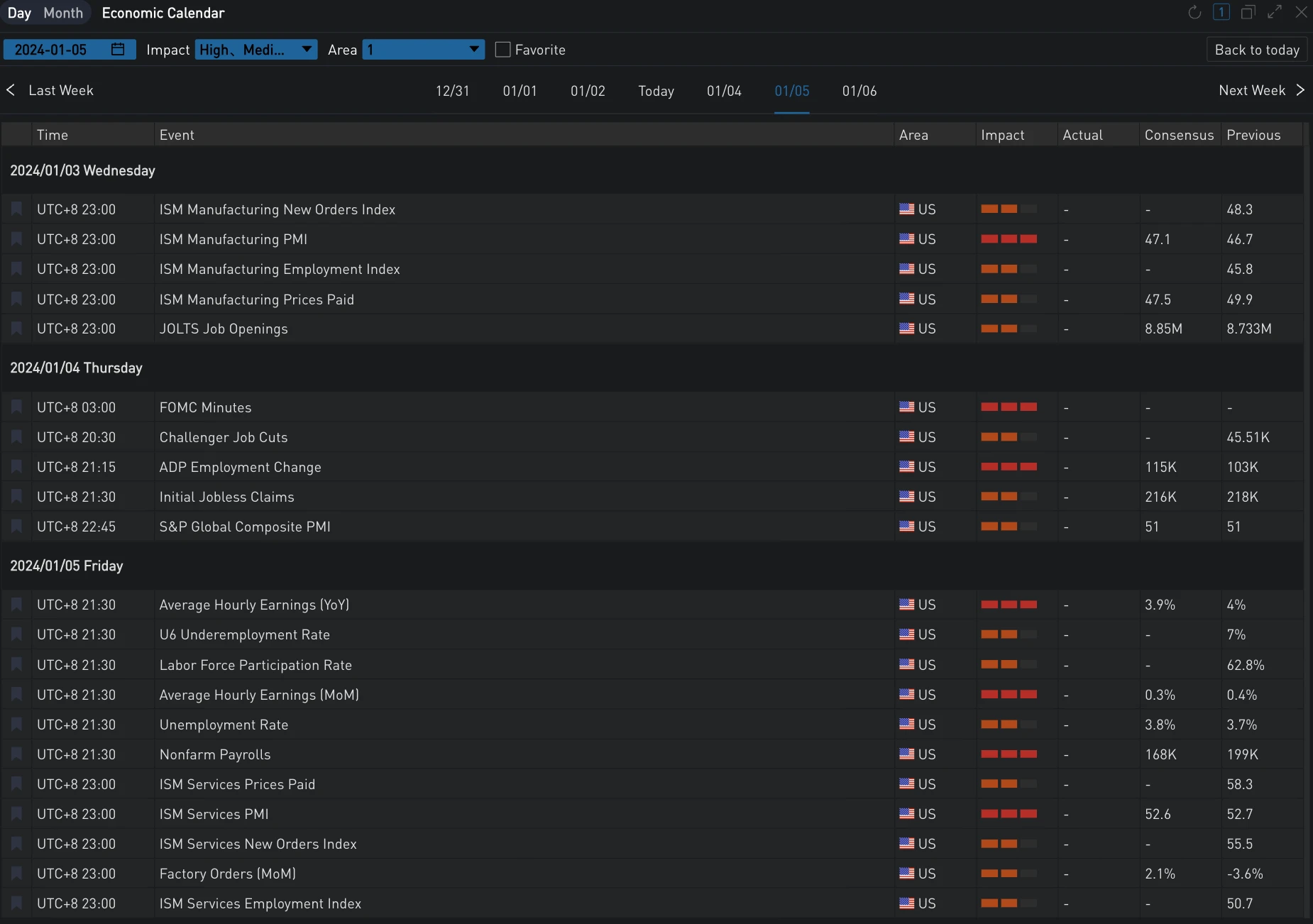
昨日(2 JAN)交易员对美联储降息的信息有所动摇, 3 月开始实施宽松政策的可能性从上周的 85% 降至 75% ,同时减少了对降息幅度的押注,预计今年累计降息幅度不会超过 150 个基点;固定收益市场交易活跃,美债收益率全线上涨,十年期收益率现报 3.976% ,创两周新高,两年期收益率报 4.347% 。美股方面,因遭到巴克莱下调评级的影响,苹果及一众芯片股均出现跌势,加之市场对美联储降息预期的削减,三大股指走势分化,其中道指平收(+ 0.07% ),纳指和标普 500 分别收跌 1.6% /0.57% 。另一方面,美国 12 月 Markit 制造业 PMI 录得 47.9 ,低于预期的 48.4 ,据金十报道,标普全球发文表示:随着美国制造业订单数量以更快的速度下降,产出再次收缩,且制造业就业人数下降速度为 2020 年 6 月来最快。本周将是数据发布相对密集,将包括周三的 ISM,JOLTS,周四的初请失业金人数,以及周五的 ISM 服务业和非农就业数据等。
SignalPlus波动率专栏(20240103):新年伊始,BTC破四万五

Source: SignalPlus, Economic Calendar

SignalPlus波动率专栏(20240103):新年伊始,BTC破四万五

Source: Binance & TradingView

数字货币方面,BTC 自 2022 年底以来首次突破 45000 美元,并一度挑战 46000 美元关口。期权隐含波动率一度飙升,但随着价格逐渐稳定在 45000 上方后,IV 整体水平有所回落,BTC 前端出现大量以 Short Straddle/Strangle 为代表的大宗看跌波动率策略;另一方面,IV Surface 在 12 JAN 24 处形成较为陡峭的坡面,表达出市场对 ETF 批准的期待。在交易上, 3 月 vs 6 月的看涨(三角)价差策略成为焦点,其中 BTC 上以卖 29 MAR 24-60000-C 买 28 JUN 24-70000-C 为代表,单腿数量超过 1000 BTC;ETH 的成交方向在期限上相反,主要是在三月买入,六月卖出。

SignalPlus波动率专栏(20240103):新年伊始,BTC破四万五

Source: Deribit (截至 3 JAN 16: 00 UTC+ 8)

SignalPlus波动率专栏(20240103):新年伊始,BTC破四万五

Source: SignalPlus

SignalPlus波动率专栏(20240103):新年伊始,BTC破四万五

Source: SignalPlus

SignalPlus波动率专栏(20240103):新年伊始,BTC破四万五

Source: Deribit Block Trade

SignalPlus波动率专栏(20240103):新年伊始,BTC破四万五

Source: Deribit Block Trade

SignalPlus波动率专栏(20240103):新年伊始,BTC破四万五

您可在 ChatGPT 4.0 的 Plugin Store 搜索 SignalPlus ,获取实时加密资讯。如果想即时收到我们的更新,欢迎关注我们的推特账号@SignalPlus_Web3 ,或者加入我们的微信群(添加小助手微信:xdengalin)、Telegram 群以及 Discord 社群,和更多朋友一起交流互动。

SignalPlus Official Website:https://www.signalplus.com

İlgili Okumalar

Why Is the World Nervous About Japan Raising Interest Rates?

In June 2026, the Bank of Japan raised its policy rate to 1%, marking its first hike to this level since 1995. While this rate remains low compared to global peers like the US and Europe, the move signals a profound shift for a nation that has been a global source of ultra-cheap funding for decades. Japan's long-standing near-zero or negative interest rates had facilitated massive "yen carry trades," where international investors borrowed low-cost yen to invest in higher-yielding assets worldwide, such as US tech stocks and emerging market bonds. This made Japan a critical, often overlooked, source of global liquidity. Japan's ultra-loose policy stemmed from structural challenges post-1990s asset bubble: aging demographics, chronic low inflation/deflation, and high public debt. Recent shifts, including sustained wage growth (exceeding 5% in recent years) and inflation consistently above the 2% target, have created a "wage-price spiral" possibility, prompting the policy normalization. The global market's concern lies not in the absolute rate but in the potential unwinding of the yen carry trade. As Japanese borrowing costs rise, the economics of these leveraged global investments change, potentially triggering deleveraging and capital outflows from risk assets. Market anxiety focuses on the end of a thirty-year consensus that Japan would perpetually provide cheap funding. Ultimately, the global impact will depend on the interplay with US monetary policy. While Japan is tightening, the significant interest rate differential with the US remains. The key future dynamic is whether simultaneous Japanese hikes and eventual US rate cuts will narrow this gap, forcing a major recalibration of global capital flows and asset pricing built on an era of abundant, cheap yen liquidity.

marsbit2 saat önce

Why Is the World Nervous About Japan Raising Interest Rates?

marsbit2 saat önce

Research Report Analysis: MRVL's Optical AI Booming, Why High Valuation Keeps Morgan Stanley's Star Analyst Sidelined?

Report Recap: MRVL Optical AI Boom - Why High Valuation Led Morgan Stanley's Star Analyst to Stay Neutral? Morgan Stanley analyst Joseph Moore maintained an "Equal-weight" (Neutral) rating on Marvell Technology (MRVL) on May 28, raising the price target from $172 to $195, below the trading price. This stance comes despite Marvell reporting a record quarter and significantly raising its full-year outlook (FY27 revenue ~$11.5B, up ~40%). Moore's neutral view is based on valuation. The $195 target implies ~40x CY2027 P/E. He contrasts MRVL with NVDA: both trade near ~$200, but Nvidia's forward EPS is more than double Marvell's. For MRVL's valuation to hold, it needs consistent earnings upgrades, proof of networking market share gains, or certainty on large-scale custom AI chip shipments—none of which are confirmed yet. Growth is driven by two pillars: **1) Optical Interconnect** (the faster runner): Moore raised FY27 growth expectations to >70%, with the optical module product line nearing a $1B annualized run rate. **2) Custom AI Chips** (the climber): Confidence in FY28 is growing, but a major new customer project only ramps in FY28, with no current revenue visibility. Key risks are the underperforming Storage, Enterprise, and legacy Networking segments. Moore acknowledges the real AI opportunity but believes the current price already reflects it. For the stock to work from here, investors need to see the optical business hit its targets, custom chips ramp as planned, and a recovery in the weaker business units.

marsbit3 saat önce

Research Report Analysis: MRVL's Optical AI Booming, Why High Valuation Keeps Morgan Stanley's Star Analyst Sidelined?

marsbit3 saat önce

İşlemler

Spot
Futures
活动图片