跨链桥再遭攻击,Orbit Chain损失超8000万美元

Odaily星球日报2024-01-01 tarihinde yayınlandı2024-01-01 tarihinde güncellendi

Özet

被盗原因并未明确,用户务必尽快撤销相关钱包授权。

原创 | Odaily星球日报

作者 | 夫如何

跨链桥再遭攻击,Orbit Chain损失超8000万美元

新年伊始,黑客又出来”兴风作浪“。根据 Beosin 旗下 EagleEye 监测,Orbit Chain 跨链桥遭黑客攻击,损失高达 8150 万美元。

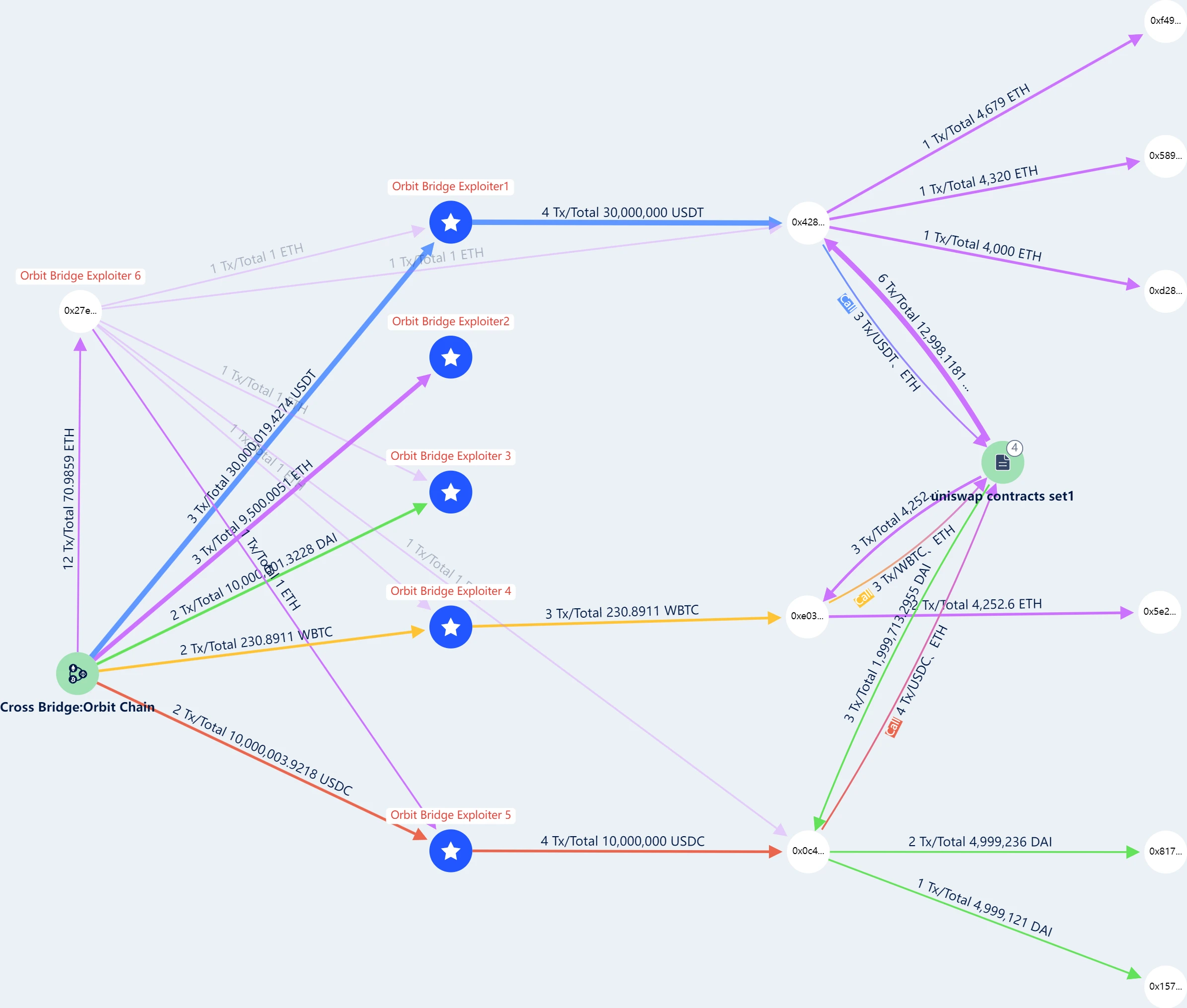
通过黑客行为来看,这一切似乎早有预谋。根据 Beosin Trace 分析,黑客早在 1 天前(12 月 31 日)就尝试根据漏洞发起小规模攻击,并且将盗取的 ETH 作为了本次攻击的其余 5 个地址的转账手续费来源。

今天凌晨,黑客正式发起攻击,并将被盗资金转移到上述五个地址。在五笔独立的交易中,每笔交易都发送到一个新的钱包,Orbit Bridge 发送了 5000 万美元的稳定币(3000 万 Tether、 1000 万 DAI 和 1000 万 USDC)、 231 枚 wBTC(约 1000 万美元)和 9500 枚 ETH(约 2150 万美元)。
跨链桥再遭攻击,Orbit Chain损失超8000万美元

虽然跨链桥被攻击事件时有发生,但攻击类型却并不复杂。比如近期,Heco Bridge 受到私钥泄露攻击,损失高达 8660 万美元;Multichain 同样是私钥泄露攻击,损失高达 2.42 亿美元,同时影响多个项目发展,使 Fantom 上资产价格脱锚。

Orbit Chain 此次被盗的原因又是什么?安全机构慢雾认为,本次攻击事件可能是跨链桥合约漏洞引发的攻击行为或者项目中心化服务器受到入侵,前者可能更易被大众接受。“人无完人,没有坚不可摧的程序,但中心化服务器受到入侵可能会引发更多的连锁反应。”

攻击发生后,Orbit Chain 代币 ORC 跌幅超 18% ,多种通过 Orbit Bridge 跨链至 Klaytn 网络的封装资产价格出现下跌,其中 OETH、OBNB、OXRP 均已下跌超过 20% 。

Odaily星球日报提醒广大用户,由于目前 Orbit Chain 跨链桥被盗原因尚未明确,不确定黑客是否有下一步计划,请尽快撤销相关钱包批准。跨链桥作为资金密集的区域,时常受到黑客的关注,作为用户尽量做到以下三点:

  •  当事故出现时,尽快撤销对该跨链桥的合约授权,防止进一步风险蔓延,可以通过所在区块链的浏览器中 approval checker 进行撤销,同时建议大家定期审核清理一些对自身无用的合约授权,黑客常常会通过智能合约中的漏洞来多次提取资产。

  • 有频繁跨链需求的用户需要密切关注跨链桥的相关信息,比如安全公司预警的风险提示,官方预告的升级等,第一时间了解做好应对准备。

  • 作为跨链桥 LP 的参与者,面对此类事件,要积极与项目方沟通,锁定的资产要做好记录,等待事后的解决。

目前, Orbit Chain 已经暂停跨链桥合约并与黑客进行沟通,同时计划为用户发放补偿金来弥补资产受损的用户,具体补偿金额尚未公开。Odaily星球日报也将持续关注。

İlgili Okumalar

Why Is the World Nervous About Japan Raising Interest Rates?

In June 2026, the Bank of Japan raised its policy rate to 1%, marking its first hike to this level since 1995. While this rate remains low compared to global peers like the US and Europe, the move signals a profound shift for a nation that has been a global source of ultra-cheap funding for decades. Japan's long-standing near-zero or negative interest rates had facilitated massive "yen carry trades," where international investors borrowed low-cost yen to invest in higher-yielding assets worldwide, such as US tech stocks and emerging market bonds. This made Japan a critical, often overlooked, source of global liquidity. Japan's ultra-loose policy stemmed from structural challenges post-1990s asset bubble: aging demographics, chronic low inflation/deflation, and high public debt. Recent shifts, including sustained wage growth (exceeding 5% in recent years) and inflation consistently above the 2% target, have created a "wage-price spiral" possibility, prompting the policy normalization. The global market's concern lies not in the absolute rate but in the potential unwinding of the yen carry trade. As Japanese borrowing costs rise, the economics of these leveraged global investments change, potentially triggering deleveraging and capital outflows from risk assets. Market anxiety focuses on the end of a thirty-year consensus that Japan would perpetually provide cheap funding. Ultimately, the global impact will depend on the interplay with US monetary policy. While Japan is tightening, the significant interest rate differential with the US remains. The key future dynamic is whether simultaneous Japanese hikes and eventual US rate cuts will narrow this gap, forcing a major recalibration of global capital flows and asset pricing built on an era of abundant, cheap yen liquidity.

marsbit6 saat önce

Why Is the World Nervous About Japan Raising Interest Rates?

marsbit6 saat önce

İşlemler

Spot
Futures
活动图片