175-Year-Old Western Union: Not Just Playing with Stablecoins, but Also Acquired a Digital Wallet

marsbit2026-04-07 tarihinde yayınlandı2026-04-07 tarihinde güncellendi

Özet

At 175 years old, Western Union, the global money transfer giant, is undergoing a significant digital shift. After a failed 2018 experiment with Ripple's XRP due to high costs, the company is now aggressively embracing blockchain and digital assets. In April 2026, Western Union acquired Singapore-based digital wallet Dash from Singtel, marking its first digital wallet asset in the Asia-Pacific region. Dash, with 1.4 million users, offers a full suite of services including payments, remittances, savings, insurance, and investments, deeply integrated into Singapore's local life. This move is part of a broader strategy to modernize its legacy business. While Western Union's vast network of over 500,000 physical agent locations remains its backbone, it is also its biggest cost burden. The company faces intense competition from digital-native rivals like Wise and Remitly, which offer significantly lower fees. To compete, Western Union is building a "Digital Asset Network." A key component is its own USD-pegged stablecoin, USDPT, issued on the Solana blockchain in partnership with Anchorage Digital. It is also piloting a stablecoin-linked Visa card with Rain for users in high-inflation countries like Argentina, allowing them to spend or cash out dollars at its agent locations. The acquisition of Dash represents a fundamental change: moving from being a transient "pipe" for money transfers to building a destination where users stay. Dash provides a trusted, established platform ...

Original author: angelilu, Foresight News

In 2018, Western Union conducted a small experiment. They integrated Ripple's cross-border payment product xRapid, using XRP tokens to settle exchanges between the US dollar and the Mexican peso. A total of 10 transactions were tested. After the test, the then CEO publicly stated: Too expensive, did not save any costs. The experiment was paused.

On April 3, 2026, Western Union announced the completion of the acquisition of the Singaporean digital wallet Dash. Dash was originally under Singapore Telecommunications, with 1.4 million users, supporting payments, remittances, savings, insurance, and investments, making it one of the most widely used all-in-one wallets in Singapore. This is the first digital wallet asset acquired by Western Union in the Asia-Pacific region.

Eight years, from "blockchain is too expensive" to issuing its own stablecoin on Solana and now starting to layout crypto wallets, Western Union is quietly undergoing a rebuild.

Western Union's 175 Years

Domestic users may rarely use Western Union and may not even be sure what the name represents. But in over 200 countries and regions worldwide, especially in immigrant communities in Southeast Asia, Latin America, and South Asia, Western Union is almost synonymous with "sending money."

It was founded in 1851, 20 years earlier than China's first telegraph line. It started as a telegraph business, building the first transcontinental telegraph line in the United States. In 1871, it began offering remittance services, using "telegraph transfers" to allow people, for the first time, to send money to another city without carrying cash or being physically present.

More than 170 years later, the core logic remains unchanged: Western Union maintains over 500,000 physical agent locations worldwide, mostly small supermarkets, convenience stores, and post offices. People walk in, fill out a form, hand cash to the counter, and the recipient can withdraw the money at another location. This network covers areas almost untouched by the banking system—immigrant workers without bank accounts, people without access to credit cards, and families in remote areas relying on remittances from relatives.
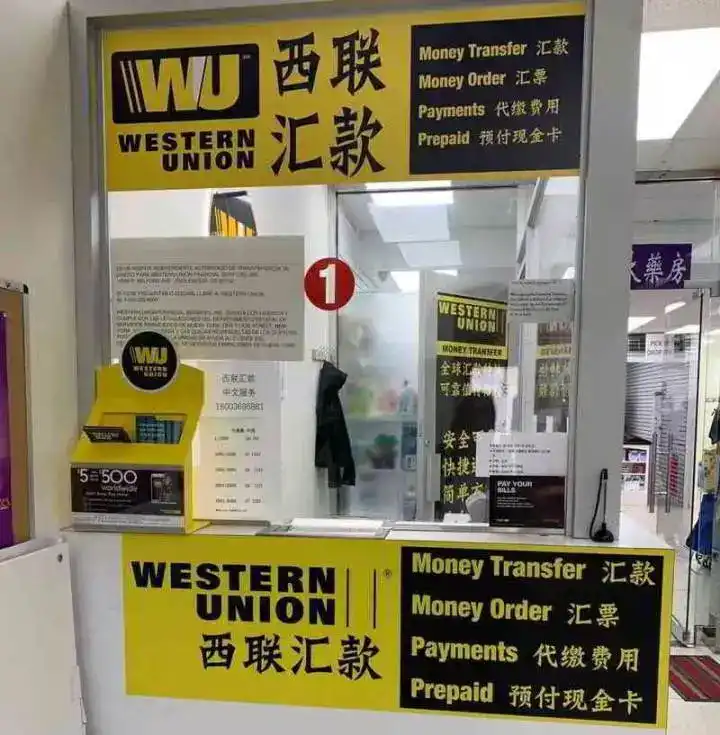
But this network is also Western Union's heaviest burden. The cost of maintaining 500,000 agent points accounts for about 60% of its service costs. Its core customer base—cash-dependent remittance senders—is being eroded by generations of digital-native products. Wise's cross-border transfer fees are 60% to 80% lower than Western Union's; Remitly's revenue reached $1.635 billion in 2025, a 29% year-on-year increase, with 9 million active users. Although Western Union's digital revenue is also growing, it still only accounts for 35% of total C2C revenue, with the vast majority of profits still from users who walk into physical locations and pull out cash.

Western Union is being caught up, and it knows it.

Moving Remittance Paths On-Chain with Stablecoins

In October 2025, Western Union announced it would issue the stablecoin USDPT on Solana, with the issuer being the US-licensed crypto bank Anchorage Digital. As of April 2026, USDPT has entered the actual deployment phase. At the same time, Western Union is building a "Digital Asset Network," connecting multiple on- and off-ramp platforms, aiming to allow users holding any mainstream crypto assets to exchange them for cash through Western Union's network.

A more specific landing scenario is its partnership with Rain to issue a Visa card linked to stablecoins. This card is designed for high-inflation countries, a Visa card tied to a US dollar stablecoin, specifically targeting countries like Argentina and Zimbabwe, where the local currency depreciates by tens or even hundreds of percentage points annually. Western Union CFO Matthew Cagwin mentioned at an industry conference, "Argentina's inflation exceeded 200% last year. After locals obtain US dollar stablecoins, they can directly spend at merchants or walk into Western Union locations to withdraw cash." The final step still relies on that network of 500,000 cash points.

Wallets Are the Real Battlefield

For the past 170-plus years, Western Union has played the role of a "pipeline" in remittances: money flows in from one end and out from the other, used and then gone. Users are not in Western Union's app, nor in Western Union's accounts; they are just passing through. What Wise and Remitly are taking is precisely that time users spend staying—people are getting used to keeping money in digital wallets, where transfers are just one action, not the entirety.

The acquisition of Dash is Western Union's first real attempt to keep users.

Dash was launched by Singapore Telecommunications in 2014 and is deeply embedded in Singapore's local life scenarios: paying utility bills, buying insurance, making small investments, and sending money to family overseas, all within one app. 1.4 million users represent a very high coverage rate for a city-state. More importantly, a large portion of these users are Southeast Asian immigrants working in Singapore, precisely Western Union's core customer group.

Western Union's previous way of reaching these people was to have them walk into convenience store counters. Now, it wants to move directly into their phones.

Dash brings not just users but also a front end for directly testing new products. After the USDPT stablecoin launches, one of the most natural distribution channels will be Dash's wallet interface; the stablecoin card for high-inflation markets also needs a trusted app to support it. Singapore, as a financial hub in Southeast Asia with a relatively mature regulatory environment, is the most suitable place for Western Union to first validate the logic before rolling out this suite of on-chain products across the Asia-Pacific region.


İlgili Sorular

QWhat was Western Union's initial experiment with Ripple's xRapid in 2018, and what was the outcome?

AIn 2018, Western Union conducted a small experiment by integrating Ripple's xRapid product to settle foreign exchange transactions between the US dollar and the Mexican peso using XRP tokens. After testing 10 transactions, the then-CEO stated that it was too expensive and did not save any costs, leading to the suspension of the experiment.

QWhat significant acquisition did Western Union announce on April 3, 2026, and why is it important?

AOn April 3, 2026, Western Union announced the acquisition of Dash, a Singapore-based digital wallet formerly owned by Singapore Telecommunications. With 1.4 million users, Dash supports payments, remittances, savings, insurance, and investments, and is one of the most widely used full-featured wallets in Singapore. This marks Western Union's first digital wallet asset in the Asia-Pacific region.

QHow does Western Union's traditional business model work, and what are its main challenges?

AWestern Union's traditional model relies on a network of over 500,000 physical agent locations, such as small supermarkets, convenience stores, and post offices. Customers fill out a form and hand over cash, and the recipient can collect the money from another agent location. This network serves people without bank accounts or in remote areas. However, maintaining these agent locations accounts for about 60% of service costs, and the core customer base is being eroded by digital-native competitors like Wise and Remitly, which offer lower fees and digital convenience.

QWhat is USDPT, and how does Western Union plan to use it?

AUSDPT is a stablecoin issued by Western Union on the Solana blockchain, with Anchorage Digital as the issuer. It is part of Western Union's 'Digital Asset Network,' which connects multiple on- and off-ramp platforms. The goal is to allow users with any mainstream cryptocurrency to convert it into cash through Western Union's network. Additionally, Western Union partnered with Rain to issue a Visa card linked to the stablecoin, targeting high-inflation countries like Argentina and Zimbabwe, where users can spend the stablecoin at merchants or withdraw cash at Western Union agent locations.

QWhy did Western Union acquire the Dash wallet, and what strategic advantages does it offer?

AWestern Union acquired Dash to move beyond being a mere 'pipeline' for remittances and to retain users within its ecosystem. Dash, with its 1.4 million users in Singapore, is deeply integrated into local life scenarios like bill payments, insurance, investments, and remittances. It particularly serves Southeast Asian immigrants in Singapore, who are part of Western Union's core customer base. The acquisition provides a front-end to test new products, such as distributing the USDPT stablecoin and launching stablecoin Visa cards, making Singapore a strategic hub for expanding these blockchain-based products across the Asia-Pacific region.
İlgili Okumalar

This Week's Key Events Preview | U.S. to Release April CPI Data; U.S. Senate Banking Committee to Review "Digital Asset Market Structure Act of 2025"

Weekly News Preview: Key events for May 12-16 include major economic and crypto industry developments. On Tuesday, May 12, the U.S. will release its April CPI data. Additionally, the gaming blockchain Ronin will begin a 10-hour migration to an Ethereum Layer 2, built on OP Stack with EigenDA for data availability. This aims to leverage Ethereum's security and settle RON's annual inflation below 1%. Base's first independent network upgrade, "Base Azul," is scheduled for mainnet activation on Wednesday, May 13, focusing on security, performance, and developer experience enhancements. Thursday, May 14, sees the U.S. Senate Banking Committee voting on the "Digital Asset Market Structure Act of 2025." In other news, Solana DeFi protocol Carrot will shut down, setting a final withdrawal deadline due to impacts from the Drift exploit. The Moscow Exchange will launch futures trading for Solana, Ripple, and Tron indices (RUB-settled) for qualified investors. Multiple service closures are scheduled for Friday, May 15. Dmail Network will begin winding down due to unsustainable infrastructure costs and failed commercialization. Users must export data before this date. Separately, the Cosmos-based lending blockchain UX Chain will fully shut down. Finally, on Saturday, May 16, gaming infrastructure provider Lattice will wind down operations, with its Redstone Layer 2 network ceasing. Users are urged to withdraw assets, especially from contracts like Uniswap pools, before the shutdown.

链捕手6 dk önce

This Week's Key Events Preview | U.S. to Release April CPI Data; U.S. Senate Banking Committee to Review "Digital Asset Market Structure Act of 2025"

链捕手6 dk önce

Morning Post | Trump Media Group Releases Q1 Financial Report; Top Three DeFi Applications Return Nearly $100 Million in Revenue to Token Holders in 30 Days; Michael Saylor Shares Bitcoin Tracker Info Again

**Title: Daily Briefing | Trump Media Group Releases Q1 Report; Top 3 DeFi Apps Return Nearly $100M to Token Holders; Michael Saylor Signals Potential Bitcoin Buy** **Summary:** Key developments in the past 24 hours include: * **Economic Outlook:** Goldman Sachs has pushed back its forecast for the next two Federal Reserve interest rate cuts to December 2026 and March 2027, citing persistent inflationary pressures from energy costs. This delayed timeline is expected to tighten liquidity flow into risk assets, including cryptocurrencies. * **DeFi & Revenue:** Data from DefiLlama shows that three leading DeFi applications—Hyperliquid, Pump.fun, and EdgeX—collectively distributed $96.3 million in revenue to their token holders over the last 30 days. This trend highlights a shift in the crypto community's focus towards real protocol earnings and sustainable economic models. * **Corporate Bitcoin Moves:** Michael Saylor, founder of MicroStrategy (note: referred to as 'Strategy' in the text, likely a typographical error), has signaled potential upcoming Bitcoin purchases by posting a "Bitcoin Tracker" update, following a pattern that typically precedes the company's official disclosure of new acquisitions. * **Market Integrity:** Prediction market platform Polymarket announced updates to address platform issues, including identifying and banning clusters of accounts involved in "ghost-fill" activities and implementing measures to prevent bulk account creation. * **Regulation:** The Bank of England Governor warned that stablecoin regulation could lead to tensions between US and international regulators. In South Korea, the National Tax Service has launched a pilot program to entrust seized virtual assets to private custody firms for management. * **Meme Token Trends:** GMGN data lists the top trending meme tokens on Ethereum (e.g., HEX, SHIB), Solana (e.g., FWOG, TROLL), and Base (e.g., SKITTEN, PEPE) over the past day. **Financial Note:** Trump Media & Technology Group reported a Q1 loss of approximately $4 billion, primarily attributed to unrealized losses on its Bitcoin and other digital asset holdings.

链捕手36 dk önce

Morning Post | Trump Media Group Releases Q1 Financial Report; Top Three DeFi Applications Return Nearly $100 Million in Revenue to Token Holders in 30 Days; Michael Saylor Shares Bitcoin Tracker Info Again

链捕手36 dk önce

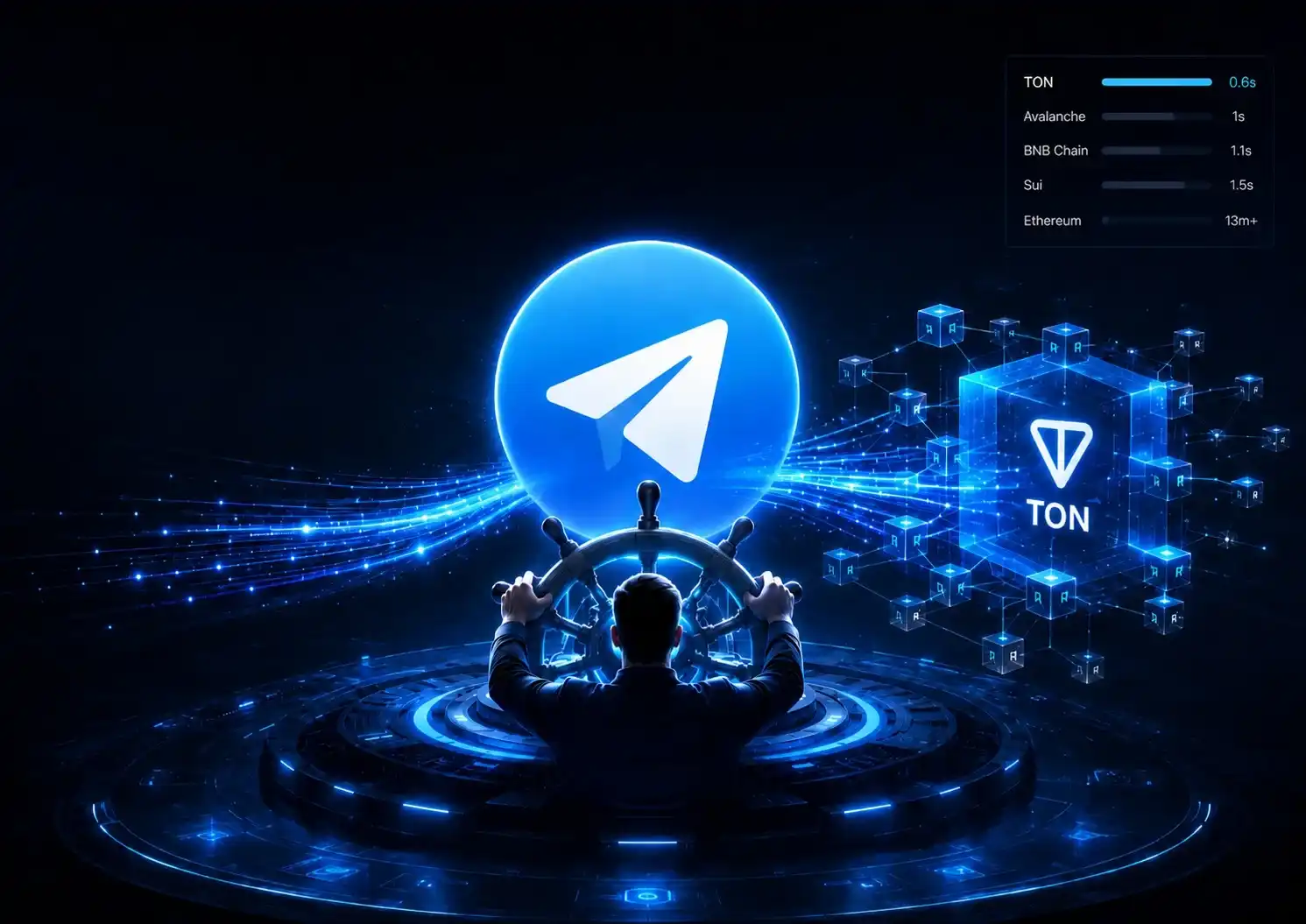
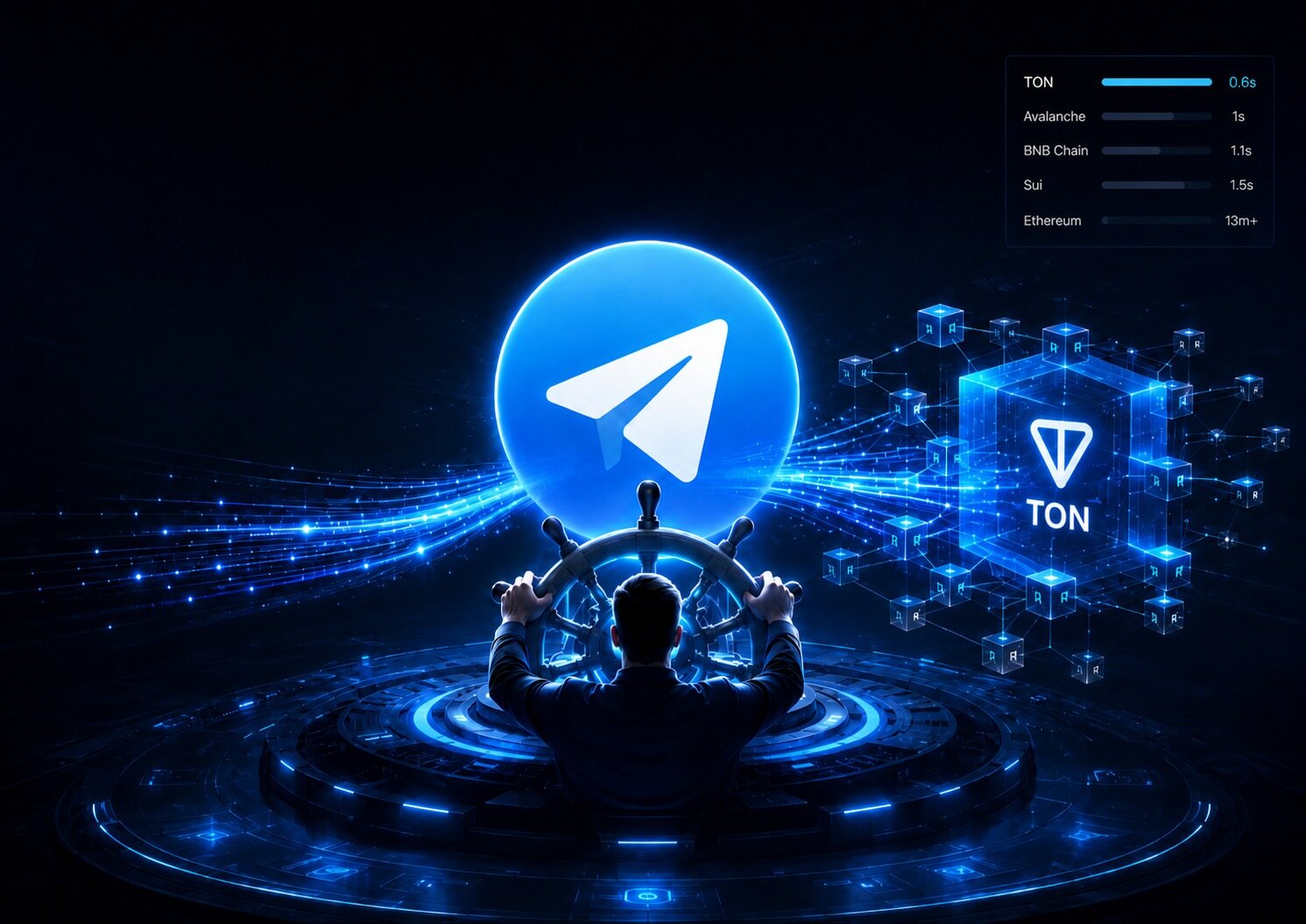
Telegram Takes Direct Control of TON, Social Traffic Rewrites the Public Chain Narrative

Telegram founder Pavel Durov announced that Telegram will replace the TON Foundation as the core driver and largest validator of The Open Network (TON). Key initiatives include a sixfold reduction in transaction fees, performance upgrades, and improved developer tools within the next few weeks. This marks a strategic shift from Telegram merely providing user access to deeply integrating TON into its platform's core infrastructure. The goal is to transform Telegram's massive social traffic into sustainable on-chain activity. While viral mini-apps like Notcoin have demonstrated Telegram's ability to drive user adoption, TON aims to support frequent, low-value transactions inherent to social platforms—such as tipping, in-app payments, and game rewards. Ultra-low fees and sub-second finality (0.6 seconds) are crucial to making blockchain interactions seamless and nearly invisible within the Telegram user experience. However, Telegram's increased central role raises questions about network decentralization. Durov argues that Telegram's participation will attract more large validators, thereby enhancing decentralization. TON also offers high annual staking rewards (18.8%), aiming to retain capital within its ecosystem. The fundamental challenge for TON is no longer leveraging Telegram's user base, but becoming an indispensable, seamless infrastructure layer for Telegram's everyday applications—moving from an adjacent chain to an embedded utility.

marsbit38 dk önce

Telegram Takes Direct Control of TON, Social Traffic Rewrites the Public Chain Narrative

marsbit38 dk önce

Telegram Takes Direct Control of TON, Social Traffic Reshapes Public Chain Narrative

Telegram's founder, Pavel Durov, has announced a major shift in the development of The Open Network (TON). Telegram will now become the core driver of TON, replacing the TON Foundation and becoming its largest validator. The focus will be on technical upgrades over the next few weeks, including slashing network fees by six times to near-zero and improving finality time to 0.6 seconds. This move signifies a deeper integration between Telegram and TON, moving beyond just providing a user base. The goal is to transform Telegram's vast social traffic and built-in features—like Mini Apps, payments, and bots—into sustainable, on-chain usage scenarios. The reduced fees and faster speeds are crucial for enabling the small, frequent transactions typical of social interactions. While this promises stronger execution and product alignment, it raises questions about centralization. Durov argues Telegram's involvement will attract more validators, enhancing decentralization, but the outcome remains to be seen. Additionally, TON's high annual staking reward of 18.8% aims to retain capital within the ecosystem. The key challenge for TON is no longer just leveraging Telegram's entry point, but becoming an invisible, seamless infrastructure layer within Telegram's daily use. Its success hinges on converting viral attention into lasting, embedded utility.

Odaily星球日报48 dk önce

Telegram Takes Direct Control of TON, Social Traffic Reshapes Public Chain Narrative

Odaily星球日报48 dk önce

İşlemler

Spot
Futures
活动图片