加密市场情绪研究报告(12.08-12.15):美国CPI数据符合预期,道指创下历史新高,比特币急跌后强势反弹

Odaily星球日报2023-12-16 tarihinde yayınlandı2023-12-16 tarihinde güncellendi

Özet

美国CPI数据符合预期,道指创下历史新高,比特币急跌后强势反弹。

美国 CPI 数据符合预期,道指创下历史新高,比特币急跌后强势反弹
加密市场情绪研究报告(12.08-12.15):美国CPI数据符合预期,道指创下历史新高,比特币急跌后强势反弹

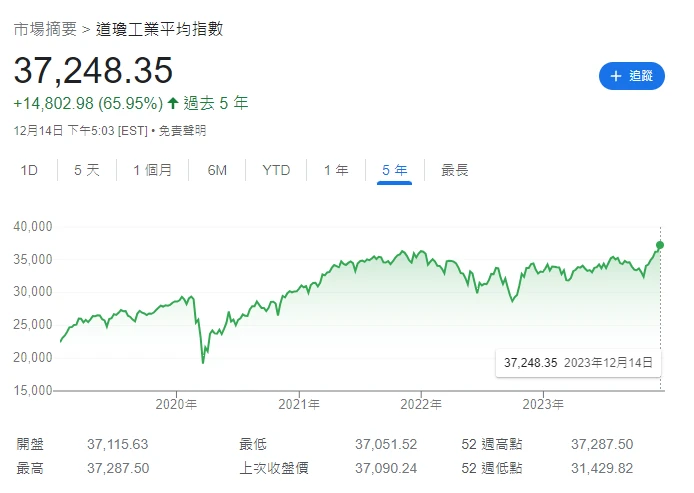
道指首次突破 37, 000 点,市场欢迎美联储降息信号,虽然美联储主席鲍威尔保留了进一步加息的可能性,但市场基本未予理会。标普 500 指数和纳斯达克综合指数分别上涨 1.4% 。道琼斯指数首次突破 37000 点,报收于历史新高 37090 点。
加密市场情绪研究报告(12.08-12.15):美国CPI数据符合预期,道指创下历史新高,比特币急跌后强势反弹

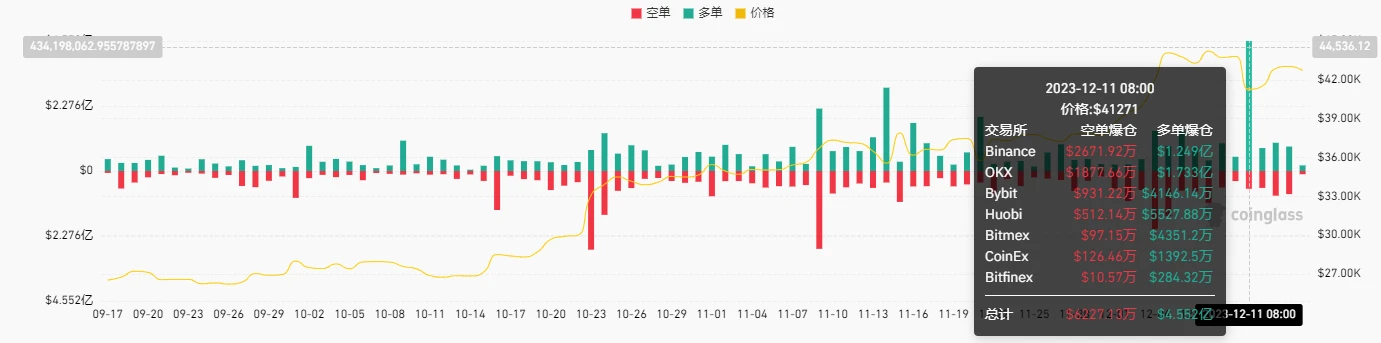
数据来源: https://www.coinglass.com/zh/LiquidationData

加密市场于 2023.12.11 发生急速下跌,市场爆仓量高达 4.552 亿美元,随后价格收复失地,回到上升趋势。

比特币减半距离今天(2023.12.15)还有约 132 天

减半倒计时:https://www.nicehash.com/countdown/btc-halving-2024-05-10-12-00?_360safeparam=1289146171

市场技术与情绪环境分析
加密市场情绪研究报告(12.08-12.15):美国CPI数据符合预期,道指创下历史新高,比特币急跌后强势反弹

加密市场情绪研究报告(12.08-12.15):美国CPI数据符合预期,道指创下历史新高,比特币急跌后强势反弹

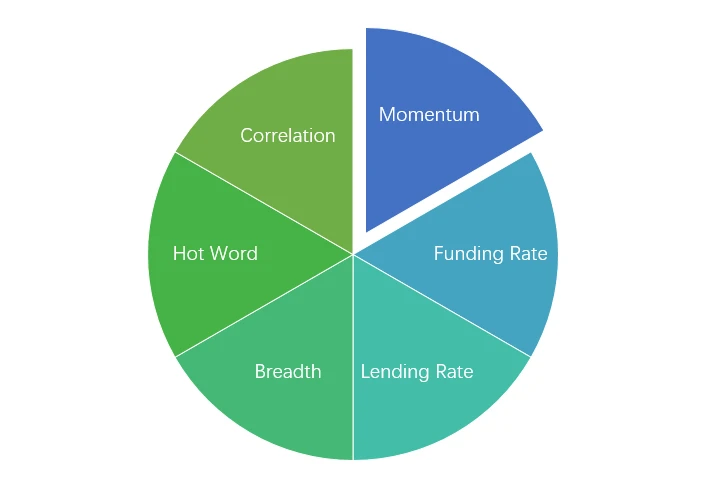
情绪分析组成

加密市场情绪研究报告(12.08-12.15):美国CPI数据符合预期,道指创下历史新高,比特币急跌后强势反弹

技术指标

价格走势

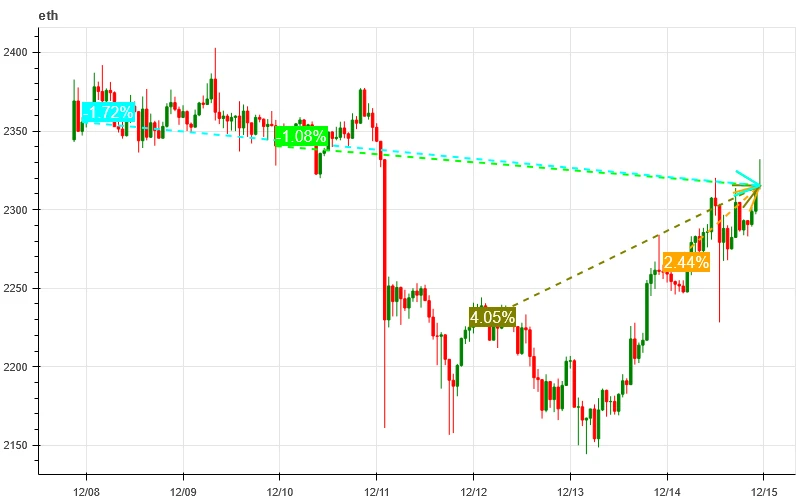
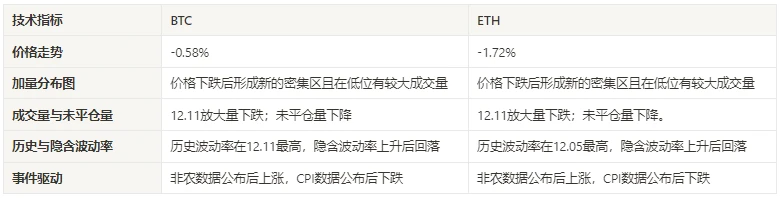
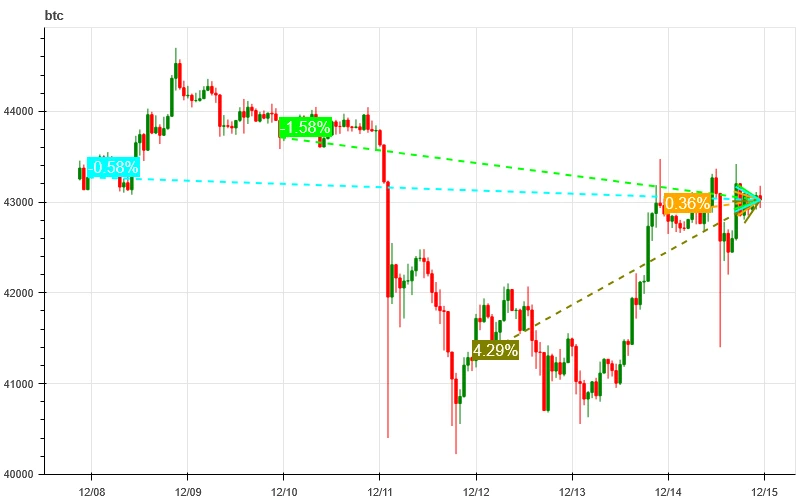
过去一周 BTC 价格下跌-0.58% ,ETH 价格下跌-1.72% 。
加密市场情绪研究报告(12.08-12.15):美国CPI数据符合预期,道指创下历史新高,比特币急跌后强势反弹

上图是 BTC 过去一周的价格图

加密市场情绪研究报告(12.08-12.15):美国CPI数据符合预期,道指创下历史新高,比特币急跌后强势反弹

上图是 ETH 过去一周的价格图

加密市场情绪研究报告(12.08-12.15):美国CPI数据符合预期,道指创下历史新高,比特币急跌后强势反弹

表格显示过去一个周的价格变化率

价量分布图(支撑阻力)

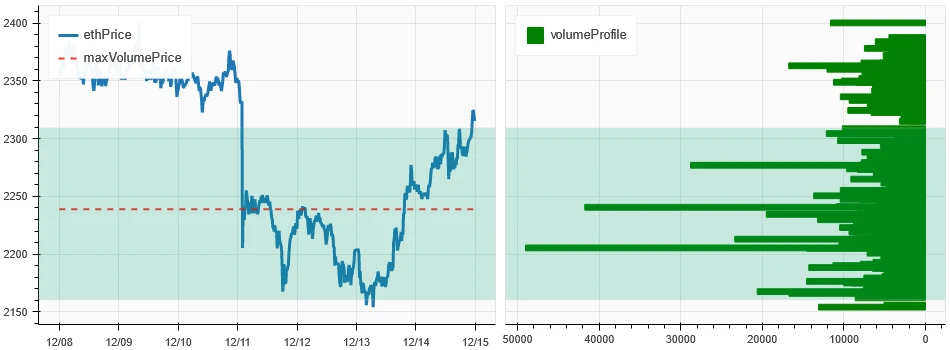
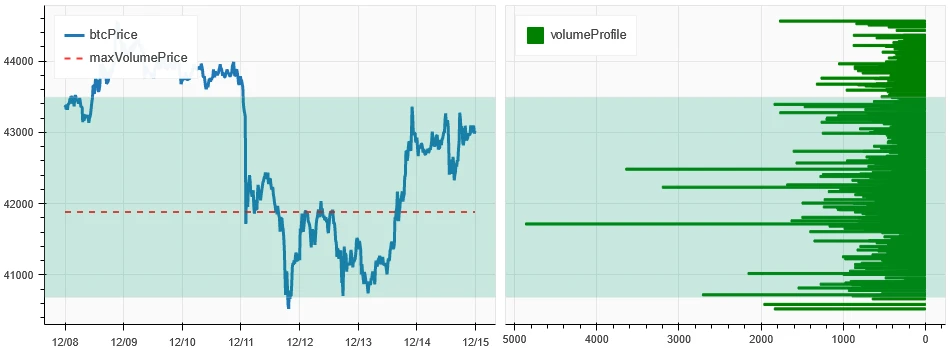
过去一周 BTC 与 ETH 价格下跌后形成新的密集区且在低位有较大成交量。
加密市场情绪研究报告(12.08-12.15):美国CPI数据符合预期,道指创下历史新高,比特币急跌后强势反弹

上图是 BTC 过去一周的密集成交区分布图

加密市场情绪研究报告(12.08-12.15):美国CPI数据符合预期,道指创下历史新高,比特币急跌后强势反弹

上图是 ETH 过去一周的密集成交区分布图

加密市场情绪研究报告(12.08-12.15):美国CPI数据符合预期,道指创下历史新高,比特币急跌后强势反弹

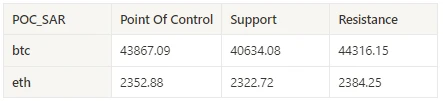
表格显示 BTC 与 ETH 过去一周中每周的密集成交区间

成交量与未平仓量

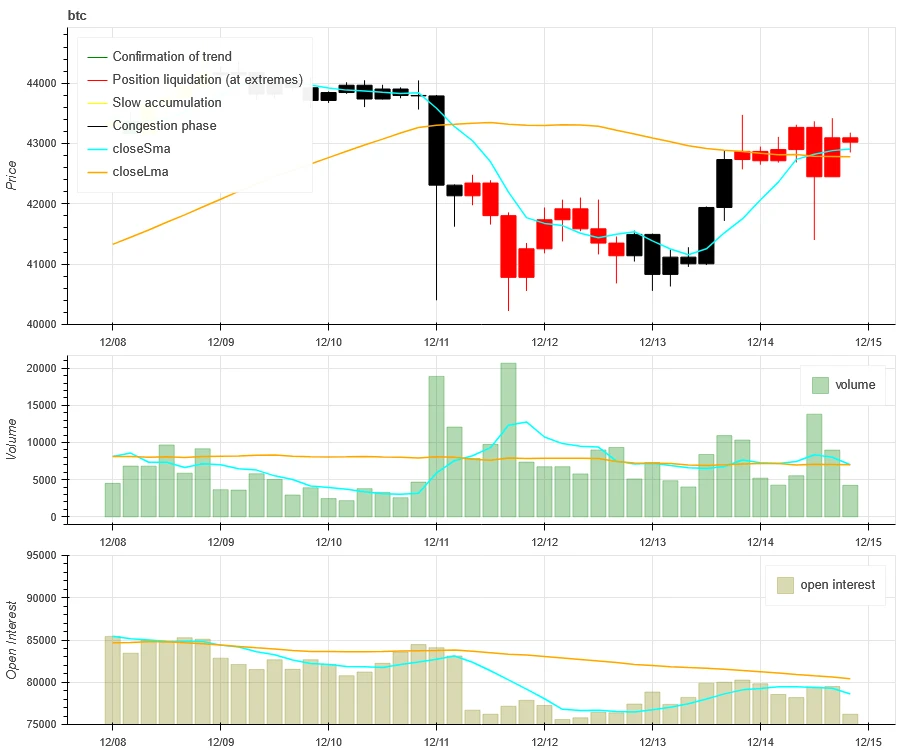
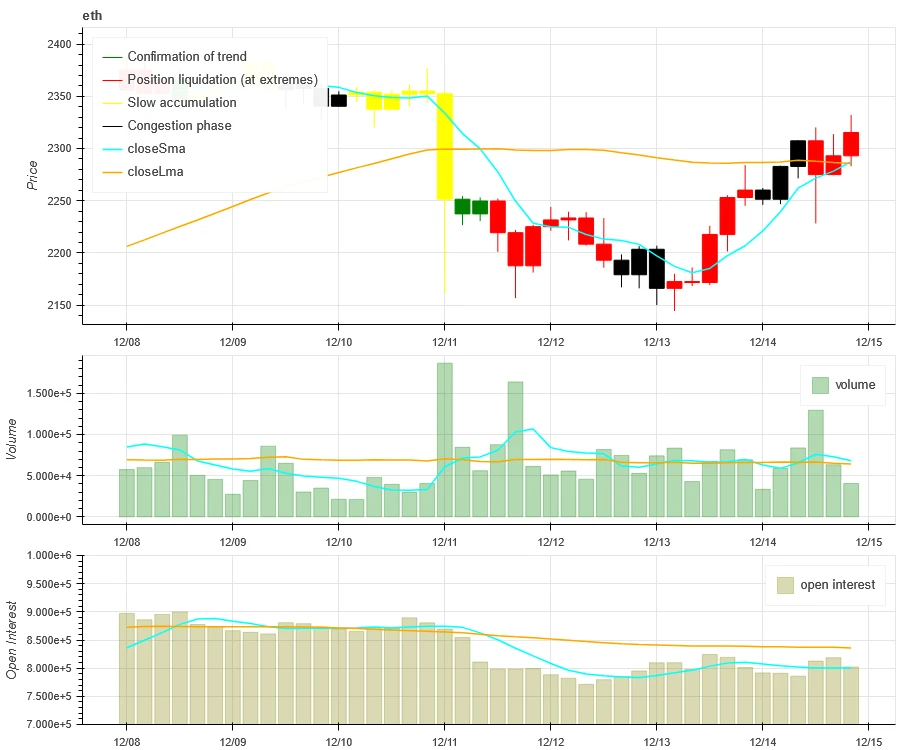
过去一周 BTC 与 ETH 都在 12.11 放大量下跌;未平仓量下降。
加密市场情绪研究报告(12.08-12.15):美国CPI数据符合预期,道指创下历史新高,比特币急跌后强势反弹

上图最上方 BTC 的价格走势,中间是成交量、最下方是未平仓量、浅蓝色是 1 天均值,橘色是 7 天均值。其中 K 线的颜色代表当前的状态,绿色是价格上升有成交量支持,红色是在平仓,黄色是在缓慢累积仓位,黑色是拥挤状态。
加密市场情绪研究报告(12.08-12.15):美国CPI数据符合预期,道指创下历史新高,比特币急跌后强势反弹

上图最上方 ETH 的价格走势,中间是成交量、最下方是未平仓量、浅蓝色是 1 天均值,橘色是 7 天均值。其中 K 线的颜色代表当前的状态,绿色是价格上升有成交量支持,红色是在平仓,黄色是在缓慢累积仓位,黑色是拥挤状态。

历史波动率与隐含波动率

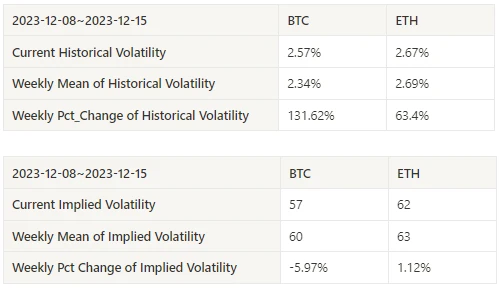
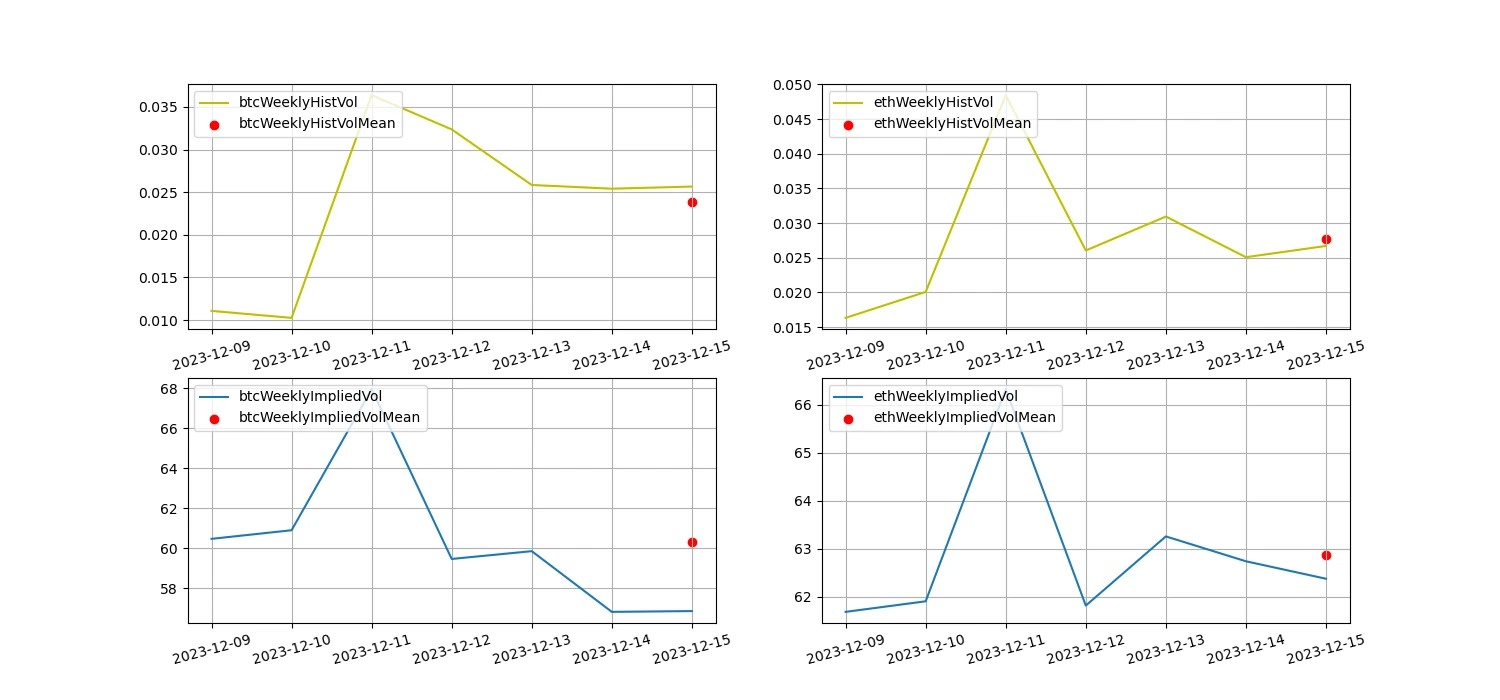
过去一周 BTC 与 ETH 历史波动率在 12.11 最高,隐含波动率上升后回落。
加密市场情绪研究报告(12.08-12.15):美国CPI数据符合预期,道指创下历史新高,比特币急跌后强势反弹

黄色线为历史波动率,蓝色线为隐含波动率,红点是其 7 日平均

加密市场情绪研究报告(12.08-12.15):美国CPI数据符合预期,道指创下历史新高,比特币急跌后强势反弹

事件驱动

本周非农与 CPI 数据公布(北京时间), 2023.12.08 21: 30 公布的非农数据比预测值好,随后比特币价格从 43594 上涨到最高 44700 (2023.12.09 05: 00), 2023.12.12 21: 30 公布的 CPI 数据与预测值一致,随后比特币价格从 42132 下跌到最低 40222 (2023.12.12 03: 30)。

情绪指标

动量情绪

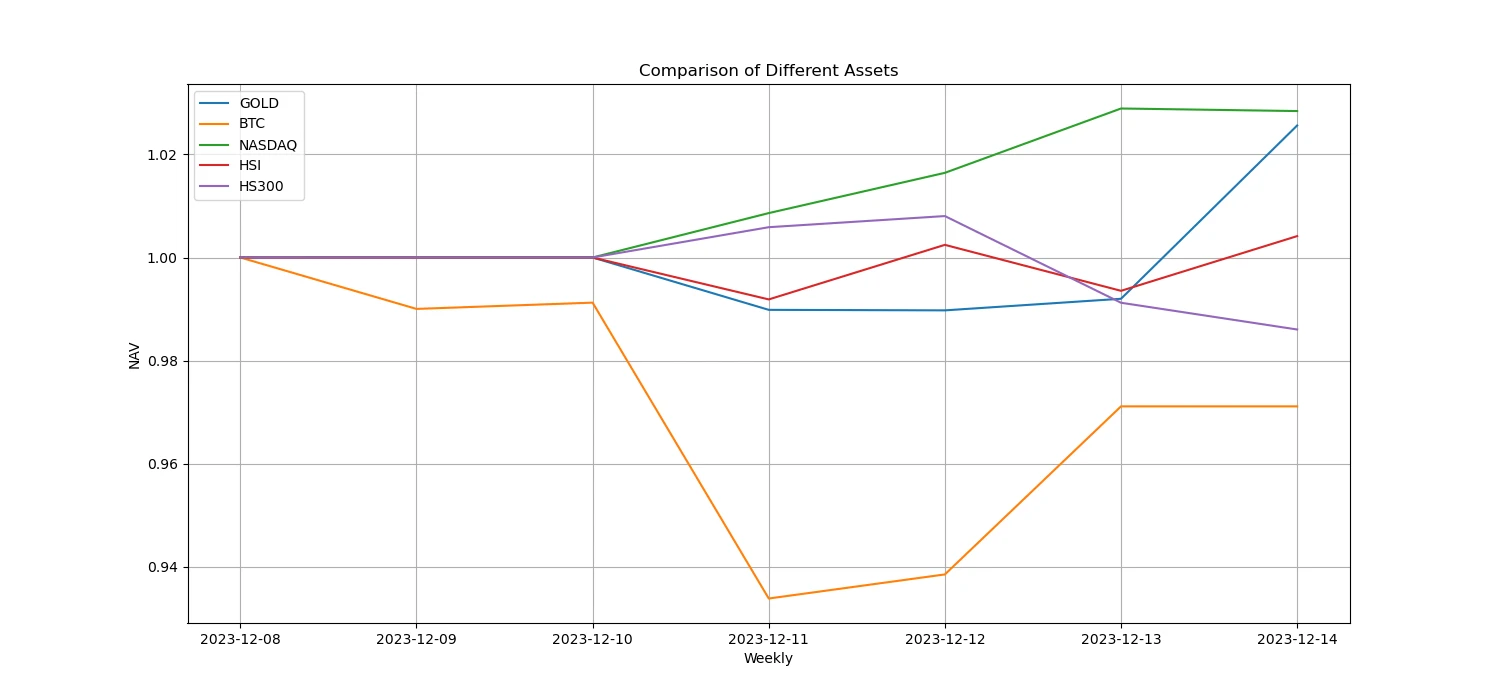
过去一周比特币/黄金/纳指/恒指/沪深 300 中,纳指与黄金都比较强势,而表现最差的为比特币。
加密市场情绪研究报告(12.08-12.15):美国CPI数据符合预期,道指创下历史新高,比特币急跌后强势反弹

上图为不同资产过去一周的走势

加密市场情绪研究报告(12.08-12.15):美国CPI数据符合预期,道指创下历史新高,比特币急跌后强势反弹

放贷利率_借贷情绪

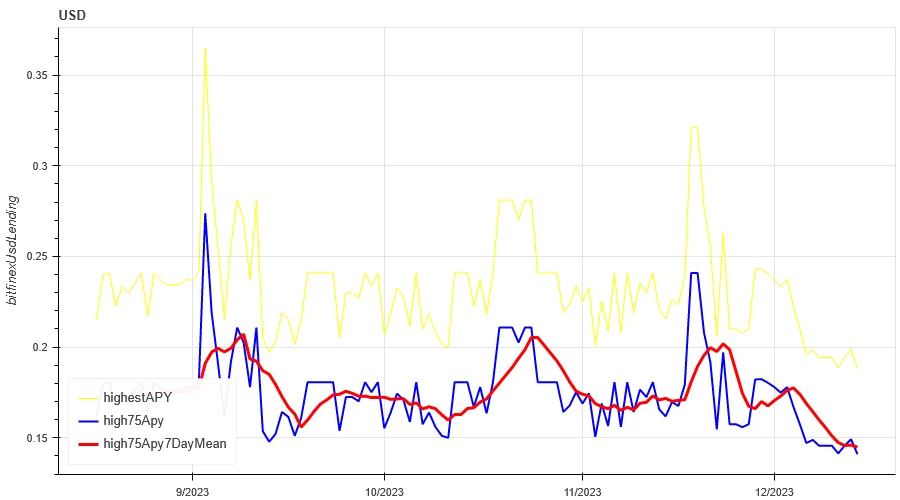
过去一周 USD 放贷年化收益平均为 14.5% ,利率持续下跌。
加密市场情绪研究报告(12.08-12.15):美国CPI数据符合预期,道指创下历史新高,比特币急跌后强势反弹

黄色线为 USD 利率的最高价,蓝色线为最高价的 75% ,红色线为最高价的 75% 的 7 天平均值

加密市场情绪研究报告(12.08-12.15):美国CPI数据符合预期,道指创下历史新高,比特币急跌后强势反弹

表格显示 USD 利率过去不同持有天数的平均收益

资金费率_合约杠杆情绪

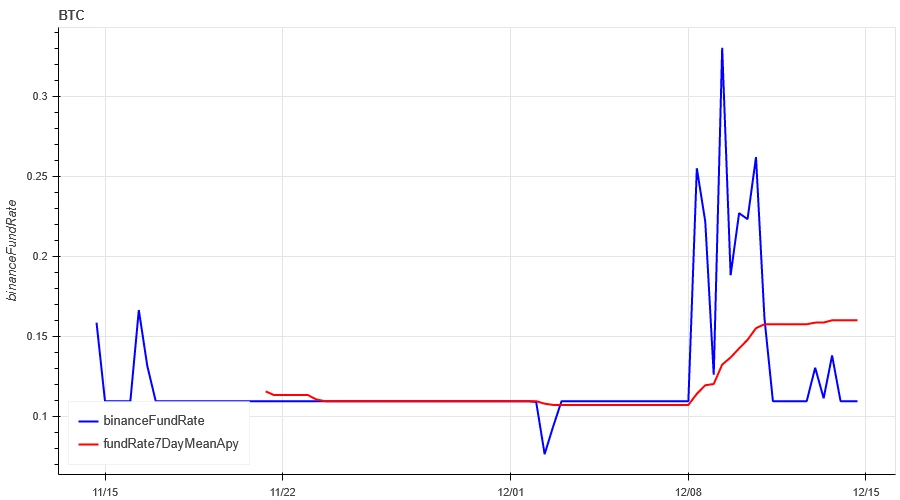
过去一周 BTC 资费平均年化收益为 15.8% ,合约杠杆情绪升温。
加密市场情绪研究报告(12.08-12.15):美国CPI数据符合预期,道指创下历史新高,比特币急跌后强势反弹

蓝色线为币安上 BTC 的资金费率,红色线为其 7 日平均

加密市场情绪研究报告(12.08-12.15):美国CPI数据符合预期,道指创下历史新高,比特币急跌后强势反弹

表格显示 BTC 的资费过去不同持有天数的平均收益

市场宽度_整体情绪

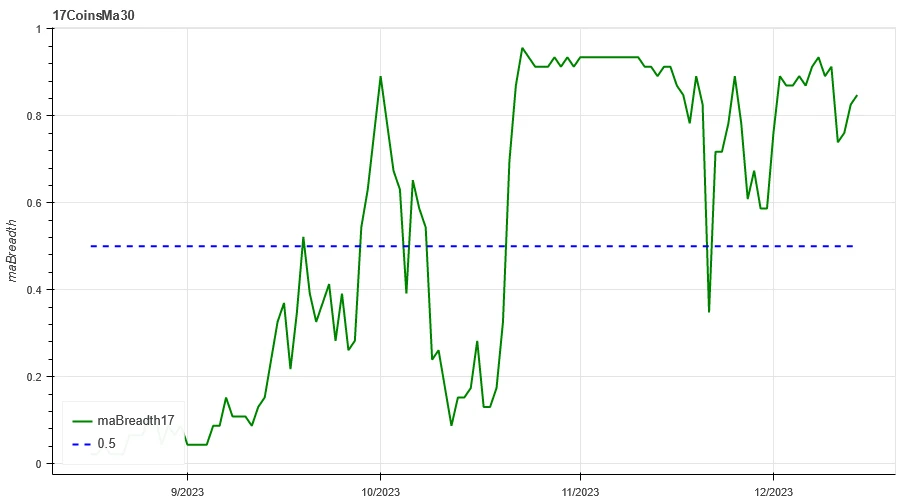
过去一周选中的 46 个币有 85% 的币在 30 日均线上方,相较上周微跌。
加密市场情绪研究报告(12.08-12.15):美国CPI数据符合预期,道指创下历史新高,比特币急跌后强势反弹

上图为['btc', 'eth', 'bnb', 'ltc', 'bch', 'doge', 'matic', 'sol','link','uni', 'enj','gala', 'mana', 'axs', 'dydx', 'fet' ,'gmx', 'xlm', 'xrp', 'ada', 'trx', 'sol', 'dot', 'avax', 'shib', 'atom', 'xmr', 'etc', 'ldo', 'hbar', 'apt', 'vet', 'qnt', 'vet','crv', 'aave', 'algo', 'ftm', 'ape', 'neo', 'sand', 'eos', 'xtz', 'rndr', 'theta', 'mkr']在 30 日均线上方的占比

市场相关性_一致性情绪

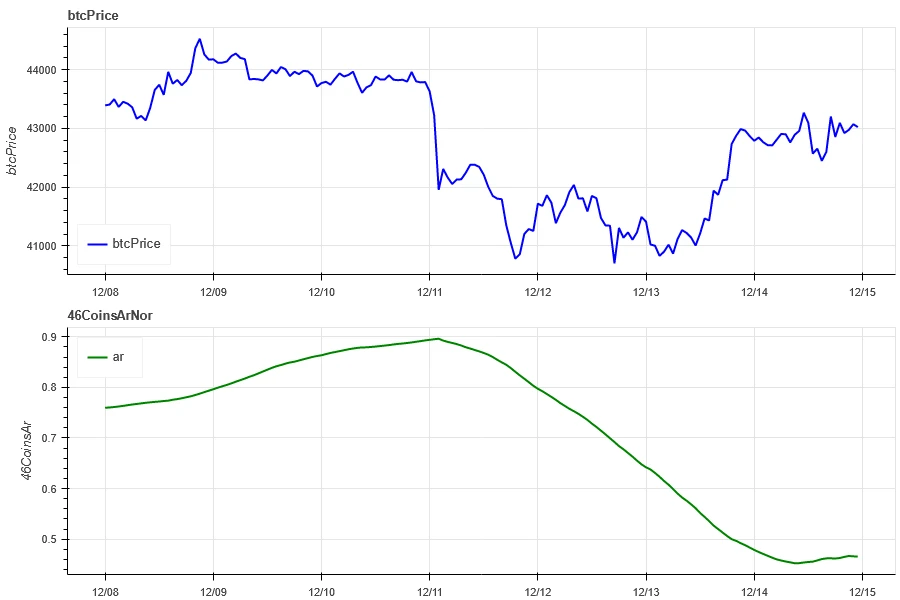
过去一周选中的 46 个币中相关性下降至 0.47 左右,不同品种间产生分歧的行情。
加密市场情绪研究报告(12.08-12.15):美国CPI数据符合预期,道指创下历史新高,比特币急跌后强势反弹

上图蓝色先为比特币价格,绿色线为['btc', 'eth', 'bnb', 'ltc', 'bch', 'doge', 'matic', 'sol','link','uni', 'enj','gala', 'mana', 'axs', 'dydx', 'fet' ,'gmx', 'xlm', 'xrp', 'ada', 'trx', 'sol', 'dot', 'avax', 'shib', 'atom', 'xmr', 'etc', 'ldo', 'hbar', 'apt', 'vet', 'qnt', 'vet','crv', 'aave', 'algo', 'ftm', 'ape', 'neo', 'sand', 'eos', 'xtz', 'rndr', 'theta', 'mkr']整体的相关性

市场热点_社交媒体情绪

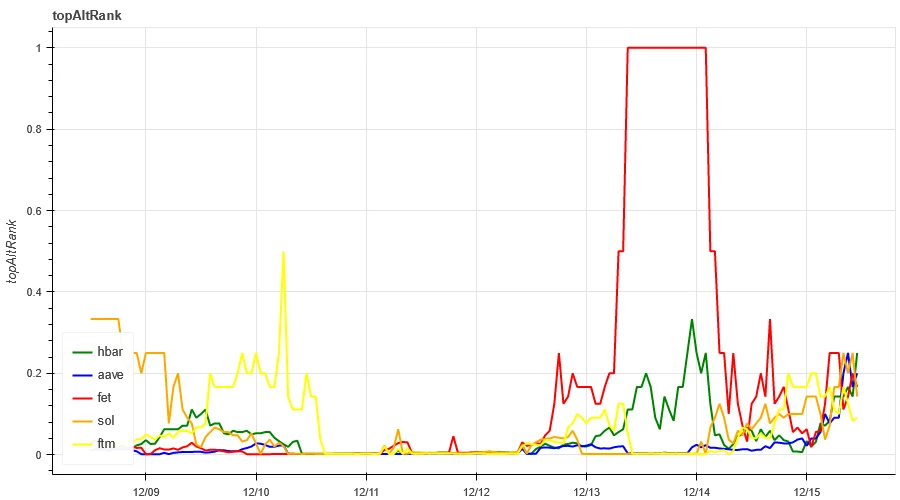
过去一周热度最高分别的是 hbar/aave/fet/sol/ftm,情绪的上升也伴随较大的涨幅。
加密市场情绪研究报告(12.08-12.15):美国CPI数据符合预期,道指创下历史新高,比特币急跌后强势反弹

数据来源: https://lunarcrush.com/categories/cryptocurrencies

总结

本周行情 BTC 与 ETH 都走出了急跌反弹的行情,隐含波动率于 2023.12.11 上升后回落,宽度指标显示目前维持在上升趋势;热点方面 hbar/aave/fet/sol/ftm 近期较高,价格持续上升;事件方面,公布了非农数据后主流币价格上涨,CPI 数据公布后主流币价格下跌。跟单策略过去 7 天收益为 0.92% ,过去 30 天收益为 5.67% 。

Binance CopyTrading: CTA_ChannelCMT

Twitter: @DerivativesCN

Website: https://dcbot.ai/

Medium:https://medium.com/@DerivativesCN

İlgili Okumalar

Who Defines AI Hardware in 2026?

"Who is Defining AI Hardware in 2026?" This article discusses a pivotal shift in the AI hardware industry in 2026, moving from conceptual demonstrations to widespread, cloud-integrated adoption. Key developments include the release of a national standard (the "Artificial Intelligence Terminal Intelligence Grading") by Chinese authorities, which classifies device intelligence from L1 to L4 based on capabilities like perception and cognition. Most current products are at L1 or L2, with L3 representing a significant leap requiring complex intent understanding and proactive service. Simultaneously, tech giants like Alibaba Cloud are accelerating this transition. At its summit, Alibaba Cloud showcased AI hardware applications and launched initiatives like the "Qianwen Smart Hardware X Tmall Cooperation Plan," offering technical support, traffic, and marketing resources. Its powerful Qwen model series, including the newly released Qwen3.7-Max, provides the essential cloud-based "brain" for advanced hardware, enabling sophisticated multimodal interactions and agent-like capabilities. The industry consensus is that "end-cloud collaboration" is now essential. Examples like the Ecovacs "Bajie"管家 robot and Yyanjiwei's "Shen Mou" cameras demonstrate this model: simple tasks and sensing happen on the device, while complex reasoning and memory are handled in the cloud. This approach lowers development barriers and directly boosts commercial metrics like user engagement and conversion rates. Looking ahead, the market's future lies in L4 "collaborative" intelligence, where multiple devices form a seamless, personalized ecosystem around the user. This shift will transform business models from one-time hardware sales to ongoing service subscriptions. The article concludes that national standards provide the destination, end-cloud collaboration offers the path, and cloud providers' standardized capabilities are making that path more accessible for widespread AI hardware adoption.

marsbit7 dk önce

Who Defines AI Hardware in 2026?

marsbit7 dk önce

21Shares Report: HYPE's P/S Ratio Only Half That of CME, Bull Market Target Price $70

21Shares Research Report: HYPE's P/S Ratio Half of CME's, Bullish Target $70 A recent report from 21Shares highlights Hyperliquid's evolution from a crypto derivatives DEX into a 24/7 "everything exchange" for perpetual contracts across various asset classes. The platform gained prominence during a February geopolitical incident when it provided real-time price discovery for WTI crude oil while traditional markets like CME were closed. Non-digital assets now account for approximately 35% of its volume, with traditional commodities and indices featuring among its top-traded assets. Hyperliquid's business model is rapidly diversifying, significantly reducing its dependence on crypto market cycles. Its cumulative trading volume and revenue are approaching levels comparable to CME Group's crypto derivatives segment. A key feature is its Assistance Fund, which directs 97%-99% of protocol fees to automated HYPE token buybacks, creating a deflationary mechanism with an implied buyback yield significantly higher than CME's traditional share repurchase program. Despite strong fundamentals, HYPE currently trades at a Price-to-Revenue (P/R) ratio of ~10x, roughly half of CME's ~17x. The report outlines valuation scenarios: a bullish case targets $62-$70 based on annualized revenue reaching $12-$15B and applying CME's P/R multiple. A bear case considers $15-$19 if growth slows. Key risks include platform centralization during crises, regulatory uncertainty for on-chain commodities, dependence on geopolitical volatility for non-crypto volume, and the need for sustained high trading volume to offset token unlocks. The analysis concludes that HYPE is increasingly being valued as a legitimate exchange business rather than a speculative crypto asset.

marsbit9 dk önce

21Shares Report: HYPE's P/S Ratio Only Half That of CME, Bull Market Target Price $70

marsbit9 dk önce

Financial Changes under the New SEC Rules: Opportunities and Regulatory Red Lines Behind "Tokenized Stocks"

The article discusses the emergence of "Tokenized Stocks" following the U.S. SEC's proposed "innovation exemption" framework, which could allow some assets to be traded on blockchain. It clarifies key misconceptions for investors, particularly those in China. Firstly, it emphasizes that most "tokenized stocks" currently offered by third-party crypto platforms are synthetic assets, not actual equity. Purchasers do not gain shareholder rights like dividends or voting; instead, they hold a derivative contract dependent on the issuing platform's credit and its ability to track the underlying stock's price. The article examines the risks of 24/7 trading, a major selling point. It notes the absence of circuit breakers, which could lead to sudden, unrecoverable losses during off-hours market shocks. It also warns of liquidity traps and high volatility due to the market's currently small size. It reveals that the primary drivers are institutional players like BlackRock and JPMorgan, who are focused on using blockchain for efficiency gains in areas like treasury settlements (T+0), not retail speculation. For Chinese readers, it strongly cautions that platforms offering "easy" access to U.S. stocks via tokens with RMB likely violate strict domestic regulations on cross-border securities and virtual currencies, offering no legal protection. The conclusion offers practical advice: use legal channels like QDII for long-term investment, be wary of high-return promises, monitor evolving regulations like the U.S. CLARITY Act, and prioritize compliance and risk management over chasing innovation. The SEC's move is framed as a strategic experiment in financial tech leadership, but for individual investors, understanding the risks and regulatory boundaries is paramount.

链捕手24 dk önce

Financial Changes under the New SEC Rules: Opportunities and Regulatory Red Lines Behind "Tokenized Stocks"

链捕手24 dk önce

Trump Halts AI Executive Order, Regulatory Efforts Succumb to Competitive Anxiety

In a last-minute reversal, former President Donald Trump halted the signing of a long-anticipated executive order on artificial intelligence. The order had sought to establish a voluntary, pre-release safety testing framework for advanced AI models developed by leading companies like OpenAI, Google, Anthropic, and xAI. Under the proposed plan, companies would have shared their most powerful models with the U.S. government 90 days before public release for national security and cybersecurity risk assessments. Trump refused to approve the order, stating he did not want anything to "slow down our leadership," emphasizing America's lead over China in AI and the technology's role in job creation. This decision highlights the core tension in U.S. AI policy: balancing the management of systemic risks posed by frontier models—such as exposing financial system vulnerabilities—against fears that any regulation could stifle innovation and undermine competitive advantage. The move came despite significant public support for AI safety testing and followed internal administration debates. Some officials, alarmed by the capabilities of models like Anthropic's Mythos in uncovering critical security flaws, had advocated for stronger oversight. However, the industry and many within Trump's circle opposed even this voluntary framework, arguing it would hamper American innovation. The incident underscores how AI policy is increasingly intersecting with national security, economic strategy, and political governance.

marsbit56 dk önce

Trump Halts AI Executive Order, Regulatory Efforts Succumb to Competitive Anxiety

marsbit56 dk önce

İşlemler

Spot
Futures
活动图片