FTX Bankruptcy Judge Takes Step to Shorten Timeline for Customers' Recoveries

CoinDeskPolicy2023-12-13 tarihinde yayınlandı2023-12-14 tarihinde güncellendi

Özet

FTX victims are closer to getting their money back from the exchange after a federal judge put an end to a time-consuming dispute that has halted the exchange's bankruptcy cas...

A federal judge took steps to end a protracted dispute between FTX and its largest creditor at a bankruptcy hearing, signaling the court could try to speed up efforts to recover FTX customer's funds from the failed crypto firm's estate.

U.S. Judge John Dorsey, from the Delaware Bankruptcy Court, scheduled a hearing for early next year to calculate the crypto exchange's debt to the IRS, a sticking point that has stagnated efforts to remunerate the exchange's many victims. As FTX's largest creditor, the IRS' claim must be resolved before FTX victim's can recover their losses.

7K
The Methodology Behind Coindesk’s Crypto Hubs 2023 Ranking

During the bankruptcy hearing, the judge said that while FTX's bankruptcy was "a complicated case," it still needs to be resolved more quickly.

Advertisement
Advertisement

"The idea here in bankruptcy, tax court bankruptcy, is we're trying to get to conclusions occlusions quickly and be as accurate as possible without wasting a lot of time and resources of the state or the other creditors," he said near the end of the hearing.

The IRS alleges the crypto firm owes $24 billion in unpaid taxes, based on its own calculations, and it has doggedly fought for court recognition of its claim.

It is unclear whether the court’s estimate of FTX's tax debt will boost the IRS’ recoveries. The IRS is usually among the first creditors to receive payouts in corporate bankruptcy cases, but Judge Dorsey has warned the agency it should temper its expectations of a multi-billion-dollar recovery.

"You might not get to a point where the debtors owe any taxes. Might be they owe a little bit of taxes, might be they owe a few million dollars, tens of millions of dollars," he said. "I don't know at this point because they don't have the benefit of the evidence."

He advised the various attorneys for the IRS and FTX to dig through FTX's tax information and work together to avoid going to a trial.

Edited by Nikhilesh De.

İlgili Okumalar

Solana Proposals Could Lead to Reduction in Staking Yields to 2.25% and Cut Emissions by $1.5 Billion

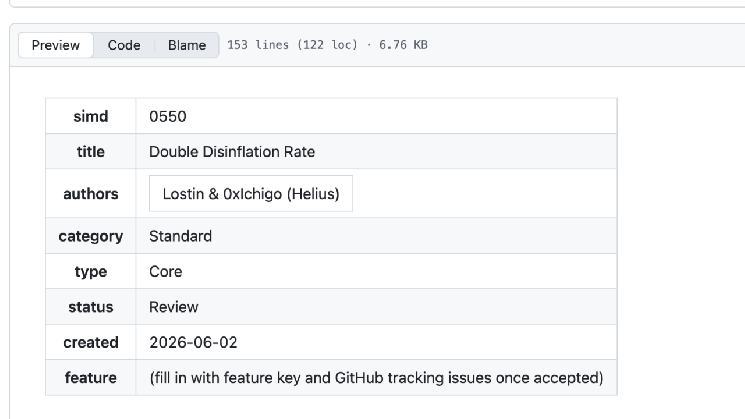
Solana is moving towards a stricter monetary model that could lead to a SOL deficit and significantly reduce staking rewards for holders. Two governance proposals drive these changes. SIMD-550, currently under vote, would double Solana's annual disinflation rate from 15% to 30%, accelerating the timeline to reach a final inflation rate of ~1.5% to the first half of 2029. The second, SIMD-553 (already approved), introduces additional token burning tied to computational units used on the network. Together, these measures could reduce SOL emission by an estimated $1.4-$1.5 billion over six years. The immediate impact would be lower staking yields, potentially falling from the current ~5.25% to approximately 4.34% in year one, 3% in year two, and 2.25% by year three. Analyst Matt Mena from 21Shares suggests inflation should be tied to economic metrics to help offset this decline. The changes also raise concerns for validator economics, with some potentially becoming unprofitable as inflation rewards decrease and voting costs may rise. However, the lower passive yield might push a significant portion of the 67.9% staked SOL into Solana's DeFi ecosystem for activities like lending and trading. This shift could boost network fee revenue to compensate for lower inflation rewards. The proposals aim to trade lower yield today for less dilution tomorrow, betting that network growth and usage will make this a worthwhile trade-off for SOL holders.

cryptonews.ru29 dk önce

Solana Proposals Could Lead to Reduction in Staking Yields to 2.25% and Cut Emissions by $1.5 Billion

cryptonews.ru29 dk önce

Bitcoin 'Basically Hopped' to $80K. What Will Happen to the Price in Autumn?

Bitcoin surged close to $80,000 in August, marking its fastest growth since 2024. Experts anticipate continued volatility for the autumn season, with price forecasts heavily dependent on macroeconomic conditions and regulatory developments in the US. Key drivers for the recent rise include a weakening US dollar, renewed capital inflows into spot Bitcoin ETFs, and liquidations of trading positions. The US Treasury's decision to increase long-term bond purchases has helped stabilize debt markets but pressured the dollar, leading investors to seek assets like Bitcoin as a hedge. Looking ahead, experts outline two primary scenarios for Bitcoin's price. A positive outcome, supported by favorable macroeconomics and the potential passage of the CLARITY Act regulating crypto in the US, could push Bitcoin toward $85,000-$100,000. Conversely, a negative scenario involving hawkish signals from the US Federal Reserve or regulatory setbacks could trigger a correction, potentially driving the price back down to the $62,000-$75,000 range. Institutional demand, reflected in consistent ETF inflows, is seen as a crucial stabilizing factor, gradually outweighing the influence of Bitcoin's traditional four-year cycles. Meanwhile, a broad rally in altcoins is not widely expected, as capital is likely to flow selectively into the most liquid projects. The central question for autumn is whether institutional buying can transform August's rapid surge into a sustainable upward trend.

cryptonews.ru33 dk önce

Bitcoin 'Basically Hopped' to $80K. What Will Happen to the Price in Autumn?

cryptonews.ru33 dk önce

İşlemler

Spot
活动图片