[dragon and tiger list] the signs of BTC's main force fleeing increased, and GRT became Web3 0 best performing currency

Huobi Research2022-04-28 tarihinde yayınlandı2022-04-29 tarihinde güncellendi

Özet

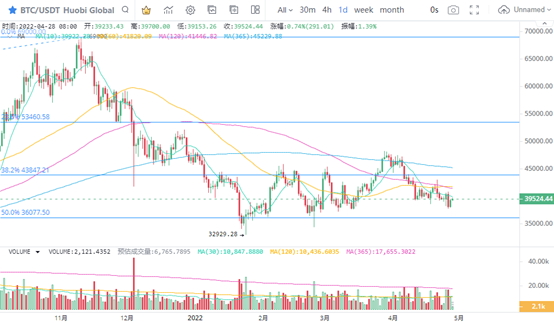
During the period when BTC prices continue to retreat, the rebound frequency increases, and the price has not touched the support level of US $36077 corresponding to 50% of Fibonacci.

1. Market trend: rebound in shock, and the trading volume remains low

During the period when BTC prices continue to retreat, the rebound frequency increases, and the price has not touched the support level of US $36077 corresponding to 50% of Fibonacci. Based on this judgment, the price and gradually close to the short-term support point, the market is about to usher in the opportunity to change the market. According to the range fluctuation, BTC has reached the low price area in the past year, and the opportunity to buy profits has increased. At the same time, among the investors who have held money on the floor, the willingness of long-term investors to take profits has increased. Before medium and long-term investors continue to lose money and ship goods, BTC's low absorption opportunity can still be concerned.
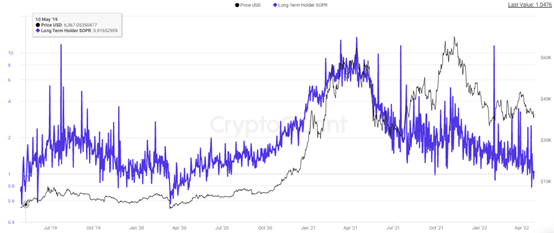
From the trading profit performance of medium and long-term investors, the SOPR index of long-term investors continues to decline in the near future. Although the overall value is still above 1, the recent drop below 1 continues frequently, which means that medium and long-term investors are considering selling BTC. According to this judgment, BTC adjustment is in the late stage, and it is the adjustment stage in which some long-term investors lose out. At this stage, BTC prices may continue to collapse in some stages, but the overall bottoming trend continues. Comparing the SOPR index before and after March 2020 and the BTC bottom confirmation process, the bottom signal will be sent after the typical index is lower than 1.
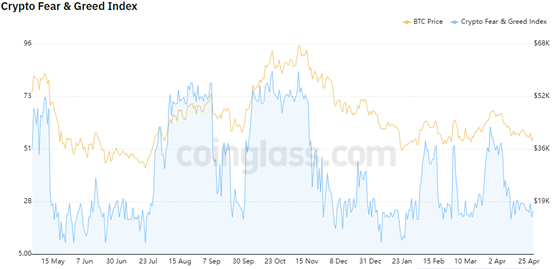
2. Interpretation of panic index:

During the slight decline of the panic index, although the value is obviously running below 30, the extreme value has not reached an unbearable bottom. According to this judgment, the typical bottom characteristics suggested by the panic index are not significant enough. Looking back on the performance of the panic index before July 2021, the value remained low below 30, and the buying signal was not effectively verified until the final value fell to 10. Therefore, in the process of judging the bottom characteristics of BTC, we can pay attention to the bottom building process of panic index.
3. Dragon and tiger list:

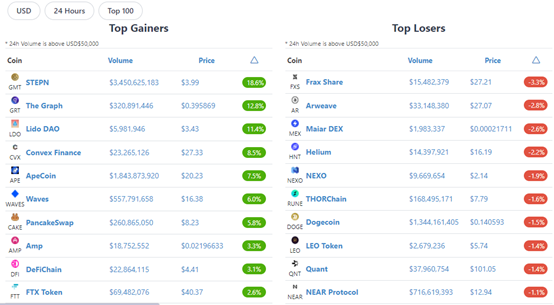
During the overall rebound of mainstream currencies, currencies in different sectors continued to rebound technically. Among the top 100 currencies in terms of market value, GMT, GRT, LDO and other currencies with a rise of more than 11%. Among the top declining currencies, FXS, storage concept AR and exchange concept mex decreased significantly. The overall market is in the rise and fall stage, and the hot spot is Web3 0 conceptual currency.
Increase list

GRT

As Web3 0 concept currency, GRT provides graph protocol service for decentralized data.

The graph (GRT) is one of the earliest decentralized indexing and query software in the market, which is equivalent to Google on the blockchain.

With it, DAPP uses smart contracts to add data to Ethereum.

The graph has also recently integrated a variety of defi protocols, including uniswap, AAVE, decentraland, Gnosis, balancer, synthetix, Polkadot, fantom, etc.

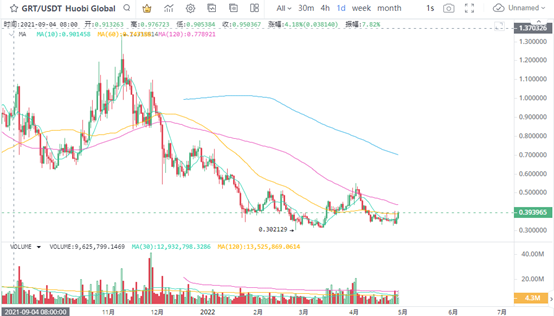
In terms of price, the bottom of GRT of US $0.3 is being gradually confirmed. After the 24-hour price rise has reached 12.8%, GRT is ushering in a better opportunity to rise in the near future. Next, we can continue to pay attention.
LDO

Lido is a financial platform that provides eth bet derivatives in exchange for management fees. Lido allows users to obtain transferable Seth by depositing eth into Lido smart contract without locking assets or maintaining their own infrastructure. In exchange, 10% of all eth pledged derivatives (which can be changed by LDO voting) flow to Lido Dao, which is controlled by the LDO token holder.

The LDO token holder is the owner / manager of the platform. LDO token holders manage Lido Dao's structure and an extended set of contracts, Lido Dao's Treasury, and the LDO token itself. Anything beyond Ethereum (Multi Chain) or IRL (human) is not directly owned or managed by LDO token holders. Although this may change in the future, Lido's governance responsibility is currently divided by LDO token voting on the chain and "voting with feet" by end users and operators.

Liquid stacking is a highly technical, capital intensive and highly competitive market. It is in the interest of LDO token holders to increase the amount of management fees due to Lido by increasing the assets under management (AUM) as much and rapidly as possible, and then reinvest in more growth and security.

As eth2 The concept of 0 pledge is an important currency. The LDO market has a strong performance, and its position locking is maintained at a high level. Judging from this, the upward trend of LDO price will continue.

GMT

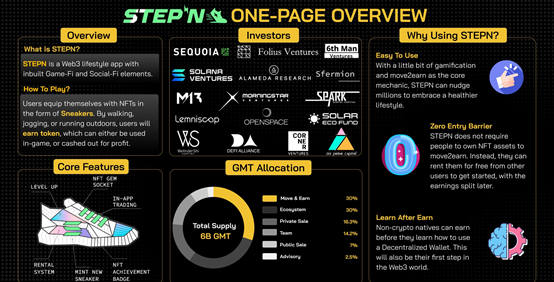
Both gamefi and movetorun have their own cycle, which may be relatively short. With the decrease of heat, the decline of price, the boredom of old players or the emergence of a large number of imitation disks, the application stepn integrating gamefi and socialfi elements appears.

Due to the application of gamefi and socialfi elements and attracting many users outside the encryption circle through the move to ear mode, stepn quickly became popular.

In terms of price performance, GMT not only rose by 18.6% in 24 hours, but also pulled the plate in the state of contraction for the first time. This shows that GMT has recently prompted the signal of market control pulling up, and the shrinking rise means that the main force dominates the short-term market and pays sustainable attention to the price performance.
Decline list

Among the currencies with the highest decline, FXS has the largest short-term adjustment space, which is related to the instability of the overall market trend. Doge, which performed well in the short term, rose and fell, showing the unsustainable characteristics of stimulating the market on the news side. Near continued to rise in the early stage, and also continued to retreat in the near future. There was no strong performance after that. The overall market is in the adjustment stage, paying more attention to a few low absorption opportunities and adjusting expectations.


İlgili Okumalar

Crypto 2029: The Ultimate Forecast for the Four-Year Cycle of the Cryptocurrency Industry

Title: Crypto 2029: The Ultimate Four-Year Cycle Prediction for the Encryption Industry This article outlines a detailed, stage-by-stage prediction for the crypto industry from the present to 2029, focusing on tangible shifts rather than abstract theory. Key predictions include: **2026 Mid-Year:** The market shifts focus from traditional tokens to synthetic perpetual contracts for private company shares (e.g., SpaceX on Hyperliquid), which become primary price discovery tools for pre-IPO assets. Most altcoins languish as the market seeks assets with real underlying value. **2026 Year-End:** The "AI + crypto" narrative fades as the AI industry itself does not require crypto infrastructure, except for prediction markets betting on model performance. Concurrently, a quiet institutional adoption of asset tokenization (e.g., money market funds) begins under new regulations like the CLARITY Act, creating a dual economy. **2027:** Major public blockchain foundations pivot decisively to serve institutional clients with compliance tools and enterprise sales, while quietly building infrastructure for a future wave of accredited retail investors. Three sectors hit growth ceilings: private perpetual contracts (due to legal restrictions on marketing), stablecoins (due to political uncertainty ahead of the 2028 US election), and tokenized assets (due to cautious institutional scaling). **2028:** Speculative trading diminishes as market efficiency drains liquidity. A major liquidation cascade in synthetic perpetual contracts exposes the flaw of lacking a legally enforceable underlying asset. In response, regulations are revised to allow marketing of private security secondary sales to accredited investors. This creates a legal, direct market for private company equity, absorbing much of the demand previously met by synthetic derivatives. **2029:** A new bull market emerges, driven not by tokens but by tradable equity in innovative private companies (biotech, robotics, AI). Tokens without legally enforceable claims to real assets lose all liquidity. Successful blockchains become invisible settlement infrastructure. Stablecoins grow steadily at a policy-capped rate. Speculation becomes a niche. Core Questions Answered: 1. **Token Value:** Determined solely by legally enforceable claims to real-world assets. 2. **Tech Adoption:** Achieved through blockchain-based primary/secondary markets for private equity, not through forcing tokens onto tech firms. 3. **Crypto as Infrastructure:** The transition happens silently; the technology becomes a mundane, unseen utility like traditional settlement systems. The entire thesis hinges on one testable variable: by late 2028, whether accredited retail investors gain legal, direct access to private asset markets. If not, the core premise—that legal frameworks, not technology, are the main bottleneck—fails.

Foresight News7 dk önce

Crypto 2029: The Ultimate Forecast for the Four-Year Cycle of the Cryptocurrency Industry

Foresight News7 dk önce

Four Questions on the Zcash Orchard Vulnerability: Was It Exploited? Can Funds Be Recovered? Is the Supply Verifiable? And Are There Others?

Zcash Orchard Bug: Four Key Questions Answered A critical forgery vulnerability was discovered in Zcash's Orchard privacy pool, raising four major concerns for users. 1. **Was the Orchard bug exploited?** The likelihood is considered low. The bug was found proactively using advanced AI-assisted tools and was promptly patched, limiting any potential attack window. If exploitation had occurred, evidence would likely have surfaced by now. 2. **Can legitimate Orchard funds be recovered?** It is believed so, based on the assessment that the bug was not exploited. If forgery did happen, existing "turnstile" mechanisms could prevent full recovery of legitimate funds if forged coins were moved out first, though this scenario is deemed unlikely. Users can choose to move funds, but this carries risks like loss of privacy or new wallet/software issues. 3. **Can users verify Zcash's total supply?** Currently, no. The vulnerability's prior existence prevented independent verification of the shielded supply. The proposed "Ironwood" network upgrade will restore this ability by sealing the Orchard pool, allowing anyone running a node to verify that the circulating ZEC does not exceed the correct amount. 4. **Are there other forgery bugs?** Ongoing intensive audits by multiple teams, including AI-assisted analysis, have not found additional forgery vulnerabilities, increasing confidence that none remain. Further work and collaborations are planned to provide additional guarantees. In conclusion, while the team assesses that exploitation was unlikely and the supply is safe, the upcoming upgrade is critical to restore users' ability to independently verify Zcash's supply integrity, moving away from reliance on trust.

marsbit51 dk önce

Four Questions on the Zcash Orchard Vulnerability: Was It Exploited? Can Funds Be Recovered? Is the Supply Verifiable? And Are There Others?

marsbit51 dk önce

Four Questions on the Zcash Orchard Vulnerability: Was it Exploited? Can Funds Be Recovered? Is the Supply Verifiable? Are There Others?

**Summary: Zcash Orchard Vulnerability Analysis** A critical forgery vulnerability was recently discovered in Zcash's Orchard shielded pool, raising concerns about the coin's supply and user funds. The developers, led by Zcash Open Development Labs, acted swiftly to temporarily freeze the pool and deploy a fix. The article addresses four key questions: 1. **Was the vulnerability exploited?** While unknown, the developers believe it is unlikely for several reasons: the bug was difficult to find, using advanced AI tools; the fix was deployed quickly; and typical crypto exploits are fast, with no evidence of abnormal outflows. 2. **Can legitimate Orchard funds be recovered?** If the bug was not exploited, all funds are safe. If exploited, a mechanism limits total withdrawals from the pool to the amount legitimately entered, potentially blocking some legitimate funds. The developers deem this unlikely but advise cautious users to consider moving funds, noting the privacy and risk trade-offs of moving to transparent or Sapling pools. 3. **Can users verify Zcash's total supply?** Not currently. The vulnerability temporarily broke the ability for users to independently verify that no extra ZEC was created. 4. **Are there other forgery bugs?** Ongoing audits by multiple teams, including using advanced AI analysis, have so far found no others, increasing confidence. The proposed "Ironwood" network upgrade is the core solution. It will **seal** the Orchard pool, preventing new entries or internal circulation. This action, combined with the existing withdrawal mechanism, will restore the ability for any node operator to verify that Zcash's supply limit has not been violated, regardless of whether exploitation occurred in the past. The upgrade aims to restore the system's long-term credibility through user-verifiable supply integrity.

Odaily星球日报51 dk önce

Four Questions on the Zcash Orchard Vulnerability: Was it Exploited? Can Funds Be Recovered? Is the Supply Verifiable? Are There Others?

Odaily星球日报51 dk önce

İşlemler

Spot
Futures
活动图片