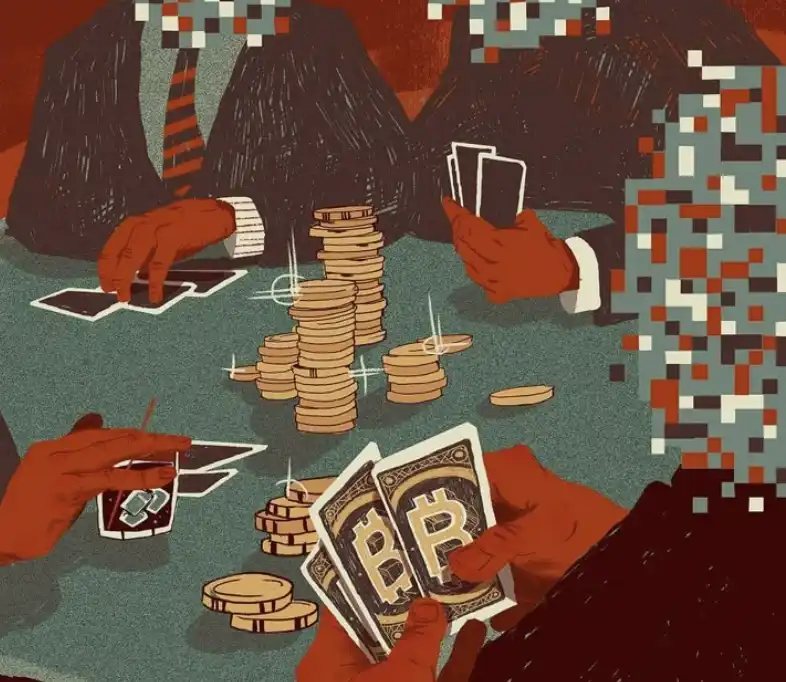
he emergence of cryptocurrencies has changed people’s perspectives toward wealth. While blockchain technology is coming up with new innovations every other day, the latest talk of the town is BRC-20. BRC-20, like Ethereum’s ERC-20 token standard, is a token standard that operates on the Binance Smart Chain (BSC). This new token standard boomed the crypto world with its high utility. It has swiftly become one of the most popular token standards on the Binance Smart Chain.
Also, the utilization in a variety of decentralized finance (DeFi) projects. Here is a sneak peek into BRC-20’s history, coins created on BRC 20, and future prospects of this ground breaking technology.
What is BRC-20?
BRC-20 uses ordinal inscription and is an experimental token standard. It was launched by an anonymous developer Domo on March 09, 2023. BRC-20 tokens are fungible tokens that are native to Bitcoin. Interestingly, unlike popular token standards on EVM blockchains, the BRC-20 standard does not use smart contracts; instead, it allows users to store a script file on Bitcoin and use that to associate tokens with specific satoshis. To deploy, mint, and transfer tokens, users can use BRC-20 tokens, which embed JSON data into ordinal inscriptions.
Despite being only an experimental fungible token, BRC-20 tokens have generated a lot of interest in the Bitcoin community. BRC-20 has begun to be integration by ordinals infrastructure providers, such as wallet services and marketplaces, to allow their users to create and trade BRC-20 tokens.
The power of open-source communities is best demonstrated by BRC-20 tokens. When a developer introduces a novel idea and makes it open-source, the concept can change and take on a life of its own because other enthusiasts keep pushing the experiment’s boundaries. The potential for significant advancements that push the limits of the underlying technology can occur occasionally in such an open, collaborative environment.
Some of the prominent and foremost examples of tokens devised on BRC-20 are pepe tokens, Ordi, and VMPX. These token standards have their own modus operandi, as is the case. The case in point is, BRC-20 are Non-fungible in nature, which simply means that each and every ordinal is unique and different from the previous one with distinct attributes.
However, smart contracts have more use cases as compared to ordinals. The functionality of Ordinals is limited to minting and transferring. Moreover, the gravity of BRC-20 tokens lies in their fungibility, which makes them interchangeable and have equal value.
History Of BRC-20
BRC-20’s history incredible ,its rise of the Binance Smart Chain (BSC). Back in September 2020, Binance came up with a surprising innovation titled BRC-20, a faster, less expensive alternative to the Ethereum blockchain. Showering all its traits, BRC-20 immediately became popular among both developers and users, and it quickly became a hub for DeFi initiatives. Its popularity stems from its ease of usage, cheap costs, and compatibility with present Ethereum tools and infrastructure.
The BRC-20 token standard was made using Ordinals and Inscriptions and was originally kept on the Bitcoin base chain. Hence, this token standard popped out from creating the Ordinals protocol, which in return allows users to store any file on the Bitcoin blockchain.
Use cases of BRC-20 tokens
Peer-to-peer transfers
One of the most significant and basic things which can is done by BRC-20 token is to transfer the token to your peers as an indication of value transfer. These tokens can utilize the functionality of Bitcoin and can be moved or transferred to various wallets irrespective of the location of each wallet. Moreover, BRC-20 tokens take over the level of efficiency used by Bitcoins and transaction fees are charged natively in Bitcoin.
Decentralized Finance (Defi)
Touching the heights of decentralized finance (Defi) systems is still in the nascent stage by Ethereum and EVM networks. However, the instigation of BRC-20 can be the starting point of decentralized finance because unlike Bitcoin, BRC-20 is flexible and can be amalgamated to Defi protocols.
Additionally, BRC-20 can be easily integrated into decentralized exchanges (DEX), yielding farms, and other lending protocols. As a starter, Ordinalwallets.com has already devised a platform for transferring, trading and minting BRC-20 and Bitcoin NFTs. Platforms like these will soon show a snowball effect with the advancement of BRC-20.
Understanding BRC-20 tokens
Though, we refer to BRC-20 tokens as fungible entities, it is appropriate to call it semi-fungible since these tokens in predefined increments can only be exchanged. If someone wants to mint BRC-20 tokens;
The foremost step is to create JSON (JavaScript Object Notation) Non-fungible token (NFT) defining the particular amount to be minted.
Then they must compete with others via a lead gas auction so that the mint can be finalized.
Additionally, to exchange the token natively on Bitcoin, the seller must make up a transfer Non-fungible token (NFT) to disperse the original mint NFTs into smaller chunks so that they initiate the selling process of predefined batches of tokens.
Moreover, if a buyer wants to purchase BRC-20 tokens, they must follow the rules of the barter system, wherein they have to look for a seller who is willing to sell the exact similar amount of BRC-20 tokens.
Impacts of BRC-20 token on transaction fees
Devising and transferring BRC-20 tokens requires more space on the blockchain, unlike peer-to-peer (P2P) transactions. For instance, transacting the traditional Bitcoin needs kilobytes, while BRC-20 which is layered on the ordinal inscription requires a space of 4MB in size.
One of the key reasons for the increase in transaction fees is the difference between traditional NFTs and Ordinal Bitcoin NFTs. In ordinals all the data is directly stored on-chain so whatever data and instructions are summed up to the inscription becomes a part of the transaction. However, the case is very different from traditional Non-fungible tokens ( NFTs), which point to an external source of information, where the art or data is stored.
Future Of BRC-20
The market of BRC-20 is rapidly expanding. A total of 14,709 different tokens made using the BRC-20 standard have already popped up in the crypto world and the number is getting stiffer. BRC-20 is turning out to be a new revolution with its tokens fast approaching a market cap of $1 billion.
On top of that, the team behind BRC-20 is rapidly evolving, and they have promised to polish the features of BRC-20, which will make it easier for developers to craft tokens using BRC-20. We should anticipate seeing even more tokens and financial products employing BRC 20 as the DeFi space grows. Summing up, BRC-20 is likely to have a bright future, playing a significant role in the world of cryptocurrencies.
Conclusion
The impact of the blockchain industry and the endless use cases could surge the utility of BRC-20 token standard. Any technology which is in its nascent stage has its own vulnerable ebbs and flows. However, nonetheless the current fad highlights the upliftment of BRC-20 token standard and its inevitable growth in future.