BTC生态 | Ordinals迎来「禧年」,诅咒铭文即将绝版?

Odaily星球日报2023-11-15 tarihinde yayınlandı2023-11-15 tarihinde güncellendi

Özet

诅咒铭文或将获得“大赦”或“祝福”,但尘埃尚未落定。

原创 | Odaily星球日报

作者 | 南枳
BTC生态 | Ordinals迎来「禧年」,诅咒铭文即将绝版?

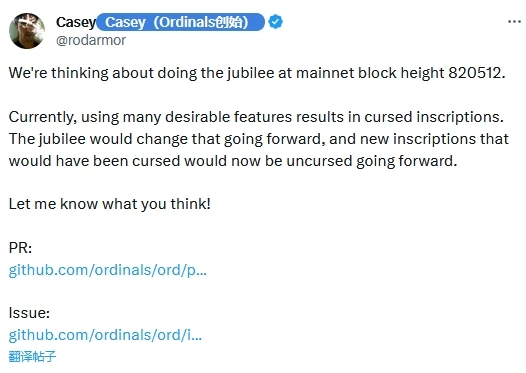
昨日,Ordinals 创始人 Casey 于 X 平台发文表示:“我们正在考虑在主网区块高度 820512 (约 26 天后) 进行 jubilee(禧年)。目前,使用许多功能会导致被诅咒的铭文。jubilee 将改变这一点,而那些本来会被诅咒的新铭文现在将不再受到诅咒。”

Odaily 注:在犹太教中,禧年也被称为大赦年,被认为是一段特殊时间,期间负债免除,奴隶得以自由。在基督教中,禧年的概念也有类似的含义,被视为庆祝上帝的恩典和宽恕。

诅咒铭文(Cursed Inscription)是因为有部分错误和缺失的功能导致 Ordinals 代码无法识别某些铭文,于是 Casey 提出了“诅咒”的铭文概念,赋予其负数编号并视为“被诅咒的”。
BTC生态 | Ordinals迎来「禧年」,诅咒铭文即将绝版?

Casey 的推文并非最终计划而是大致的预告,将对目前已知的、能产生诅咒铭文的途径进行修复,在 Jubilee 之后不再能够用这些方法产生诅咒铭文,这意味着诅咒铭文或将“绝版”,但并不能排除将来还会出现其他新的 Bug 导致无法识别的诅咒铭文的情况。

近期进展与计划

实际上,诅咒铭文由来已久,Ordinals 团队在今年上半年就表示将在特定的区块高度后对其进行修复。而 Casey 也在推文中附上了其今年 10 月在 Github 上的相关讨论。该讨论的重点内容包括:

  • 诅咒铭文或不会赋予正数序号

10 月 15 日,Casey 表示“我们可以通过在激活高度后的最后一个正铭文后给他们正铭文编号来祝福先前的诅咒铭文。然而,我不确定这是否值得”, 但之后又表示“我很犹豫要不要承诺负数序号永远不变”。

BTC生态 | Ordinals迎来「禧年」,诅咒铭文即将绝版?

两周前,Casey 再次明确了其意见“我认为我们不太可能会祝福被诅咒的铭文,但被诅咒的铭文的全部意义在于它们不稳定,所以我想保持这种灵活性,不要因为承诺稳定而让自己再次陷入麻烦。”

诅咒铭文的一大特性便在于其负数序号的特殊性,若赋予了正数序号其“收藏”价值或将大打折扣,但目前如何处理尚未有披露信息。

  • 修复仍为时尚早

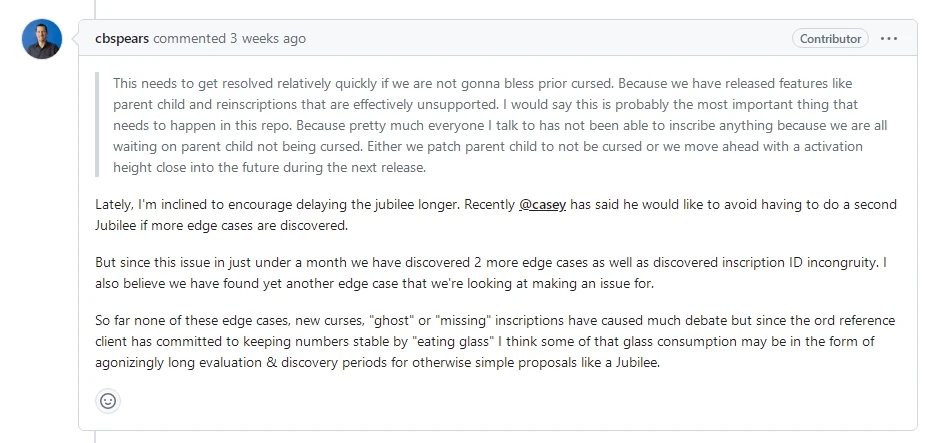
Ordinals 贡献者cbspears表示:“我倾向于鼓励推迟 jubilee。最近 Casey 表示,若发现更多的特殊案例,希望避免第二次 jubilee。

但是自从这个问题提出以来,在不到一个月的时间里,我们发现了 2 个更多的特殊案例,发现铭文 ID 不一致。我还认为,我们已经找到了另一个特殊案例。”
BTC生态 | Ordinals迎来「禧年」,诅咒铭文即将绝版?

这意味着目前的修复可能覆盖并不全面,新的“诅咒铭文”的种子仍未完全清除。Casey 的推文也只是一条初步预告,各开发者和社区成员也仍在讨论当中。

虽具体计划与时间表仍未明确,但市场已开始对相应标的进行炒作。例如 Cursed Bitcoin Punks、Cursed Pokemon 等诅咒系列的 NFT,以及同名概念 BRC-20 代币 CRSD、诅咒代币-TAP,一时间成交量与价格都大幅上涨。
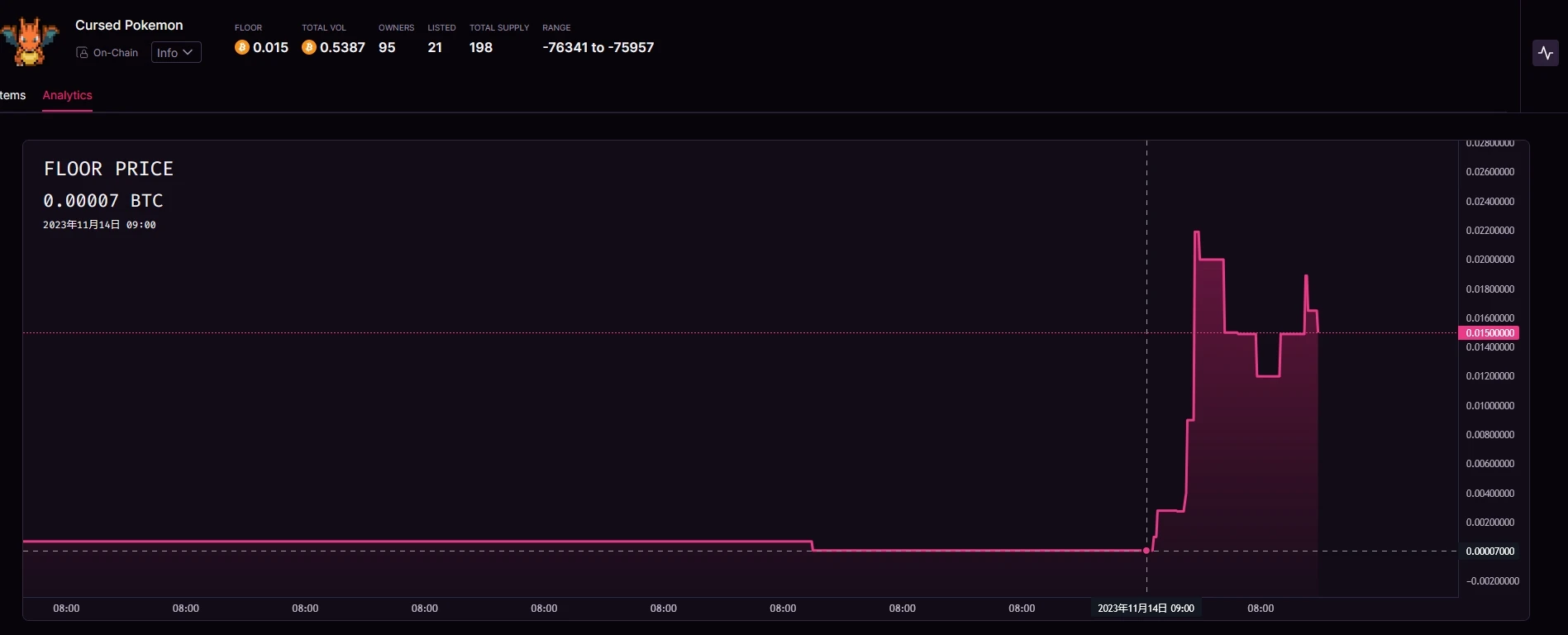
BTC生态 | Ordinals迎来「禧年」,诅咒铭文即将绝版?诅咒铭文作为 Ordinals 的特殊产物,像错版邮票一样确有其特殊性和收藏价值,但由于未来计划的不确定性,仍具备一定风险,投资者需谨慎甄别。

İlgili Okumalar

Huawei Cloud Rejects Token Price War, Zhou Yuefeng Seeks a New Winning Formula for AI Cloud

At the 2026 Huawei Cloud INSPIRE Creator Conference, CEO Zhou Yuefeng outlined Huawei Cloud's distinct strategy in the competitive AI cloud market. Instead of engaging in price wars based on token volume or Maas revenue—a common focus for rivals like Alibaba Cloud and ByteDance's Volcano Engine—Huawei Cloud is shifting the competition towards real-world productivity gains. Zhou highlighted three core differentiators: a fully domestic computing stack (Ascend, Kunpeng), a focus on government and enterprise clients rather than consumer internet, and a deep commitment to open-source ecosystems. To this end, Huawei Cloud launched a suite of new products under the "Agentic Infra" paradigm, including the AICS Lingqu computing cluster, AMS memory storage, and the ModelArts Next platform. These aim to solve enterprise challenges in deploying AI agents, such as latency, memory, scheduling, and security. The strategy further involves creating specialized industry zones ("AI Dream Factories") for sectors like healthcare and embodied intelligence. For example, a smart medical zone developed with Shanghai Ruijin Hospital aims to democratize expert-level diagnostic capabilities. In essence, Huawei Cloud is positioning itself not as a commodity token provider, but as the foundational infrastructure for industrial AI, leveraging its domestic supply chain and hybrid cloud solutions to serve sectors where productivity, not just scale, is the ultimate measure of value.

marsbit1 saat önce

Huawei Cloud Rejects Token Price War, Zhou Yuefeng Seeks a New Winning Formula for AI Cloud

marsbit1 saat önce

70% of the Public Opposes AI, Americans Hope the U.S. Loses the AI War

70% of Americans believe AI development is moving too fast, with growing public resistance evolving from online criticism to real-world protests and violence. This widespread anti-AI sentiment stems from fears of job losses, rising utility costs, environmental damage, threats to democracy, and financial instability. Key incidents illustrate the backlash: Google's former CEO Eric Schmidt was loudly booed at a graduation for promoting AI; AI company ads are vandalized; protests and even violent attacks target AI firms and data centers. Polls show deep public pessimism and strong local opposition to data center construction, often surpassing resistance to nuclear power plants. The core grievances are economic and practical: AI is seen as automating jobs, concentrating wealth, and increasing household electricity and water bills due to massive data center resource demands. Environmentalists also oppose AI's high energy use and carbon emissions. This opposition has turned AI into a major political issue in the US. While the Trump administration prioritizes AI innovation for global competition, bipartisan pushback is growing. Democrats and factions within the MAGA movement are forming temporary alliances to support stricter regulations and local bans on new data centers, pressuring the administration to choose between its tech industry backers and its voter base. The situation highlights a profound national divide over AI's future.

marsbit1 saat önce

70% of the Public Opposes AI, Americans Hope the U.S. Loses the AI War

marsbit1 saat önce

İşlemler

Spot
Futures
活动图片




