NFT赛道复苏?八组数据解读NFT市场近况

Odaily星球日报2023-11-13 tarihinde yayınlandı2023-11-13 tarihinde güncellendi

Özet

NFT 能否迎来复苏大拐点,需要新系列、新叙事、新金融方式的刺激,也受到 Crypto 整体市场的影响。

原文作者:Karen,Foresight News

Crypto 整体市场向好趋势下,NFT 市场出现复苏迹象,蓝筹地板价出现普遍性的反弹,头部 NFT 系列 BAYC、CryptoPunks 在过去 30 天的地板价增幅分别为 19% 和 33% 。

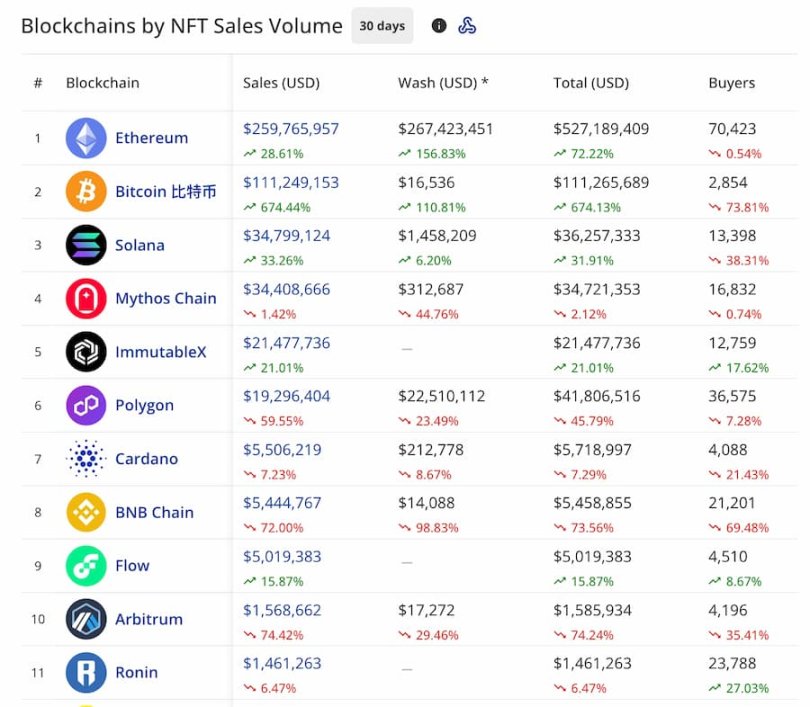
与此同时,近三个月,以太坊 NFT 市场成交量小幅反弹,但是否扭转有待观察。按公链网络来看,过去 1 个月,以太坊 NFT 交易额达 2.6 亿美元,稳坐第一宝座。随着比特币生态崛起,比特币上 NFT 成交量也再次冲到第二,过去 1 个月成交量达到 1.1 亿美元。

从交易数量和地址来看,以太坊 NFT 交易笔数在 7 月份以来稳定蓄力,独立 NFT 交易地址数量虽降速放缓,但未见反弹趋势。

笔者看来,当前 NFT 市场虽有复苏迹象,但能迎来复苏大拐点,需要新系列、新叙事、新金融方式的刺激注入新的活力,也受到 Crypto 整体市场的影响。

以太坊 NFT 成交稳居第一,比特币直冲第二

根据 CryptoSlam 数据,按公链网络来看,截至撰稿时,近一个月,以太坊上 NFT 交易额达到近 2.6 亿美元(剔除对敲交易 2.67 亿美元),稳坐第一宝座。而在比特币生态持续火热的背景下,比特币上 NFT 成交情况也呈现出高增长趋势,继今年 5、 6 月份后再次冲到第二,过去 1 个月成交量达到 1.1 亿美元,其中,本月迄今为止的成交量就超过了 9800 万美元。
NFT赛道复苏?八组数据解读NFT市场近况

来源:CryptoSlam

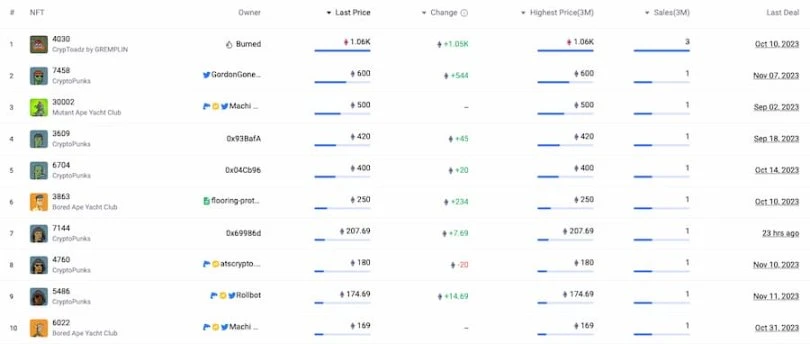
下图是过去 3 个月成交价最高的 10 个 NFT。
NFT赛道复苏?八组数据解读NFT市场近况

来源:NFTGo

其次是 Solana、Mythos Chain、ImmutableX 和 Polygon,这四个网络过去一个月 NFT 成交量均在 2000 万美元至 4000 万美元之间。

这里也提下 Mythos Chain,Mythos Chain 是一个许可 EVM 区块链和游戏生态系统,托管头部链游工作室 Mythical Games 的旗舰游戏资产和 NFT 市场,如 CS:GO 皮肤市场 DMarket(占据 Mythos Chain 链上成交量的 99% )、NFL Rivals(由美国国家橄榄球联盟 NFL 与 Mythical Games 合作推出)、Nitro Nation World Tour 和 Blankos Block Party。Mythical Games 是 Mythos 的初始贡献者和支持者。

以太坊 NFT 市场成交小幅反弹,是否扭转有待观察

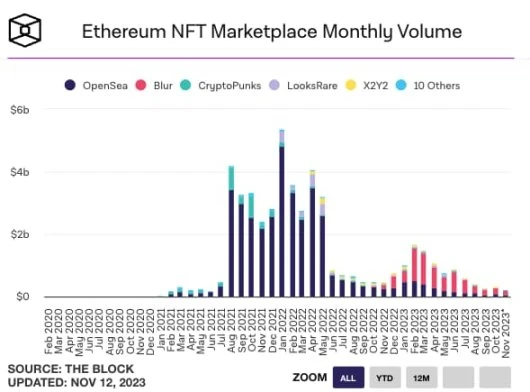
下面 The Block Data 这张图表能直观地反映出以太坊 NFT 市场成交量的变动情况(过滤掉清洗交易),可以看到,今年 2 月份以来,以太坊 NFT 市场成交状况呈逐步下降趋势, 9 月份后结束下降趋势, 10 月份的成交量超过 3 亿美元, 11 月份至今的成交量为 2.3 亿美元,出现反弹趋势,但目前说开始扭转可能还为时尚早。
NFT赛道复苏?八组数据解读NFT市场近况

来源:The Block Data

若细分 NFT 市场, 3 月份以来,大部分时间段内 Blur 成交量占比稳定在 50% 到 70% 之间,OpenSea 的市场占比在 6 月份一度跌至 16% 左右,随后逐步恢复,在 10 月 15 日至 10 月 22 日短时占据 68% 的市场份额,目前降到 25% 左右。

 NFT赛道复苏?八组数据解读NFT市场近况

来源:The Block Data

以太坊 NFT 交易笔数在 7 月份以来稳定蓄力

交易笔数方面,根据 The Block Data 数据,和成交量趋势类似,年初开始,NFT 交易笔数一直延续下降趋势,尤其是 3、 4、 5 月份从每月 200 万笔骤降到每月 50 万笔,不过 7 月份以来稳定在每月 50 万到 60 万笔。

NFT赛道复苏?八组数据解读NFT市场近况

来源:The Block Data

以太坊独立 NFT 交易地址未见反弹趋势

独立交易用户的变动情况也能在很大程度反应出 NFT 玩家的整体情况。较为失望的是, 2 月份以来 NFT 交易用户持续减少, 10 月份每月交易用户为 15 万,相较 5 月份的 45 万已跌去 66% ,不过下降幅度在减缓,尚未看到反弹趋势。

NFT赛道复苏?八组数据解读NFT市场近况

来源:The Block Data

以太坊累计 NFT 玩家数量统计图也能体现出当前 NFT 玩家的增长曲线趋于平缓。

NFT赛道复苏?八组数据解读NFT市场近况

来源:The Block Data

以太坊 NFT 地板价普遍反弹

来自 WGMI.io 的数据显示,按照近 30 日的成交量来看,成交量最多的前 20 个 NFT 系列的地板价均出现了上涨,平均涨幅为 47% ,其中,头部 NFT 系列 Bored Ape Yacht Club(BAYC)、CryptoPunks 在过去 30 天的地板价增幅分别为 19% 和 33% 。

Animoca Brands 支持的跨媒体 NFT 项目 The Grapes 系列增幅最大,达到 200% ,第一代 Pixelmon 和 CrypToadz by GREMPLIN 的增幅也超过 100% ,Doodles 在遭受重创后在过去一个月反弹 93% 。头部 NFT 系列 Bored Ape Yacht Club(BAYC)、CryptoPunks 在过去 30 天的地板价增幅分别为 19% 和 33% 。

NFT赛道复苏?八组数据解读NFT市场近况

来源:WGMI.io

下面这张图能直观地显示近一年半蓝筹 NFT 地板价变动情况。

NFT赛道复苏?八组数据解读NFT市场近况

来源:The Block Data

NFT 谷歌趋势热度持续低迷

谷歌趋势可以在一定程度上反映出圈外对 NFT 的关注程度。下图显示了 2021 年以来全球范围内 NFT 的搜索热度。如果将 2022 年 1 月份最高搜索热度的值视作 100 分, 2022 年 12 月份的小高峰为 19 ,今年 5 月份以来的热度值在 5 到 7 之间。

NFT赛道复苏?八组数据解读NFT市场近况

来源:Google Trends

若按区域显示,中国大陆地区的搜索热度最高,其次为香港地区、新加坡、直布罗陀、尼日利亚、澳门地区、开曼群岛和韩国。

盈亏地址数比严重失衡

根据 NFTGo 数据,排除疑似清洗交易后,过去 30 日,盈利大于 1 ETH 的唯一地址的数量为 5.77 万个,亏损大于 1 ETH 的唯一地址数量为 49.55 万个,数值比例为 1 比 8.6 。30 天盈亏是指过去 30 天内销售产生的已实现利润与每个地址持有的 NFT 的预计未实现利润之和。

NFT赛道复苏?八组数据解读NFT市场近况

来源:NFTGo

比特币上累计铭刻 3895 万枚 NFT,近 68 万个钱包持有

OKLink 比特币浏览器统计到的比特币 NFT 系列有 2382 个,下面是持仓地址数最多的 10 个系列。

NFT赛道复苏?八组数据解读NFT市场近况

来源:OKLink 比特币浏览器

Bitcoin NFTScan 数据显示,截止到 11 月 13 日,比特币网络上累计铭刻了 3895 万枚 NFT,在链上创造了 2482 枚 BTC 的 Gas 费消耗,目前持有比特币 NFT 资产的钱包地址有 67.89 万个。

下面两张图可以看出今年以来比特币 Ordinals 铭刻数量和费用的变动情况,Ordinals 热度高峰期在今年 5 月份、三季度以及本月。

NFT赛道复苏?八组数据解读NFT市场近况

来源:Dune

NFT赛道复苏?八组数据解读NFT市场近况

来源:Dune

İlgili Okumalar

Bernstein Report: Agentic AI Will Transform CPU from Supporting Role to Leading Role, Bullish on Hygon Information

Bernstein research report: Agentic AI will turn CPUs from supporting players to leading roles, bullish on Hygon Information. Analysts led by David Dai argue that AI is transitioning from the chatbot era to the agentic AI era. Unlike simple query-response models, agentic AI involves complex workflows including retrieval, planning, tool calling, and multi-step reasoning. This shift dramatically increases the demand for CPU compute to orchestrate these tasks, manage memory, and prevent expensive GPU idling. The report forecasts that the GPU-to-CPU ratio in inference clusters will reverse from 8:1 in 2025 to 1:1 by 2029. In agentic AI workloads, CPUs could account for 50% of the compute, on par with GPUs. Consequently, the server CPU Total Addressable Market (TAM) is projected to surge from $37 billion in 2025 to $223 billion by 2030, representing a 6x expansion. Arm is identified as a key beneficiary due to its superior performance-per-watt and a strategic shift from IP licensing to designing its own chips, targeting $15 billion in chip revenue by 2030. Bernstein raises Arm's price target to $500. For x86 vendors, the report is Overweight on AMD (target $600) and Hygon Information (target CNY 450), citing leadership and strong growth in the Chinese market respectively. Intel's target is raised to $100, reflecting upgraded earnings assumptions. The analysis acknowledges significant supply-side risks, questioning whether foundry and memory capacity can support such rapid CPU growth. The optimistic demand forecast also heavily relies on Nvidia's guidance for over $1 trillion in annual AI infrastructure spend by 2027.

marsbit8 dk önce

Bernstein Report: Agentic AI Will Transform CPU from Supporting Role to Leading Role, Bullish on Hygon Information

marsbit8 dk önce

Will UNI Reach $100 in Four Years? Can Standard Chartered's Prediction Come True?

TL;DR: Standard Chartered Bank predicts UNI token will reach $100 by 2030, based on the growth of tokenized assets fueling demand for open DeFi liquidity and Uniswap's potential to capture fees from that trading. However, institutional tokenized products like BlackRock's BUIDL fund show that strict access controls and permissioned systems remain major barriers. Standard Chartered's $100 price target for Uniswap's (UNI) governance token by 2030 projects massive growth from current levels. The bank's thesis hinges on tokenized real-world assets (RWA) reaching trillions in value and a significant portion flowing into open, decentralized markets for trading and liquidity, rather than remaining in closed, permissioned systems. Uniswap's position as a leading decentralized exchange (DEX) infrastructure could allow it to capture a major share of this future trading activity. A key challenge is whether tokenized assets like bonds, funds, and stocks will trade openly on DEXs or be restricted to controlled, institutional platforms. The case of BlackRock's BUIDL fund exemplifies this tension: while it uses Uniswap's technology for settlements, trading is strictly limited to pre-approved, whitelisted institutional participants. This hybrid model provides DeFi efficiency but maintains traditional access barriers. For UNI to achieve such a high valuation, Uniswap must not only see increased trading volume from tokenized assets but also implement effective value-capture mechanisms for token holders. Recent governance proposals aim to direct protocol fees to UNI stakers, creating a clearer link between platform usage and token value. Ultimately, the realization of Standard Chartered's prediction depends on the future structure of the tokenized asset market. If open liquidity pools and reduced restrictions prevail, Uniswap's role could expand far beyond crypto-native trading. If permissioned, walled-garden systems dominate, its growth from institutional tokenization may be limited. The prediction itself signals growing institutional recognition of DeFi's potential role in the future of finance.

marsbit17 dk önce

Will UNI Reach $100 in Four Years? Can Standard Chartered's Prediction Come True?

marsbit17 dk önce

Banking Giants Battle in the Tokenization Arena: Who Will Take the Lead?

**Banking Titans Battle in Tokenization: Who Leads the Pack?** Four major banks—JPMorgan Chase, Goldman Sachs, HSBC, and BNY Mellon—are heavily investing in tokenization infrastructure but have adopted distinct strategic paths. This analysis compares them across four key dimensions: verified transaction volume, product breadth, regulatory compliance, and underlying infrastructure model. JPMorgan's Onyx network stands out with over $1 trillion in cumulative cleared transaction volume, focusing deeply on niche areas like tokenized collateral management and intraday repo settlement. However, its closed private network limits market reach. Goldman Sachs Digital Assets Platform (GS DAP) leads in product diversity, having executed tokenized bond issuances for sovereign entities and supranational organizations, and launched tokenized money market funds. It is also a founding member of the Canton Network, a shared ledger for institutions, though its overall cleared volume is less publicly disclosed than JPMorgan's. HSBC's Orion platform carves a niche in cross-border tokenized securities and sustainable finance, exemplified by its tokenized gold product and its role in large-scale digital green bond issuances for the Hong Kong Monetary Authority. Its global network provides a unique advantage in Asia and emerging markets. BNY Mellon, as the world's largest custodian, plays a fundamentally different role by providing essential custody and asset servicing infrastructure for digital assets, notably supporting the Canton Network. It does not actively issue front-end tokenized products. In summary, no single bank dominates all fronts. JPMorgan leads in scale, Goldman in product breadth, HSBC in global cross-border positioning, and BNY Mellon in foundational custody services. The market is likely to see multiple parallel development paths. A key future challenge is avoiding fragmentation; the success of interoperability standards like those within Canton Network will be crucial to realizing blockchain's full efficiency gains across the entire financial ecosystem. The next 5-10 years will reveal which institution builds the most enduring competitive moat.

Foresight News41 dk önce

Banking Giants Battle in the Tokenization Arena: Who Will Take the Lead?

Foresight News41 dk önce

İşlemler

Spot
Futures
活动图片