检验Ordinals的叙事假说:一种「安全税」?

Odaily星球日报2023-11-09 tarihinde yayınlandı2023-11-09 tarihinde güncellendi

Özet

BRC 20 的火热,变相的向 BTC 交易的刚需用户征收了「安全税」。

原文作者:DrJinglee(X:@ordjingle)

编者按:近日,Ordinals 只有 FEE。

检验Ordinals的叙事假说:一种「安全税」?

图二

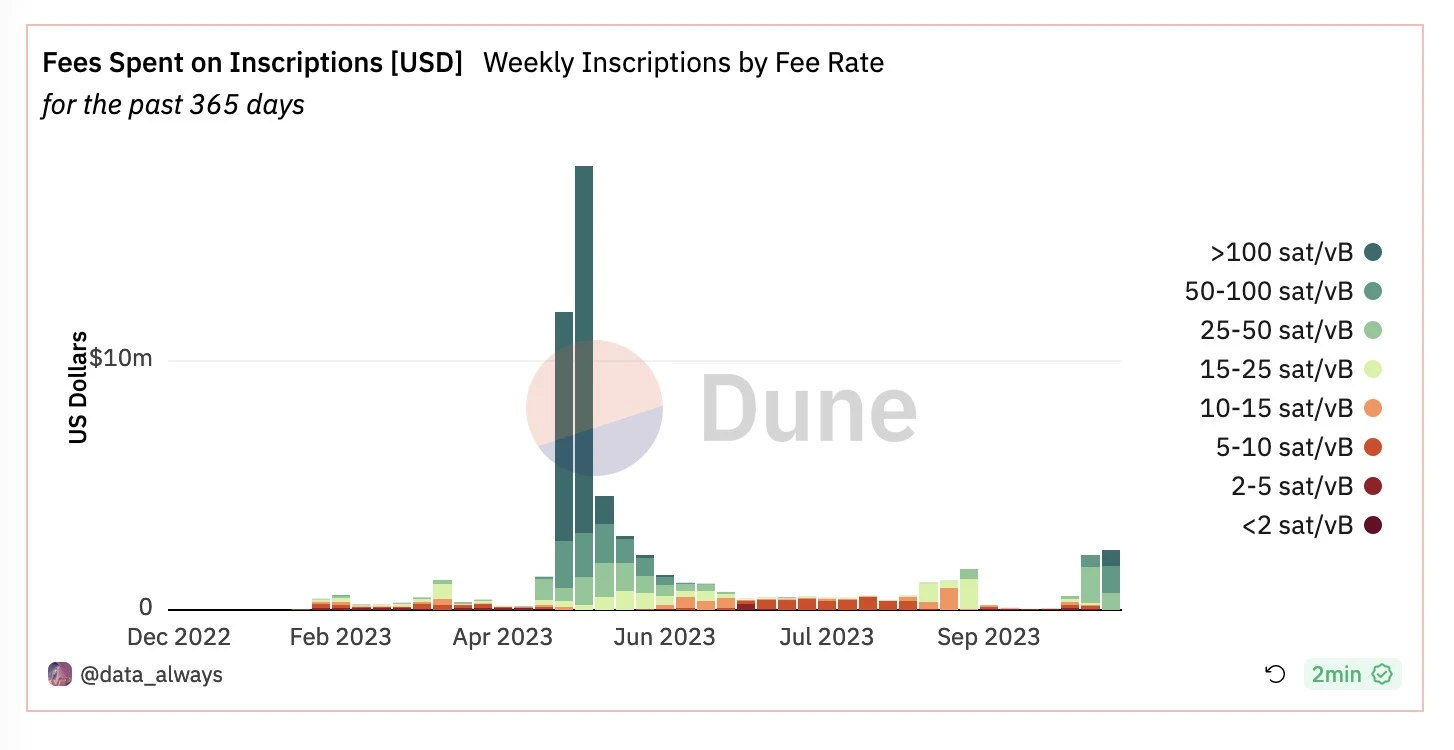
从图二明显可见 BTC 链上的 FEE 在过去两周有了明显的回暖,但这一次链上活动产生 Fee 的高度和前面 5 月份产生的高度相差还很大。

检验Ordinals的叙事假说:一种「安全税」?

图三 

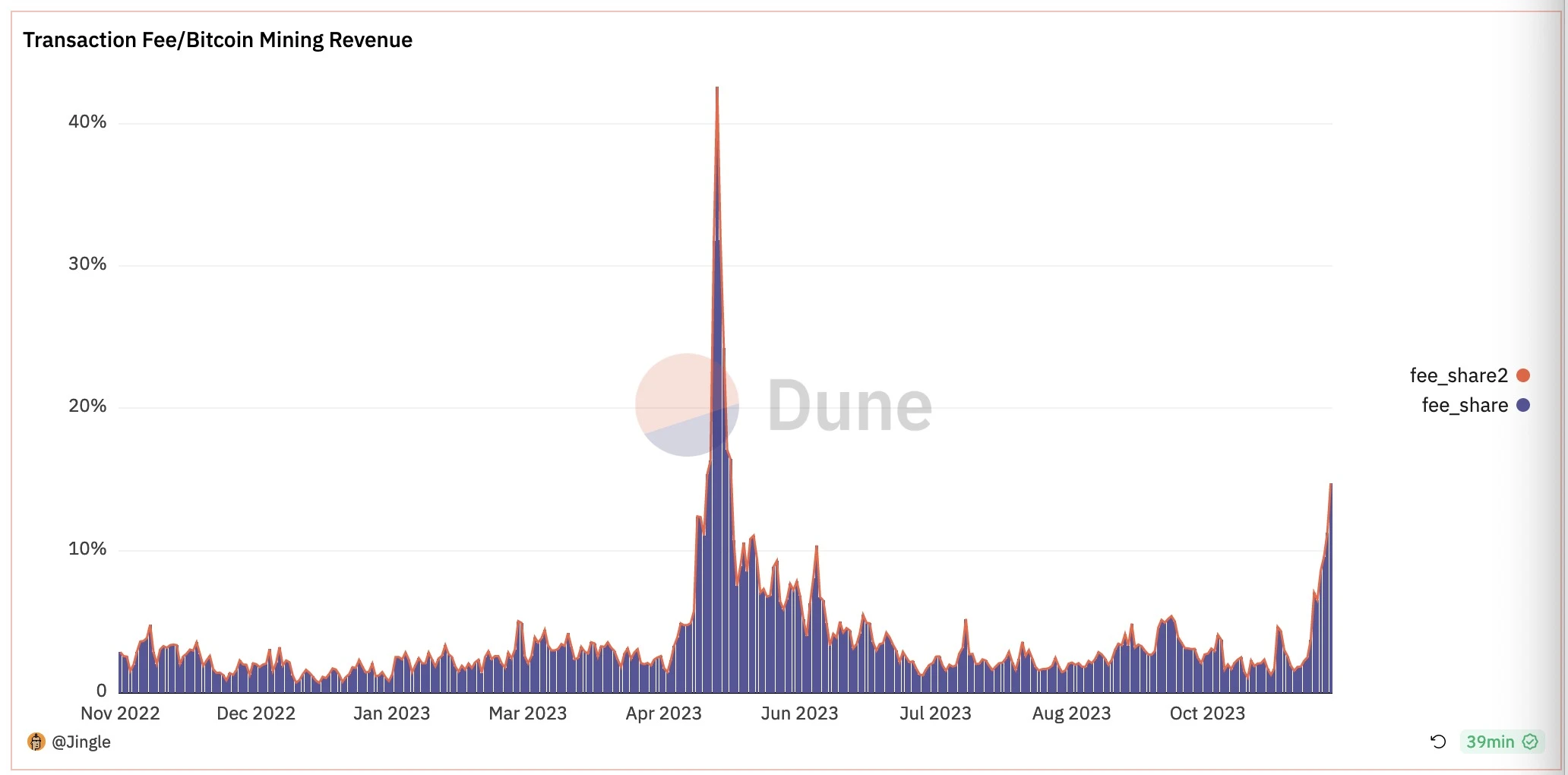
图三是检验 Ordinals 或者广义的 Layer 1 对 security budget 贡献的跟踪指标,在假设普通交易转账大体不变的情况下,可以看到因为 Layer 1 协议带来的交易费用的增加,最高到过目前整个 coinbase 的 40% 左右,也就是未来减半以后,大体上可以补上这一部分的空缺。 

最近几天在 gas 基本持续在 100 左右的状态下,占比大约是 10% -15% ,这个水平在减半以后能够达到 coinbase 的 20% -30% 的水准,因此增加矿工收益,维系 BTC 安全预算的说法,目前看起来并不是特别离谱。只是所有都要忍耐,也相当于向 BTC 用户按照谁使用谁付费的原则收取了安全税收? 

因为 Ordinals/BRC 20 的火爆,拉高了 FEE,让一些刚需用户急于完成交易的用户也被迫使用了高费率。

检验Ordinals的叙事假说:一种「安全税」?

图四

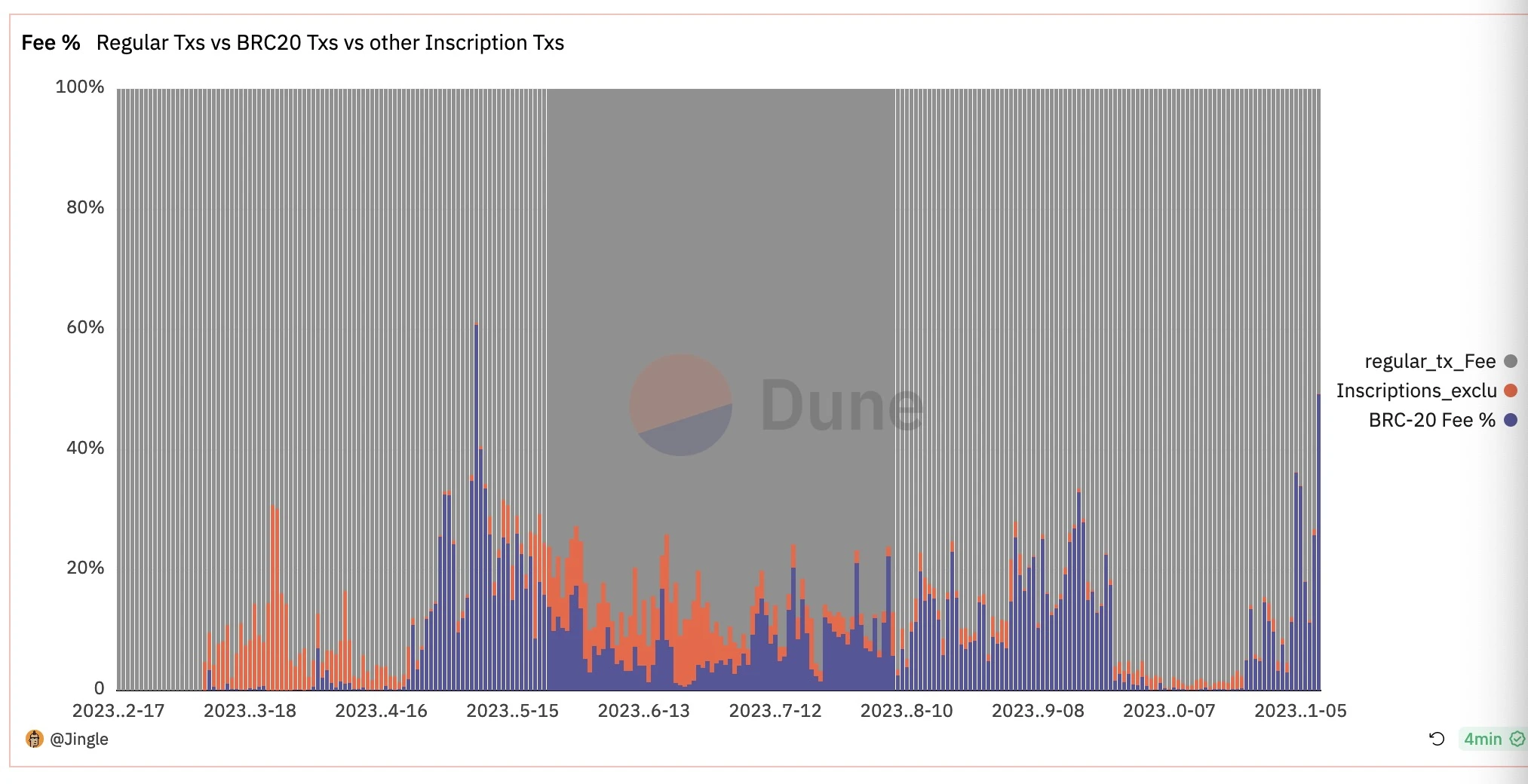
图四是最近 BTC 交易手续费的构成情况,可以看到 BRC 20 的费用,在最近几天站到了整个交易费用「图四」的一半左右,另外一半是普通的交易。

结论

  • 没有 Ordinals/BRC 20 ,BTC 交易费和矿工 Coinbase 收入比例大致在通常在 1-3% 左右,引发人们对未来减半以后的安全预算担忧;

  • Ordinals/BRC 20 爆发期间,交易费用增加,最高到过 40% ,在 Fee 100 左右的时候可以增加 15-20% 左右。交易费用增加是由于 BRC 20 的抢跑机制,带动整体 Fee 的增加,从而提高一些“刚需”用户的交易成本;用户被动需要缴纳高额费率以其尽快完成交易;

  • BRC 20 对于交易费的贡献也越来越多,峰值可以占到全部交易费用的一半。 

从数据上看,Ordinals/BRC 20 的持续火爆,是可以极大的弥补矿工收入,从而缓解人们对安全预算的担忧的。BRC 20 的火热,变相的向 BTC 交易的刚需用户征收了“安全税”,这同样成为增加矿工收入的一个来源。 关于比特币减半、安全预算的基本知识,可以自行学习。

原文链接

İlgili Okumalar

Agents Take Over Traffic Distribution Power: What Are Tencent, ByteDance, and Alibaba Competing For?

In the race to dominate the AI era's entry point, China's tech giants—Tencent, ByteDance, and Alibaba—are aggressively deploying AI Agents to control the future of traffic distribution. Alibaba is pursuing a dual-track "closed loop + openness" strategy. Its Qianwen app is evolving into a super-Agent integrated across its ecosystem (Taobao, Alipay, etc.) to handle complex tasks like travel planning. Concurrently, it is opening its platform to external brands (Luckin Coffee, KFC) and has launched a B2B Agent platform, "Wukong," targeting enterprise automation. Its other flagship, Quark, aims to be an "AI super search box" for information and tasks. ByteDance is executing an omnipresent "sprawl strategy." Its Doubao app boasts over 300 million monthly active users and is evolving into a default AI entry point for daily life, with plans for paid versions and e-commerce integration. Its core weapon is the Kouzi platform, a visual "AI assembly factory" for developers to build custom Agents. ByteDance is also pushing hardware integration, collaborating on AI phones and developing smart glasses to embed Doubao everywhere. Tencent is playing its long-held "ultimate card" by quietly embedding an AI Agent directly into WeChat. This Agent, accessible via a swipe, can understand user commands and automatically execute tasks by calling upon WeChat's millions of mini-programs (e.g., finding and ordering coffee). This leverages WeChat's unparalleled 1.4-billion-user ecosystem to position the app as an AI-powered "service operating system," a move that could dramatically reshape the competitive landscape. The core battleground is shifting from competing for "user screen time" to competing to be the "default execution layer" for user intent. The business model is evolving from an "attention economy" to an "intent economy," where the Agent that can most efficiently fulfill a user's need gains control over service access and token flow. This represents a fundamental change in how users connect with digital services, making the fight for the Agent入口 (entry point) a pivotal moment for redefining industry leadership in the AI age.

marsbit1 saat önce

Agents Take Over Traffic Distribution Power: What Are Tencent, ByteDance, and Alibaba Competing For?

marsbit1 saat önce

From Banning Doubao to Embracing Honor: Why Did WeChat Suddenly 'Change Its Face'?

The article explores the sudden shift in WeChat's strategy towards AI assistants from mobile phone manufacturers, transitioning from strict opposition to active collaboration. For over a year, WeChat fiercely resisted attempts by phone AI assistants (like ByteDance's Doubao in late 2025) to control its features via GUI automation ("simulated clicking"), citing security and data control concerns. This stance created a significant barrier for system-level AI integration. Now, Tencent has initiated A2A (Agent-to-Agent) partnerships with major phone brands like Honor, Xiaomi, OPPO, and vivo. This model allows a phone's system AI (e.g., Honor's YOYO) to parse a user's voice command and send a structured request directly to WeChat's own internal AI agent via secure APIs. WeChat then executes the action (e.g., sending a message) and returns the result. The article attributes Tencent's "change of face" to strategic pressure. While leading in social app usage, Tencent trails rivals like ByteDance and Alibaba in standalone AI app popularity. WeChat, with its vast mini-program ecosystem, is Tencent's key asset for an AI comeback. The upcoming WeChat AI agent aims to handle tasks like booking and payments within the app. However, phone system assistants remain the primary AI entry point for most users. The A2A collaboration allows Tencent to extend WeChat's AI reach to this crucial system layer while maintaining control over its core functions and data. For phone manufacturers, embracing A2A is a pragmatic move. The GUI route proved unviable due to WeChat's blocks. A2A offers a compliant path to integrate a vital service, enhancing their AI assistants' usefulness. It allows them to focus on developing their own AI ecosystems for other services while cooperating on WeChat access. The collaboration is framed as a mutual, strategic necessity: Tencent gains a distribution channel, and manufacturers gain a key functionality. The partnership relies on a "dual authorization" mechanism for security, requiring both user and app consent for each action. While questions about long-term data privacy practices remain, experts note A2A is more secure and compliant than GUI automation. Ultimately, this cooperation is seen as a tentative, calculated truce. Tencent's long-term goal is to make WeChat an AI-powered "service OS." Phone manufacturers aim to make their system AI the central user interface. Their paths may converge or clash in the future, but for now, the A2A deal represents the opening chapter in the battle for the AI-era user入口, driven by necessity and strategic calculus on both sides.

marsbit3 saat önce
From Banning Doubao to Embracing Honor: Why Did WeChat Suddenly 'Change Its Face'?

marsbit3 saat önce

İşlemler

Spot
Futures
活动图片