一周代币解锁预告:HFT、APT均迎来历史最大规模解锁

Odaily星球日报2023-11-05 tarihinde yayınlandı2023-11-05 tarihinde güncellendi

Özet

历史性解锁事件发生,投资者谨慎注意风险

整理 | Odaily星球日报

编辑 | Loopy
一周代币解锁预告:HFT、APT均迎来历史最大规模解锁

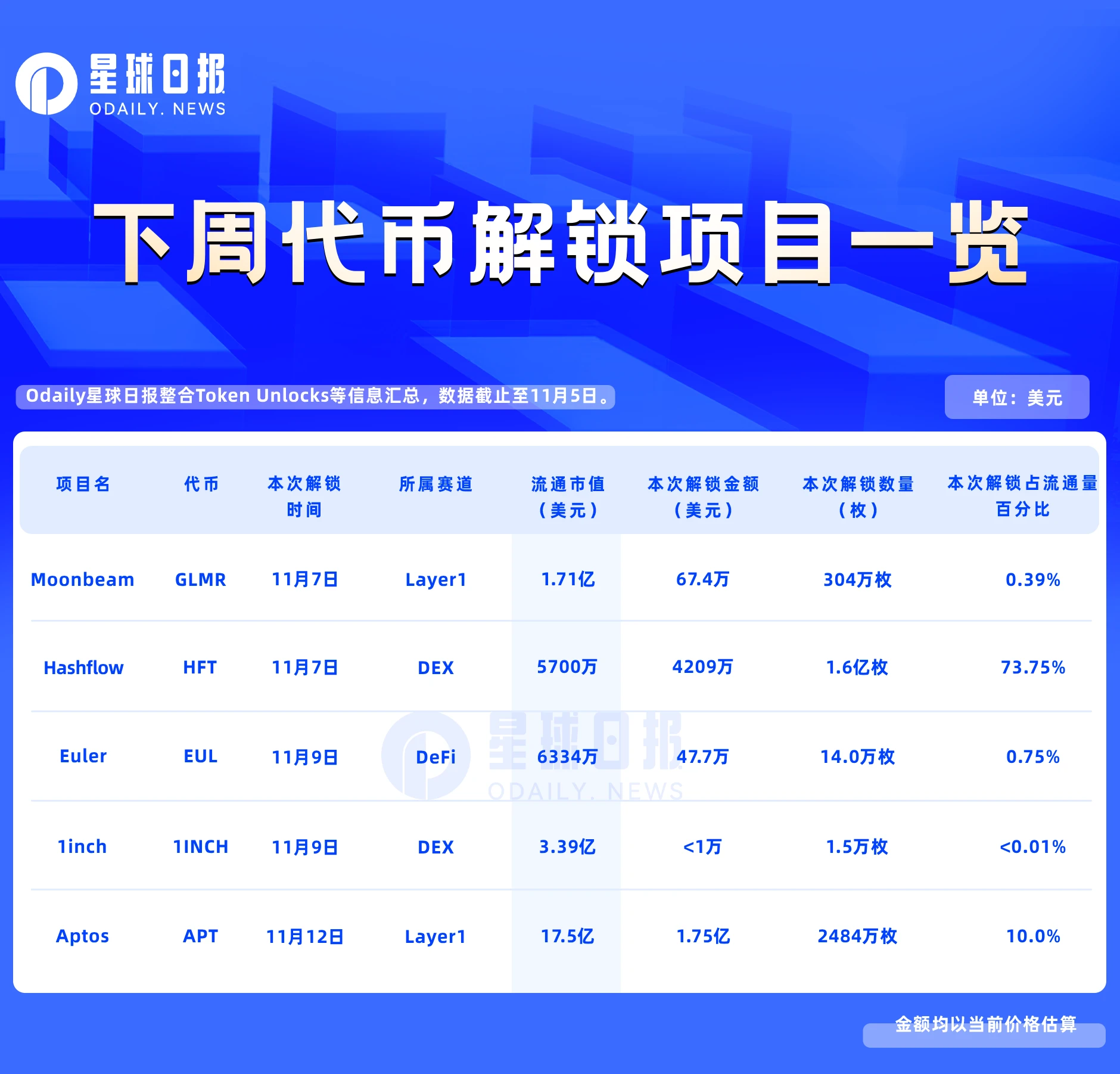
具体解锁详情如下:

一周代币解锁预告:HFT、APT均迎来历史最大规模解锁

Hashflow

项目官网:https://www.hashflow.com/

官方推特:https://twitter.com/hashflow

本次解锁数量: 1.6 亿枚

本次解锁金额:(约) 4209 万美元

Hashflow 是一个去中心化的交易所,旨在实现零滑点和具备 MEV 保护的交易。Hashflow 目前可在以太坊、 BNB Chain、  Polygon、Avalanche、  Arbitrum   和   Optimism   等多链上使用;通过引入专业做市商来管理流动性提供了更好的交易价格,更小的滑点。

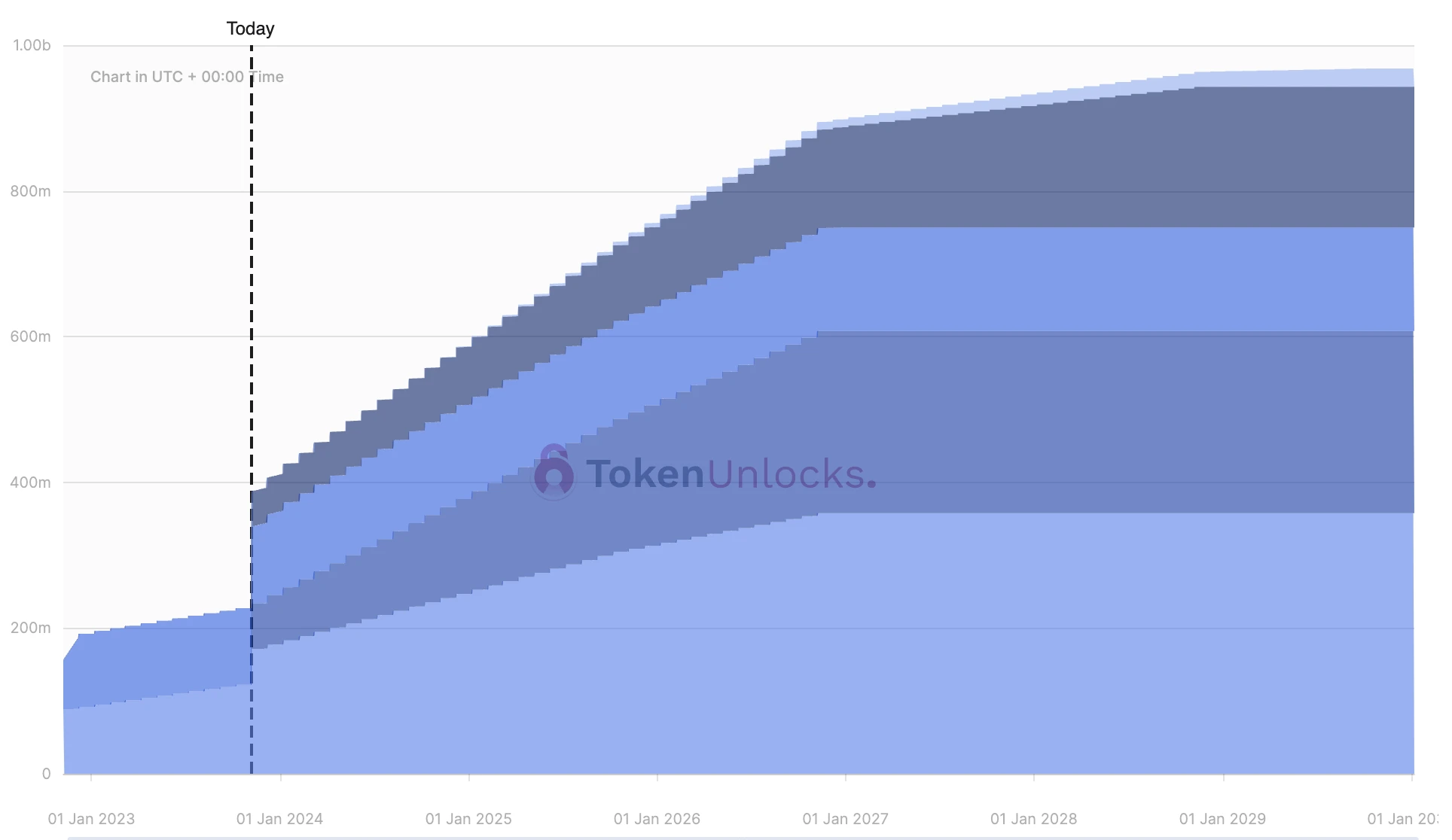
HFT 代币的本次解锁是该代币全生命周期中规模最大的单次解锁,解锁规模之庞大值得引起所有人的注意。
一周代币解锁预告:HFT、APT均迎来历史最大规模解锁

从解锁历史来看,此前 HFT 代币均在有条不紊的进行线性解锁之中,每月均会迎来一次规模相仿的解锁。到目前为止,总供应量 26% 的 HFT 已经进入流通,仍有 74% 的代币等待解锁。

归属于团队、早期投资者、做市商、未来员工四者的代币是本次大额解锁的原因。这四者的代币,其中 75% 均会在 36 个月的时间里线性释放,每月解锁一次。但剩余的 25% 则会于代币发布一年后(即下周)一次性释放。因此,这引发了本次释放量接近流通量的巨额解锁。

本次解锁的 1.6 亿枚代币约占流通量的 73% ,这也意味着,一夜之间 HFT 流通量近乎翻倍 。

本次解锁,是 HFT 全生命周期历史最大的一次单一解锁,无论是此前还是今后都不会再复现同等规模的解锁。这一解锁或将会冲击市场走向,投资者应及时捕捉交易机会或规避相关风险。

Aptos

项目官网:https://aptoslabs.com/

官方推特:https://twitter.com/Aptos_Network

本次解锁数量: 2484 万枚

本次解锁金额:(约) 1.75 亿美元

Aptos 是此前一段时间内备受关注的 Move 系公链双雄之一,由 Facebook 背景和技术所支持的这条新生 Layer 1 备受大资本的关注。该链旨在为用户提供性能好、TPS 更高的下一代 PoS 公链,以此来支持区块链在应用层的普及,并为加密世界迎接十亿级的用户。

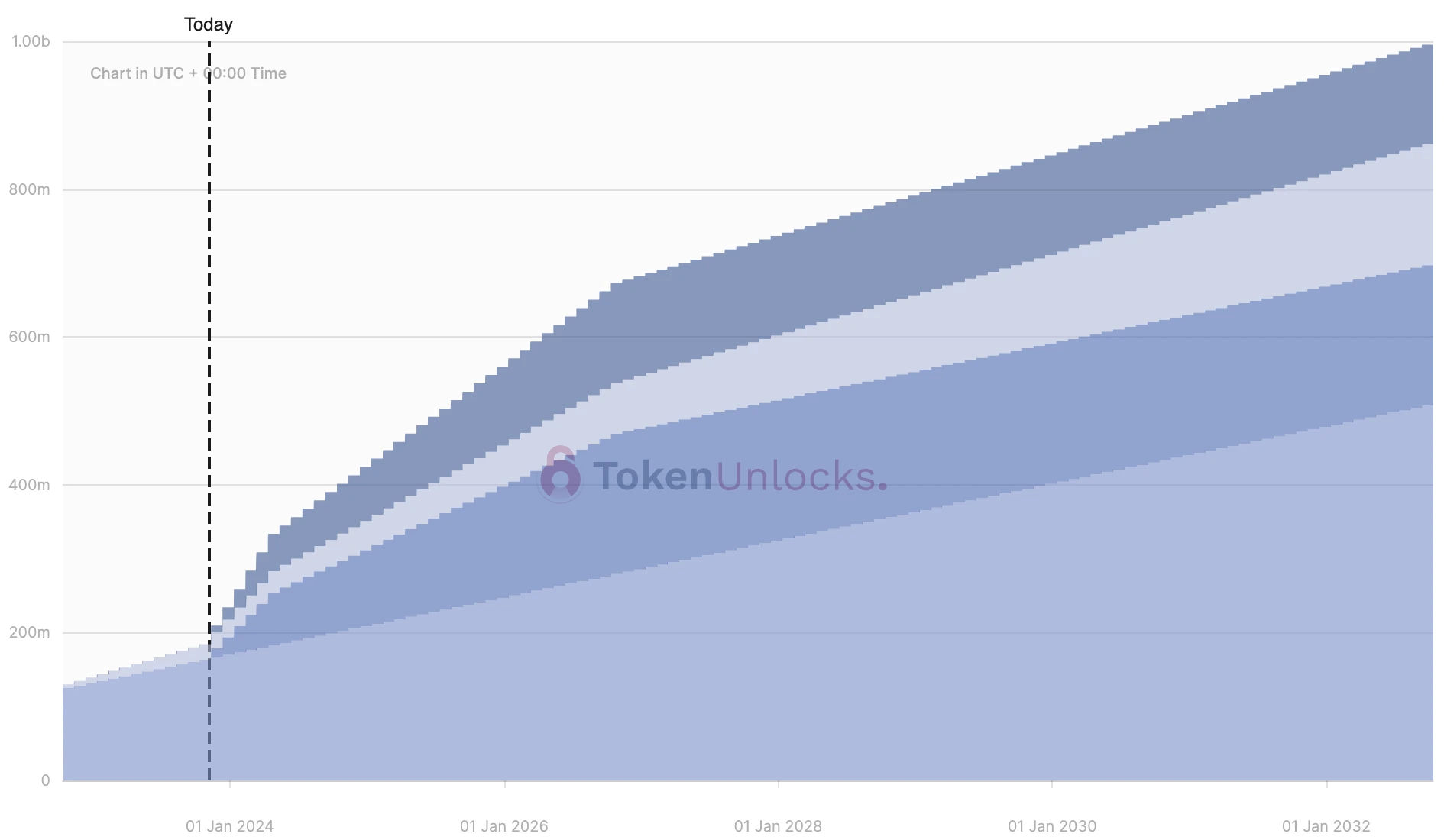
从流通量来看,尽管 APT 解锁量远远低于 HFT 这种特殊情况,但占据流通量 10% 的解锁仍然是并不常见的大额解锁。

Aptos 项目市值较大,本次解锁的代币也高达约 1.75 亿美元。
一周代币解锁预告:HFT、APT均迎来历史最大规模解锁

从解锁历史来看,此前 APT 均在每月固定解锁,解锁规模每月相似。而本次解锁以后,每月解锁规模将会发生改变。

因此,本次 APT 解锁也是截至目前为止,规模最大的一次单次解锁。

APT 本次超过 1.7 亿美元的解锁,值得引起投资者关注。若与交易量相比较,CoinGecko 数据显示,APT 24 小时交易额约为 7500 万美元。

常规解锁

除 HFT、APT 两项历史级大额解锁外,下周其他代币的解锁量均不足流通量 1% 。包括波卡生态 Moonbeam 代币 GLMR、DeFi 项目 Euler 代币 EUL、老牌 DEX 项目1inch代币1INCH等。

İlgili Okumalar

Anthropic's IPO Launch: Commercial Miracle or Valuation Bubble?

Anthropic has confidentially filed for an IPO, led by Morgan Stanley and Goldman Sachs, potentially going public by October. Following its latest $650 billion funding round, its pre-IPO valuation stands at $965 billion, with projections reaching up to $2 trillion at listing, which would make it the highest-valued private company ever. The article, written by Fu Sheng, addresses skepticism that this represents an AI bubble akin to the 2000 dot-com crash. It argues the current situation differs fundamentally. Unlike the internet bubble era, which relied on speculative narratives with little revenue, Anthropic's valuation is backed by unprecedented, measurable financial performance. Key data points include: * **Revenue Growth:** ARR skyrocketed from $10 billion in early 2025 to $470 billion by May 2026, targeting $100 billion by year-end—a growth curve unmatched in business history. * **Profitability:** It achieved operating profitability in Q2 2026 with an estimated $5.6 billion profit. * **Efficiency:** With ~3,000 employees and ~$470 billion ARR, its revenue per employee exceeds $10 million. Products like Claude Code, launched less than a year ago, already generate $25 billion in annualized revenue. * **Enterprise Adoption:** It boasts a strong enterprise client base, with 8 of the Fortune 10 and over 1,000 large firms spending over $1 million annually on Claude. The valuation is framed using a traditional SaaS model (e.g., a 10x Price-to-Sales multiple on $100 billion revenue). The author contends the core question for analysts has shifted from "How big could this be?" to "How much is it earning and will earn next quarter?" The discussion extends beyond Anthropic to a broader paradigm shift: the transition from a "carbon-based" to a "silicon-based" economy. Companies are increasingly prioritizing investment in compute and AI capabilities over human resources, as these directly scale productivity and competitive advantage. Anthropic's IPO is thus positioned not just as a corporate milestone, but as a price anchor for this new economic era.

链捕手2 saat önce

Anthropic's IPO Launch: Commercial Miracle or Valuation Bubble?

链捕手2 saat önce

Near Returns to the AI Stage: Transformation into a Public Chain Due to 'Payroll Difficulties,' Agent and Privacy Emerge as New Growth Narratives

NEAR Returns to AI Origins: From Payroll Struggles to Blockchain, Now Focusing on AI Agents and Privacy NEAR Protocol's journey began not with grand blockchain ambitions, but from a practical hurdle: its AI startup founders, including Transformer paper co-author Illia Polosukhin, couldn't efficiently pay international developers in 2017. This led them to pivot and build a high-performance, scalable blockchain. After years navigating various crypto narratives like sharding and cross-chain interoperability, NEAR is now leveraging its AI roots to re-enter the AI arena. A key driver is its "NEAR Intents" layer, which abstracts complex cross-chain transactions. Users simply state their goal (e.g., swap BTC for ETH), and a solver network finds the optimal route. This system has processed over $20B in cross-chain volume, generating significant fee revenue. A major growth area is private transactions via "Confidential Intents/Swaps," which hide trade details until settlement to protect against MEV and front-running. Remarkably, private swaps recently accounted for over 40% of NEAR's transaction volume, highlighting strong demand but also potential regulatory scrutiny. With its AI-founder pedigree, NEAR is positioning itself at the intersection of blockchain, AI agents, and privacy, aiming to become infrastructure for the emerging agent economy while navigating the challenges of its rapid adoption.

marsbit4 saat önce

Near Returns to the AI Stage: Transformation into a Public Chain Due to 'Payroll Difficulties,' Agent and Privacy Emerge as New Growth Narratives

marsbit4 saat önce

İşlemler

Spot
Futures
活动图片