Algoracle, The Next Phase Oracle Solution Ready To Power The Algorand Ecosystem

newsbtc2022-04-11 tarihinde yayınlandı2022-04-11 tarihinde güncellendi

Özet

The Algorand ecosystem has seen unprecedented levels of adoption. The network has been rising in popularity as investors seek a...

The Algorand ecosystem has seen unprecedented levels of adoption. The network has been rising in popularity as investors seek a sustainable and cost-efficient alternative to the expensive and slower blockchains.
Algoracle, a project created to provide Algorand with a native oracle service was created to bootstrap the ecosystem’s expansion. This can only move forward by connecting its decentralized applications (dApps) to the real world.
Algoracle facilitates this process by providing the network with a decentralized bridge to connect smart contracts with real-world data. This service is critical for the expansion of any blockchain-based ecosystem.
Data from Token Terminal indicates that Ethereum, one of the largest networks in terms of dApps numbers, saw an explosion in its monthly revenue. This growth was recorded from April 2020 when it stood below $1 billion to its current $14 billion.
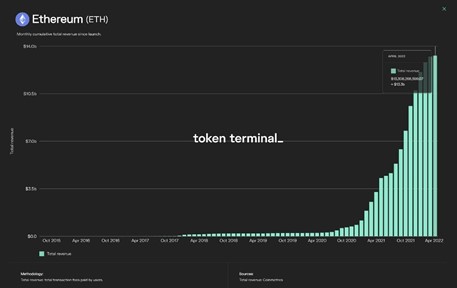
The main driver for this growth has been the adoption of its decentralized finance (DeFi) protocols and non-fungible tokens (NFTs). Conversely, these dApps require an oracle service to operate, offer a product or use case, process transactions, and onboard more users.
Simply put without an oracle, there is no growth. At its yearly high, Algorand saw as many as 1.8 million active addresses. These users will support the network’s next era of adoption, but they need the tools and services that will enable it. Algoracle is the bridge that will make it happen.
Algoracle Can Enable A New Generation Of Use Cases
Unlike competitive services, Algoracle leverages Algorand’s unique consensus algorithm. Called Pure Proof-of-Stake (PPoS), it allows Algoracle to operate as a fully decentralized service without the limitations of a traditional oracle.
In that sense, Algoracle is a step forward for oracle as it can provide newer and more complex dApps with a native Verifiable Random Function (VRF) mechanism. This improves the oracle’s performance, efficiency, scalability, and uptime.
Algoracle and the VRF mechanism features will enable the service to power a new branch of use cases. For example, smart contracts will be able to receive data, and their upgraded infrastructure will allow them to send data into the real world.
In that way, a user could receive notifications from their NFT marketplace, receive or send data on a decentralized exchange (DEX), and more. It is the next generation in DeFi and smart contract interaction. This could allow dApps operating with Algoracle to communicate and potentially support cross-chain transactions.
Algoracle Supports Numerous Projects On Algorand
Over the past year, Algoracle has partnered with Brave New Coin, Kaiko, Nomics, AlgoGuard, Equito Finance, Glitter Finance, and many others. Their collaboration with Glitter Finance has enabled them to power their DeFi services comprised of a yield generation solution, a cross-chain bridge, and a cross-chain NFT marketplace.
This goes to show the importance of an oracle solution for the Algorand ecosystem and its vast array of use cases. When the partnership was announced, David Dobrovitsky, founder and CEO of Glitter Finance said:
The Glitter Finance technical team, working in concert with the technical team of Algoracle has developed new innovations that will greatly enhance and change the way blockchain and cross-chain bridges work and will allow for much greater solidity and stability for the Glitter Protocol (…).

İlgili Okumalar

How Much Debt Does Strategy Really Have? Is There a Risk of Implosion?

MicroStrategy's Debt Risk: A Turning Point in the "Never Sell" Strategy As of June 3, 2026, MicroStrategy holds 843,706 bitcoins (valued at ~$53.1B) but faces significant financial obligations. Its capital structure includes $6.75B in convertible notes and $15.48B in perpetual preferred stock (led by the $8.5B STRC series), creating an annual payout burden of ~$1.71B. With software revenue at only ~$500M, interest and dividend obligations far exceed operating income. A critical shift occurred in late May 2026 when the company sold 32 bitcoins for ~$2.5M to cover dividends, breaking CEO Michael Saylor's long-standing "never sell" pledge. This symbolic move triggered a sharp decline in both Bitcoin's price and MSTR stock, reflecting market fears about cash flow sustainability. The core of the strain is the STRC perpetual preferred stock, designed as a "permanent loan" with no maturity date but requiring high monthly dividends (currently 11.5%). Its business model relies on a three-part cycle: issuing new STRC shares, using proceeds to buy more Bitcoin and fund a USD reserve, and using that reserve to pay dividends. This cycle depends on continuous investor demand for STRC and Bitcoin's price appreciation. Analysis shows Bitcoin needs to appreciate at least 2.3% annually to cover the $1.71B in yearly obligations at current holdings. With Bitcoin price down ~22% from March 2026 highs, this pressure has intensified. The company's $900M USD reserve can only cover about 7 months of payments if STRC issuance stalls. Key risks are not immediate bankruptcy or forced Bitcoin liquidation (as BTC is not collateral), but rather: 1) The erosion of MSTR's premium to its Bitcoin holdings (mNAV), which would cripple its ability to raise cheap capital; 2) A vicious cycle where stagnant Bitcoin prices reduce STRC demand, draining the USD reserve and forcing BTC sales, further depressing prices. The period from February 2027 to September 2028 is a crucial test, with over $5.9B in convertible notes facing put options or maturity. In essence, MicroStrategy has evolved from a simple Bitcoin holder into a complex financial entity acting like a "private Bitcoin bank," leveraging its BTC holdings to create layered financial products. Its survival depends on maintaining Bitcoin's price trend, its stock premium, and market appetite for its preferred shares. The recent token sale marks not a betrayal of its Bitcoin thesis, but an admission that the leveraged strategy must eventually be paid for.

marsbit4 dk önce

How Much Debt Does Strategy Really Have? Is There a Risk of Implosion?

marsbit4 dk önce

Anthropic Cries Wolf: Is the AGI Threat Real, or Just an IPO Story?

Anthropic has published an article titled "When AI builds itself," discussing the emerging concept of "recursive self-improvement," where AI begins to actively participate in designing, training, testing, and optimizing its own subsequent versions. The company presents internal data showing that by May 2026, over 80% of code merged into its codebase was written by Claude, its AI model. Claude's capabilities have expanded to handling complex, open-ended engineering tasks, achieving a 76% success rate in such areas, and even contributing to research processes, such as optimizing code performance and conducting AI safety experiments. Anthropic outlines an evolution from human-driven development to AI-assisted workflows, culminating in the current stage where AI agents can autonomously write, run, and delegate code. The company cautions that the path toward a "closed loop," where AI continuously improves itself, is becoming visible. It calls for coordinated global mechanisms to potentially slow or pause frontier AI development to allow safety research and societal structures to catch up. However, the timing of this warning coincides with Anthropic's preparations for an IPO, framing the narrative not just as a safety concern but also as a demonstration of Claude's advanced capabilities and its integral role in accelerating Anthropic's own R&D—creating a potential "flywheel" effect for competitive advantage. This contrasts with OpenAI's recent, more policy-oriented discussion of the same risks, highlighting the competitive dynamics in the AI industry as companies position themselves in both the technological and regulatory landscape.

marsbit1 saat önce

Anthropic Cries Wolf: Is the AGI Threat Real, or Just an IPO Story?

marsbit1 saat önce

BIT Research: ETF Purchases Have Slowed, Strategy (MicroStrategy) Has Slowed, What Else Can Drive Bitcoin's Rise?

Market Refocus on Inflation and Rate Expectations Weighs on Bitcoin Currently, the market is in a phase of macro-repricing dominated by inflation and interest rate expectations. Bitcoin, which previously benefited from easy liquidity and low inflation, is seeing its core bullish drivers weaken. These drivers were market expectations for interest rate cuts and strong inflows from Bitcoin ETFs and institutions like MicroStrategy (referred to as "Strategy" in the text). The logic has shifted. Recent high inflation data (e.g., CPI hitting 3.8% in a May 2026 report) has caused the market to sharply reduce its rate cut expectations for 2025 and even price in potential hikes. This is a key constraint for Bitcoin, as it lacks cash flows and is highly sensitive to rate expectations. Concurrently, institutional capital flows have slowed significantly. Following the hot CPI data, Bitcoin ETFs saw accelerated outflows, with around $4.3 billion leaving over a period. MicroStrategy's ability to keep adding substantial Bitcoin to its balance sheet is also diminishing. Together, ETF and MicroStrategy holdings total roughly $110 billion, but their momentum as growth engines is cooling. In summary, Bitcoin's current pressure stems not from its own fundamentals but from a changing macro environment. As long as inflation stays elevated, Bitcoin is likely to remain in a consolidating phase. However, historically, inflation eventually peaks. Once it recedes and rate cut expectations rebuild, institutional capital could return, potentially fueling a new and more robust recovery phase for Bitcoin.

marsbit1 saat önce

BIT Research: ETF Purchases Have Slowed, Strategy (MicroStrategy) Has Slowed, What Else Can Drive Bitcoin's Rise?

marsbit1 saat önce

İşlemler

Spot
Futures

Popüler Makaleler

ALGO Nasıl Satın Alınır

HTX.com’a hoş geldiniz! Algorand (ALGO) satın alma işlemlerini basit ve kullanışlı bir hâle getirdik. Adım adım açıkladığımız rehberimizi takip ederek kripto yolculuğunuza başlayın. 1. Adım: HTX Hesabınızı OluşturunHTX'te ücretsiz bir hesap açmak için e-posta adresinizi veya telefon numaranızı kullanın. Sorunsuzca kaydolun ve tüm özelliklerin kilidini açın. Hesabımı Aç2. Adım: Kripto Satın Al Bölümüne Gidin ve Ödeme Yönteminizi SeçinKredi/Banka Kartı: Visa veya Mastercard'ınızı kullanarak anında Algorand (ALGO) satın alın.Bakiye: Sorunsuz bir şekilde işlem yapmak için HTX hesap bakiyenizdeki fonları kullanın.Üçüncü Taraflar: Kullanımı kolaylaştırmak için Google Pay ve Apple Pay gibi popüler ödeme yöntemlerini ekledik.P2P: HTX'teki diğer kullanıcılarla doğrudan işlem yapın.Borsa Dışı (OTC): Yatırımcılar için kişiye özel hizmetler ve rekabetçi döviz kurları sunuyoruz.3. Adım: Algorand (ALGO) Varlıklarınızı SaklayınAlgorand (ALGO) satın aldıktan sonra HTX hesabınızda saklayın. Alternatif olarak, blok zinciri transferi yoluyla başka bir yere gönderebilir veya diğer kripto para birimlerini takas etmek için kullanabilirsiniz.4. Adım: Algorand (ALGO) Varlıklarınızla İşlem YapınHTX'in spot piyasasında Algorand (ALGO) ile kolayca işlemler yapın.Hesabınıza erişin, işlem çiftinizi seçin, işlemlerinizi gerçekleştirin ve gerçek zamanlı olarak izleyin. Hem yeni başlayanlar hem de deneyimli yatırımcılar için kullanıcı dostu bir deneyim sunuyoruz.

311 Toplam GörüntülenmeYayınlanma 2024.12.11Güncellenme 2026.06.02

ALGO Nasıl Satın Alınır

Tartışmalar

HTX Topluluğuna hoş geldiniz. Burada, en son platform gelişmeleri hakkında bilgi sahibi olabilir ve profesyonel piyasa görüşlerine erişebilirsiniz. Kullanıcıların ALGO (ALGO) fiyatı hakkındaki görüşleri aşağıda sunulmaktadır.

活动图片