比特币保持在 30,000 美元以上,这 4 种竞争币表现强劲

Tap Chi Bitcoin2023-06-26 tarihinde yayınlandı2023-06-26 tarihinde güncellendi

Özet

比特币(BTC) 于 6 月 23 日创下 52 周新高,表明多头正在卷土重来。买家设法保住了本周的大部分利润,表明他们并不急于获利了结。比特币本周上涨 16%,超过标准普尔 500 指数,后者已下跌 1.39%。

比特币(BTC) 于 6 月 23 日创下 52 周新高,表明多头正在卷土重来。买家设法保住了本周的大部分利润,表明他们并不急于获利了结。比特币本周上涨 16%,超过标准普尔 500 指数,后者已下跌 1.39%。

不仅是比特币,甚至以太坊(ETH)也显示出开始看涨的迹象。 Glassnode数据显示,过去30天内,交易所的以太币余额大幅下降,创下12.6%的新低。

2022 年 11 月,以太币余额也出现了类似的下降,随后急剧增加 33%。尽管有可能出现反弹,但交易者需要谨慎行事,因为此次交易所余额下降可能是由美国证券交易委员会针对币安和 Coinbase 采取的行动引发的。

复苏不仅限于比特币和以太币。几种竞争币已从各自的低点反弹,显示出较低水平的强劲买盘。这意味著看跌情绪可能正在减弱。

买家的回归是否会开启加密货币的新一轮牛市,还是更高的高点吸收空头的抛售?让我们研究一下可能出现短期上涨的前五种加密货币的图表。

过去四天,比特币交易价格接近 31,000 美元。这表明空头正在捍卫这一水平,但多头尚未放弃。通常,关键阻力位附近的紧密盘整往往会解决上行趋势。
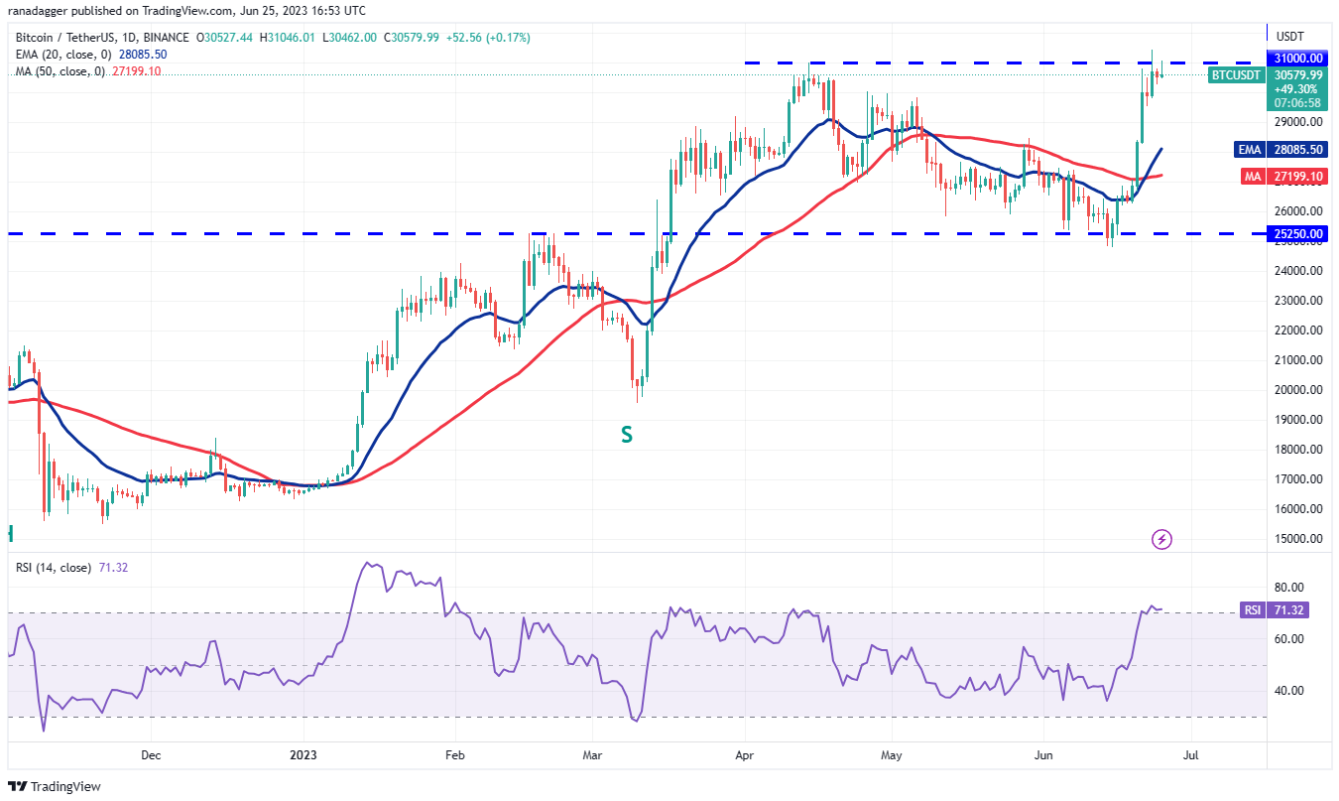
BTC/USDT 日线图 |来源:TradingView

多重移动平均线(28,085 美元)和超买区域的 RSI 表明多头的优势。如果买家将价格推高并维持在 31,000 美元以上,BTC/USDT 货币对可能会开始下一阶段的牛市。 32,400 美元存在阻力,但该水平很可能会被克服。此后,该货币对可以飙升至 40,000 美元。

疲软的第一个迹象将是跌破并收于 29,500 美元下方。如果发生这种情况,该货币对可能会滑向 20 日均线。这仍然是一个值得关注的重要水平,如果它被突破,该货币对可能会跌至 50 日简单多重移动平均线(27,199 美元)。
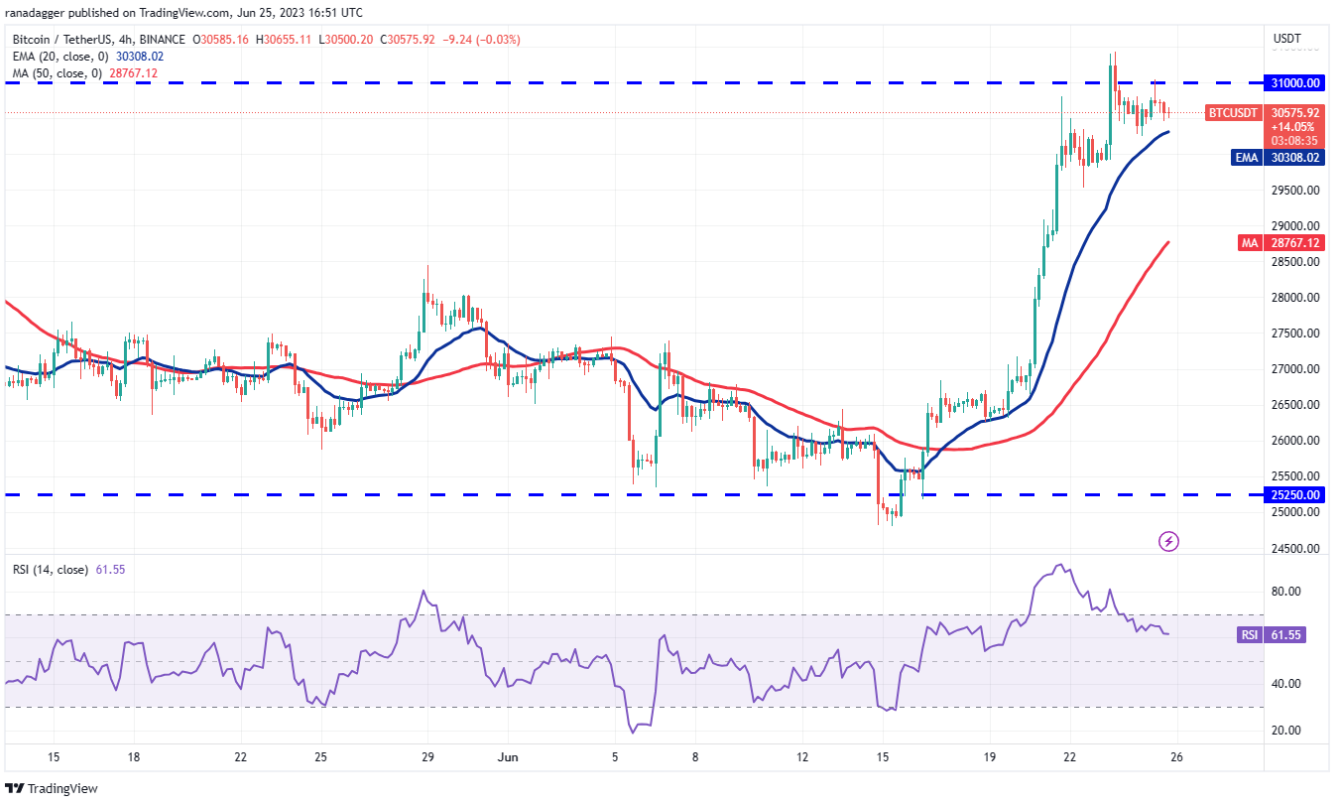
BTC/USDT 4 小时图 |来源:TradingView

该货币对徘徊在 20 日均线和 31,000 美元之间,但在这个窄幅区间内交易不太可能持续很长时间。突破 31,000-31,500 美元区域可能会开启下一阶段的上升趋势。

相反,如果价格下跌并维持在20日均线下方,则可以触发短线交易者的止损。此后,该货币对可能会跌至 29,500 美元,预计多头将在此进行强有力的防守。跌破该水平可能为跌至 50 日移动平均线打开大门。

过去三天,以太坊面临 1,928 美元的抛售,但多头不愿让位给空头。这表明买家预计阻力位将被突破。
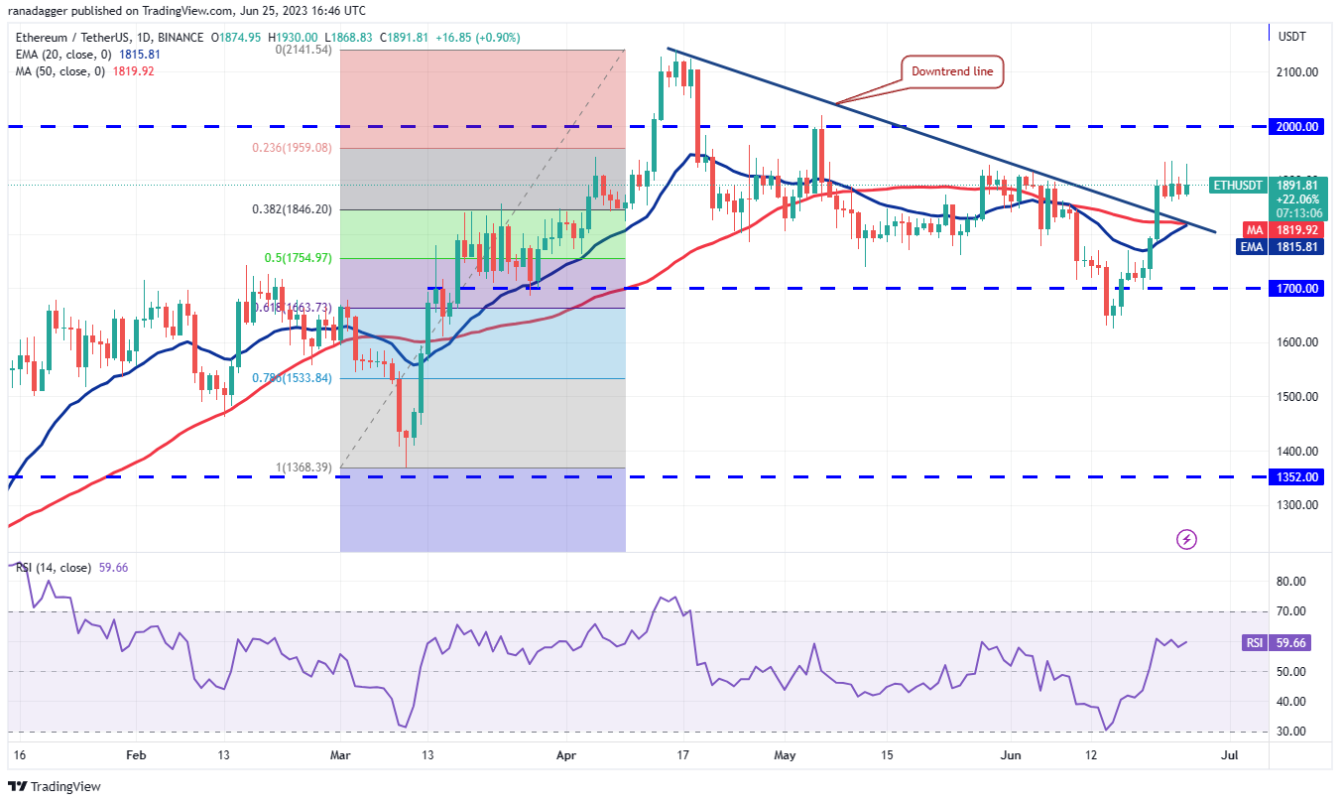
ETH/USDT 日线图 |来源:TradingView

多重移动平均线即将形成看涨交叉,RSI 处于牛市区域,表明多头处于主导地位。如果买家突破 1,928 美元的关口,ETH/USDT 货币对可能会反弹至 2,148 美元至 2,200 美元之间的上方区域。

如果空头想要阻止涨势,他们将不得不迅速将价格拖至多重移动平均线以下。这可能会触及激进多头的止损点,导致价格向 1,700 美元的强劲支撑位回调。
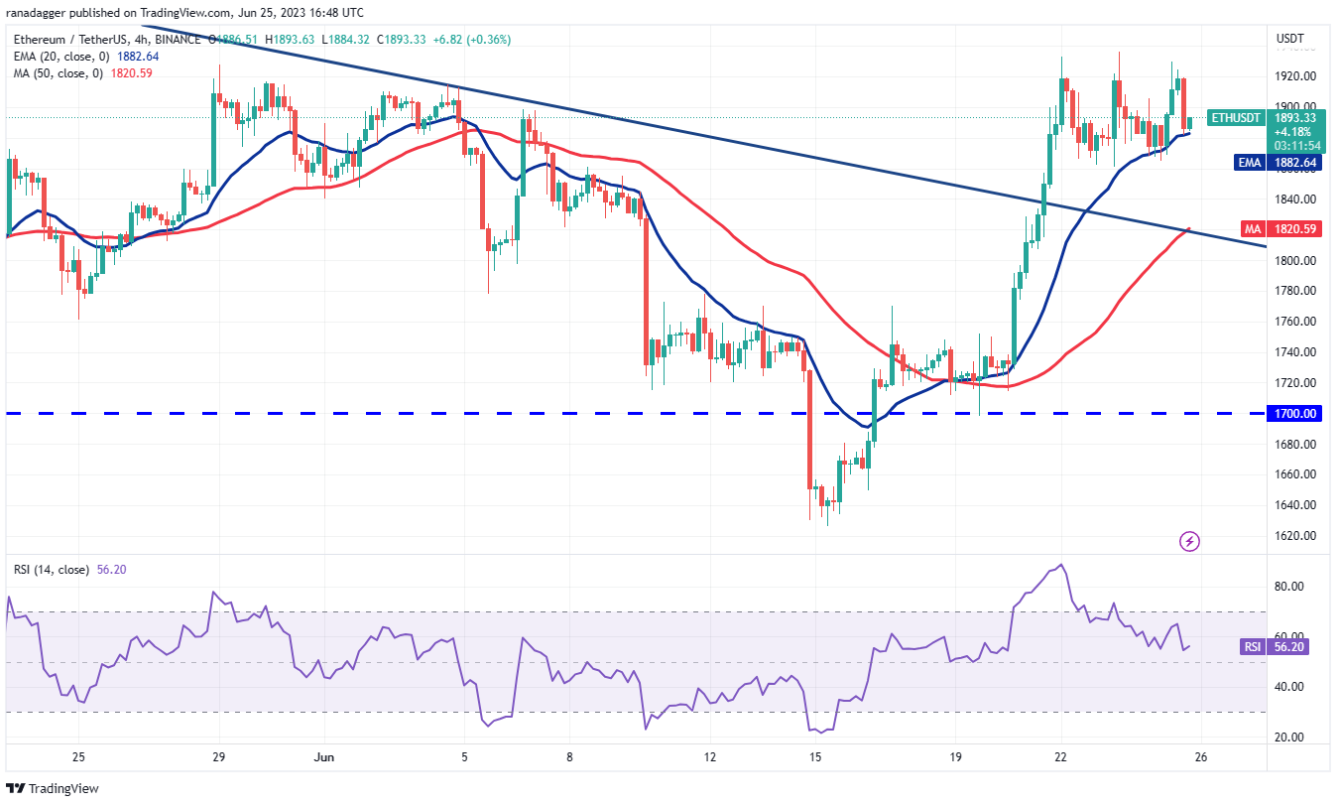
ETH/USDT 4 小时图 |来源:TradingView

四小时图表显示价格徘徊在 1,861 美元至 1,936 美元之间。多重移动平均线正在上升,RSI 处于牛市区域,表明阻力最小的路径是上行。如果买家将价格推高至该区间之上,则该货币对可能会开始向 2,000 美元的心理水平迈进。

相反,如果价格下跌并跌破 1,861 美元的支撑位,短期优势将有利于空头。然后该货币对可能会跌至 50 SMA 并跌破 1,750 美元。

Arbitrum (ARB) 于 6 月 19 日突破 1 美元,随后于 6 月 20 日强劲反弹。这表明最近的突破是一个空头陷阱。
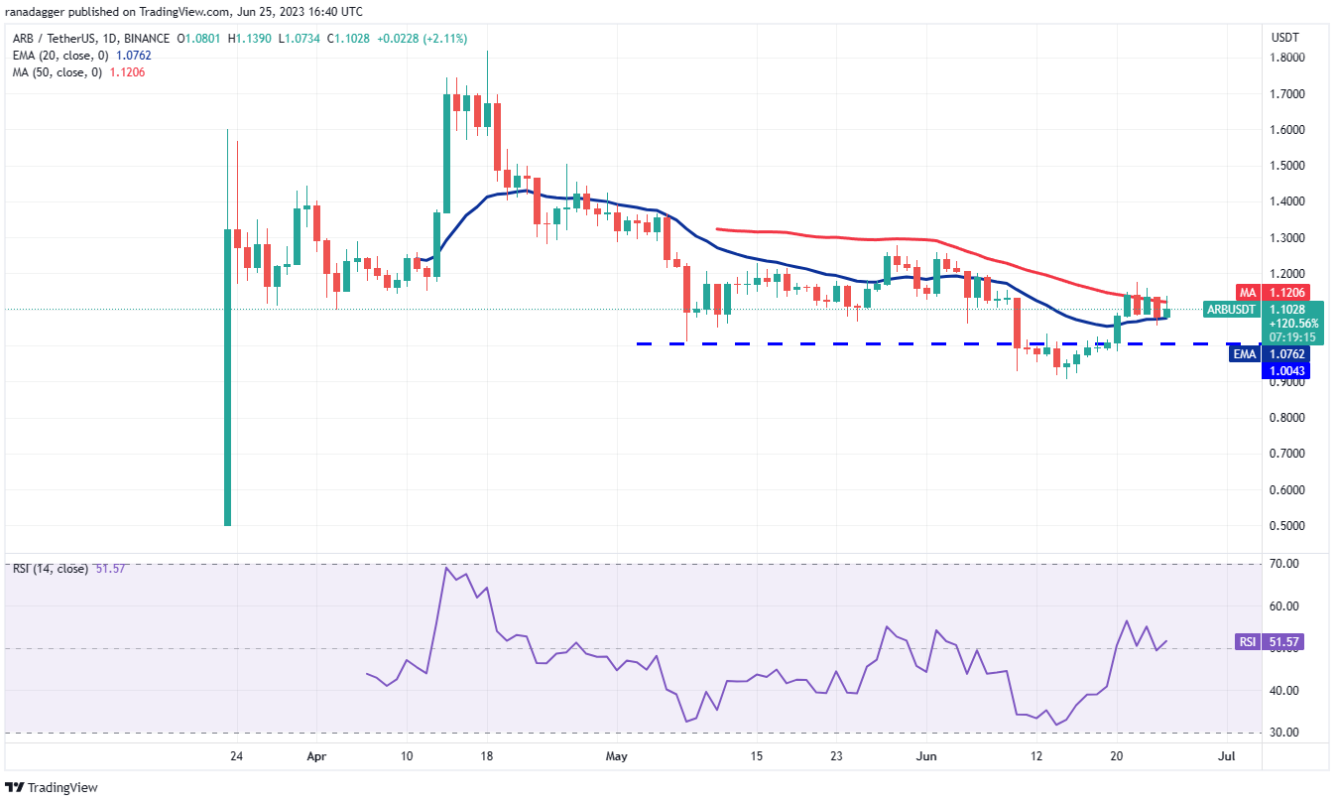
ARB/USDT 日线图 |来源:TradingView

空头正试图阻止 50 日均线(1.12 美元)的反弹,但一个牛市的迹像是多头已成功捍卫 20 日均线(1.07 美元)。这种窄幅区间的交易不太可能持续很长时间,突破可能即将到来。

突破并收盘于 1.18 美元上方可能表明新一轮牛市的开始。 ARB/USDT 货币对可能会首先升至 1.28 美元,然后升至 1.54 美元。如果价格下跌并跌破 1-0.90 美元支撑区域,这种看涨观点将失效。
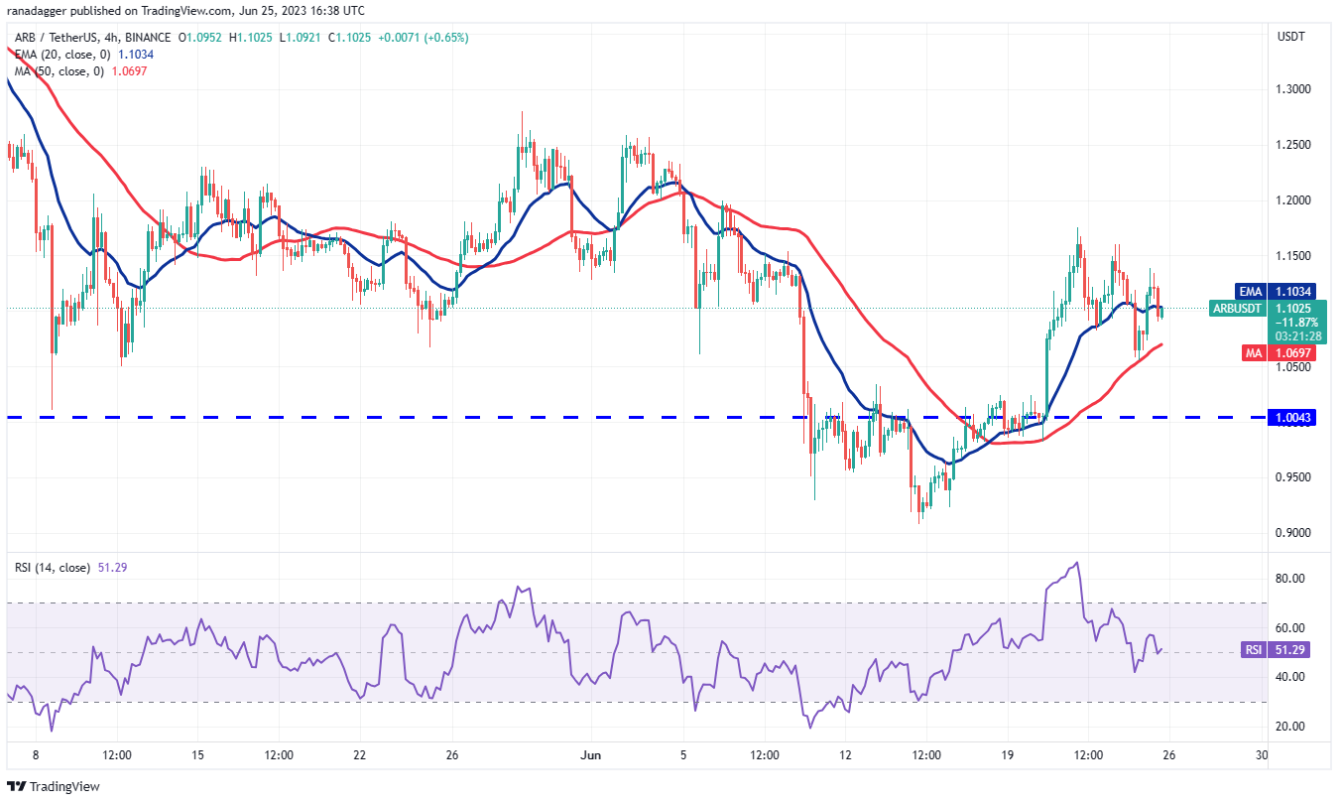
ARB/USDT 4 小时图 |来源:TradingView

四小时图表显示多头正在努力克服 1.18 美元的障碍。这表明空头在更高水平上活跃。卖家将价格拖至 20 日均线下方,但无法突破 50 日均线。

20 日均线趋于平缓,RSI 接近中点,表明买家和卖家之间处于平衡状态。如果多头将价格推高至 1.18 美元以上,则表明强劲反弹的开始。相反,突破并收盘低于 50 日移动平均线可能会导致价格跌至 1 美元。

VeChain (VET) 于 6 月 23 日被阻力线拒绝,但空头正在努力将价格维持在 50 日移动平均线(0.018 美元)下方。这表明交易者正在低位买入。
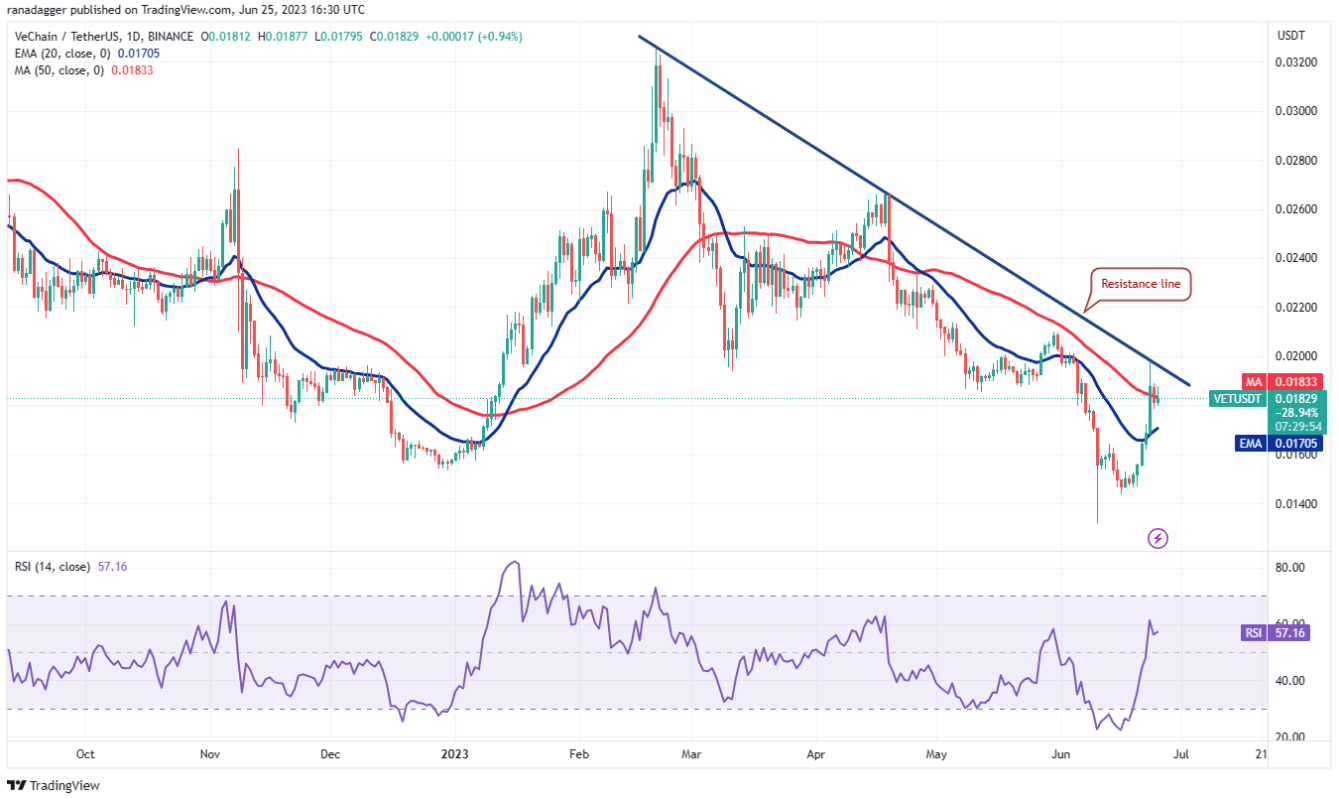
每日 VET/USDT 图表 |来源:TradingView

多头将再次尝试将价格推至阻力线上方。如果成功,则表明下跌趋势已经结束。此后,VET/USDT 货币对可能开始上涨至 0.026 美元。

与这一假设相反,如果价格再次从阻力线下跌,则表明空头仍处于控制之中。然后,他们将尝试将该货币对跌破多重移动平均线并挑战 0.013 美元的支撑位。
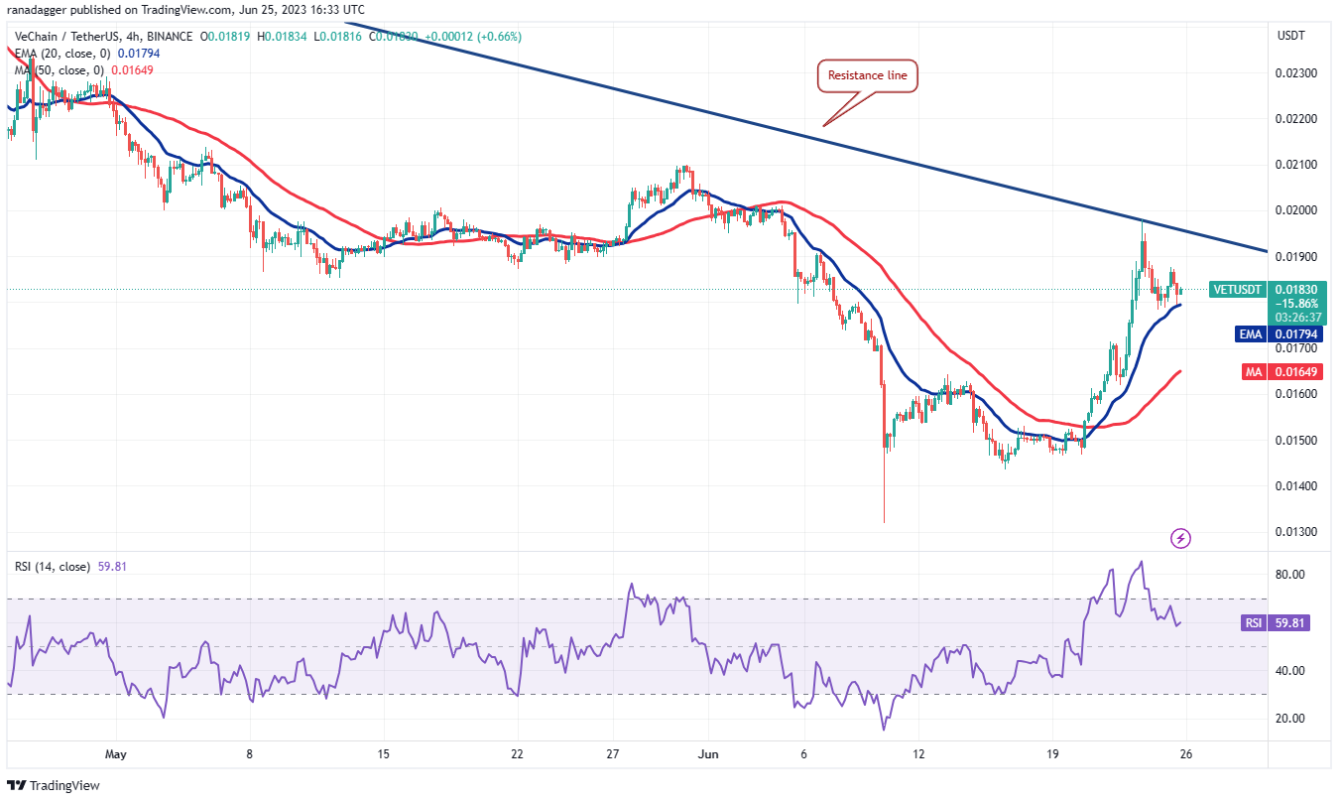
VET/USDT 4 小时图 |来源:TradingView

4小时图显示,价格已从阻力线反转,但在20均线处找到支撑。这表明市场情绪正在转为牛市,交易者将下跌视为买入机会。

多头将再次尝试将价格推至阻力线上方。如果这样做,该货币对可能会上涨至 0.021 美元。该水平可能再次成为障碍,但如果突破,牛市可能会开始。下行的第一个支撑是 20 日均线,其次是 50 日均线。

Stacks (STX) 于 6 月 20 日飙升至多重移动平均线线之上,预示著潜在的趋势变化。调整期从6月22日开始,但一个牛市的迹像是价格仍高于多重移动平均线。
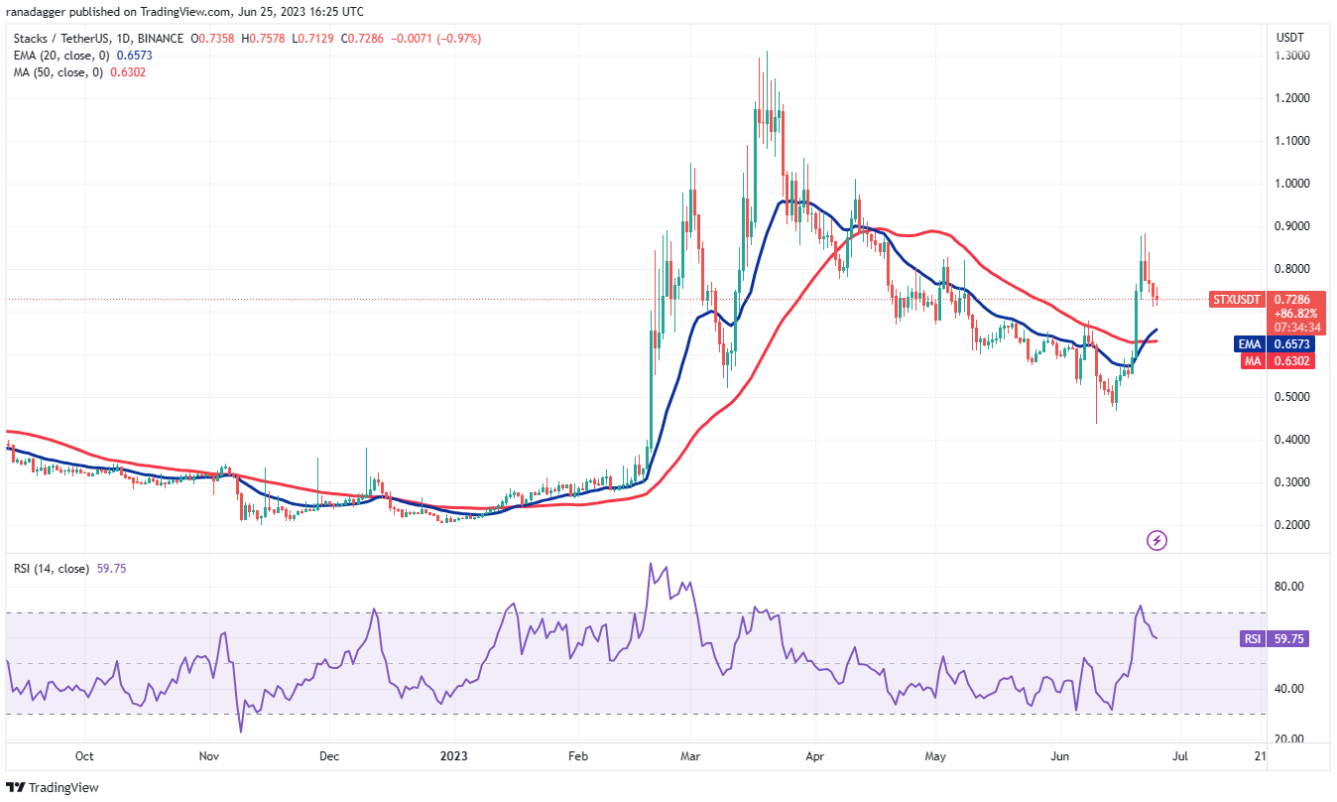
STX/USDT 每日图表 |来源:TradingView

多重移动平均线形成看涨交叉,RSI 处于牛市区域,表明多头占据上风。如果价格从当前水平回升或从 20 日均线(0.65 美元)反弹,则建议逢低买入。这将使突破 0.89 美元的可能性上升。

如果发生这种情况,STX/USDT 货币对可能会上涨至 1.10 美元,然后上涨至 1.30 美元。如果价格下跌并跌破多重移动平均线,这种牛市的观点将失效。此举将表明空头尚未放弃并将继续逢高抛售。
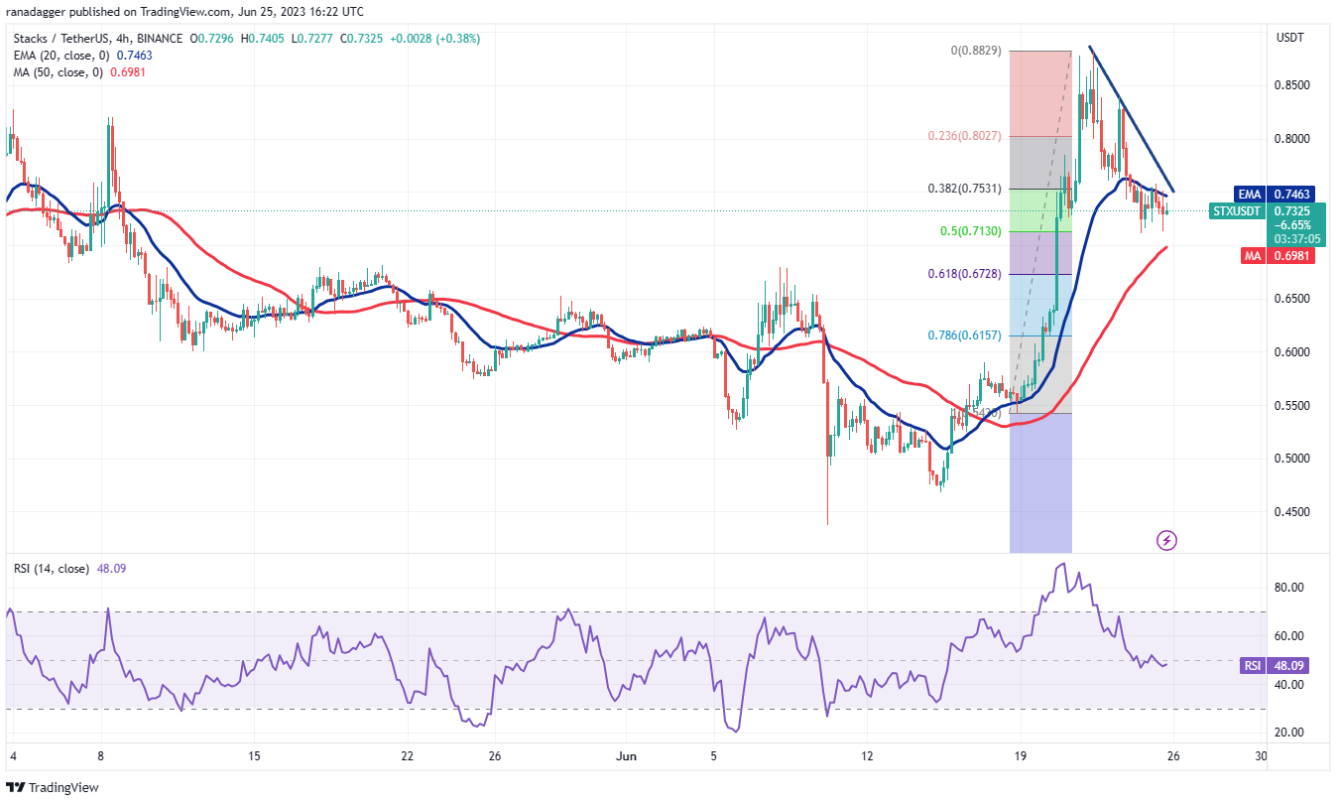
STX/USDT 4小时图 |来源:TradingView

四小时图显示该货币对正处于修正阶段。空头将价格拖至 20 日均线下方,但多头正在捍卫 0.71 美元的 50% Fib 回撤位。买家必须将价格推至趋势线,才有可能反弹至 0.88 美元。

此外,如果价格从趋势线转向下跌,则表明空头正试图占据上风。跌破并收于 61.8% Fib 回撤位 0.67 美元下方可能表明空头卷土重来。
İlgili Okumalar

Fei-Fei Li's Team Clarifies the Concept of 'World Models', Sora Merely a Renderer

"World Models" has become a widely used yet confusing term in AI. To address this, a team led by Fei-Fei Li and World Labs proposed a functional taxonomy based on the Partially Observable Markov Decision Process framework. This taxonomy categorizes systems called "world models" into three distinct projections: Renderers, Simulators, and Planners. Renderers, like OpenAI's Sora and other video generation models, focus on producing photorealistic visual outputs for human perception. They prioritize visual fidelity over physical accuracy. Simulators, such as NVIDIA Omniverse, aim to compute precise future environmental states for computational tasks like engineering analysis or digital twins. Planners, like Vision-Language-Action models, take in observations and goals to output executable actions for robots or agents. The article clarifies that most current "world models," including Sora, are primarily Renderers. They generate convincing visuals but lack the core ability to simulate state transitions based on actions, a key requirement for a true world model in classic reinforcement learning definitions. This conceptual confusion has practical implications, leading to potential misalignment in technology selection, investment, and public understanding of AI capabilities. Clear categorization is crucial. It helps enterprises avoid costly mistakes (e.g., using a renderer for robot training), allows investors to accurately assess markets, and enables researchers to build comparable benchmarks. While future systems may integrate these functions, recognizing current boundaries is essential for honest assessment and progress.

marsbit14 dk önce

Fei-Fei Li's Team Clarifies the Concept of 'World Models', Sora Merely a Renderer

marsbit14 dk önce

Bloomberg Uncovered: How Do China's Wealthy Circumvent the Annual $50,000 Limit to Transfer Assets?

**Summary: How Wealthy Chinese Circumvent $50,000 Annual Foreign Exchange Limits** Despite China's strict capital controls, including an annual $50,000 per person foreign exchange quota, an estimated $150 billion in funds still leaves the country annually via various gray and underground channels. This report outlines the evolution of China's "capital wall" and the methods used to bypass it. **The Evolving Capital Controls:** * **Foundation (1994):** The system of "current account convertibility with strict capital account controls" was established. * **Quota Set (2007):** The $50,000 individual annual forex purchase limit was formalized. * **Crackdown Begins (2015-2017):** Following market volatility, enforcement tightened. Banks were required to scrutinize transactions, and channels like using UnionPay cards for Hong Kong insurance premiums or buying overseas property were blocked. * **Digital & Legal Upgrades (2024-2026):** Enhanced algorithms now flag suspicious patterns (e.g., "smurfing"). The Common Reporting Standard (CRS) provides Chinese tax authorities with data on citizens' offshore accounts. Unlicensed cross-border brokers have been targeted. **Five Primary Methods for Moving Capital:** 1. **Underground Banking / "Hawala" (Duiqiao):** The largest-scale method. No money crosses borders. Clients pay RMB to a domestic account; an overseas associate deposits equivalent foreign currency into the client's offshore account. Risks include high fees, account freezes, and legal penalties. 2. **"Smurfing" or "Ant Moving":** Using multiple individuals' $50,000 quotas to pool funds for one offshore recipient. Increasingly detected by anti-money laundering algorithms. 3. **Trade Invoice Manipulation:** Businesses over-invoice imports or under-invoice exports via offshore shell companies, creating a pretext to transfer excess funds abroad under the guise of trade. 4. **Channel Migration:** After a crackdown on internet brokers, funds flow toward more compliant but costly channels like major banks' cross-border wealth management services or Qualified Domestic Institutional Investor (QDII) quotas. 5. **Structural Arrangements:** High-net-worth individuals use complex, high-cost legal structures involving offshore trusts, insurance, and investment migration programs to transfer asset ownership. **Regulatory Response: Focusing on People, Not Just Money** The current strategy extends oversight from enterprises to **individual residents**. Tools like CRS allow retroactive visibility into offshore assets. Cryptocurrencies, once seen as a potential loophole, are now actively monitored and prosecuted as an illegal channel. The underlying driver remains: with significant wealth concentrated among millions of affluent households seeking diversification amid domestic economic shifts, the incentive to move assets offshore persists despite regulatory barriers.

marsbit33 dk önce

Bloomberg Uncovered: How Do China's Wealthy Circumvent the Annual $50,000 Limit to Transfer Assets?

marsbit33 dk önce

Ethereum's Ballmer Moment: As Everyone Is Bearish, the Circulating Supply Is Disappearing

"Ethereum's Ballmer Moment: Circulation Shrinks Amid Bearish Sentiment" Amid widespread bearish sentiment, with prominent figures like Bankless founder David Hoffman selling ETH and young developers flocking to Solana, some argue Ethereum is entering its "Ballmer era"—akin to Microsoft's perceived stagnation under Steve Ballmer. While surface-level criticisms about slow protocol development, cautious leadership, and competitive pressure are valid, underlying fundamentals tell a different story. Approximately 30% of ETH is staked, major holders like BitMine are accumulating, and spot ETFs continue to absorb supply. Regulatory clarity, including the SEC/CFTC's March ruling on staking rewards and the potential passage of the CLARITY Act, is transforming crypto from a regulatory threat into a legitimized framework. This institutionalization, alongside a shrinking circulating supply (with net issuance around 0.23% annually), creates significant buy-side pressure independent of fee-based value capture. The broader crypto total addressable market is expanding through regulated stablecoins, tokenized assets, and institutional adoption. While public chains face competition from permissioned alternatives, the winning model appears to be permissioned assets settling on public chains like Ethereum and Solana. The author advocates a non-maximalist, barbell strategy: holding ETH for its institutional role and supply squeeze, SOL for consumer/throughput trends, BTC as a macro hedge, and a basket of next-gen L1s. Key bullish drivers for ETH include rapid circulation shrinkage, potential Q2 staked ETF approvals, regulatory tailwinds solidifying its role as a default settlement layer, and the optionality of an eventual "Satya moment" leadership shift. Despite bearish consensus, the current setup—where crypto is "not hot" and regulatory groundwork is being laid—presents a compelling investment opportunity. The crypto cycle's focus may have shifted to AI, but blockchain infrastructure is gaining a legal and institutional foothold precisely while attention is elsewhere.

marsbit33 dk önce

Ethereum's Ballmer Moment: As Everyone Is Bearish, the Circulating Supply Is Disappearing

marsbit33 dk önce

İşlemler

Spot
Futures
活动图片