Shiba Inu (SHIB) and Dogecoin (DOGE) Still Top Dogs in Memecoin History, Says Analytics Firm – Here’s Why

dailyhodl2023-05-18 tarihinde yayınlandı2023-05-18 tarihinde güncellendi

Özet

A leading analytics firm says the current frenzy surrounding the frog-themed memecoin Pepe (PEPE) remains...

A leading analytics firm says the current frenzy surrounding the frog-themed memecoin Pepe (PEPE) remains dwarfed by past Shiba Inu (SHIB) and Dogecoin (DOGE) manias.
In a new analysis, crypto analytics firm Santiment notes that PEPE’s peak daily trading volume in the past few weeks was $2 billion.

“In the world of meme-inspired cryptocurrencies, DOGE and SHIB have had their moments of glory, with trading volumes reaching astronomical heights in their heydays. PEPE, another cryptocurrency with meme origins, is not quite there yet. When comparing their trading volumes at their peak, PEPE reached $2 billion, while SHIB and DOGE hit $40 billion and $70 billion, respectively.”
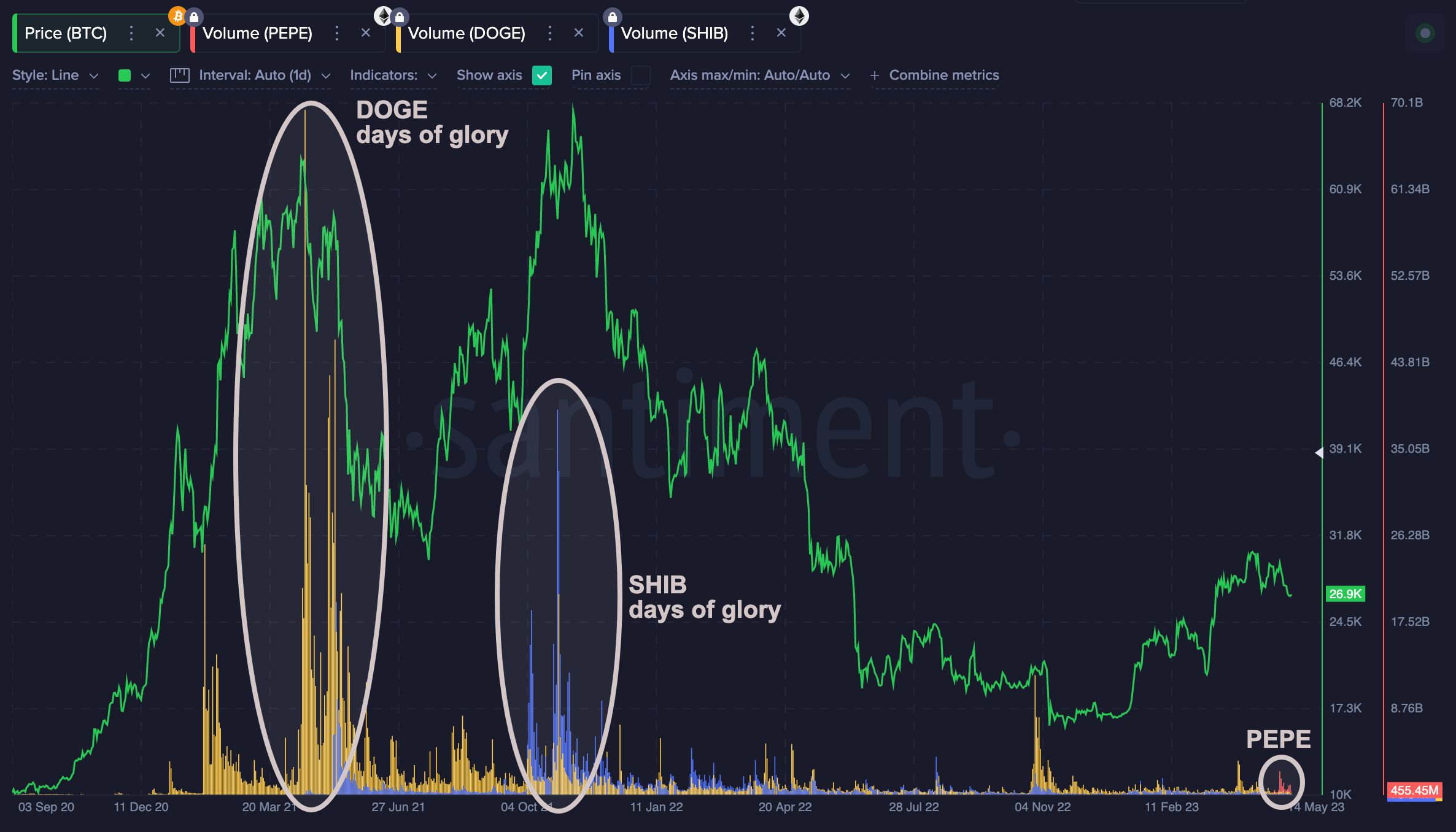
Source: Santiment Santiment also notes that retail participation in the Pepe rally has been “nearly nonexistent” compared to the Dogecoin and Shiba Inu frenzies.
PEPE is trading at $0.000002 at time of writing. The 63rd-ranked crypto asset by market cap is up 0.63% in the past day but down more than 53% from its all-time high of $0.00000431, which it hit on May 5th.
DOGE is trading at nearly $0.0726 at time of writing. The ninth-ranked crypto asset by market cap is up 0.08% in the past 24 hours but down more than 0.7% in the past seven days.
Shiba Inu is trading at $0.000009 at time of writing. The 16th-ranked crypto asset by market cap is down more than 1.3% in the past day and more than 0.22% in the past week.


İlgili Okumalar

Solana Proposals Could Lead to Reduction in Staking Yields to 2.25% and Cut Emissions by $1.5 Billion

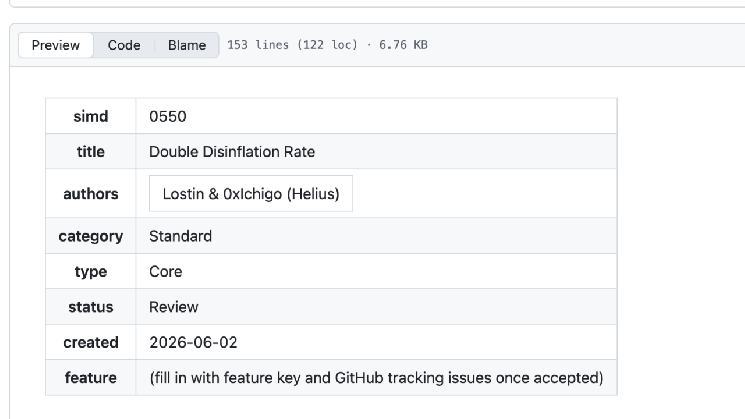
Solana is moving towards a stricter monetary model that could lead to a SOL deficit and significantly reduce staking rewards for holders. Two governance proposals drive these changes. SIMD-550, currently under vote, would double Solana's annual disinflation rate from 15% to 30%, accelerating the timeline to reach a final inflation rate of ~1.5% to the first half of 2029. The second, SIMD-553 (already approved), introduces additional token burning tied to computational units used on the network. Together, these measures could reduce SOL emission by an estimated $1.4-$1.5 billion over six years. The immediate impact would be lower staking yields, potentially falling from the current ~5.25% to approximately 4.34% in year one, 3% in year two, and 2.25% by year three. Analyst Matt Mena from 21Shares suggests inflation should be tied to economic metrics to help offset this decline. The changes also raise concerns for validator economics, with some potentially becoming unprofitable as inflation rewards decrease and voting costs may rise. However, the lower passive yield might push a significant portion of the 67.9% staked SOL into Solana's DeFi ecosystem for activities like lending and trading. This shift could boost network fee revenue to compensate for lower inflation rewards. The proposals aim to trade lower yield today for less dilution tomorrow, betting that network growth and usage will make this a worthwhile trade-off for SOL holders.

cryptonews.ru1 saat önce

Solana Proposals Could Lead to Reduction in Staking Yields to 2.25% and Cut Emissions by $1.5 Billion

cryptonews.ru1 saat önce

İşlemler

Spot
活动图片