【5.2-5.15 两周观察】美元危机下的 BTC, Meme 和 Worldcoin

DeFi之道2023-05-16 tarihinde yayınlandı2023-05-16 tarihinde güncellendi

Özet

但从事实来看,无论是加息还是银行危机,都无法支持市场萎缩的论点。从今年数据来看,美股和加密市场都出于上升趋势。今年的稳定币供应也并未出现萎缩。而所谓的加息和银行倒闭带来的也仅仅在于短期的回调,和资金在不同银行间的转移(从 Circle 到 Tether)。 真正改变的是加密市场对于 BTC 价值的重新凝练。在放弃了诸多“噪声”之后,加密行业再一次证明了自己的真正价值底层还是这个 BTC。就连一次 BTC 网络的拥堵都造成了远比加息至新高更大的市场影响,可见一斑。

最近两周加密市场下行,BTC 由 $30k 降至 $27k 上下。
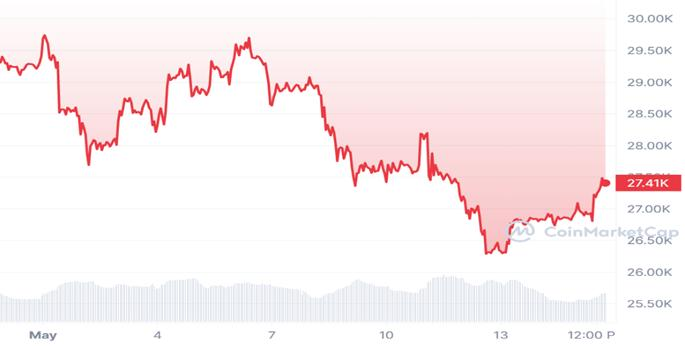
前两周 BTC 行情,来源:CMC

在宏观方面,5 月 4 日美联储加息 25 个基点至 5%-5.25% 已经属于“强弩之末”。当天加密市场反应甚至还有所上扬。同时,此时的联邦利率已经为 2007 年以来新高,市场预期 6 月美联储将停止加息。

伪风险:银行危机

稍早一些的 5 月 1 日,摩根大通宣布收购已倒闭的第一共和国银行。为这一轮银行危机暂时划下休止符。但是目前来看,本年度的几次银行危机虽然导致市场的部分恐慌,但是今年总体而言,Nasdaq 上涨 20% 以上,BTC 涨幅更是将近 100%。

从稳定币的供给来看,同样不支持加密市场因银行危机“雪上加霜”的论点。以 USDC + USDT 来看(两者占据稳定币市场的绝大部分),稳定币在相当长的时间内都维持在 $110B 的水平上,唯一的变化只是资金从 Circle 向 Tether 的转移。
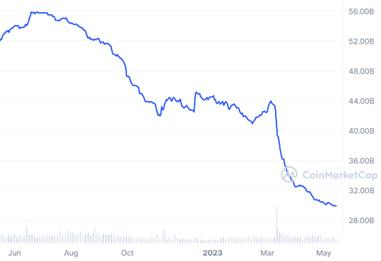
USDC 过去一年流通量,来源:CMC
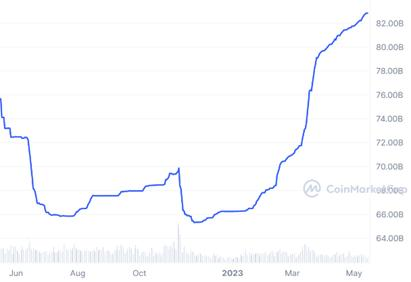
USDT过去一年流通量,来源:CMC
真转变:加密行业的收缩

就今年来看,整个加密行业的市值向 BTC 集中确实正在发生。以 CMC 的 BTC Dominance 指数来看,今年初 BTC 市值占比整个加密市场约为 40%,目前升至47%。
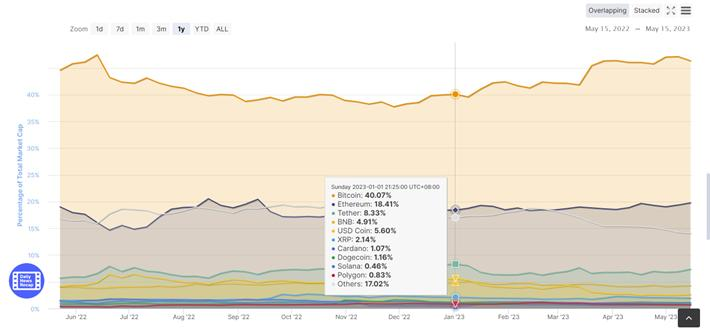
再对比 BTC 的涨幅和整个加密市场今年的涨幅,结局可见:整个市场虽然正在上升,但是市场情绪却更偏向于加密行业中偏保守的避险资产 BTC。
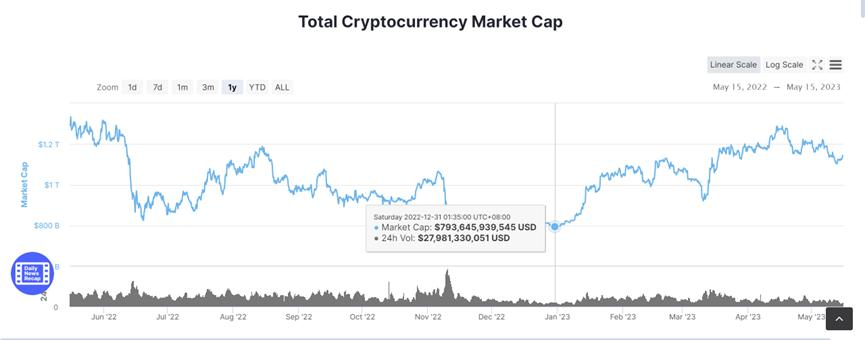
收缩视角下的 BTC:

收缩视角其实也是一种聚光灯视角。对于 BTC 的关注也发掘出了在 BTC 网络上加载 NFT 和 Defi 的那一套愿景。但是以加密行业仅存的历史而言,BTC 代表的是整个加密行业的托底价值和最后抵押物,每一次向非支付应用层的 BTC 拓展(BTC的那些分叉)都失败了。

真正影响市场的却是 5 月 8 日,BTC 的两个矿池同时诞生两个分叉,而后在争夺最长链的过程中,失败链的交易需要重新上链,从而造成了网络拥堵。

并没有什么外部力量可以真正摧毁一个去中心化的网络,如果有,可能就是这个网络自身。

Meme币和 Altman的 WorldCoin

最近的市场中,Meme 币又很神奇地成为了趋势。虽然所有人都知道Meme 币并不能代表市场的基本面,但是 Meme 币却能从侧面反应市场情绪。

事实证明,大多数的 Meme 币都会昙花一现。但是也有例外,去年马斯克推广过的狗狗币就成为了主流。

而 OpenAI 创始人的 WorldCoin 看起来就像是新的狗狗币。支付,转账,为一个虚拟网络提供金融服务,首先提供钱包服务,并且寻求融资。

如果推行下去,WorldCoin 也很有可能成为新的主流代币。只是,马斯克没成功的事,希望Altman 能成。

总结

虽然在美联储加息和新一轮银行危机之下,加密市场前景似乎令人担忧。

但从事实来看,无论是加息还是银行危机,都无法支持市场萎缩的论点。从今年数据来看,美股和加密市场都出于上升趋势。今年的稳定币供应也并未出现萎缩。而所谓的加息和银行倒闭带来的也仅仅在于短期的回调,和资金在不同银行间的转移(从 Circle 到 Tether)。

真正改变的是加密市场对于 BTC 价值的重新凝练。在放弃了诸多“噪声”之后,加密行业再一次证明了自己的真正价值底层还是这个 BTC。就连一次 BTC 网络的拥堵都造成了远比加息至新高更大的市场影响,可见一斑。

从目前看,重视 BTC 的偏保守的市场情绪还将持续一段时间。但是市场也总不乏新的趋势,比如最近的 Meme 币,其中,最有希望的似乎是目前还处于 Meme 币阶段的 WorldCoin,希望Altman 可以带给这个行业惊喜。

毕竟加密跟 AI 一样,也是个超出当下现实的行业,希望现实可以快点赶上。
İlgili Okumalar

Saeed Al-Marri: How Tokenization Unlocks New Opportunities for Shipping Funds

Said Al-Marri: How Tokenization Opens New Opportunities for Shipping Funds For centuries, commercial shipping has been a capital-intensive asset class limited to institutional funds and shipping dynasties. Said bin Saleh Al-Marri, CEO of Ethra Invest and Ethra Ship, aims to break down these barriers by combining Real World Asset (RWA) tokenization with conservative private equity principles. This bridges decentralized finance (DeFi) with the physical realities of global trade. Tokenization allows fractional ownership of ships on a blockchain, giving smaller investors access to previously inaccessible markets. However, Al-Marri warns it is not a regulatory loophole or a cure for asset illiquidity. The core physical risks are isolated in Special Purpose Vehicles (SPVs) for qualified investors. While tokenization enhances transparency and ownership record-keeping, Al-Marri stresses that a liquid secondary market depends on transparent asset valuation and must not interfere with ship operations managed by professionals. Regarding legal enforcement, smart contracts cannot physically seize a ship. Legal recourse still relies on traditional maritime courts, ship mortgages, and flag state laws, with blockchain records needing to mirror legal ownership in the SPV perfectly. Beyond ownership, the industry faces administrative hurdles like paper-based bills of lading. Al-Marri argues the bottleneck is legal and operational standardization, not technology. He advocates for a hybrid model combining digital trade documents and programmable settlements with support from regulated financial institutions, rather than a full crypto replacement for tools like Letters of Credit. A major challenge is decarbonizing the global fleet by 2050. Transitioning to green fuels requires massive upfront investment. Al-Marri emphasizes a conservative, holistic approach to underwriting these projects, evaluating technology, fuel availability, safety, and resale value. Investments must be justified under conservative forecasts, not just optimistic ones. By combining pragmatic risk management with digital infrastructure, leaders like Al-Marri show that the evolution of maritime finance is about mobilizing capital to build a modernized and sustainable global fleet, not just putting ships on a blockchain.

cryptonews.ru5 dk önce

Saeed Al-Marri: How Tokenization Unlocks New Opportunities for Shipping Funds

cryptonews.ru5 dk önce

Six Years Later, UNI Finally Welcomes Its Own "Buyback Bull"

After years of debate, Uniswap's UNI token has finally entered a 'buyback bull' phase following the long-awaited activation of its fee-switch mechanism. The UNIfication proposal, executed in December 2025, redirected a portion of protocol fees from select pools and Unichain sequencer revenue into a treasury (TokenJar) dedicated to buying back and permanently burning UNI. Initial market reaction was muted due to modest early burn rates. A significant shift occurred in July 2026 with the launch of Robinhood Chain. Uniswap's immediate deployment there skyrocketed trading volume, making it a top fee-generator. Subsequently, governance votes extended the fee mechanism to v4 pools and Robinhood Chain, causing protocol revenue to nearly triple. Daily funds directed to UNI burns rose sharply, with Robinhood Chain contributing over half. This transitioned UNI's narrative from a governance token to a cash-flow asset backed by a perpetual automatic buyer. UNI's price, which had languished around $2.30 in early June, nearly doubled to approach $4.60 by late July. Analysts credit this to the tangible cash flow from fees rather than mere speculation. Unlike many newer projects where buybacks are offset by large investor unlocks, UNI's six-year history has resulted in a widely distributed and relatively clean supply, allowing the buyback pressure to effectively impact the secondary market. The key test will be whether trading activity, particularly on Robinhood Chain, sustains after its initial gas subsidies expire.

marsbit10 dk önce

Six Years Later, UNI Finally Welcomes Its Own "Buyback Bull"

marsbit10 dk önce

Only 153 Venture Capital Firms Invested in July: Is the Crypto VC Industry Experiencing a 'Mass Extinction'?

In July 2026, only 153 unique venture capital firms participated in disclosed crypto funding rounds, marking the lowest monthly count since November 2020. This figure represents an 87% decline from the peak of 1,177 firms in 2022. Overall, the first seven months of 2026 saw crypto projects raise approximately $11.78 billion across 481 rounds. This crypto VC contraction contrasts sharply with the broader venture capital landscape, where global VC investment reached a record $560.4 billion in H1 2026, heavily fueled by major AI company financings. This shift in capital allocation has drawn funds away from the crypto sector. Within crypto, funding is highly concentrated. Trading platforms, prediction markets, and payment sectors absorbed 53% of the total capital. While early-stage deals remain frequent, the largest sums flow to a few late-stage rounds and mergers & acquisitions, which surged to $7.23 billion in Q2 2026. The market is consolidating around top funds like a16z crypto and Dragonfly, which successfully raised new multi-billion dollar funds, while many smaller firms have retreated. Analysts describe this as a "great extinction" for crypto VCs, where capital is becoming more selective, favoring proven business models and assets over early-stage speculation. This raises the bar for project quality, funding efficiency, and viable exit paths.

marsbit31 dk önce

Only 153 Venture Capital Firms Invested in July: Is the Crypto VC Industry Experiencing a 'Mass Extinction'?

marsbit31 dk önce

İşlemler

Spot
活动图片